Kuala Lumpur Cocktail Week 2026 is Set to Be Bigger, Bolder, and Better Than Ever
Everything you need to know for this year's KLCW
January 26, 2026
Updated February 13, 2026
Chongqing is another one of China's modern marvels. In just 40 years, the city is unrecognizable, tracing back to its origins as an inland industrial center. Today it is the world's neon-lit cyberpunk capital.
With its dense, 3D architecture, neon lights, and multi-level transports systems that pass by skyscrapers, under skybridges, and through mountains, Chongqing feels like a cyberpunk, high tech dream world, blurring the lines between reality and video game.
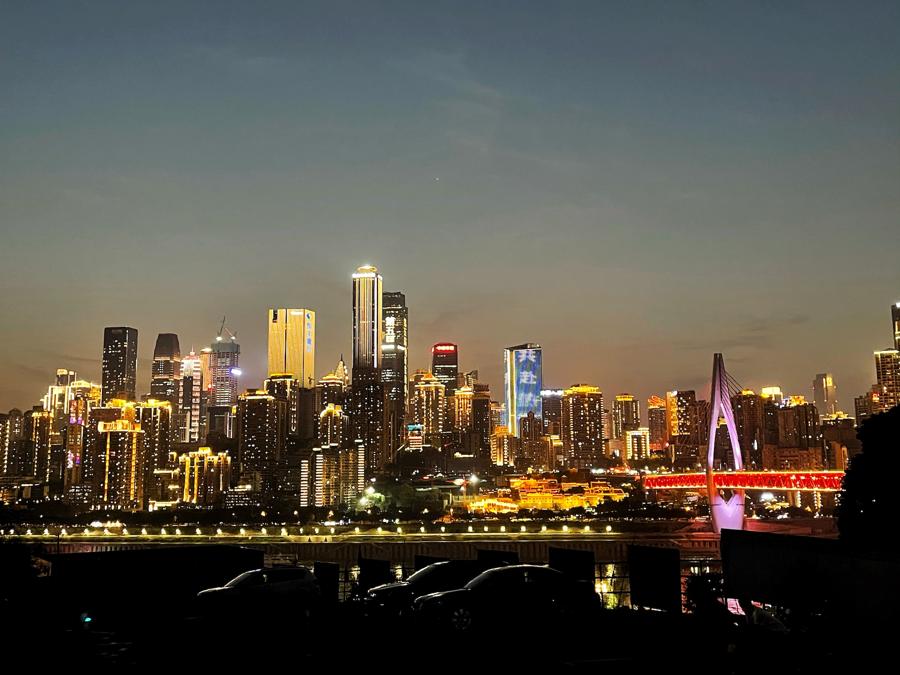
Chongqing isn't a single blob of city, it's a distributed megacity, stitched together by rivers, mountains, bridges, tunnels and vertical infrastructure. That's why it feels so unreal. Is it worth a visit? Definitely.
This megacity of more than 32 million people is famous for its “8D” layout – one where you enter somewhere at what seems like street level but peer over the side only to realize you’re standing far above other parts of the city – with entire buildings, highways and levels below you. (Kuixinglou Square is a prime paradigm of this phenomena but there are dozens throughout the city.)
This major mountainous municipality is located in Southwest China, a part of Sichuan Province. With over 3,000 years of history, the city is an intriguing amalgamation of historic and contemporary influences. This vertical city is now considered a major economic hub, known for manufacturing, logistics and transportation. Also famed for its "mala" (numbing and spicy) hotpot and humid, hot, and foggy climate, it has earned the nickname "Fog Capital."
Here is a curated guide on what to do and eat in this Tron-like, layered metropolis.
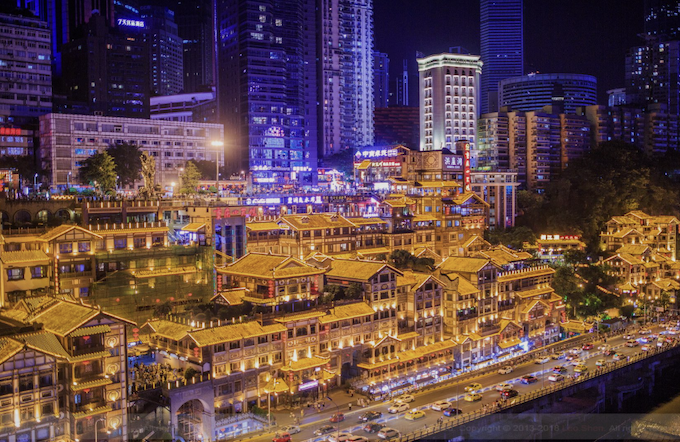
Despite the name, this isn’t a cave; it’s a historic 2,300-year-old cliffside complex of traditional Bayu-style stilted houses, famously resembling the bathhouses from the Miyazaki film Spirited Away. Situated at the confluence of the Yangtze and Jialing Rivers, it features brilliant, nightly illumination, offering a mix of shopping, dining, and scenic views – an iconic Chongqing destination.
Here, visitors will find boutiques, café, restaurants, and other niche shops in an ancient Chinese decorative style spread across 11 stories. For the most jaw-dropping views, go to Chaotianmen Bridge and walk towards Hongyadong. Or visit the Chongqing Grand Theater for a view of both Hongyadong and the bridge together lit up at night. The lights are on every night between 6-10pm.
Pro tip: A lot of the food in this area is quite touristy and overpriced, so to get the local Chongqing experience, save your stomach space for elsewhere.
No. 88, Jialing River Binjiang Road, Yuzhong District, Chongqing, 渝中区滨江路88号
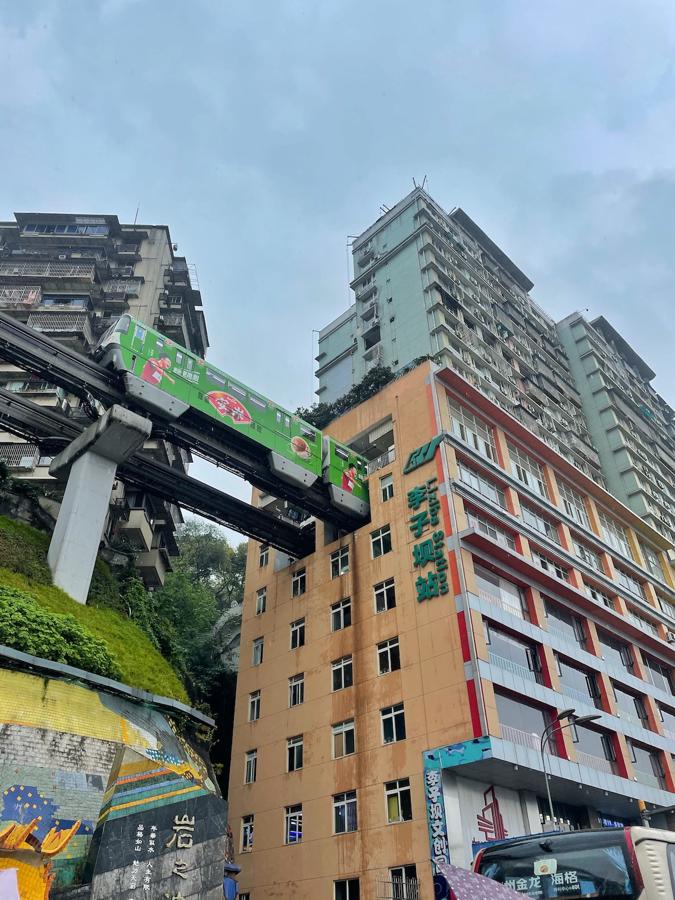
Liziba Station is an internet-famous, innovative monorail station on Line 2 of Chongqing's metro that runs directly through the 6th-8th floors of a 19-story residential building. This setup allows the train to pass without disrupting residents due to specialized noise reduction. Since opening in 2005, it has become a major tourist spectacle, attracting crowds at all hours. From morning until night (6:30am-11:30pm), the train runs every 5-10 minutes and is fully open to the public. Despite being just a train station, it has truly become a landmark in Chongqing showcasing the city's hilly terrain, architectural innovation, and creative, space-saving engineering that promotes urban tourism.
No. 39 Liziba Main Street, Chongqing, 地铁2号线李子坝站
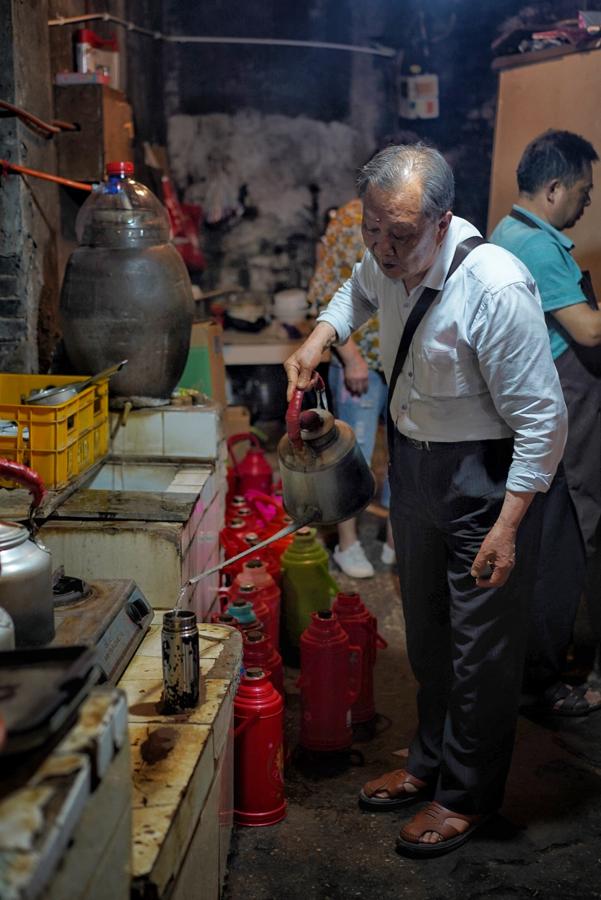
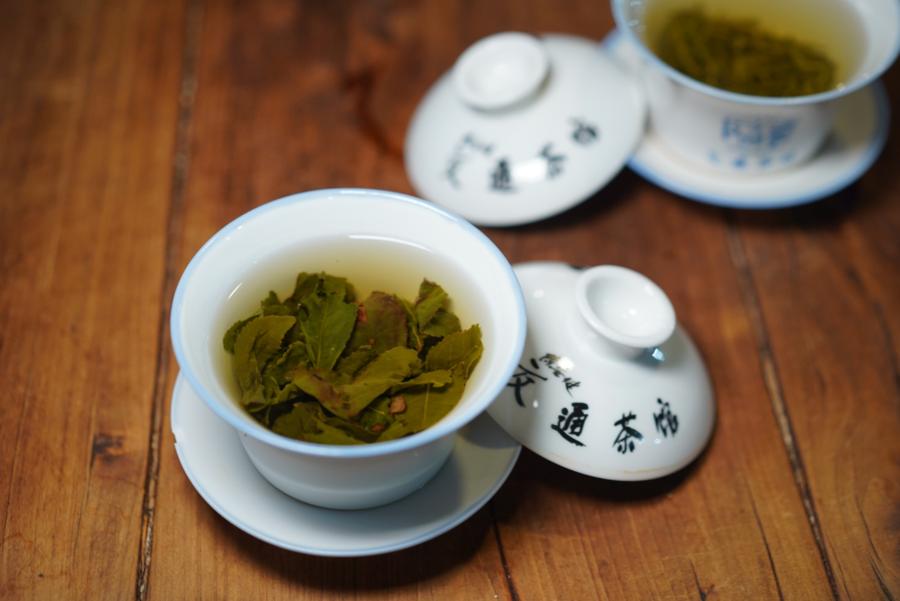
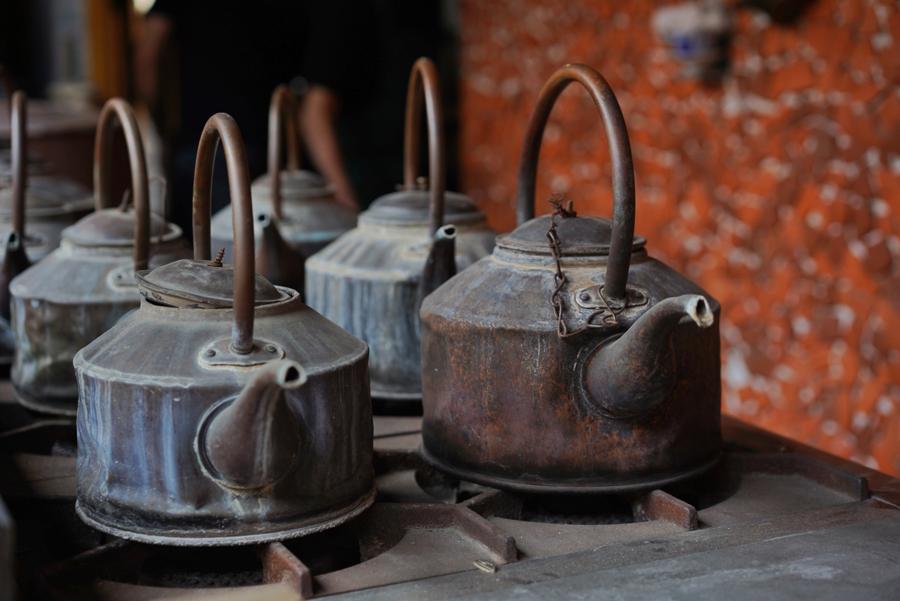
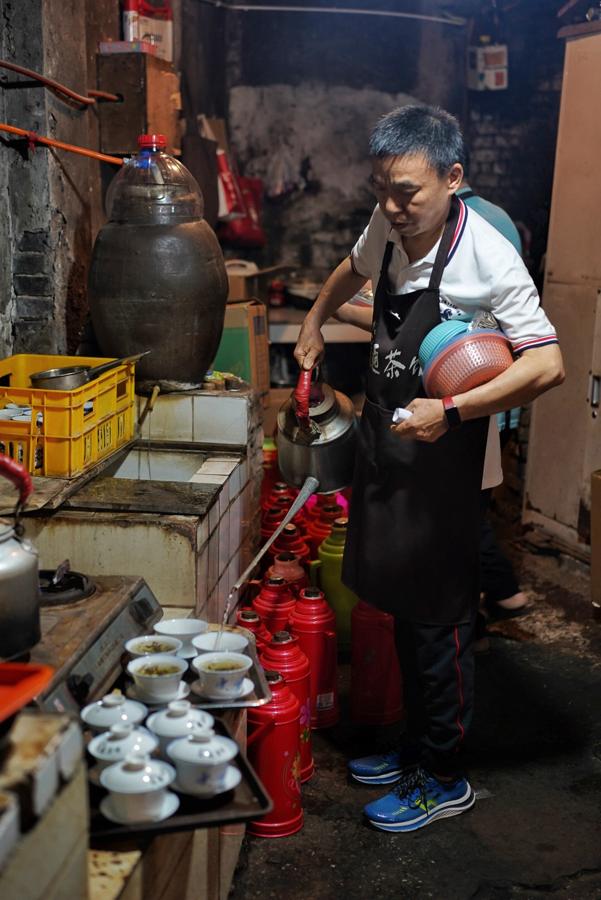
Jiaotong Teahouse, located in the Huangjueping area of Jiulongpo District, is an authentic 1980s-style "time capsule" operating since 1987. Known for its smoky, bustling, and nostalgic atmosphere, it is considered one of the last few authentic, old-school teahouses in Chongqing. Like a living museum, it captures daily life of Chongqing’s past through rustic, original wooden furniture, dim lighting, and tea prepared and poured directly in front of guests via kettles with long spouts.
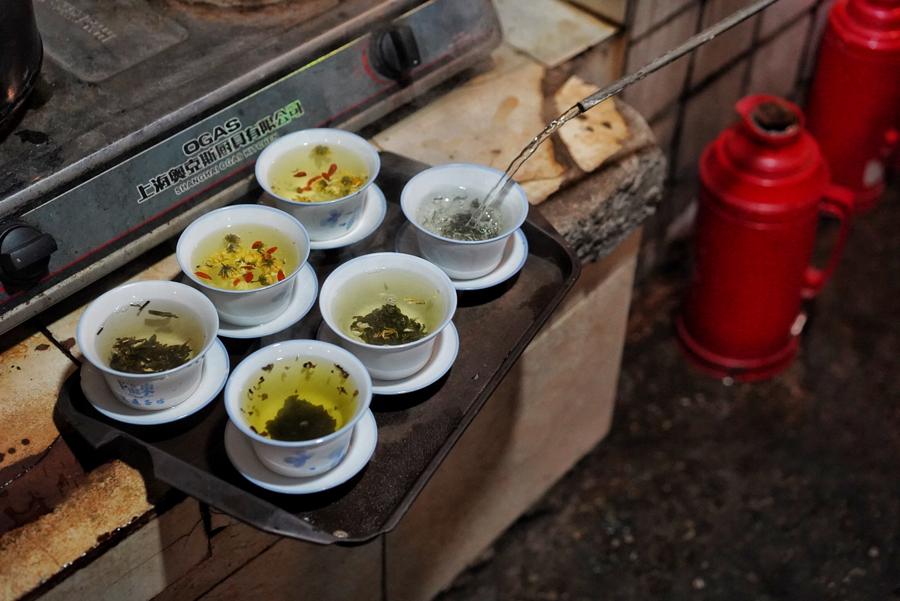
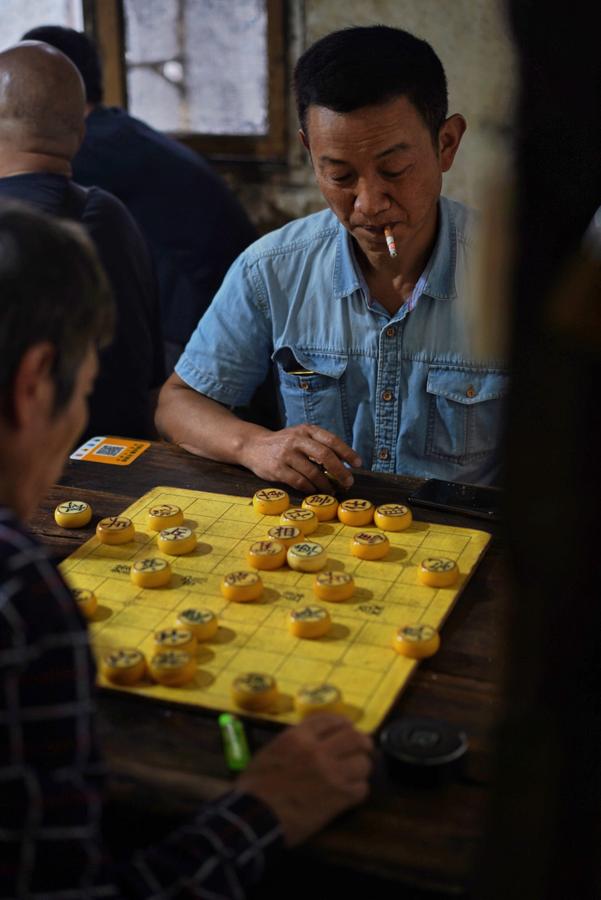
The teahouse is frequented by locals as a common pastime alongside playing mah jong or cards, drinking affordable tea, snacking on sunflower seeds, and chatting away the afternoon. A cup of tea will set you back roughly RMB10, a tiny spend for such an immersive experience.
No. 20 Huangjueping, Zheng Street, Chongqing, 九龙坡区黄桷坪正街4号
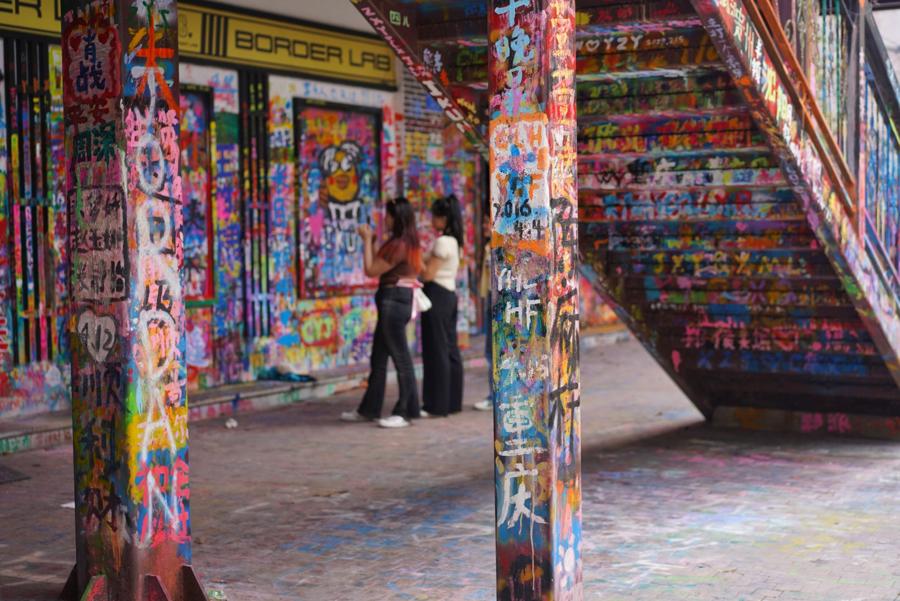
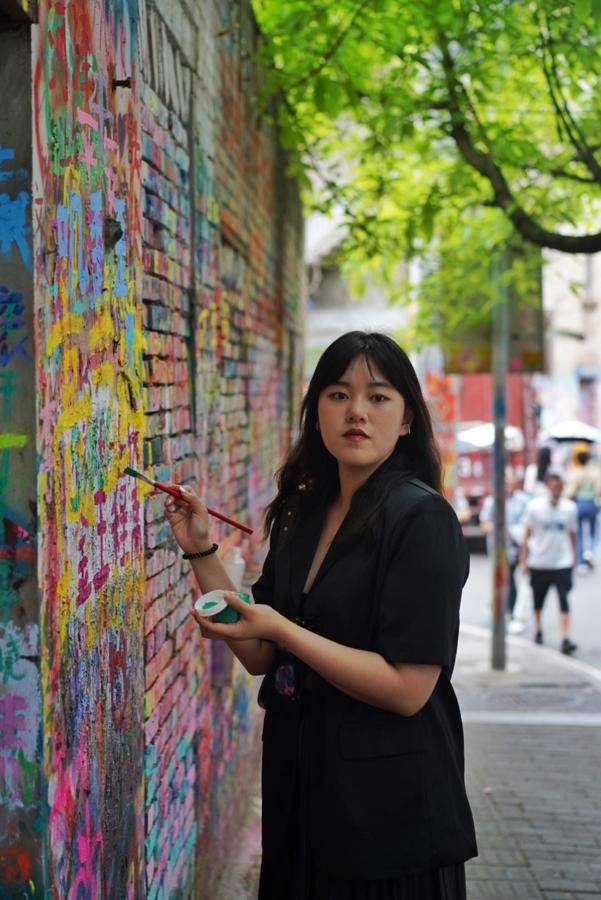
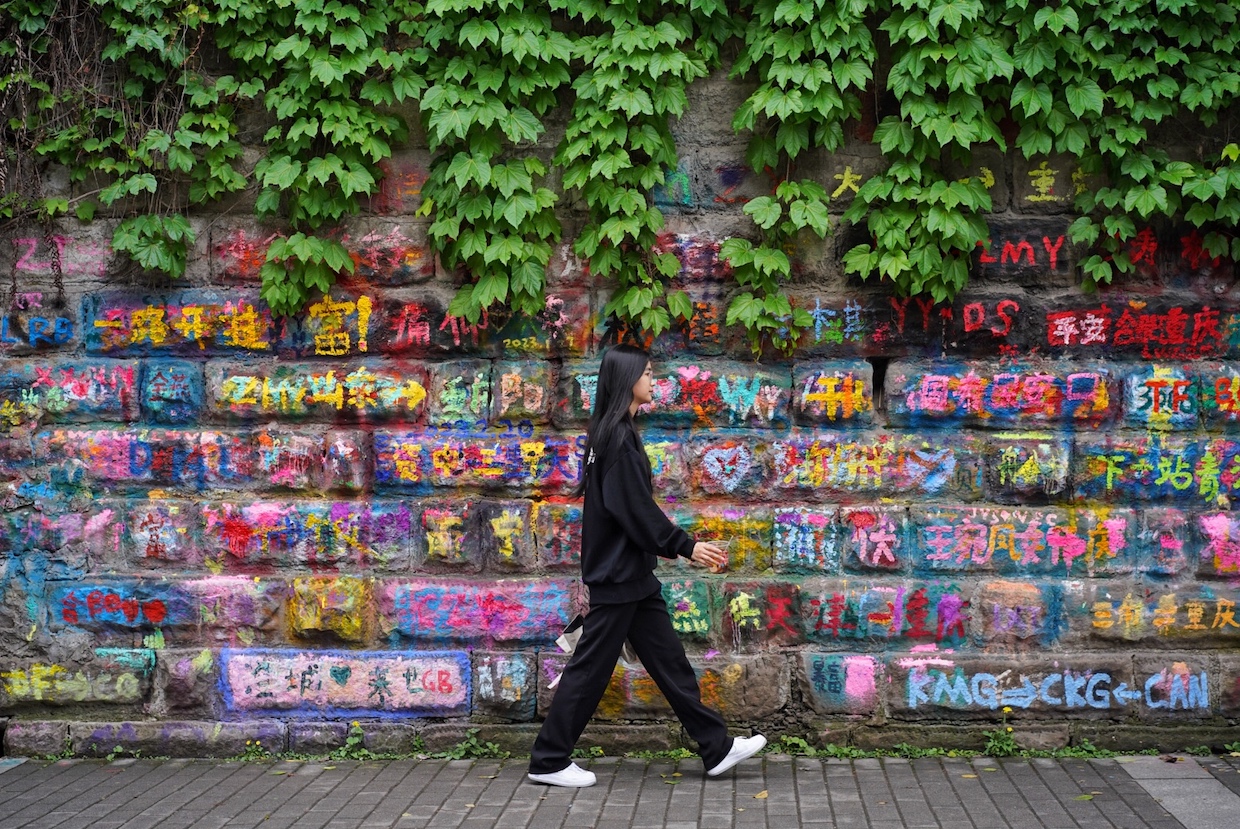
Huangjueping Graffiti Street in Chongqing's Jiulongpo District is the world's largest, covering rougly 1.25-kilometers consecutively across walls, doors, and buildings with colorful, vibrant graffiti art. Created in 150 days by over 800 artists and students in the early 2000s, this area near the Sichuan Fine Arts Institute transforms old buildings into an urban art gallery.
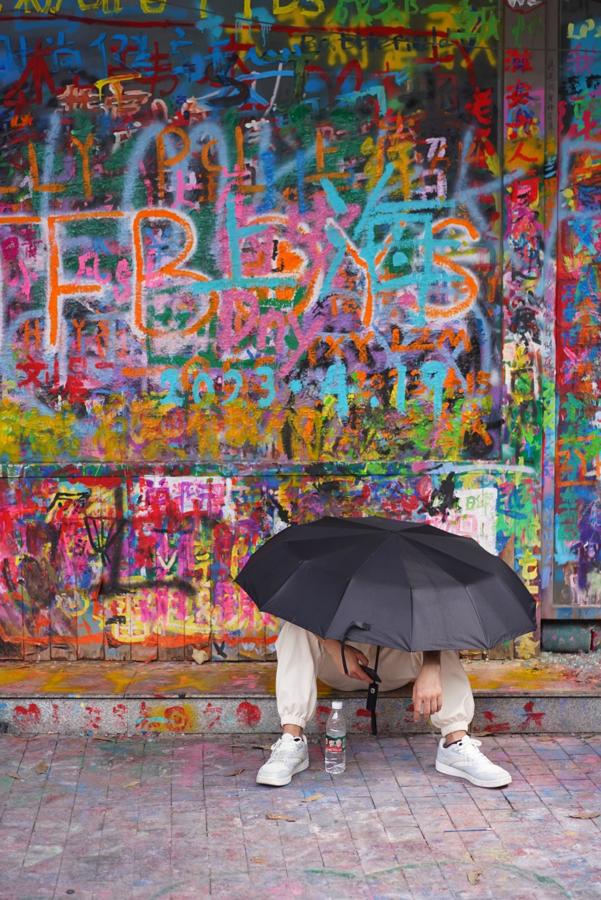
Some of the walls feature elaborate murals, while others are just a mishmash of colors, as the graffiti is constantly updated, a living work of art. Nearby, the area is filled with boho shops, artisan storefronts, cafés, and the aforementioned Jiatong Teahouse. Entrance is free and open to the public 24/7.
Jiulongpo District, Chongqing, stretching from Huangjueping Railway Hospital to the 501 Art Warehouse, 九龙坡区黄桷坪正街
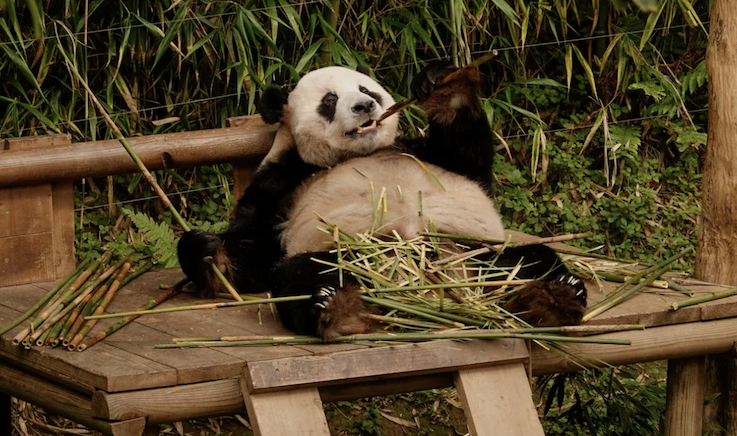
While most people think of Chengdu when it comes to pandas, nearby Chongqing is also home to over 20 pandas in The Panda House at Chongqing Zoo, conveniently located in the city center. This is a great, affordable place for observing these giant pandas, featuring both indoor and outdoor habitats designed to mimic their natural mountainous environment. It is also a top breeding destination for pandas, especially red pandas. In addition to pandas, the zoo features over 230 species, including South China tigers, giraffes, and various primate species across the 45-hectare space.
Pro tip: Do note that the pandas are only outside from around 7-9am, so make sure to visit early.
1 Xijiao Road, Yangjiaping, Jiulongpo District, Chongqing, 九龙坡区西郊路西郊一村1号
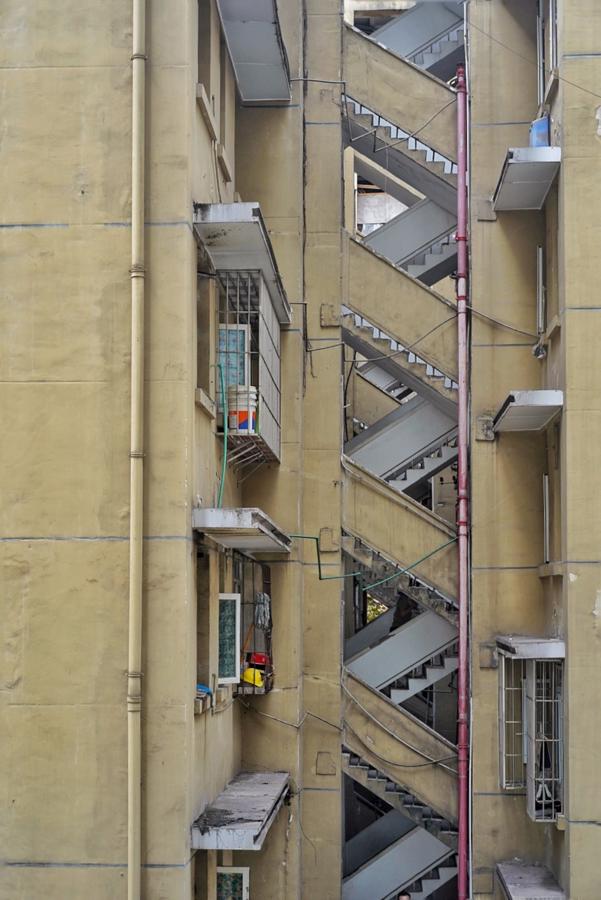
This maze of a building was once an ordinary residential block in the 1990s, but today it has become one of the city’s top landmarks. Renowned for its 24-story, no-elevator design that perfectly captures the city's "8D" cyberpunk aesthetic. It’s a popular tourist destination for its labyrinth-like architecture, offering stunning views of the Yangtze River, skyline, and close-up views of the Yangtze River Cableway. The complex is also unique because it has three distinct road entrances on the 1st, 10th, and 15th floors. Over time, it has been used as a filming location for several films and TV dramas like "Chongqing Hot Pot," despite the high tourist traffic and local residents that still live there.
No. 1 BaiXiang Street, Jiefangbei Sub-district, Yuzhong District, Chongqing, 渝中区白象街1-6号
So much more than a shopping mall, this mixed-use structure is home to dozens (if not hundreds) of restaurants, an arcade, a zoo, a sky garden, a rooftop swing (250 meters above the ground, and so much more. In total, it features eight skyscrapers and "The Crystal," a 300-meter-long horizontal skybridge atop four towers. Completed in 2019, it also includes a shopping mall, offices, residences, and the InterContinental hotel, functioning as a "city within a city".
No. 2 Changjiang Binjiang Road, Yuzhong District, Chongqing, 渝中区滨江路2号
*Zhongshuge Bookstore has since closed in Chongqing
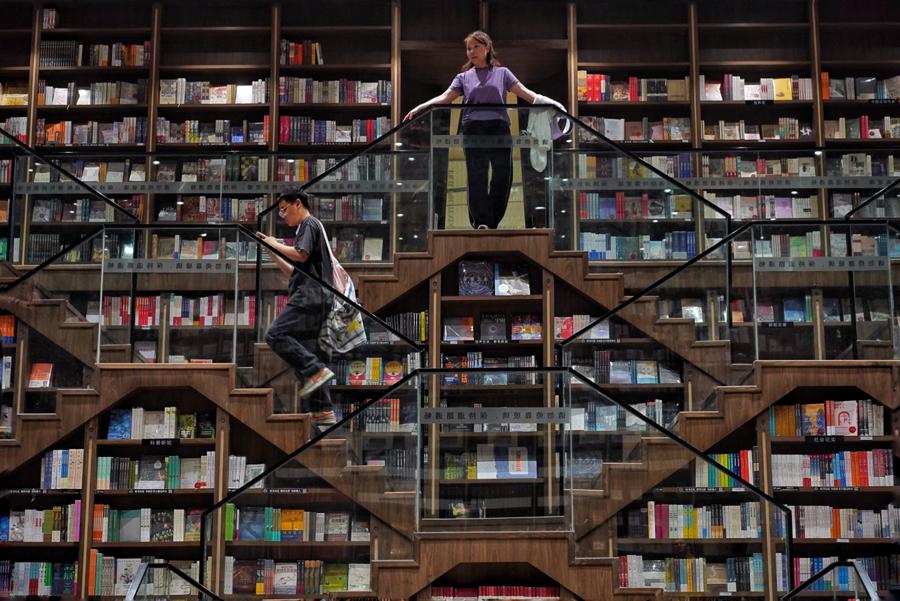
Chongqing Zhongshuge Bookstore is a renowned, architecturally surreal bookstore. Designed by Li Xiang of X+Living and opened in 2019, the 1,300-square-meter space is famous for its "mind-bending" interior that utilizes mirrors and MC Escher-inspired zig-zagging, "impossible" staircases that create an illusion of an infinite maze-like world of books. The bookstore includes the main study, dubbed The Ladder Hall, lampshade-shaped bookshelves, a children's reading room, a reading corridor, and a leisure area. Since opening, the store has garnered international recognition, winning the 2019 Best of Year Design Award and the 2020 ArchDaily Award for Best Interior Architecture.
3F-4F, Zodi Plaza, 68 Yangjiaping Zheng Street, Jiulongpo District, Chongqing
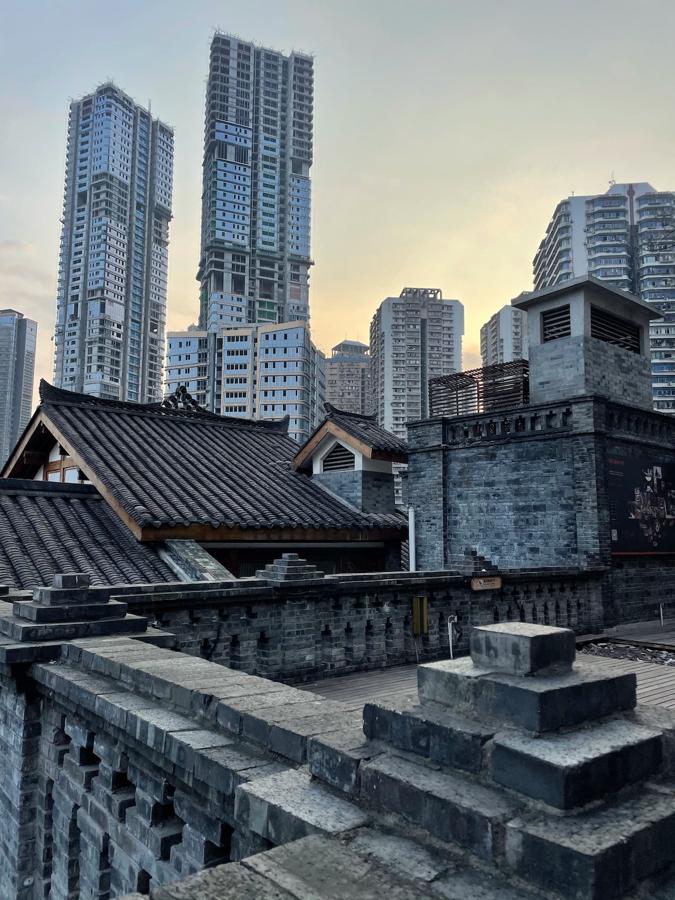
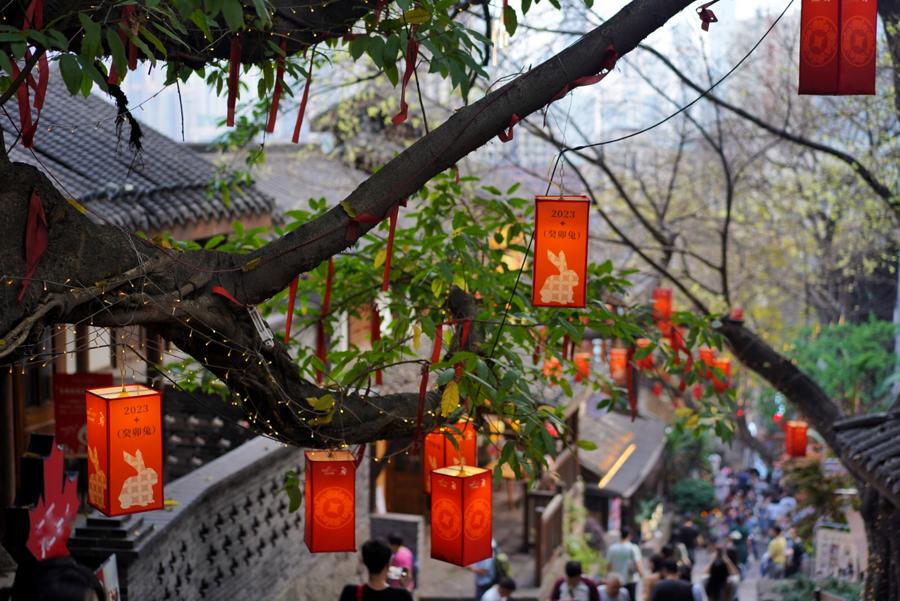
18 Ladders Street is a revitalized historic area in the Yuzhong District, that reopened in 2021. Located near the Liberation Monument, it previously served as a vital, historic passage for traders and residents, dating back to the Ming and Qing dynasties. Bridging the city’s mountainous upper and lower levels, it combines restored traditional stilted houses and steep stone stairways with modern, neon-lit shops, cafés, and tea houses. Best visited in the evening, the area is all lit up, highlighting its lantern-adorned buildings. Here visitors can also catch a traditional performance, like Sichuan opera face-changing, in local tea houses.
No. 1, Zhongxing Road, Yuzhong District, Chongqing, 渝中区中兴路1号
This futuristic shopping mall blends natural forest elements and modernistic architecture for the ultimate shopping experience. From imported brands to gourmet grocery stores to local luxury car showrooms, you can find nearly anything here. The mall is a major eco-conscious, trendy lifestyle shopping complex, most famous for its 42-meter-tall indoor botanical garden (Forest Walk), evoking a feeling of shopping in a park.
No. 118 Hucai Road, Yuanyang Subdistrict, Yubei District, Chongqing, 渝北区湖彩路118号
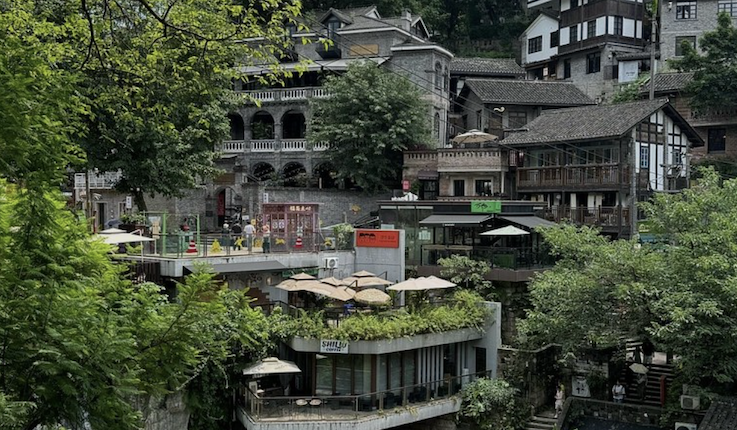
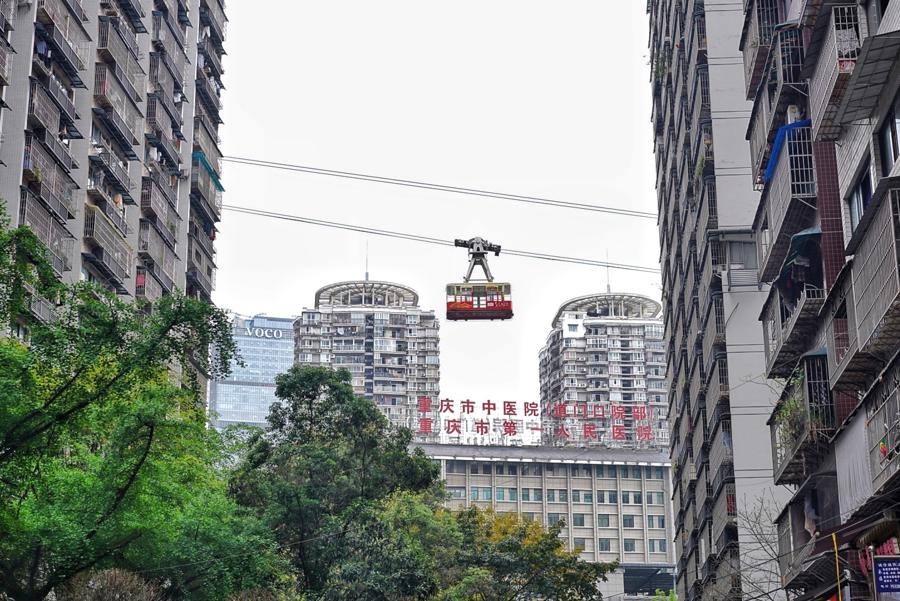
Longmenhao Old Street is the largest, best-preserved historical and cultural neighborhood in Chongqing's urban area, located in the Nan'an District along the Yangtze River. Featuring 18 historic buildings (like former foreign embassies), it boasts a scenic atmosphere with stunning night views, particularly from its glass observation deck. From here, visitors can also see the Yangtze River Cable Car, which offers riders views over the city and river.
105 Nanbin Road, Nanan District, Chongqing, 南岸区南滨路105号
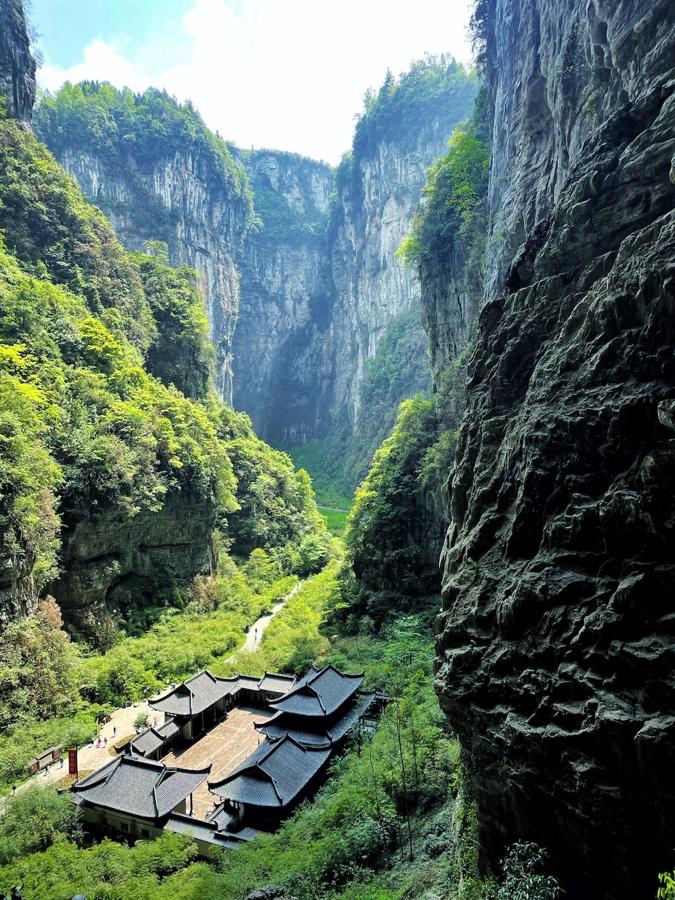
Wulong is a renowned UNESCO World Natural Heritage site known for its dramatic karst landscapes, including massive natural bridges, deep gorges, and limestone caves. Located about 140 kilometers from Chongqing's city center, it features other-worldly attractions like the Three Natural Bridges, Longshuixia Fissure, and the "Oriental Switzerland" Fairy Mountain. Summer is the best time to visit (to escape Chongqing's heat), but spring and autumn are also pleasant.
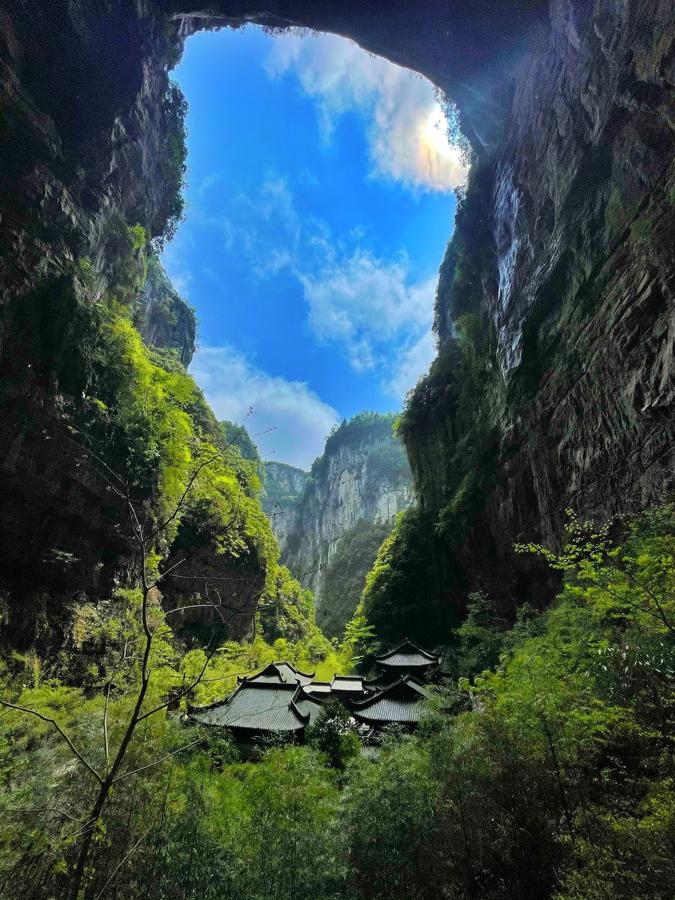
To get to Wulong, take a 1 hour and 45-minute train ride (RMB47-52) from Chongqing Bei Railway Station to Wulong. Trains run regularly throughout the day, but it's best to book a ticket in advance, particularly on weekends and holidays. From the station, there's a convenient bus that goes straight to the park (RMB10, 30 minutes). The park entrance fee is RMB125, which includes a short 10-minute shuttle ride from the ticket office to the park entrance. Most people visit the park for 2-3 hours at a leisurely pace. Visitors can return to Chongqing city the same way they came.
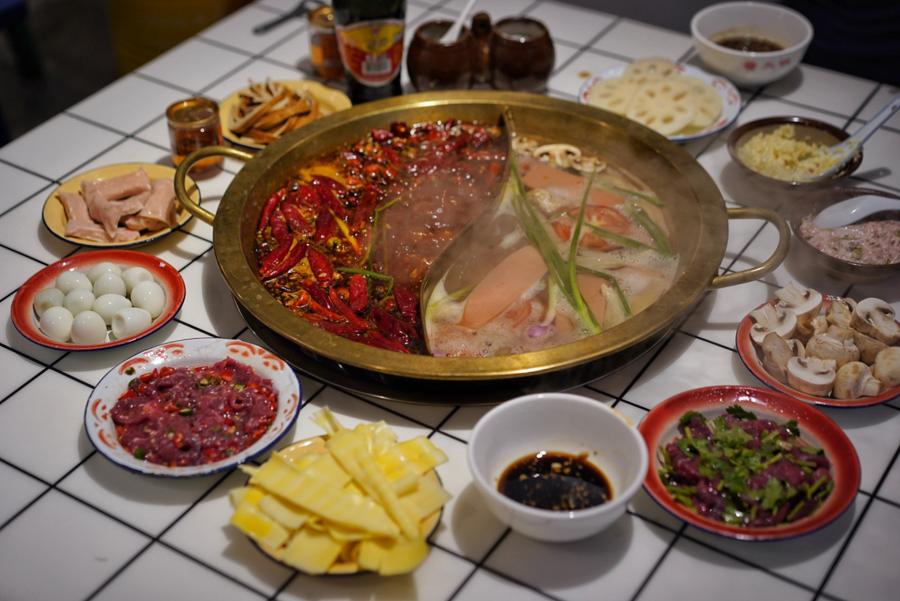
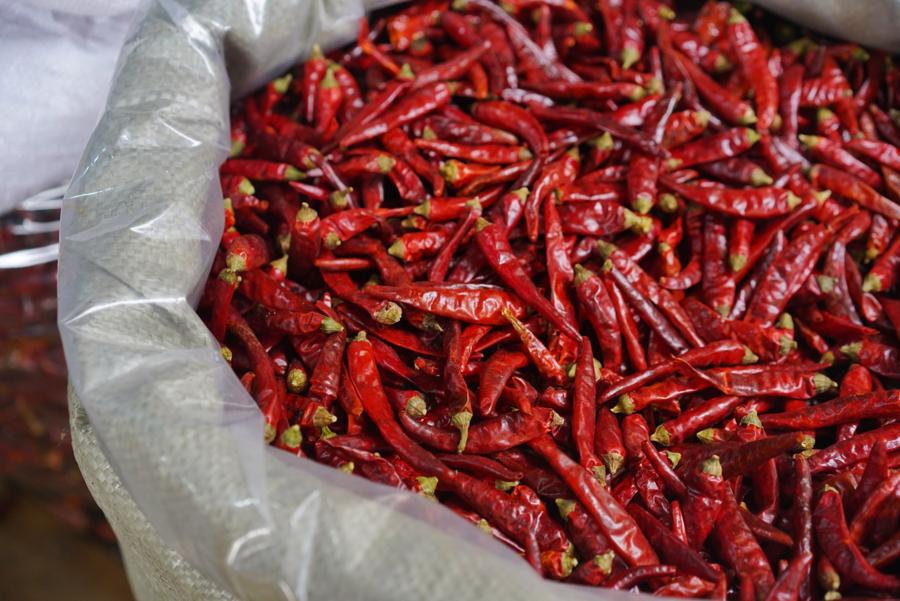
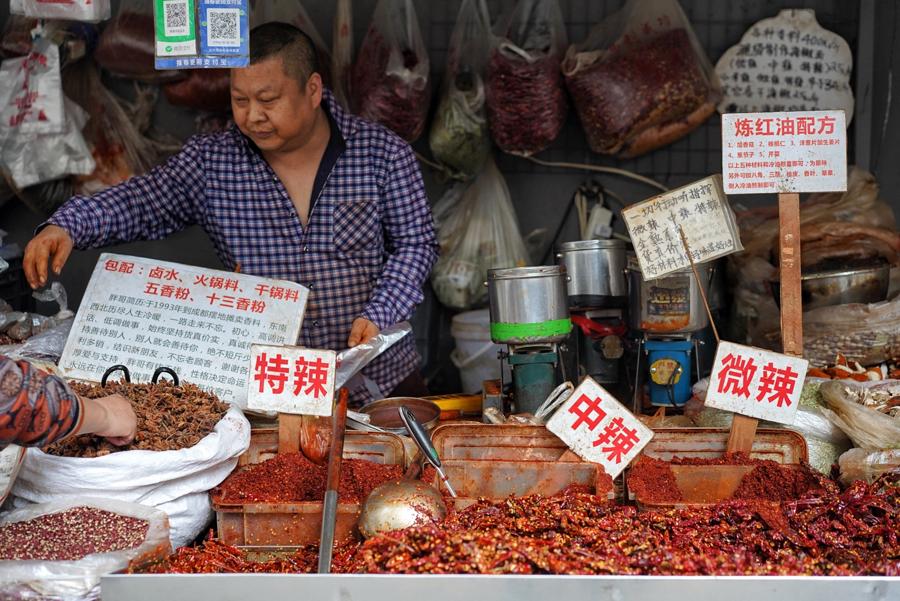
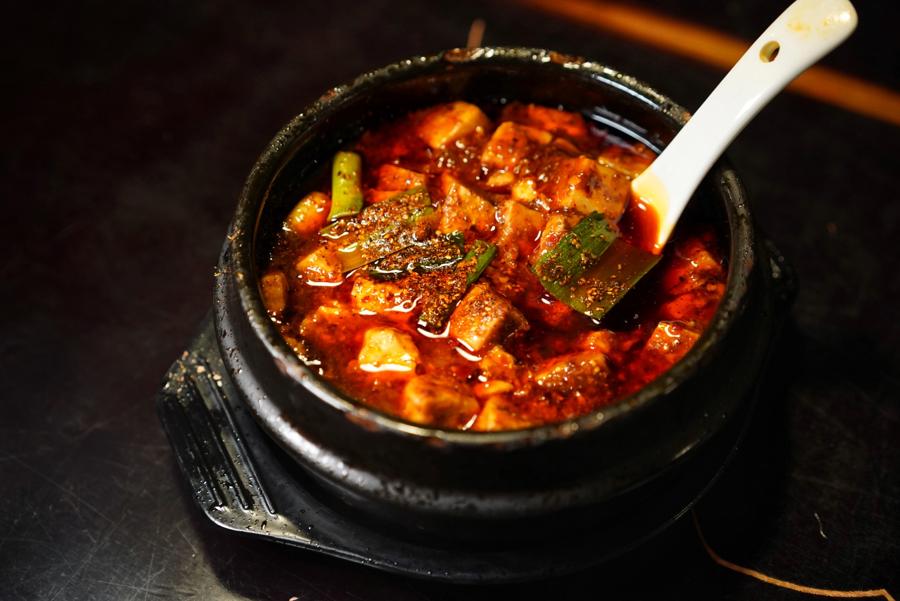
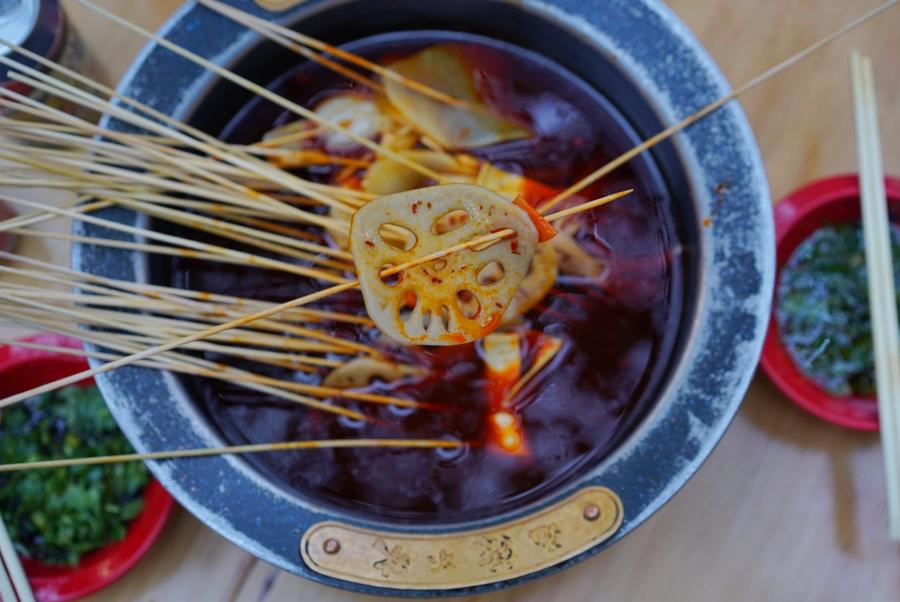
Whether you’re a winter homebody or a summer spirit, prepare to spit hot fire from the mind-rearranging heat of Chongqing's hot pot broth. The base stock sees a spicy lard butter added as the pot heats up, melting into the broth and imbuing it with extra-rich heat. Mala (麻辣) is the predominant flavor thanks to the numbing sensation of Sichuan peppercorns (花椒) and flamin' hot dried red chilies. Ingredients range from sliced beef, tofu, mushrooms and pork belly to bull frog and tripe. Duo spicy and non-spicy broths are available for those that can’t handle the heat.
Where to get it:
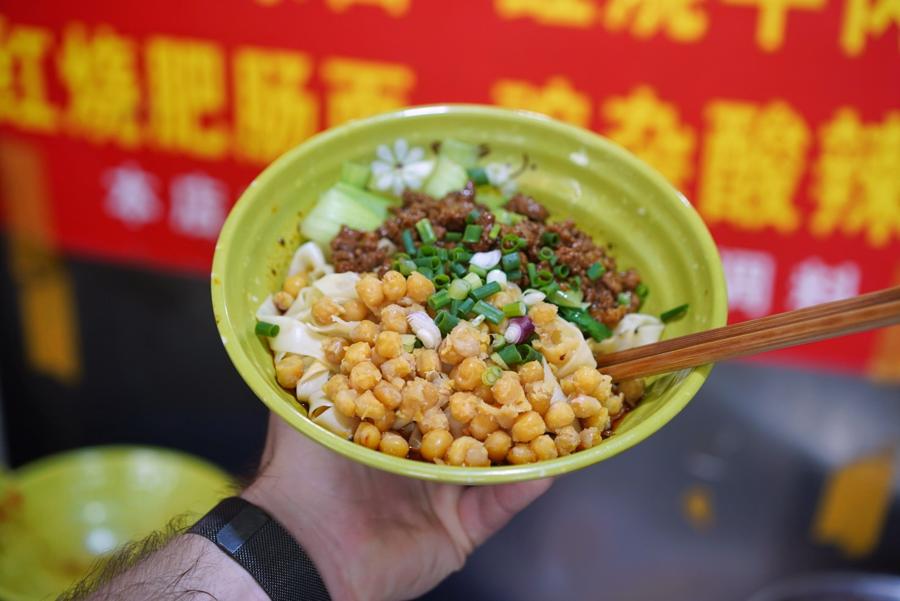
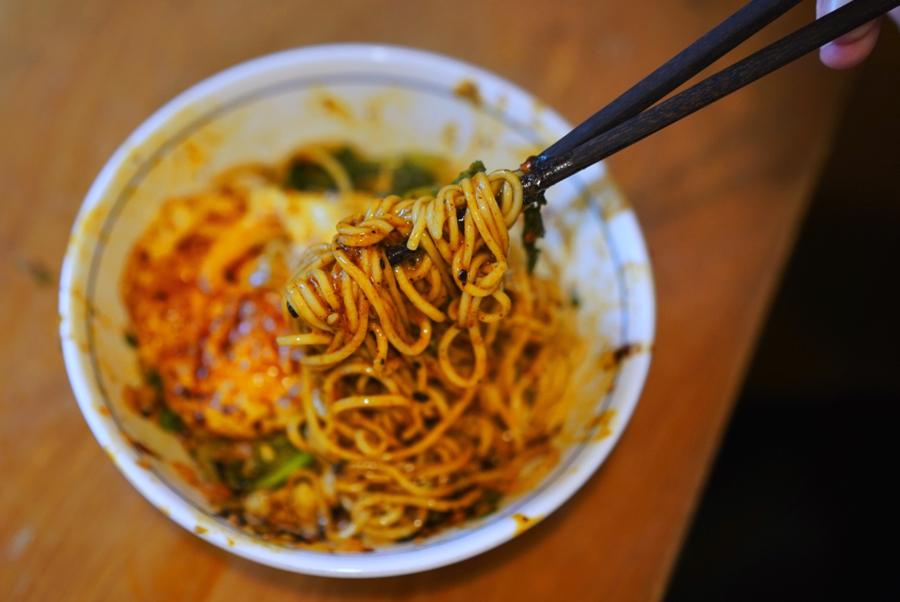
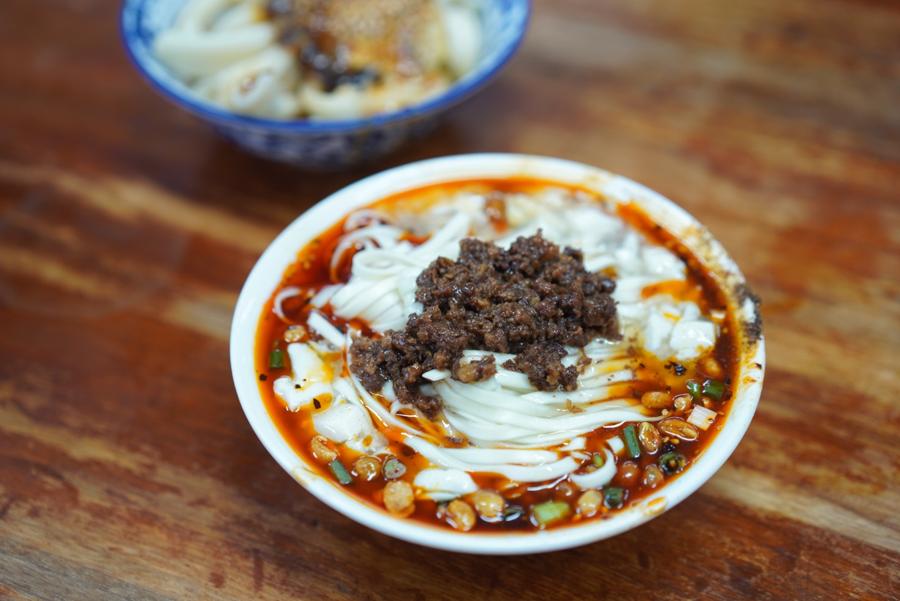
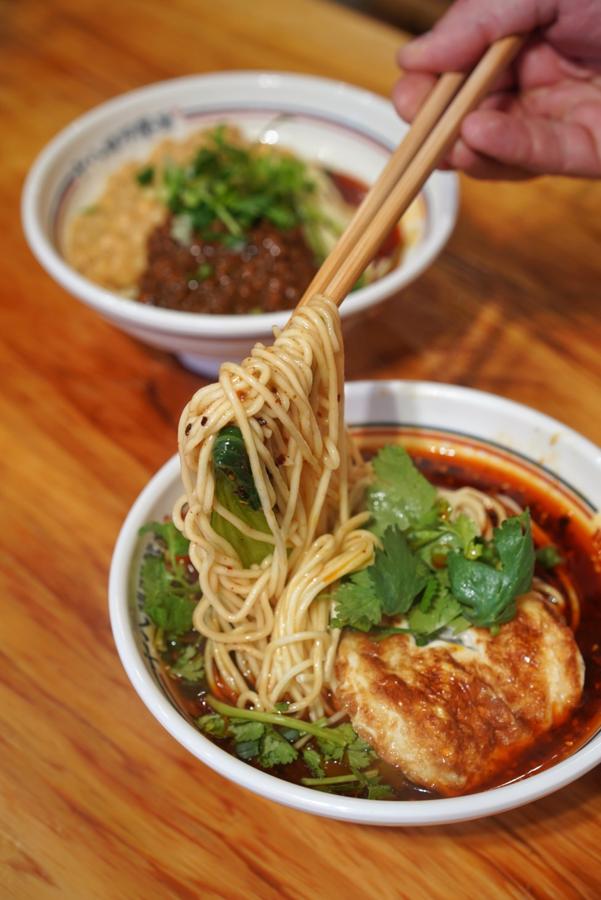
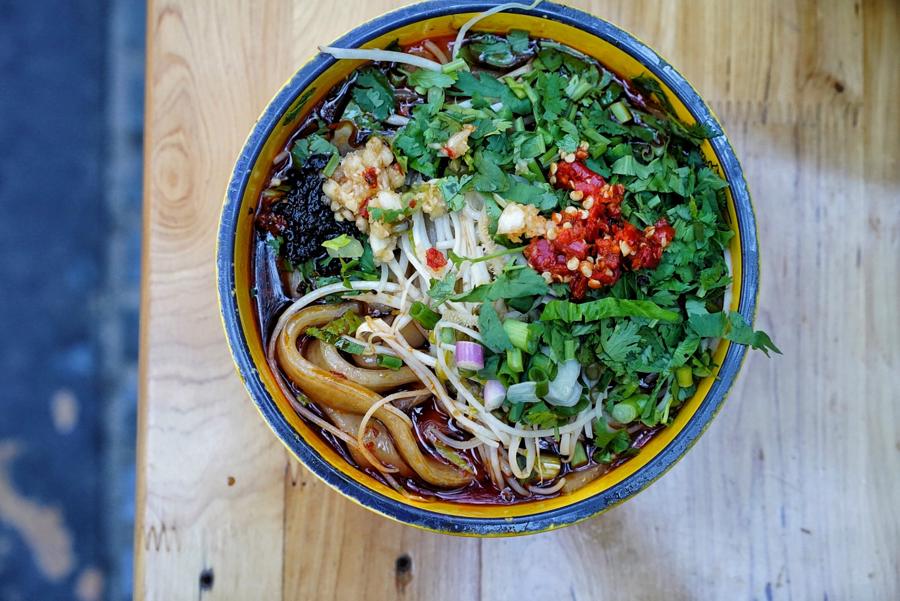
Famous for an array of noodles with various toppings typically eaten for breakfast or as a snack, the three most common varieties span wanza mian (a mixed noodle dish featuring mashed and stewed chickpeas, and minced spicy pork, either served dry or in soup), xiao mian (a fiery, lip-tingling dry or soup noodle dish of noodles simply splashed with spicy chili oil, Sichuan pepper, and vegetables), and dan dan mian (dry noodles swaddled in chili oil, seasoned ground pork, peanuts and pickled vegetables). These noodle varieties can be found at nearly every street corner in the city, with each shop having its own slight variation and spice level.
Where to get it:
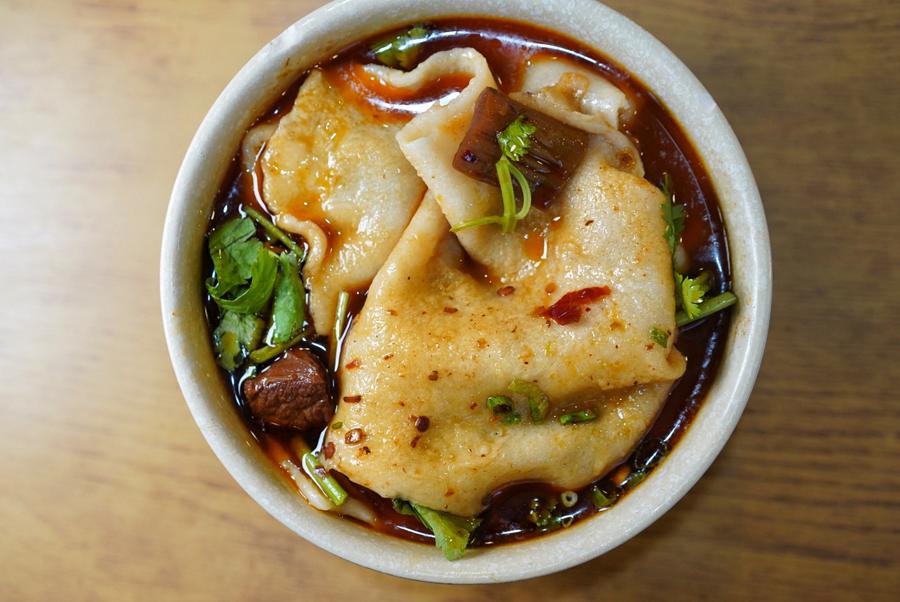
Known as “bedspread noodles,” these pasta sheets are made by artisan noodle makers around Chengdu, Chongqing and neighboring villages. A hunk of dough is first ripped from a heaping mound and stretched to the size (and weight) of mini blankets – roughly 12-inches long (30cm) and 3-inches wide (8cm), and tossed haphazardly into a simmering pot of water to cook for just two minutes. Thick with that QQ chew, the blanket noodles are usually served swimming in a meat-heavy broth with chickpeas and garlic.
Where to get it:
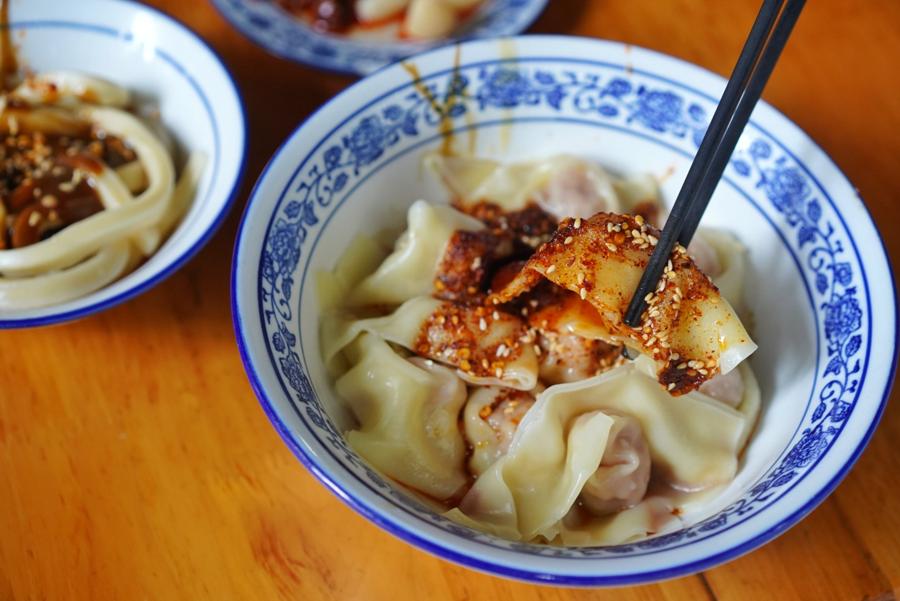
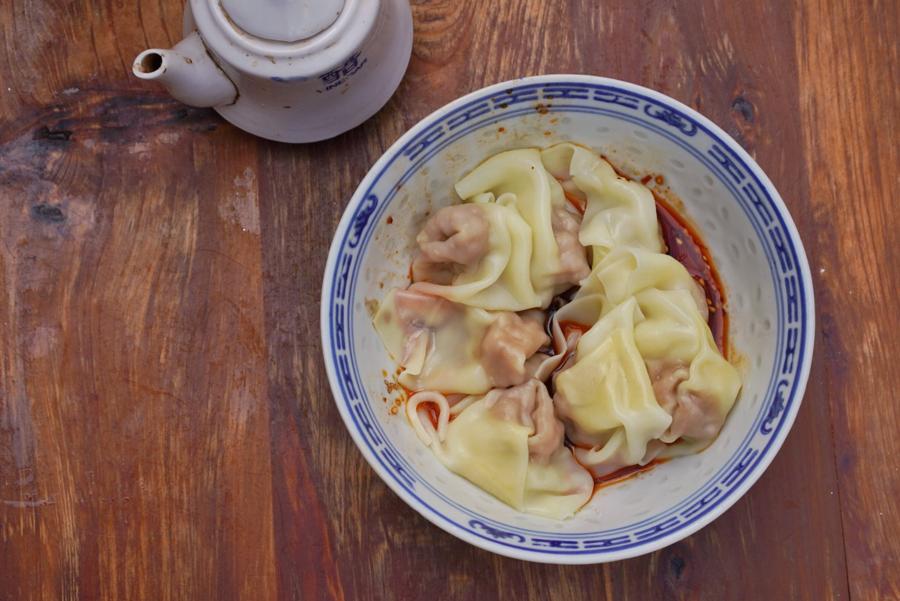
These crescent-shaped, pork-stuffed dumplings are famously found at every food stand in the city, each spot tweaking the recipe ever so slightly to cause a ripple in the die-hard fandom of one wonton shop over the next. Presented atop glistening chili oil, the pleated wrappers appear harmless, even mild, at first. But like all streetside bowls in Sichuan, the power comes from the act of mixing – the steam from the flash-boiled wonton skins mingling with the sauce, coating each morsel in a bath of silky chili oil, hot dried chilies, sweet soy sauce, garlic, and Sichuan peppercorns.
Where to get it:
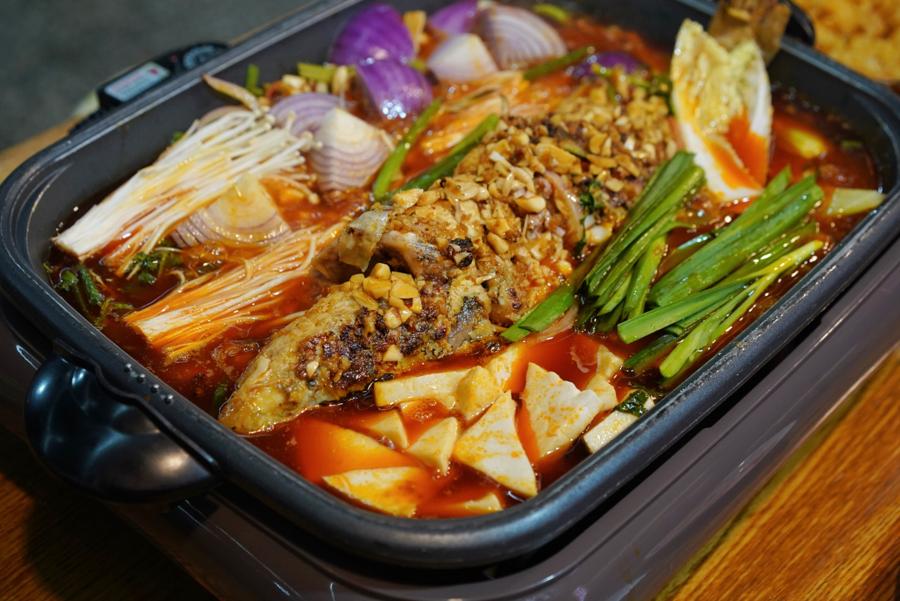
Wanzhou Roasted Fish is a signature dish originating from the Wanzhou District of Chongqing that combines barbecue with Sichuan hot pot. The dish involves grilling a whole fish (commonly carp) over charcoal, followed by simmering/braising it in a large pan filled with a spicy, oil-based broth and a variety of vegetables. The fish's crispy exterior contrasts its soft flesh, making it a staple at night markets and a major part of Chongqing's street food culture.
Where to get it:
The Chongqing Jiangbei Airport is a hub in China, with direct flights to all major Chinese cities and some international Asian cities. To get to the downtown from the airport, it’s best to take a taxi or order a Didi, setting you back anywhere from RMB80-120.
For getting around, public transportation is very efficient and expansive across the entire city, but local taxis and Didi are always available in a time crunch for a slightly higher fee.
For international travelers entering Chongqing, eSIMs can be purchases in advance at Trip.com for as low as RMB2 per day.

My name is Sophie Steiner, and welcome to my food-focused travel blog. This is a place to discover where and what to eat, drink, and do in Shanghai, Asia, and beyond. As an American based in Shanghai since 2015 as a food, beverage, travel, and lifestyle writer, I bring you the latest news on all things food and travel.
Your email address will not be published.
Be the first to comment!

Sign up for tips on the latest Shanghai openings, and other food, beverage, and travel content
© 2026 Sophie Steiner
Privacy Policy