Show Us Your Best Noods! 7 Bowls of Chinese #PastaPorn – Part VI
Slurping up Shanghai’s local noodle scene

June 12, 2025
Updated October 7, 2026
After living in Shanghai for over 10 years and working in the food and beverage industry most of that time (visiting more than 1,000 bars, restaurant, hotels, and other venues), I can confidently say this is one of the city's top curated food and beverage lists of the best restaurants and bars Shanghai has to offer.
READ MORE: 48 Hours in Shanghai: What to Do, Eat, Drink, and Explore
And because no one's got time these days to sift through a wordy, long-form article to find the necessary details, I've boiled down the cream of the crop into an easily digestible list, with must-order suggestions. From local eats to fine dining, from smashable cocktails to crafted libations, this tried-and-true lineup has got you covered for all your Shanghai foodie-focused travel needs.

Yaya's
Yaya’s: Yaya’s specializes in handmade pasta with a distinctly Chinese accent, marrying Italian technique with flavors drawn from regional cuisines across China. Pappardelle might arrive beneath an Inner Mongolian lamb ragù fragrant with cumin, coriander, and fennel, while other dishes riff on everything from mapo tofu to chili oil. Casual, affordable, and consistently lively, Yaya’s is one of the clearest examples of Shanghai’s increasingly confident approach to cross-cultural cooking.
Unit E, 329 Tongren Lu, Jing’an District, 静安区铜仁路329号E室

Polux
Polux: Set in the heart of Xintiandi, Polux is chef Paul Pairet’s relaxed French café and bistro, serving polished renditions of familiar French comfort food from breakfast through dinner. Expect croque monsieur, pâté, steak, seafood, and other bistro classics alongside wine and cocktails. The leafy outdoor terrace makes it particularly appealing in warmer weather – yes, Xintiandi is touristy, but this is one touristy stop actually worth making.
181 Taicang Lu, Huangpu District, 黄浦区太仓路181号

Bottega
Bottega and Capri by Bottega: Beijing-born Bottega has built its reputation around blistered, leopard-spotted Neapolitan-style pizza, with dough that is light, airy, and properly chewy. Shanghai’s Bottega restaurants pair those pizzas with Italian antipasti, pasta, spritzes, and a consistently convivial atmosphere. Capri expands on the formula with an Amalfi Coast-inspired aesthetic and menu. Prices remain refreshingly reasonable for the quality, making both excellent choices for casual group dinners.
Bottega, 1/F, 101B, K.WAH CENTRE, 108 Xiangyang Bei Lu, by Huaihai Zhong Lu 襄阳北路108号101B嘉华中心1楼, 近淮海中路.
Bottega Jing'an, 457 Shaanxi Bei, by Beijing Xi Lu 陕西北路457号, 近北京西路
Capri by Bottega, #A-L105, 111 Ji’an Lu, by Taicang Lu, ji吉安路111号一层A-L105, 斤太仓路

Bar Goodman
Bar Goodman: This stylish neighborhood burger joint specializes in properly smashed patties with deeply caramelized edges, squishy buns, melted cheese, and the sort of unapologetically messy construction a smash burger deserves. The new location in Jing'an is slightly more upscale, with an emphasis on sharing plates and drinks as much as the smash patties. The atmosphere is young and energetic, with weekend parties occasionally turning the restaurant into as much of a social destination as a place to grab dinner.
C203, Yanping Lu, 延平路98号C栋203

Parlay
Parlay: Equal parts American barbecue restaurant, sports bar, and neighborhood party spot, Parlay specializes in smoked meats, hearty comfort food, cold drinks, and a decidedly social atmosphere. Brisket, ribs, pulled meats, and other smokehouse staples are the reason to come hungry; major sporting events and weekend DJs provide reasons to stay considerably longer.
358 Kangding Lu, Jing’an District, 静安区康定路358号

Zup
ZUP: One of Shanghai’s most popular casual pizza spots, ZUP is known for thin-crust pies alongside upside-down Sicilian-style pizza with sauce layered over the cheese. The rest of the menu stays firmly in the Italian-American comfort-food lane, while the central location and energetic atmosphere make it particularly good for groups.
No. 101, 457 Shanxi Bei Lu, 陕西北路457号何东旧居4幢沿街1层101号

Homeslice Pizza: Since opening in 2017, Homeslice has become a Shanghai institution for proper New York-style pizza, serving enormous, foldable slices and 20-inch pies on a crust fermented for 48 hours with a sourdough starter. Founder Nat Alexander keeps the classics – particularly pepperoni and cheese – firmly in rotation, while seasonal specials get considerably more creative, drawing inspiration from cuisines around the world. Casual, affordable, and reliably satisfying, it works equally well for a quick lunch, a whole pie shared with friends, or that all-important late-night slice after several drinks.
Room 103, Bldg 3, Shankang Li, 358 Kangding Lu, Jing’an District, 静安区康定路358号陕康里3幢103室

Tacolicious
Tacolicious: One of Shanghai’s longest-running modern Mexican-American restaurants, Tacolicious is best known for generously filled tacos, quesadillas, margaritas, micheladas, and a playful approach to Tex-Mex comfort food. The patio and consistently social weekend atmosphere make it as much a neighborhood hangout as a restaurant. Do not skip the quesadilla.
Rooms 104–105, Bldg 1, 34 Yuyao Lu, Jing’an District, 静安区余姚路34号1幢104–105室

Cages
Cages: Shanghai’s definitive American-style sports bar is less a bar than an entertainment complex, combining enormous screens with batting cages, games, beer, cocktails, and a menu of unapologetically American comfort food. It is the place to watch major international sporting events, particularly when the goal is being surrounded by a loud crowd rather than quietly following the score on your phone.
2/F, 325 Changhua Lu, Jing’an District, 静安区昌化路325号2楼
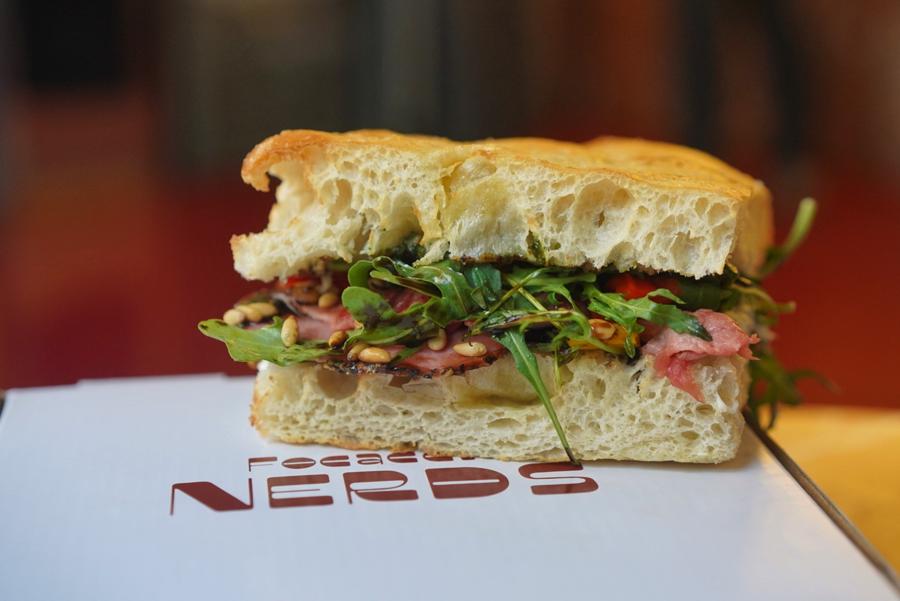
Nerds
Nerds: The draw at Nerds is straightforward: oversized sandwiches stacked on house-made focaccia. Fillings change, but the combination of freshly baked bread, substantial portions, and creative sandwich construction makes this one of Shanghai’s better stops when only an aggressively carb-heavy lunch will do.
111 Xikang Lu, 西康路111号

Kebaba
Kebaba: A late-night specialist in European-style kebabs, Kebaba serves the kind of gloriously messy combination of grilled meat, vegetables, sauces, and bread that tastes particularly good after several drinks. It is less about culinary ceremony than satisfying a very specific craving – and does that job exceptionally well.
6-98-1 Yanping Lu, 延平路98号6幢98-1室
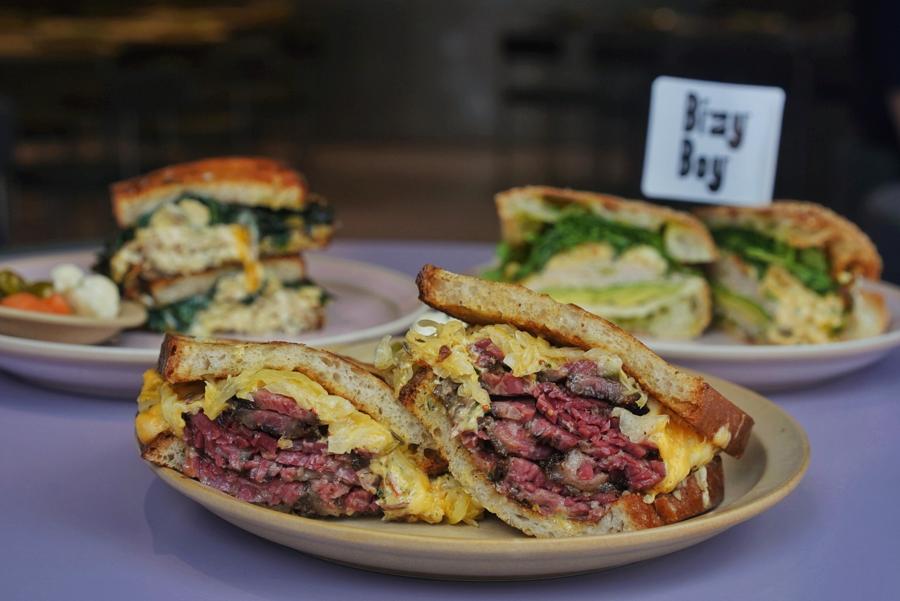
BizyBoy
BizyBoy: BizyBoy is a daytime sandwich and pasta shop where chef Jeremy (previously of Mavis and Netta) channels fine-dining-level attention into decidedly unfussy comfort food. The enormous sandwiches are the main draw, particularly the brisket and sauerkraut number layered with tender beef, pickles, and plenty of melted cheese, while seasonal pastas round out the menu. Portions border on comically generous, queues are common, and popular sandwiches can sell out early – so this is one lunch where procrastination rarely pays off.
Bldg 10, 546 Yuyuan Lu, Jing’an District, 静安区愚园路546号10号楼

Eli Falafel
Eli Falafel: Founded by Lebanese restaurateur Wael Accad, Eli Falafel has grown from a neighborhood falafel shop into one of Shanghai’s most established destinations for Lebanese food. The expansive menu goes well beyond its namesake, covering hummus and mezze, shawarma, kibbeh, sambousek, grilled meats, stuffed vine leaves, Lebanese-style pizzas, and homemade sweets. The falafel – made with chickpeas, fava beans, herbs, and spices – remains a signature, but come with a group so you can cover the table in dips, hot pita, mezze, and mixed grills. Generous portions and plenty of vegetarian options make it an especially easy crowd-pleaser.
Room 107, 1/F, 686 Jiujiang Lu, Huangpu District, 黄浦区九江路686号1楼107室

So Mezze
So Mezze: Designed around sharing, So Mezze focuses on Turkish and Eastern Mediterranean cooking, spanning cold and hot mezze through grilled, meat-heavy mains. Gather a group, cover the table in dips, bread, vegetables, and grilled meats, and order accordingly.
Shankang Li, 358 Kangding Lu, by Shanxi Bei Lu, 康定路358号, 近陕西北路

Porto Matto
Porto Matto: One of Shanghai’s enduring Italian restaurants, family-run Porto Matto has been serving traditional Italian cooking since 2014 under chef-owner Roberto Bernasconi. The menu leans heavily toward Puglia, drawing on recipes and techniques Bernasconi learned from his family, with many breads, pastas, cheeses, and other components made in-house. Slow-fermented focaccia Barese, handmade orecchiette, seafood pasta, and rustic southern Italian dishes are the reason to visit. In a city awash with polished Italian restaurants, Porto Matto remains refreshingly personal and rooted in tradition.
2/F, 83 Changshu Lu, Jing’an District, 静安区常熟路83号2楼

La Diosa
La Diosa: Housed inside the historic Mansion Hotel on Xinle Lu, La Diosa is an exuberant celebration of Mexican food, agave spirits, and feminine power. Colorful, maximalist interiors set the stage for tacos and other Mexican favorites alongside a particularly strong tequila- and mezcal-focused drinks program. The atmosphere is deliberately festive rather than precious, making this as much a place for margaritas and a night out as dinner. Grab a seat outdoors when the weather cooperates, order liberally for the table, and let the tequila take it from there.
1/F, 82 Xinle Lu, Xuhui District, 徐汇区新乐路82号1楼

Shankang Li
Shanking Li is a complex in the Jing’an neighborhood with a myriad of Western restaurants and bars. On weekends, it turns into a lively block party of sorts.
358 Kangding Lu, by Shanxi Bei Lu, 康定路358号, 近陕西北路
The Former French Concession: This area is brimming with cute shops, boutiques, cafés, and restaurants. The main area for a stroll is along Anfu Lu and Wuyuan Lu where each intersects with Wulumuqi Lu.

Aster
Aster: Contemporary cooking with a French backbone anchors the menu at Aster, where globally inspired flavors are filtered through polished European technique. The food is refined without feeling overly formal, making this a strong option for diners looking for creative Western cooking without committing to the ceremony of a full tasting-menu experience.
Aster, No. 208, 130 Yongyuan Lu, by Wulumuqi Zhong Lu, 永远路130号208室

Scarpetta
Scarpetta: A longtime Shanghai Italian institution, Scarpetta specializes in handmade pasta, crisp, airy pizzas, and polished pan-Italian cooking in a warm two-story dining room. The name refers to the Italian tradition of using bread to mop up the final traces of sauce – an appropriate philosophy for a restaurant where sauces are very much part of the appeal. This is an enduring date-night favorite that has managed to remain relevant despite Shanghai’s constantly changing restaurant landscape.
33 Mengzi Lu, Huangpu District, 黄浦区蒙自路33号

Coquille
Coquille: Scarpetta’s seafood-focused sister restaurant leans French in technique while maintaining the same polished-but-approachable sensibility. Oysters, shellfish, seafood towers, fish, and more indulgent plates make this an ideal “treat yourself” restaurant, particularly because the quality-to-price ratio remains comparatively reasonable for Shanghai’s upper-end seafood category.
29–31 Mengzi Lu, Huangpu District, 黄浦区蒙自路29–31号

Juke
Juke: A modern wine bar built for lingering, Juke combines an interesting bottle selection with shareable food and a relaxed neighborhood atmosphere. It is particularly good for drinkers who want a wine-focused night without the stiffness sometimes associated with more traditional wine bars.
11 Dongping Lu, Xuhui District, 徐汇区东平路11号-102

The Merchants
The Merchants: The Merchants describes its cooking as “third culture cuisine,” combining Chinese ingredients and culinary references with Western techniques in a way that reflects the cross-cultural experience of contemporary Shanghai. During the day, the space operates with more of a café feel; by evening, food and an extensive wine selection take center stage.
52 Yongfu Lu, by Fuxing Zhong Lu 永福路52号, 近复兴中路

MONA
MONA: Located on the ground floor of Fotografiska Shanghai along Suzhou Creek, MONA is a Mediterranean-inspired bistro with a decidedly Asian – and often spicy – streak. Chongqing-born chef Mandy draws on more than a decade of experience to pair European bistro sensibilities with Chinese ingredients and flavors, while an applewood-fired grill and wood-fired oven anchor the menu. Nearly 100 natural wines, a walk-in wine cellar, and a lively terrace make it equally appealing for a leisurely lunch before an exhibition or dinner and drinks after one.
127 Guangfu Lu, Jing’an District, 静安区光复路127号

La Bourriche 133
La Bourriche 133: Dedicated entirely to seafood, La Bourriche 133 takes a globe-trotting approach to the ocean, drawing inspiration from coastal cuisines while sourcing premium seafood from waters around the world. Executive chef Lee Jia Wei applies contemporary techniques without losing sight of the ingredient itself, resulting in a refined tasting-menu experience that feels more sea-to-table than traditionally French fine dining. Opened in 2023, it has quickly accumulated accolades, including a Michelin star and the No. 48 spot on Asia’s 50 Best Restaurants 2026.
133 Yuanmingyuan Lu, Huangpu District, 黄浦区圆明园路133号

Fathom
Fathom: Russian chef Evgeny Vikentev takes a seafood-forward approach to contemporary fine dining at Fathom, weaving Russian culinary references into a polished international tasting experience. Premium seafood, caviar, and technique-heavy dishes dominate the menu, backed by an unusually extensive Champagne and caviar selection. Come here when the goal is indulgence rather than restraint.
5/F, No. 201 Hankou Lu, 外滩街道汉口路201号5层

Ting
Ting: One of Shanghai’s more unconventional fine-dining experiences, Ting describes its cooking as “pastry cuisine,” applying techniques more commonly associated with pâtisserie to savory dishes. The intimate omakase-style set menu plays with lamination, dough, fermentation, fillings, and other pastry methods in unexpected ways, resulting in a meal that feels part dinner, part culinary experiment.
245 Madang Lu (above VERIE Bakehouse), 马当路245号新天地时尚IIL1层L108(从沿街VERIE Bakehouse进入)

8 1/2 Otto e Mezzo Bombana
8 1/2 Otto e Mezzo Bombana: Chef Umberto Bombana’s two-Michelin-starred Bund restaurant is one of Shanghai’s benchmark Italian fine-dining experiences. The menu celebrates luxurious Italian ingredients through refined, ingredient-driven cooking, with handmade pasta, premium seafood, meat, seasonal white truffles, and an extensive Italian wine cellar. This is firmly a special-occasion restaurant – both in experience and price.
6–7/F, Mission Building, 169 Yuanmingyuan Lu, Huangpu District, 黄浦区圆明园路169号协进大楼6–7楼
Craving pizza? Here is a list of Shanghai's best pizza spots, and here is a global guide to pizza and where to try it in Shanghai.
Craving burgers? Here is a guide to Shanghai's best burgers.
Craving sandwiches? Here and here are guides to Shanghai's best sandwiches.
Craving pasta? Here and here are guides to Shanghai's best pasta.
Craving American BBQ? Here is a guide to Shanghai's best American BBQ.
Craving tacos? Here is a guide to Shanghai's best tacos.
Craving steak? Here is a guide to Shanghai's best steakhouses.
Craving eggs? Here is a guide to Shanghai's best yolk porn.
Craving tartare? Here is a guide to Shanghai's best tartares.
Looking for a patio or terrace to soak up some sun? Here is a guide to Shanghai's best terraces.

味香斋 (Wei Xiang Zhai)
味香斋 (Wei Xiang Zhai): This enduring Shanghai noodle institution is famous for majiang mian – springy noodles liberally coated in an intensely nutty sesame paste sauce – alongside wontons and other inexpensive local staples. The room is no-frills, turnover is fast, prices are low, and there is almost always a crowd. Exactly as it should be.
14 Yandang Lu, Huangpu District, 黄浦区雁荡路14号

法华汤包馆 (Fa Hua Tang Bao Guan)
法华汤包馆 (Fa Hua Tang Bao Guan): One of my favorite places in Shanghai for xiaolongbao, this tiny neighborhood shop serves delicate soup dumplings with thin skins encasing piping-hot broth and savory pork filling. It is resolutely local, inexpensive, and unpolished – the kind of place you visit for the dumplings rather than the décor.
503 Fahuazhen Lu, 法华镇路503号
麟笼坊 (Ling Long Fang) : A longstanding xiaolongbao specialist, Ling Long Fang is prized for freshly steamed soup dumplings with thin wrappers and generous fillings. Less internationally famous than some of Shanghai’s headline dumpling shops, it remains a reliable local option for experiencing the city’s most iconic dumpling.
338 Zhapu Lu, 乍浦路338号

佳家汤包 (Jia Jia Tangbao)
佳家汤包 (Jia Jia Tangbao): One of Shanghai’s best-known xiaolongbao specialists has spent decades doing essentially one thing extremely well: freshly made soup dumplings. The classic pork version is the benchmark, while the crab and crab roe dumplings are worth ordering when available. Expect a simple dining room, fast turnover, and a queue – this is about consistency rather than atmosphere.
127 Huanghe Lu, Huangpu District, 黄浦区黄河路127号
黄阿姨锅贴大王 (Ayi Huang Guotie Dawang): Come hungry for guotie and shengjianbao – two glorious examples of Shanghai’s affection for putting juicy meat inside dough and introducing it to a ripping-hot pan. The potstickers emerge deeply crisp underneath while retaining plenty of juice, while shengjianbao offer a breadier, fluffier contrast beneath their similarly bronzed bottoms.
174 Wanhangdu Lu by Xinzha Lu, 万航渡路174号近新闸路
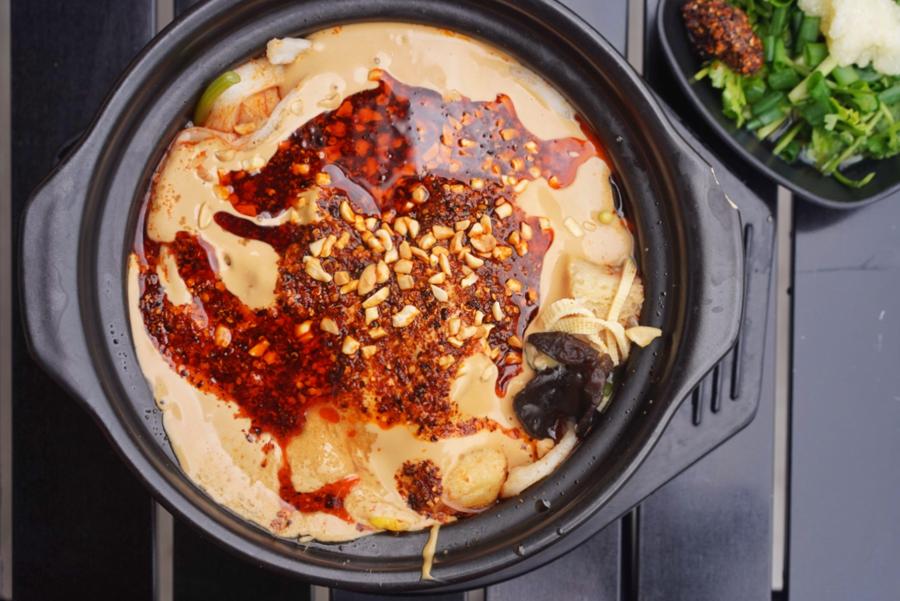
王小灶砂锅麻辣烫东北炸串 (Wang Xiaozao Shaguo Malatang Dongbei Zha Chuan)
王小灶砂锅麻辣烫东北炸串 (Wang Xiaozao Shaguo Malatang Dongbei Zha Chuan): Malatang is essentially choose-your-own-adventure dining: select skewers of vegetables, tofu, mushrooms, noodles, meat, and other ingredients before having the lot cooked together in a bubbling, numbing-spicy broth. Here, the finished bowl gets a generous slick of sesame paste, tempering the chile and Sichuan peppercorn heat with rich nuttiness.
580 Lingshi Lu, 灵石路580号

千平平面店·爆炒小馆
千平平面店·爆炒小馆 (Qian Ping Ping Mian Dian): This Chongqing noodle specialist does not hold back on heat. The star is pugaimian, or “blanket noodles” – enormous sheets of hand-stretched dough draped through a fiery broth and paired particularly well with slow-braised beef. Come prepared for chile oil, Sichuan peppercorns, sweat, and a very satisfying carb coma.
167 Jiangning Lu, 江宁路167号
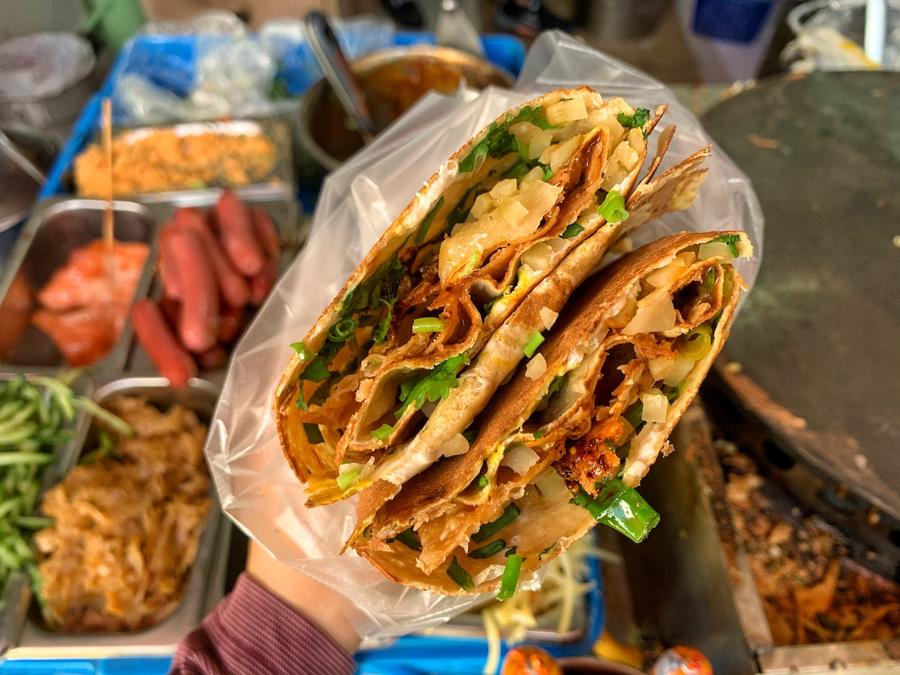
Jianbing
Jiangbing: More dish than destination, jianbing is one of China’s quintessential grab-and-go breakfasts and is best eaten from whatever neighborhood stall happens to have a morning queue. A thin mung-bean-and-wheat crepe is cooked to order with egg, scallions, cilantro, chile, savory sauces, and a crisp cracker folded inside. Think of it as a Chinese breakfast burrito – if the burrito were crisp, savory, spicy, and usually cost pocket change.

Cila
Cila: Think Western Chinese food coupeled with some Western cuisine techniques at this trendy wine bar bistro. Expect lots of lamb, a dusting of cumin in all dishes, a lot of spice, and mouth-watering hand-pulled biang biang noodles.
122 Wulumuqi South Lu, by Yongjia Lu 乌鲁木齐南路122号, 近永嘉路
San Bai Bei
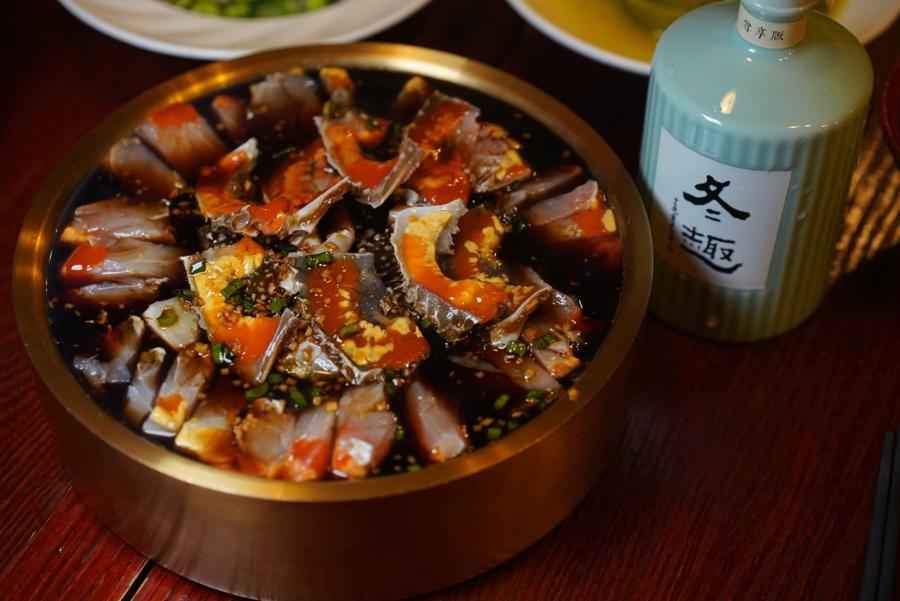
San Bai Bei: Think of San Bai Bei as a Ningbo seafood izakaya: lively, casual, and built around ultra-fresh seafood flown in daily from the coastal region south of Shanghai. The menu celebrates the briny, umami-rich flavors associated with Ningbo cooking in a setting geared toward drinking and sharing.
328 Huashan Lu, 华山路328号

Alea
Alea: Located beneath Michelin-starred Fabula, Alea takes chef Zee Zheng’s East-meets-West cooking and loosens the collar. The intimate 20-seat neo-bistro pairs French technique with ingredients, recipes, and culinary memories from Ningbo and the wider Yangtze River Delta, resulting in dishes that are playful without becoming gimmicky. A signature “risotto,” for example, replaces Italian rice with diced Ningbo rice cake and pairs it with briny sea anemone. Unlike Fabula’s set-menu format, dishes here are designed for sharing, backed by an excellent wine list heavy on French bottles.
720 Weihai Lu, Jing’an District, 静安区威海路720号

Fabula
Fabula: Michelin-starred Fabula describes its cuisine as “Neo-Sino-French,” but the concept is considerably more personal than that label suggests. Chef-owners Zee Zheng, Charles, and Ricky hail from Ningbo, Foshan, and Shanghai respectively, weaving memories of their hometowns and years spent abroad into a tightly constructed tasting menu grounded in French technique. Dinner unfolds around an open kitchen in a room designed more like a friend’s living room than a formal fine-dining restaurant, with thoughtful Chinese references appearing throughout. Even the opening bite of rice is intentional – a comforting nod to home before the story begins.
2–3/F, 720 Weihai Lu, Jing’an District, 静安区威海路720号2–3楼

Fu He Hui
Fu He Hui: One of Shanghai’s most acclaimed vegetarian restaurants, Fu He Hui builds intricate tasting menus entirely around vegetables, fungi, grains, tofu, and other Chinese ingredients rather than imitation meat. The cooking is subtle, highly seasonal, and deeply produce-driven, complemented by an excellent Chinese tea program. Even committed carnivores should consider this one of the city’s essential fine-dining experiences.
1037 Yuyuan Lu, Changning District, 长宁区愚园路1037号
Ling Long
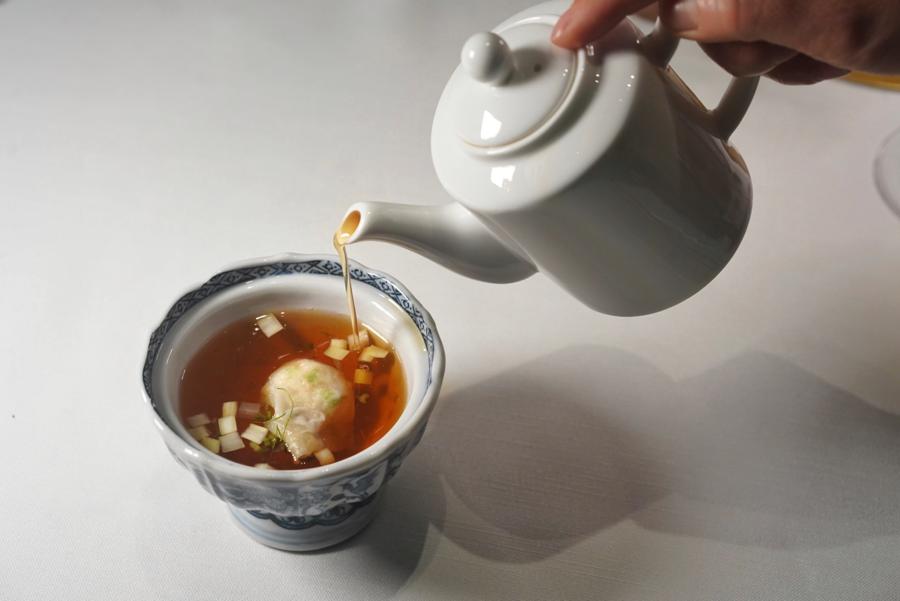
Ling Long: Chef Jason Liu’s award-winning contemporary Chinese restaurant explores regional flavors through the central idea of xian – the deeply savory quality often translated as umami. The tasting menu pulls references from across China and reworks them through modern technique, playful presentation, and meticulous sourcing, making Ling Long one of Shanghai’s strongest examples of progressive Chinese fine dining.
2 Zhongshan Dong Yi Lu, by Guangdong Lu, 中山东一路2号外滩华尔道夫酒店,近广东路
Meet the Bund
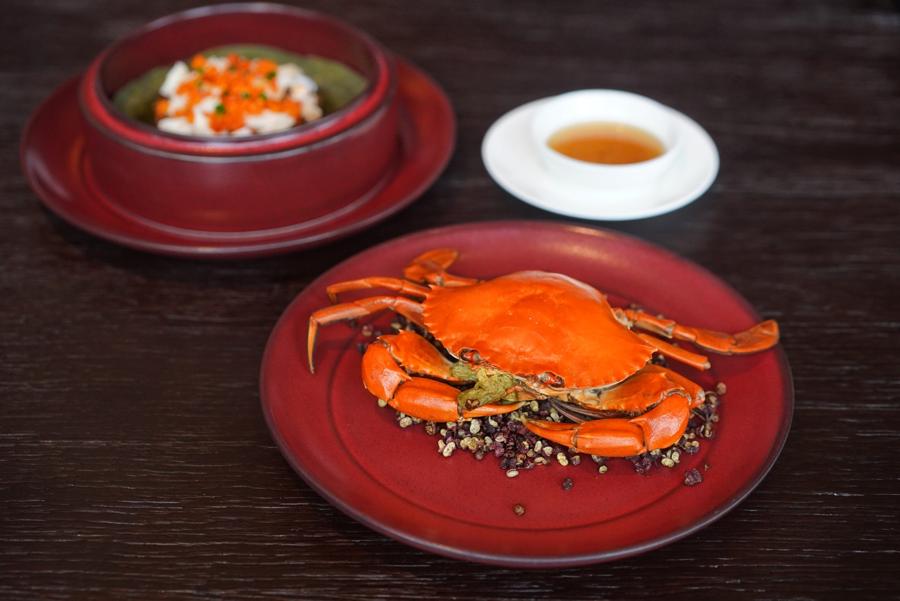
Meet the Bund 遇外滩: One of Shanghai’s most acclaimed regional Chinese restaurants, Meet the Bund makes a compelling case for the complexity of Fujian cuisine. Chef Chen Zhiping and a kitchen team drawn from Fujian showcase the province through exceptional seafood, deeply layered broths, soups, stews, and traditional preparations refined for a contemporary dining room. The signature duck essence – produced by steaming a whole duck for hours and collecting its concentrated juices without adding water – encapsulates the kitchen’s approach to extracting maximum flavor from deceptively simple ingredients. An extensive Fujian tea selection rounds out the experience.
S301, 3/F, South Mall, Bund Finance Center, 600 Zhongshan Dong Er Lu, Huangpu District, 黄浦区中山东二路600号外滩金融中心南区商场3楼S301

YEN
YEN: Perched inside W Shanghai – The Bund, YEN presents contemporary Cantonese and regional Chinese cooking against sweeping views of the Huangpu River and Pudong skyline. The weekend free-flow dim sum brunch is particularly popular, pairing unlimited-style dim sum and Cantonese dishes with drinks and one of the more dramatic dining-room views in the city.
W Shanghai – The Bund, 538 Lushun Lu, Hongkou District, 虹口区旅顺路538号上海外滩W酒店

Yong Fu
Yong Fu 甬府: One of Shanghai’s definitive destinations for high-end Ningbo cuisine, Yong Fu has spent more than a decade championing the seafood-heavy cooking of Zhejiang’s eastern coast. Wild-caught seafood arrives daily from Ningbo and the East China Sea, with seasonality dictating much of the menu – think yellow croaker, white crab, razor clams, shrimp, and other pristine seafood prepared with remarkable restraint. The Huangpu location occupies the historic Cathay Building at Jin Jiang Hotel, lending plenty of old-Shanghai grandeur to a meal firmly rooted in Ningbo tradition.
11–12/F, Cathay Building, Jin Jiang Hotel, 59 Maoming Nan Lu, Huangpu District, 黄浦区茂名南路59号锦江饭店峻岭楼11–12楼
Sheng Yong Xin: This refined Beijing restaurant is best known for Peking duck roasted over jujube wood, presented whole before being expertly carved tableside. Crisp lacquered skin, juicy meat, delicate pancakes, and all the traditional accompaniments are backed by an unusually serious wine program. The Bund location adds panoramic Pudong views, making this one of Shanghai’s more extravagant ways to experience Peking duck.
5/F, Bund 5, 20 Guangdong Lu, Huangpu District, 黄浦区广东路20号外滩五号5楼
Craving dumplings? Here is a guide to China's dumplings and where to find them in Shanghai. Here is a guide to global dumplings and where to find them in Shanghai. And here is a guide to the wildest xiaolongbao in Shanghai.
Craving bing? Here is a guide to Shanghai's bing and where to find them.
Craving scallion oil noodles? Here is a guide to Shanghai's best scallion oil noodles.
Craving local noodles? Here are some great options: Part 1, Part 2, Part 3, Part 4, Part 5, Part 6.
Craving contemporary Chinese? Here is a guide to contemporary Chinese cuisine in Shanghai.
Craving higher-end progressive Chinese? Here is a guide to Chinese fine dining establishments embracing & reinterpreting Chinese flavors
Craving Xinjiang food? Here is a guide to where to eat the best Xinjiang food in Shanghai.
Craving salted egg yolk treats? Here is a guide to where to eat salted egg yolk creations in Shanghai.
Rambu
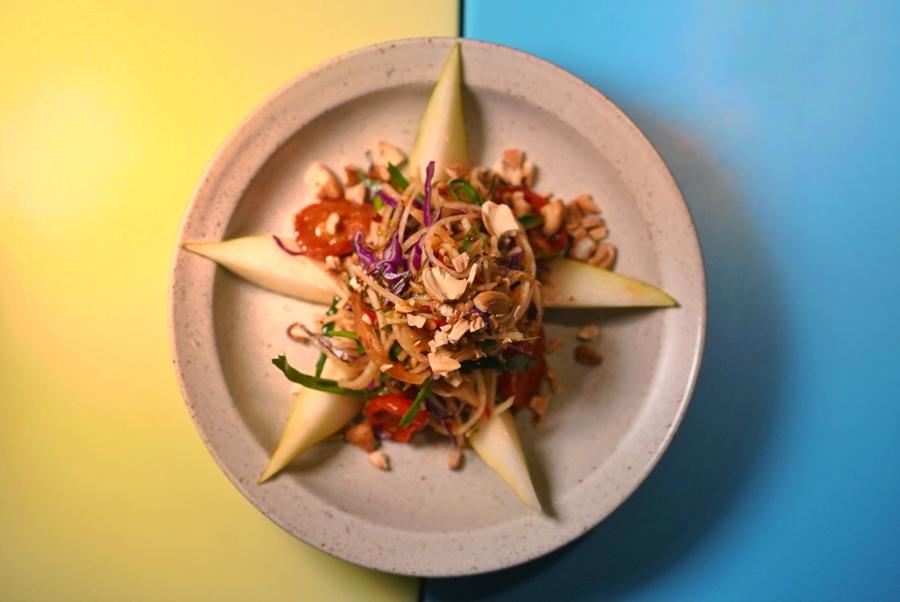
Rambu: Chef Jun Nishiyama draws on his Japanese heritage and upbringing across Southeast Asia at this lively neighborhood restaurant dedicated to the comfort foods of the region. Rather than adhering to one country or cuisine, the menu bounces between familiar flavors from Thailand, Malaysia, Singapore, Indonesia, Japan, and beyond, interpreted through Nishiyama’s own memories and culinary perspective. Bold flavors, generous portions, and an approachable price point make Rambu particularly good for groups – and one of Shanghai’s most consistently buzzy casual restaurants.
966 Wuding Lu, Jing’an District, 静安区武定路966号

Madame Ching
Madame Ching: Chef Derek “Dali” Wong deconstructs and rebuilds Cantonese cuisine at this playful restaurant inspired by the legendary 19th-century pirate Madame Ching. Traditional Cantonese flavors collide with Western techniques and influences collected from around the South China Sea, resulting in a menu that feels familiar one moment and entirely unexpected the next. A powerful sound system, bold interiors, and The Treasury – a cocktail bar hidden inside the restaurant – add to the rebellious, maritime-inspired experience.
98 Yanping Lu, Jing’an District, 静安区延平路98号

Bastard
Bastard: Hidden down a residential lane in Jing’an, Bastard is a contemporary Chinese bistro and wine bar that riffs playfully on regional Chinese flavors through modern techniques. Dinner revolves around punchy, shareable plates – think white mapo tofu enriched with bone marrow broth, prawn toast, crispy-skinned chicken, and seasonal creations – alongside natural wines and highballs. At lunch, the restaurant shifts gears with its cult-favorite noodle menu, including scallion aburasoba and wonton noodles. Small, energetic, and effortlessly cool, this is modern Shanghai dining at its most fun.
Room 102, Bldg 30, Lane 319 Jiaozhou Lu, Jing’an District, 静安区胶州路319弄30号102室

Nono's
Nono's: From the team behind Yaya’s comes Nono’s, a playful Italian-Chinese restaurant that takes the fusion philosophy of its pasta-focused sibling and expands it across a broader menu. Familiar Italian preparations become a canvas for Chinese regional ingredients and flavor profiles, resulting in dishes that feel inventive without veering into novelty for novelty’s sake. The lively, personality-driven space also has a strong cocktail program and turns up the energy with late-night weekend service.
2/F, 47 Yongfu Lu, Xuhui District, 徐汇区永福路47号2楼

NABI
NABI: Meaning “butterfly” in Korean, NABI uses metamorphosis as a metaphor for chef Tom Ryu’s contemporary interpretation of Korean cuisine. The intimate, dramatically lit restaurant seats diners around an open kitchen, where a single tasting menu transforms recognizable Korean flavors through modern techniques and meticulous presentation. Expect a highly choreographed progression of dishes that might incorporate handcrafted noodles, seafood, fermentation, gochujang, and premium seasonal ingredients.
Room 201, Bldg 1, WYSH, 168 Wuyi Lu, Changning District, 长宁区武夷路168号WYSH 1号楼201室

Narisawa
Narisawa: The Shanghai outpost of chef Yoshihiro Narisawa’s acclaimed Tokyo restaurant brings his signature satoyama philosophy – an exploration of the relationship between food, nature, and sustainability – to China. The seasonal tasting menu is rooted in Japanese culinary traditions, refined through Western techniques, and relies heavily on Chinese produce. The restaurant’s famous “Bread of the Forest,” fermented and baked tableside in a stone pot, remains one of its defining courses.
L7-05, 1000 Trees, 600 Moganshan Lu, Putuo District, 普陀区莫干山路600号天安千树L7-05
Craving ramen? Here is a guide to Shanghai's best ramen.
Craving izakaya fare? Here is a guide to Shanghai's best izakayas.
Craving sushi? Here is a guide to Shanghai's best sushi.
Craving Japanese food? Here is a guide to Shanghai's best Japanese food in Gubei.
Craving Thai food? Here is a guide to Shanghai's best Thai food and here is an updated Thai food guide for 2026.
Craving Korean BBQ? Here is a guide to Shanghai's best Korean BBQ.
Craving Asian noodles? Here is a guide to noodles from around Asia and where to try them in Shanghai.

Bar Leone
Bar Leone: he Shanghai sibling of Lorenzo Antinori’s Hong Kong bar – named The World’s Best Bar in 2025 – brings the same “cocktail popolari,” or cocktails for the people, philosophy to Sinan Mansions. The approach deliberately rejects unnecessary theatrics in favor of beautifully executed, deeply drinkable classics and Italian-inspired bar snacks. Downstairs works for a quick aperitivo; upstairs slows things down with aged cocktails and a living-room atmosphere. Expect a queue.
Sinan Mansions, 525–527 Fuxing Zhong Lu, Huangpu District, 黄浦区复兴中路525–527号

Sober Company
Sober Company: Shingo Gokan’s Shanghai institution takes drinkers through several distinct spaces inspired by Japanese drinking culture. Sober Kissa focuses on coffee and tea-inflected cocktails, Sober Izakaya pairs food and drinks, while Sober Sakaba leans into more serious cocktails. The multi-room format makes the experience feel less like visiting one bar and more like progressing through an entire night out without leaving the building.
109 Yandang Lu, Huangpu District, 黄浦区雁荡路109号

Union Trading Co
The Union Trading Co: A Shanghai cocktail institution since 2014, Union has always succeeded at balancing serious bartending with the warmth of an actual neighborhood bar. The frequently changing menu combines inventive signatures with beautifully executed classics, backed by proper American-style bar food. Come for one drink and it is dangerously easy to stay for four.
306 Hengshan Lu, 横山路306号

Pony Up
Pony Up: Small, buzzy, and proudly neighborhood-focused, Pony Up pairs creative but highly drinkable cocktails with bar food good enough to warrant a visit on its own. The menu plays confidently with unexpected ingredients without sacrificing drinkability, while corn dogs, patty melts, and the now-famous chocolate chip cookie make a compelling argument for drinking on a full stomach.
230 Jinxian Lu, 进贤路230号
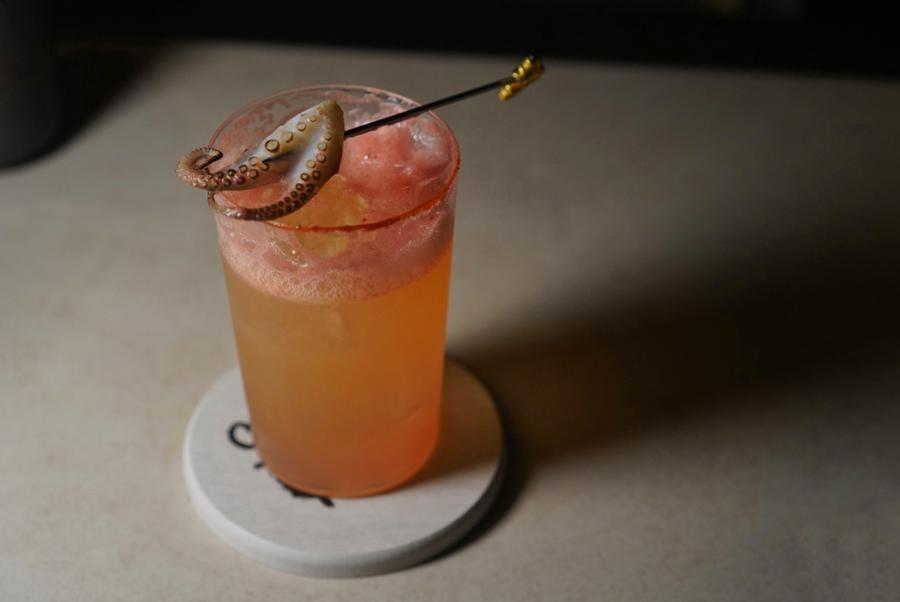
Sting & Honey
Sting & Honey: Underground bartender Bee runs this dimly lit dram den with a decidedly unconventional approach to cocktails. Drinks are made individually rather than pre-batched and arranged from lighter to heavier styles, with creations such as a Hot Dog Old Fashioned, Korean Paloma, and Salmon Martini proving that very little is considered off-limits.
4/F, 318 Julu Lu, 巨鹿路318号4楼

Bar Blanc
Bar Blanc: Restraint is the guiding principle at Bar Blanc, where clean, straightforward cocktails prioritize balance and drinkability over elaborate garnishes or unnecessarily complicated techniques. The result is a menu of polished, smashable drinks in a minimalist setting.
542 Julu Lu, by Shanxi Nan Lu, 巨鹿路542号, 近陕西南路

Coa
Coa: Jay Khan’s acclaimed Hong Kong agave bar expanded to Shanghai with an ambitious four-story temple to tequila, mezcal, and other agave spirits. Each floor offers a different experience and drinks become progressively more spirit-forward as you climb, culminating in the top-floor Mezcaleria. Even serious agave drinkers are likely to discover something unfamiliar here.
580 Fuxing Zhong Lu, Huangpu District, 黄浦区复兴中路580号
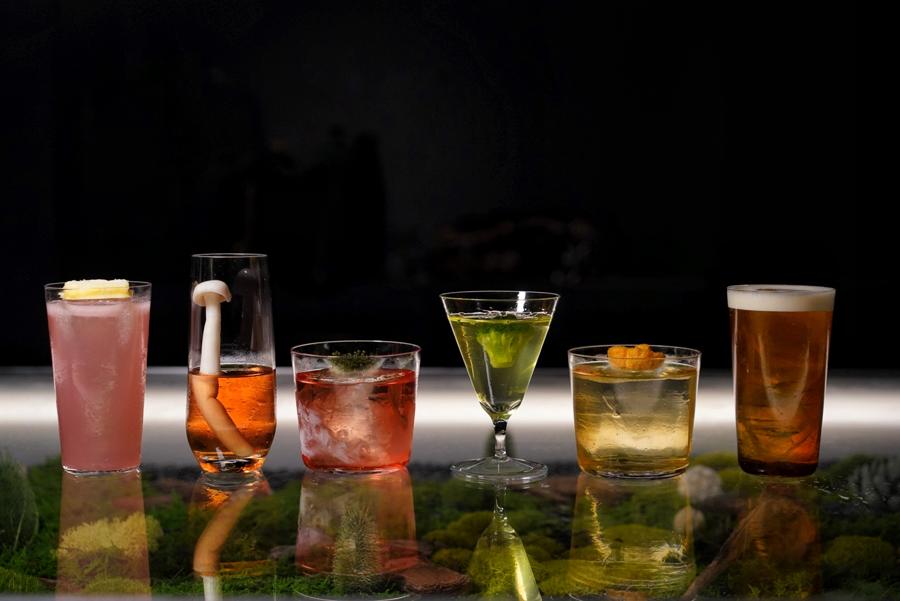
Penicillin
Penicillin: This Shanghai sibling of Hong Kong’s sustainability-driven cocktail bar approaches drinking like a delicious science experiment. The closed-loop philosophy transforms kitchen scraps, fermentation, by-products, and locally sourced ingredients into technically ambitious cocktails designed to reduce waste without making sustainability feel like homework.
62 Nanchang Lu by Sinan Lu, 南昌路62号近思南路
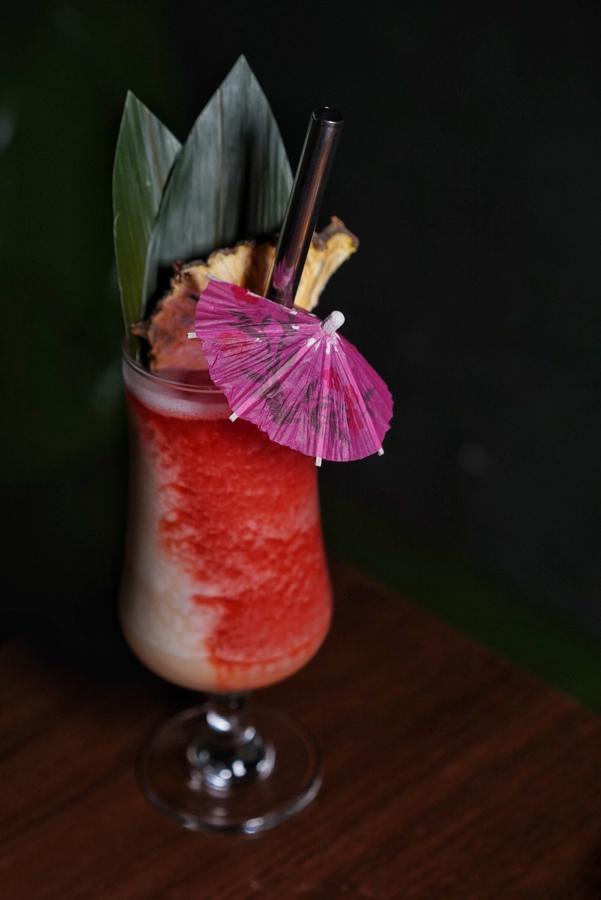
Alma Luna
Alma Luna: From Yao Lu, the celebrated bartender behind Union Trading Company, comes this sultry ode to mid-century Havana and, more importantly, rum. Alma Luna trades Union’s rambunctious energy for a more intimate, 45-seat drinking den designed for lingering over cocktails and conversation. The rum-focused menu moves between Cuban classics and playful contemporary creations – think sharply executed daiquiris, an El Presidente, and the frozen Miami Vice, half strawberry daiquiri and half piña colada. The Cuban-inspired food deserves attention too, particularly the gloriously overstuffed Cubano sandwich.
17 Xiangyang Bei Lu, Jing’an District, 静安区襄阳北路17号

Paal
Paal: Intimate and experimental, Paal channels Cantonese culinary memories and ingredients into cocktail form. The drinks often feel closer to dishes than conventional cocktails, translating familiar flavors through infusions, distillation, clarification, and other modern techniques.
94 Nanchang Lu, Huangpu District, 黄浦区南昌路94号

Gallow's Humor
Gallow’s Humor: Part cocktail bar, part subterranean rave, Gallow’s Humor combines serious drinks with techno, psychedelic lighting, and a deliberately disorienting dungeon-like aesthetic. The cocktails are as unconventional as the room, making this one for drinkers who prefer their bar experiences several steps removed from a quiet martini lounge.
35 Shanxi Nan Lu, 陕西南路35号

Triple Neck
Triple Neck: Inspired by the world of Dune, Triple Neck unfolds across three floors, each with its own aesthetic and cocktail menu. Moving vertically through the building is part of the experience, making this one of Shanghai’s more theatrical multi-level drinking concepts.
1750 Xinzha Lu, 新闸路1750号

Bar S-Otto
Bar S-Otto: Hidden behind a door and down a staircase beneath Atelier No. 3, Bar S-Otto bills itself as Shanghai’s first basement speakeasy. Veteran bartender Filippo Sanchi keeps the concept intentionally focused: eight classics, eight signatures, an intimate counter, and plenty of bartender interaction. The name plays on both sotto – Italian for “under” – and otto, meaning eight.
291 Fumin Lu, Jing’an District, 静安区富民路291号

Asian Flush
Asian Flush: Serial barman Allen Fang (previously of Dreamsicle) opened Asian Flush (cheekily named after the red facial “glow” many Asians experience when consuming alcohol) with a menu full of – you guessed it based on the bar’s name – culinary Asian ingredients, like pandan soda, durian distillate, white miso, Sichuan oolong, MSG saline solution, Thai tea, and the list goes on. The candy apple red velour sofas mirror the bedazzled crimson velvet ceiling, contrasted by wood counter and Malay-style wicker chairs, plus leafy plants abound, inviting guests in for another round.
592 Fuxing Zhong Lu, 复兴中路592号

Boo's
Boo’s: Designed to feel more like a friend’s kitchen and living room than a formal cocktail bar, Boo’s splits its menu between riffs on classics and more experimental drinks. Ingredients such as miso, taro, cactus juice, tea, corn, coffee, and Parmesan reinforce the culinary approach, while Chinese-leaning snacks complete the house-party atmosphere.
50-3 Ruijin Er Lu, Huangpu District, 黄浦区瑞金二路50-3号

Bar Rock
Bar Rock: Tibetan culture provides both the visual and flavor vocabulary at Bar Rock, where cocktails incorporate ingredients including highland barley, sea buckthorn, cili fruit, tsampa, and yak butter. Tibetan monastic motifs and ethnic-meets-electronic music complete a concept that feels rooted in a very specific cultural landscape rather than another generic themed cocktail bar.
No. 101, Building 22, 72 Fuxing Zhong Lu, 复兴中路72号22幢101室

Full House by Bar Choice
Full House by Bar Choice: Hangzhou’s West Lake provides the inspiration for everything from the serene design to the cocktail menu at Full House. Longjing tea is the common thread running through every signature drink, allowing the bar to explore one of China’s most celebrated teas through different spirits, techniques, textures, and flavor combinations.
BFC, #106A, Building N1, 73 Renmin Lu, 人民路73号N1栋106A室
Funkadeli: Come to Funkadeli less for cutting-edge mixology and more for the atmosphere. The Italian-style neighborhood bar spills onto the street in warm weather and remains one of the Former French Concession’s most reliable places for a spritz, casual drink, and people-watching – particularly on weekends.
291 Fumin Lu, 富民路291号
Chair Club: A proper live-music dive rather than a polished cocktail bar, Chair Club programs themed music nights spanning genres and styles throughout the week. Drinks are secondary to the performances, the crowd, and the pleasantly unvarnished atmosphere.
34 Yuyao Lu, 余姚路34号
Want even more cocktails? Here are my favorite bars that opened in 2025.
Craving wine. Here and here are guides to Shanghai's best wine bars.

Egg
Egg: One of the original Australian-style cafés to help define Shanghai’s modern brunch culture, Egg remains a reliable neighborhood stop for excellent coffee, egg-centric breakfast plates, toast, pastries, and rotating seasonal dishes. The tiny room fills quickly, particularly on weekends, so arrive early if you want a leisurely breakfast rather than a leisurely wait.
12 Xiangyang Bei Lu, Jing’an District, 静安区襄阳北路12号

TonTon
TonTon: This perpetually busy bakery on Yongkang Lu built its reputation on cinnamon rolls but has expanded into a formidable lineup of sourdough, croissants, kouign-amann, Berliner-style doughnuts, pies, cakes, and oversized sandwiches. The cinnamon rolls still draw the queues and regularly sell out, but the broader pastry counter is reason enough to visit.
176–178 Yongkang Lu, Xuhui District, 徐汇区永康路176–178号

Sloppy Gin
Sloppy Gin: Despite the name, Sloppy Gin is where I go for some of my favorite doughnuts and pastries in Shanghai. The bakery specializes in gloriously indulgent American-style sweets, from stuffed Berliners and glazed crullers to cinnamon rolls and rotating pastries. Seating is limited, so I generally treat this as a grab-and-go sugar stop.
Room 104, 1/F, 425 Yanping Lu, Jing’an District, 静安区延平路425号1楼104室
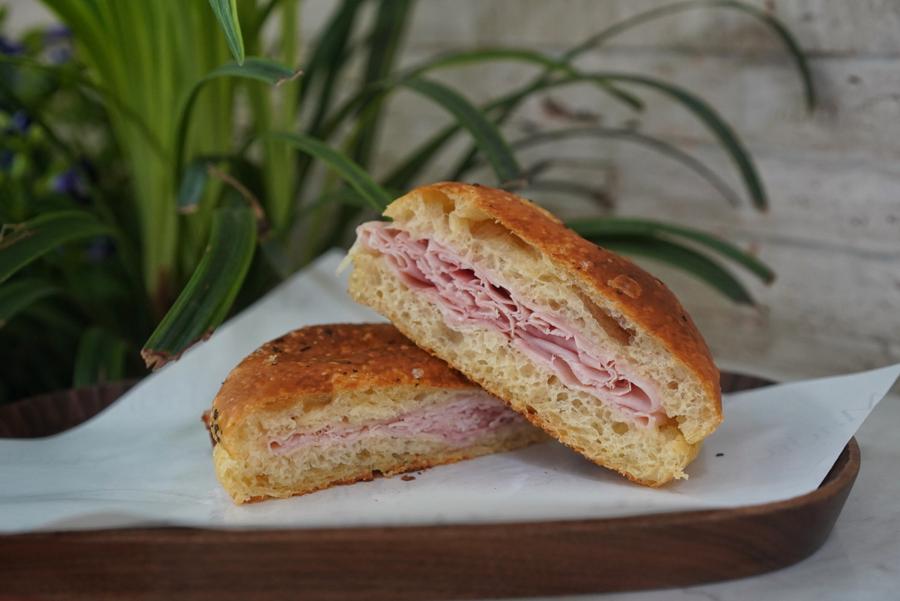
Madre
Madre: From the team behind Michelin-starred Italian restaurant Scilla comes Madre, an Italian neighborhood bakery where the name – “mother” in Italian – neatly captures the philosophy. The focus is on the comforting staples of an Italian pasticceria and panificio: sourdough breads, oversized cornetti, panettone, small cakes, and excellent bomboloni generously filled with jam or custard. The baking is serious, but the experience isn't – arrive early, grab coffee and whatever has just emerged from the oven, and settle into the upstairs room overlooking leafy Panyu Lu. Popular pastries regularly sell out before noon.
504 Panyu Lu, Changning District, 长宁区番禺路504号

Alimentari
Alimentari: Part Italian deli, part café, part wine bar, and part neighborhood pantry, Alimentari has expanded into a Shanghai mini-chain with slightly different personalities across its locations. Expect good coffee, pastries, panini, brunch plates, salumi, cheese, wine, and imported Italian pantry goods at prices that remain remarkably reasonable for the quality. The original Jing’an location is particularly good for a casual breakfast, lunch, or aperitivo.
343 Jiaozhou Lu, Jing’an District, 静安区胶州路343号

FOTY
FOTY: Short for “From Oven to You,” FOTY built an entire bakery around one gloriously buttery obsession: the kouign-amann. Fresh batches emerge from the oven throughout the day, resulting in deeply caramelized pastries with brittle, glass-like exteriors and rich laminated centers. Choose from classic sea salt and cinnamon or whatever seasonal creation happens to be in rotation.
Unit A103, 1107 Yuyuan Lu, Changning District, 长宁区愚园路1107号A103

BasdBan
BasdBan: One of Shanghai’s most design-conscious bakeries, BAsdBAN combines a striking industrial interior with an equally photogenic pastry counter. Croissants are the main event, particularly savory versions such as truffle and ham, alongside pain au chocolat, cakes, rotating laminated pastries, and coffee. It is trendy, yes, but the baking gives you a reason to visit beyond the photos.
546 Yuyuan Lu, Jing’an District, 静安区愚园路546号

Crave
Crave: Equal parts café, bakery, wine bar, and neighborhood hangout, Crave built its following on an enticing pastry counter alongside sandwiches, brunch dishes, coffee, and wine. A DJ booth and serious sound system give the otherwise compact café more personality than your average pastry-and-latte operation, while the patio remains a draw in good weather.
218 Xinle Lu, by Donghu Lu, 新乐路218号, 近东湖路

O'Mills
O’Mills: One of the pioneers of Shanghai’s artisan bread and modern brunch scene, O’Mills was founded in 2018 by chef and food personality Xiao Xiao with fermentation at the heart of its philosophy. Naturally leavened sourdough – fermented for 72 hours using wild yeast – forms the backbone of everything from loaves and open-faced sandwiches to sourdough pizzas, alongside house-made kimchi, kombucha, seasonal dishes, and plenty of vegan and gluten-free options. Now expanded across Shanghai, the original Yongjia Lu bakery and bistro remains an easy choice for a leisurely breakfast, brunch, or loaf to take home.
110 Yongjia Lu, Xuhui District, 徐汇区永嘉路110号
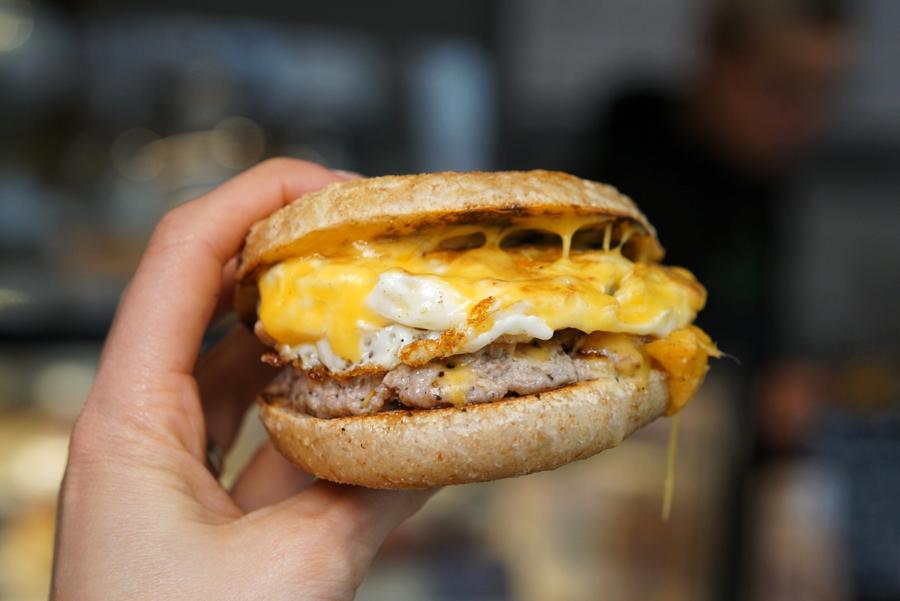
Moofin
Moofin: This compact bakery specializes in French-leaning pastries and satisfying breakfast sandwiches, making it an easy stop for a quick morning meal. The pastry case changes, but expect laminated doughs, fruit-filled pastries, and other classic European bakes executed with a contemporary Shanghai sensibility.
699 Jiangning Lu, by Haifang Lu, 江宁路699号, 近海防路
Shanghailander: Shanghailander bridges European pastry technique and distinctly Asian flavor profiles. Croissants, mille crêpes, cheesecakes, and coffee become vehicles for black sticky rice, brown sugar pearls, preserved mustard greens, matcha, and – most memorably – intensely savory salted duck egg yolk sourced from Yangzhou. Come here when a plain butter croissant simply feels too predictable.
92 Wuyuan Lu, Xuhui District, 徐汇区五原路92号
Got a sweet tooth? Here are guides to:
READ MORE: 48 Hours in Shanghai: What to Do, Eat, Drink, and Explore
Visiting Hong Kong? Here's a similar guide to Hong Kong's best restaurants and bars.
Visiting Shanghai? Here's a similar guide to Shanghai's best restaurants and bars.
Visiting Phnom Penh? Here's a similar guide to Phnom Penh's best restaurants and bars.
Visiting Macau? Here's a similar guide to Macau's best restaurants and bars.
Visiting Taipei? Here's a similar guide to Taipei's best restaurants and bars.
Visiting Shenzhen? Here's a guide to Shenzhen's top 5 must visit destinations.
Visiting Bangkok? Here's a similar guide to Bangkok's best restaurants and bars.

My name is Sophie Steiner, and welcome to my food-focused travel blog. This is a place to discover where and what to eat, drink, and do in Shanghai, Asia, and beyond. As an American based in Shanghai since 2015 as a food, beverage, travel, and lifestyle writer, I bring you the latest news on all things food and travel.
Your email address will not be published.
Be the first to comment!

Sign up for tips on the latest Shanghai openings, and other food, beverage, and travel content
© 2026 Sophie Steiner
Privacy Policy