Show Us Your Best Noods! 7 Bowls of Chinese #PastaPorn – Part VI
Slurping up Shanghai’s local noodle scene
October 16, 2026
From the ashes of The Cannery rises a Korean BBQ comeback worth raising a glass (or six) to. With premium Uruguayan wagyu, fiery Korean comfort food, free-flow booze, and a hip-hop-heavy soundtrack, JUJU is turning up the heat on Yuyuan Lu.
Some restaurants are made for intimate conversations, candlelit dinners, and civilized sipping. Others are made for sizzling slabs of meat, overflowing glasses of soju, and shouting the lyrics to Biggie Smalls between bites of bulgogi.
JUJU is decidedly the latter.
After a five-year hiatus, Shanghai’s beloved Korean BBQ party spot is back, bringing its signature brand of grill-and-ganbei debauchery to the former home of The Cannery on Yuyuan Lu.
And while the address has changed, the philosophy remains gloriously intact: come hungry, bring friends, drink generously, and don’t expect to leave smelling like anything other than charcoal and questionable decisions.
For longtime Shanghai residents, JUJU needs little introduction. Originally launched in 2019 at Three on the Bund, the restaurant was the brainchild of Canadian restaurateur Mark Klingspon, whose Shanghai hospitality résumé includes The Nest, The Cannery, and Rye & Co.
At a time when the Bund was synonymous with white tablecloths and wallet-emptying fine dining, JUJU took a decidedly different approach.
Housed in the former Chi-Q space, originally designed by Neri & Hu, the restaurant traded polished sophistication for graffiti-covered walls, retro arcade games, self-service booze fridges, and an unapologetically rowdy atmosphere. There was free-flow Korean BBQ, inexpensive drinks, plenty of soju bombs, and a soundtrack heavy on old-school hip-hop.
It was chaotic, convivial, and refreshingly unpretentious.
Unfortunately, the timing wasn’t ideal. COVID and changing circumstances on the Bund brought the party to a premature end in 2020. But Klingspon never quite got JUJU out of his system.
“JUJU always felt like a job unfinished…like the right thing at the wrong time,” he explained while searing a fat-laced slab of short ribs over open flame. “Now that Korean food has really hit its stride in Shanghai, we feel those vibes that set us apart previously still give us a place to play.”
Fast-forward to 2026, and the closure of The Cannery after a decade on Yuyuan Lu presented an opportunity to resurrect the concept. For Klingspon, who spent two years working in Seoul before moving to Shanghai, the inspiration remains deeply personal.
JUJU pays homage to Korea’s backstreet barbecue joints and tent bars, where grilled meat, generous pours, and late-night revelry go hand in hand. Think less Gangnam glamour, more Seoul after dark.
Joining Klingspon in JUJU’s second coming is Buenos Aires native Luis of UYYU Uruguay Wagyu, who brings some serious beef credentials to the table as the (un) official “Beef and Ganbei Director.”
Together with his business partner Jackie, Luis operates a vertically integrated wagyu operation in Uruguay, overseeing everything from cattle breeding and genetics to the finished product. Rather than simply importing premium beef, UYYU controls the supply chain from farm to fork.
At JUJU, that translates into a carefully curated selection of Uruguayan wagyu, with six different cuts incorporated across approximately 14 dishes. But this isn’t simply a case of importing expensive beef and throwing it on a grill.
The menu takes inspiration from the team’s international backgrounds, blending Korean barbecue traditions with South American grilling culture and the occasional North American comfort-food classic. Take the restaurant’s Korean-inspired chimichurri, which swaps the usual South American herb combination for fragrant kkaennip leaves and kombu. Or the K-Poutine (RMB68), a playful tribute to Klingspon’s Canadian roots and a cheeky nod to The Cannery’s former menu, featuring fries loaded with bulgogi and kimchi.
It’s an unlikely culinary marriage, but one that makes perfect sense in a city like Shanghai, where cultural crossovers are practically a local specialty.
Naturally, meat takes center stage.
JUJU’s menu runs the gamut from Korean BBQ staples to premium wagyu cuts, charcoal-grilled pork, bubbling stews, fiery chicken, and all manner of carb-heavy Korean comfort food.
And while there’s plenty to explore, a few dishes demand immediate attention.
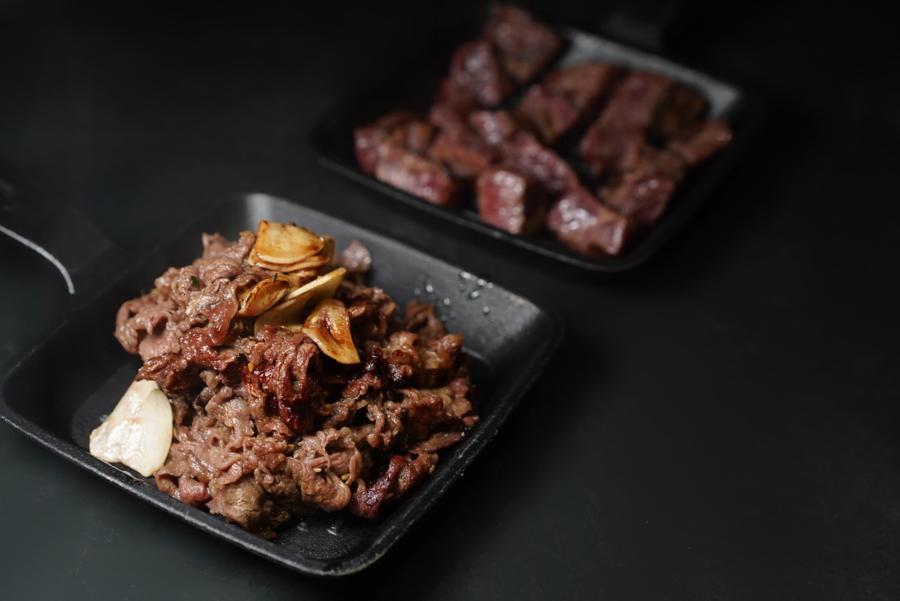
First up, the Juju Bulgogi (RMB148). Sweet, savory, expertly marinated, and impossibly tender, it’s one of those dishes that makes conversation grind to a halt. The thinly sliced beef delivers a beautifully balanced combination of caramelization, umami, and sweetness, with enough richness to warrant another lettuce wrap. And then another. It’s dangerously easy to demolish an entire plate before remembering you’re supposed to be sharing.
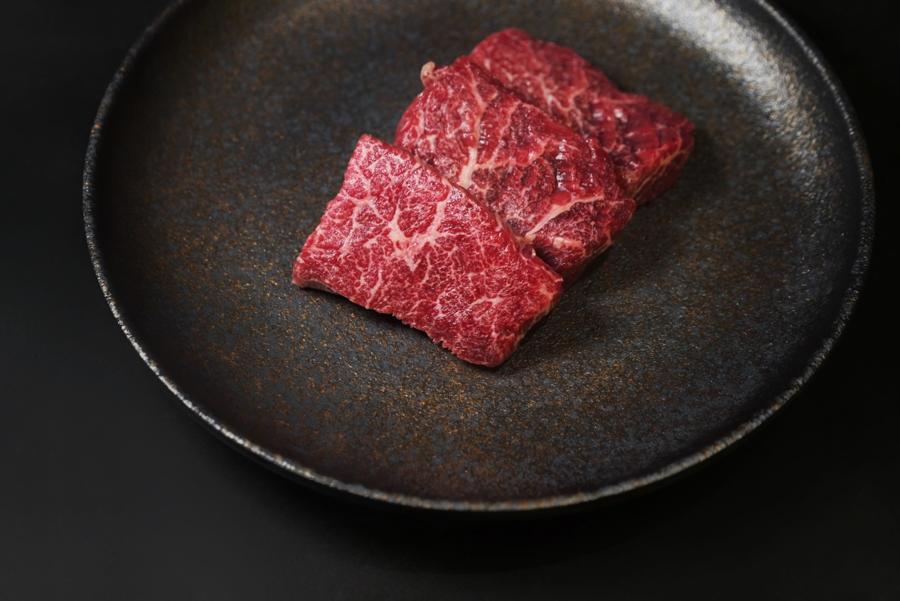
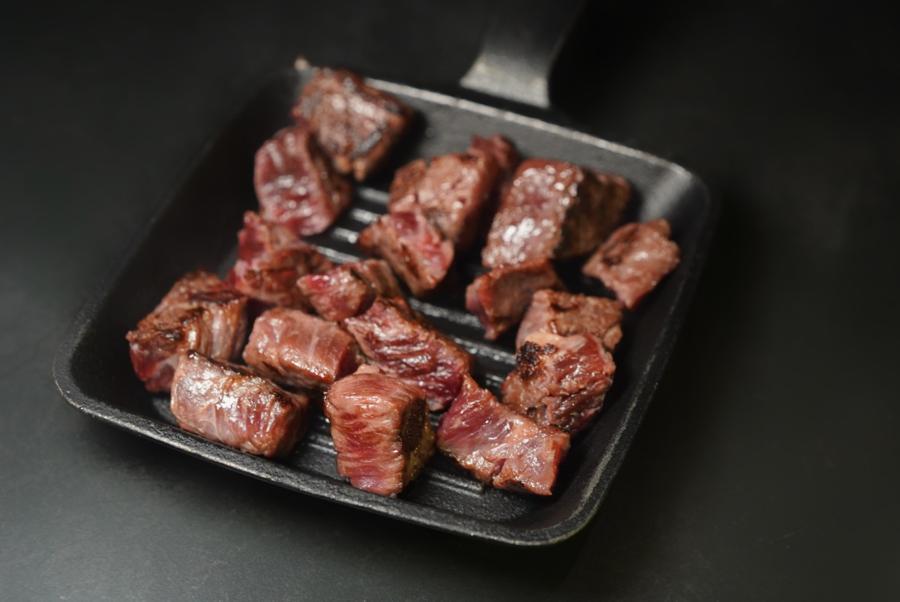
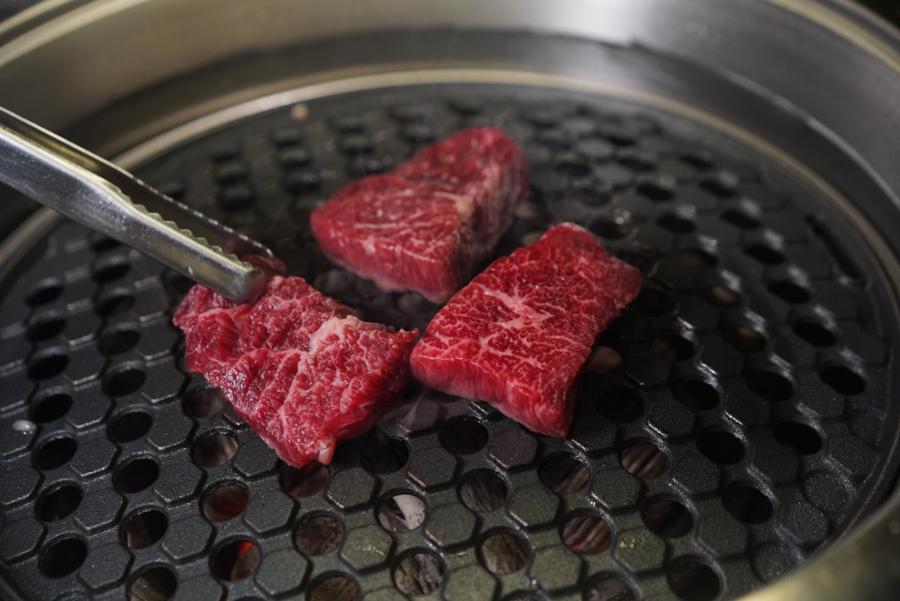
Another standout is the Shio Koji Chima-Sal (RMB98), a premium cut that demonstrates exactly why Luis’s beef deserves its own billing. Bavette, also known as flank steak, is prized for its pronounced beefiness and loose grain. Here, shio koji – a Japanese fermented rice seasoning – helps tenderize the meat while adding subtle savory depth. The result is outrageously succulent, juicy beef that practically melts on the tongue. It’s the kind of cut that needs little more than a quick kiss from the grill to shine.
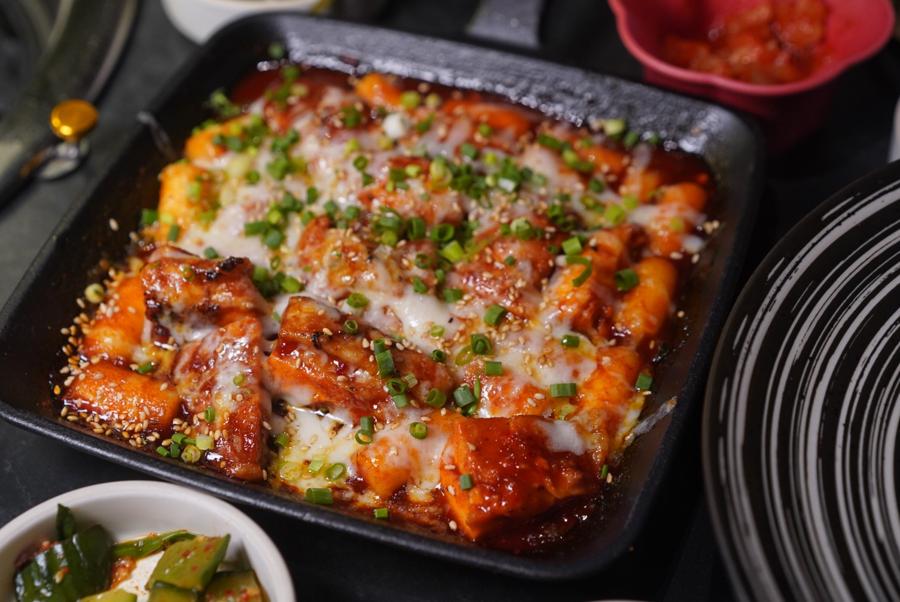
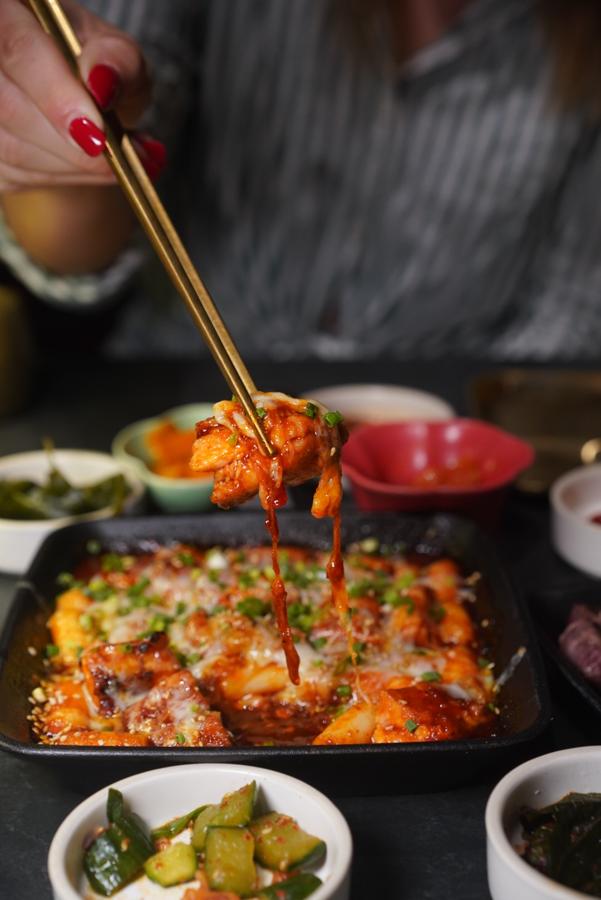
For those who prefer their dinner with a side of danger, there’s the Buldak (RMB98), Korea’s famously fiery chicken dish. Tender boneless chicken thighs arrive coated in a thick, sticky, gochujang-driven sauce, accompanied by chewy Korean rice cakes and a glorious blanket of melted cheese.
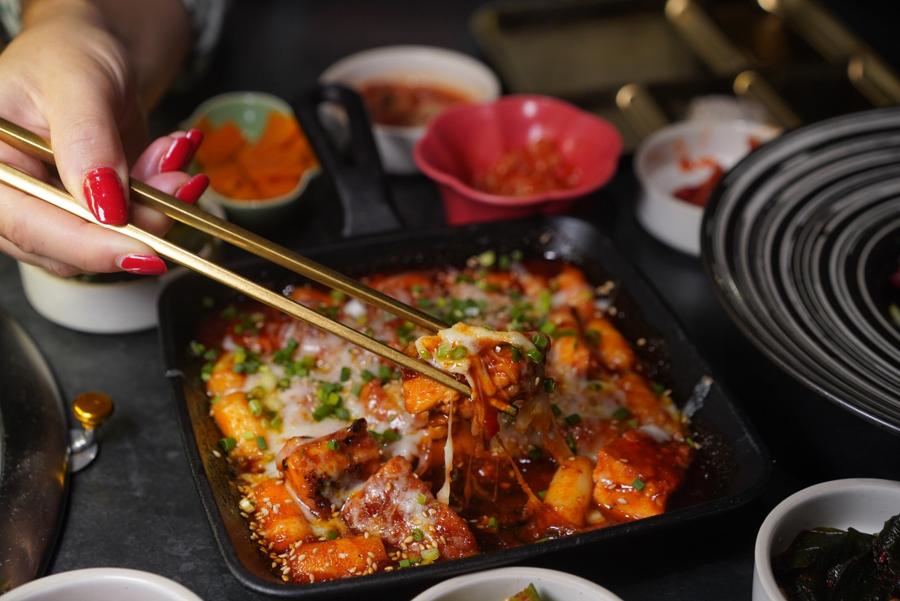
It’s spicy, saucy, cheesy, and completely addictive.
Diners can choose between Fire and Nuclear spice levels, although even the former packs a respectable punch. Consider this your warning: things are about to get hot and heavy.
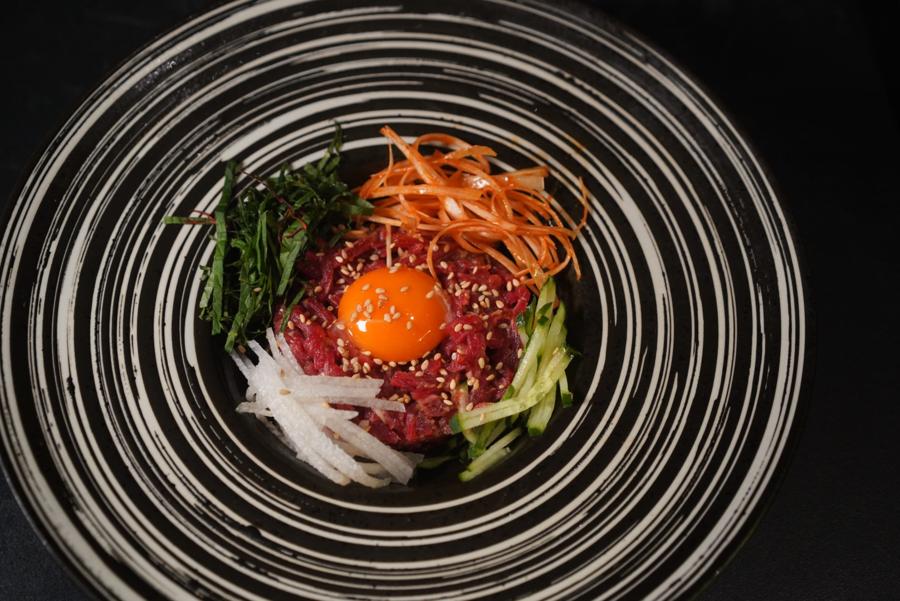
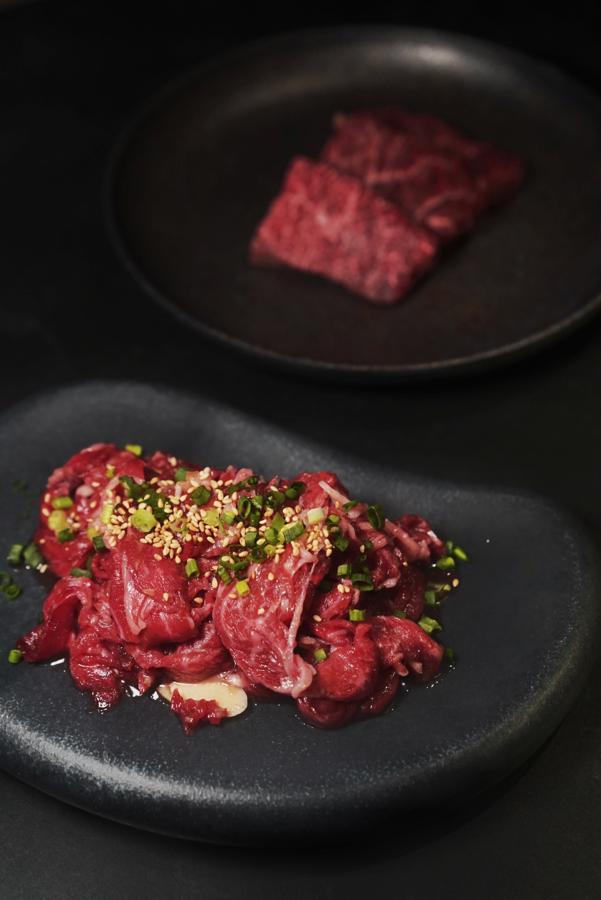
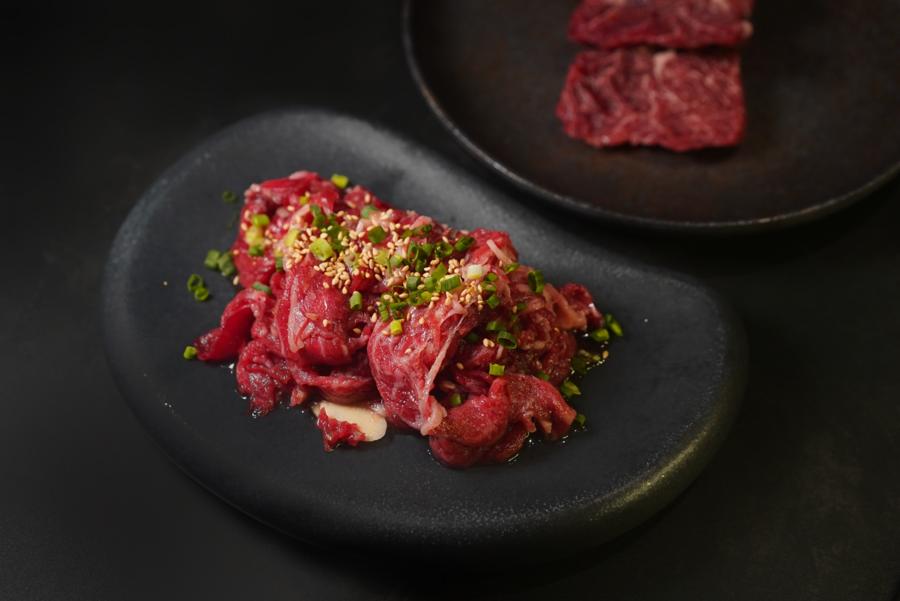
For those who prefer their beef on the raw side, the JUJU UYYU Yukhoe (RMB98) is a Korean take on steak tartare, showcasing UYYU’s premium M7 wagyu tenderloin in all its uncooked glory. Finely sliced raw beef is served Korean-style, accompanied by an arrangement of garnishes that includes julienned Asian pear and a golden egg yolk, ready to be mixed into one gloriously silky, savory mouthful. Proof that sometimes the best way to appreciate exceptional beef is to leave the grill out of the equation entirely.
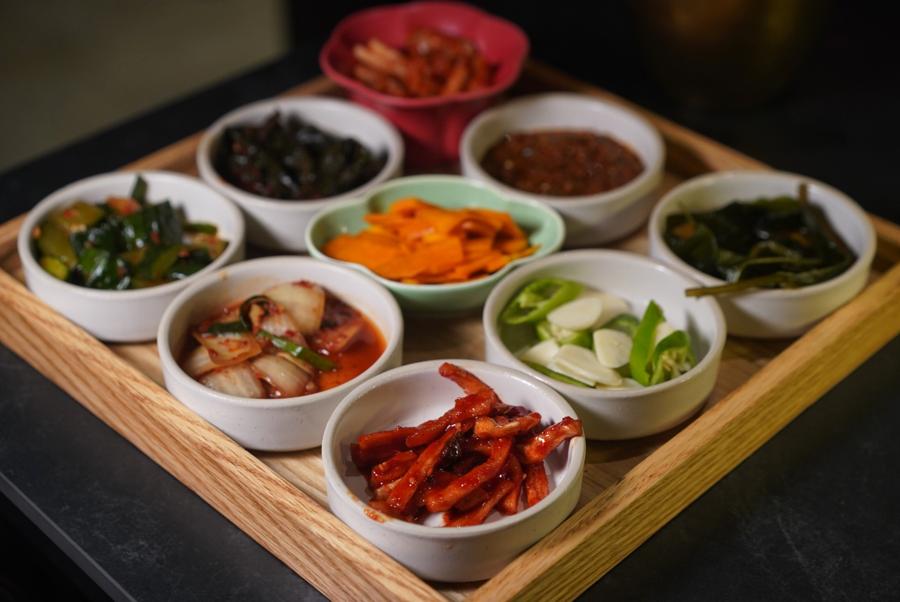
Elsewhere, the menu ventures into familiar Korean comfort-food territory with dishes like Doenjang Jigae (RMB58) (fermented soybean paste stew), Seolleongtang (RMB68) (beef bone soup), Japchae (RMB48) (stir-fried glass noodles), crispy Korean Paejeon (RMB58) pancakes, and warming West Coast Shin Ramyun (RMB88).
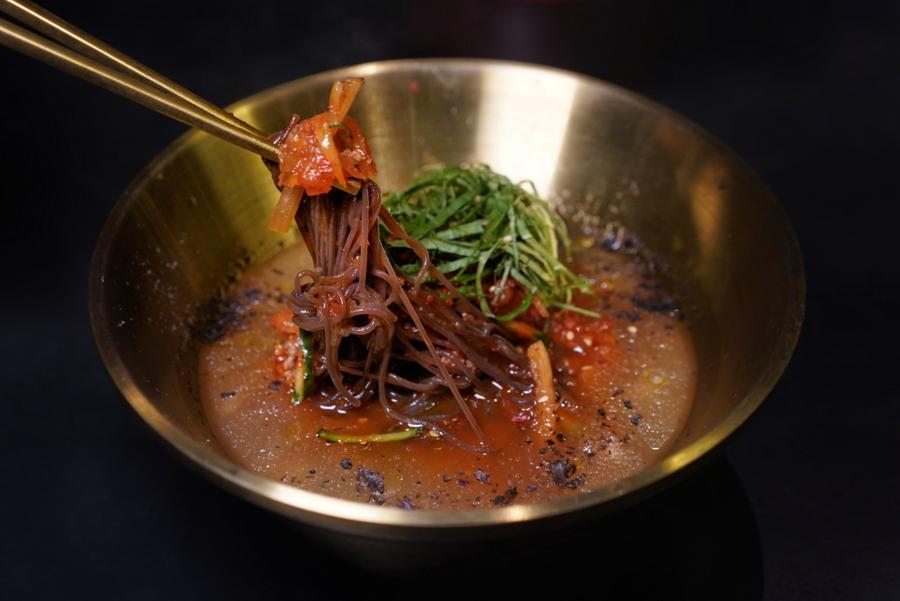
And when the spice starts getting the better of you, the Mul Naengmyeon (RMB58), Korean cold noodles, provide the perfect palate reset. Served in an icy broth complete with a mound of snow-like slush, they’re refreshingly chilled, tangy, and wonderfully slurpable.
Even dessert gets the cross-cultural treatment.
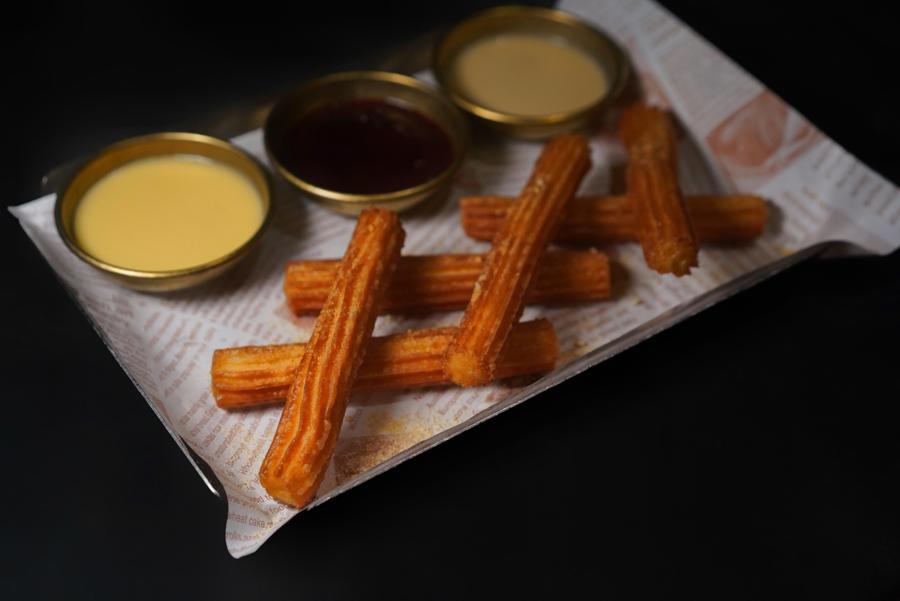
The K-Churros (RMB88) are a nod to Luis’s South American roots, reimagining the familiar fried pastry with an unexpected Korean twist. Golden, crisp churros come accompanied by makgeolli cream, salted miso cream, and a tart cranberry-style berry jam for a trio of dipping options.The makgeolli cream brings a subtle fermented tang, while the miso adds a savory-salty counterpoint to the sweetness.
And after an evening of aggressively spicy chicken, smoky beef, and liberal amounts of booze, a little sweetness goes a long way.
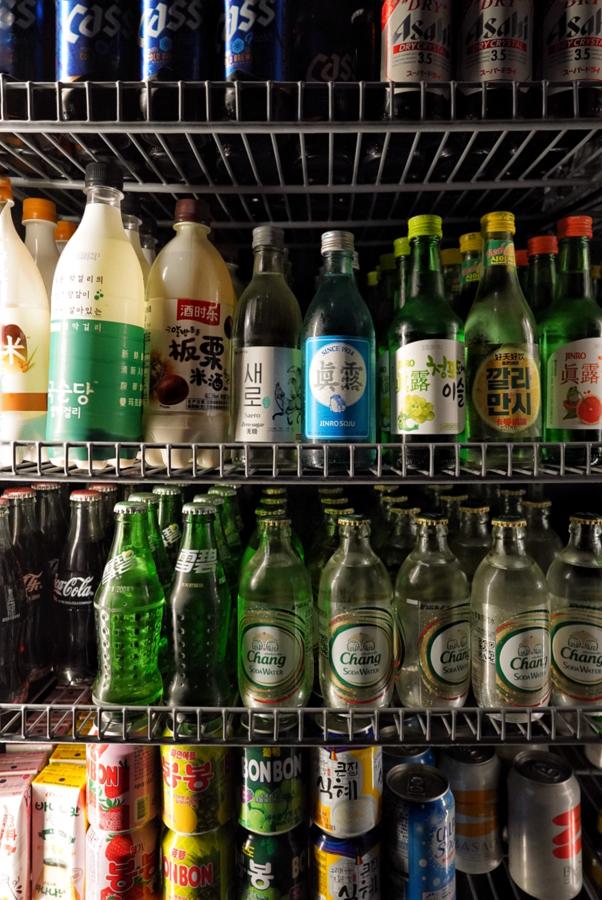
Of course, at JUJU, the drinks aren’t an afterthought. They’re practically a supporting cast member.
The beverage program leans heavily into Korea’s enthusiastic drinking culture, with soju, makgeolli, beer, whisky, and highballs all making an appearance.
There are eight beers on tap, along with slushies, cocktails, and plenty of opportunities to indulge in somaek – the Korean combination of soju and beer.
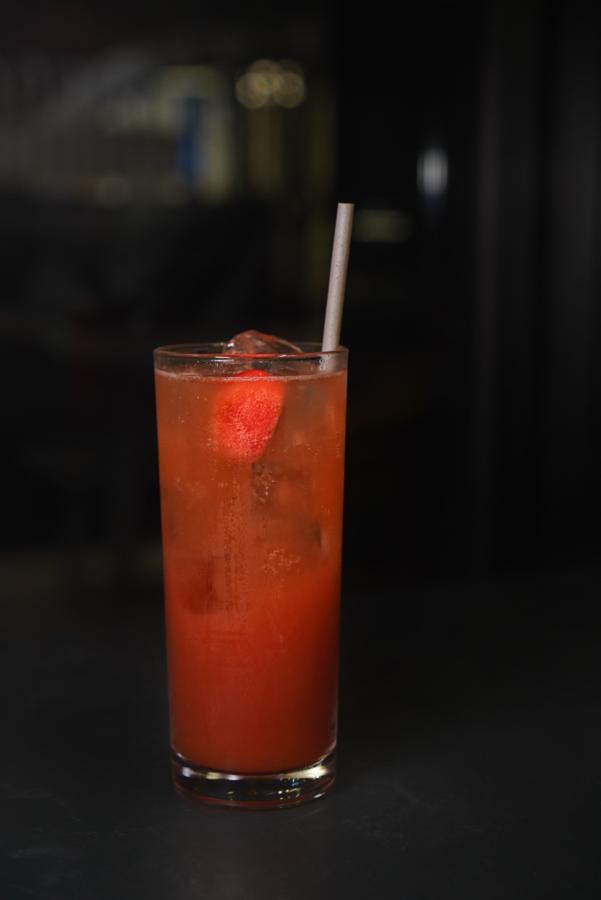
Tomato Highball (RMB38)
For the uninitiated, soju bombs are essentially Korea’s answer to the beer-and-shot combo, only considerably more entertaining when drinking games enter the equation. And JUJU isn’t shy about encouraging a little liquid-fueled camaraderie.
The restaurant is also rolling out wallet-friendly promotions, including a Monday deal featuring grilled pork belly and free-flow highballs, Aperol Spritzes, and Asahi beer for a steal at just RMB98 a person. It’s the sort of offer that could make Mondays considerably more appealing – although perhaps Tuesdays considerably less productive.
Between the affordable pours, convivial drinking culture, and generous portions, JUJU makes a compelling case for abandoning the notion of a quiet night out.
Taking over The Cannery’s former home was never going to be a simple case of changing the sign above the door.
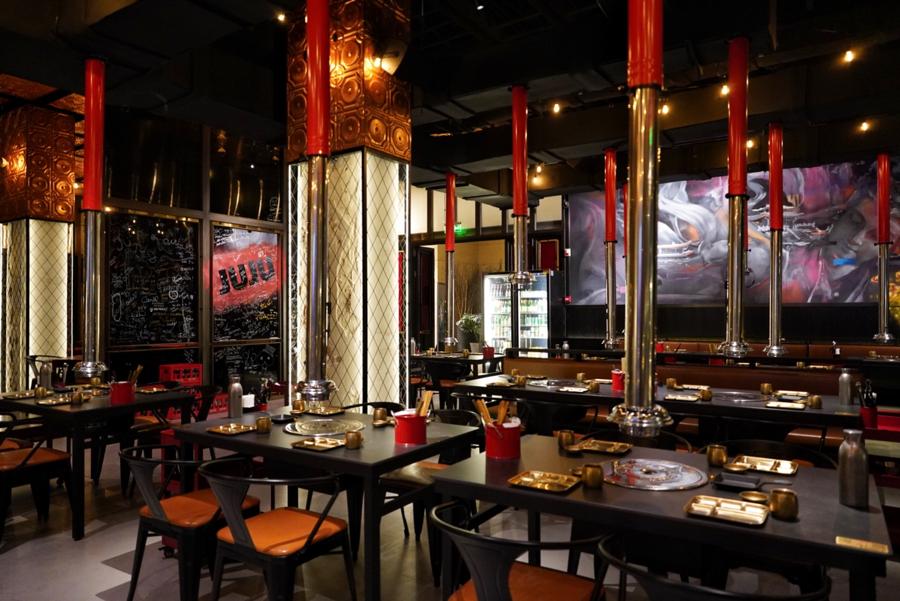
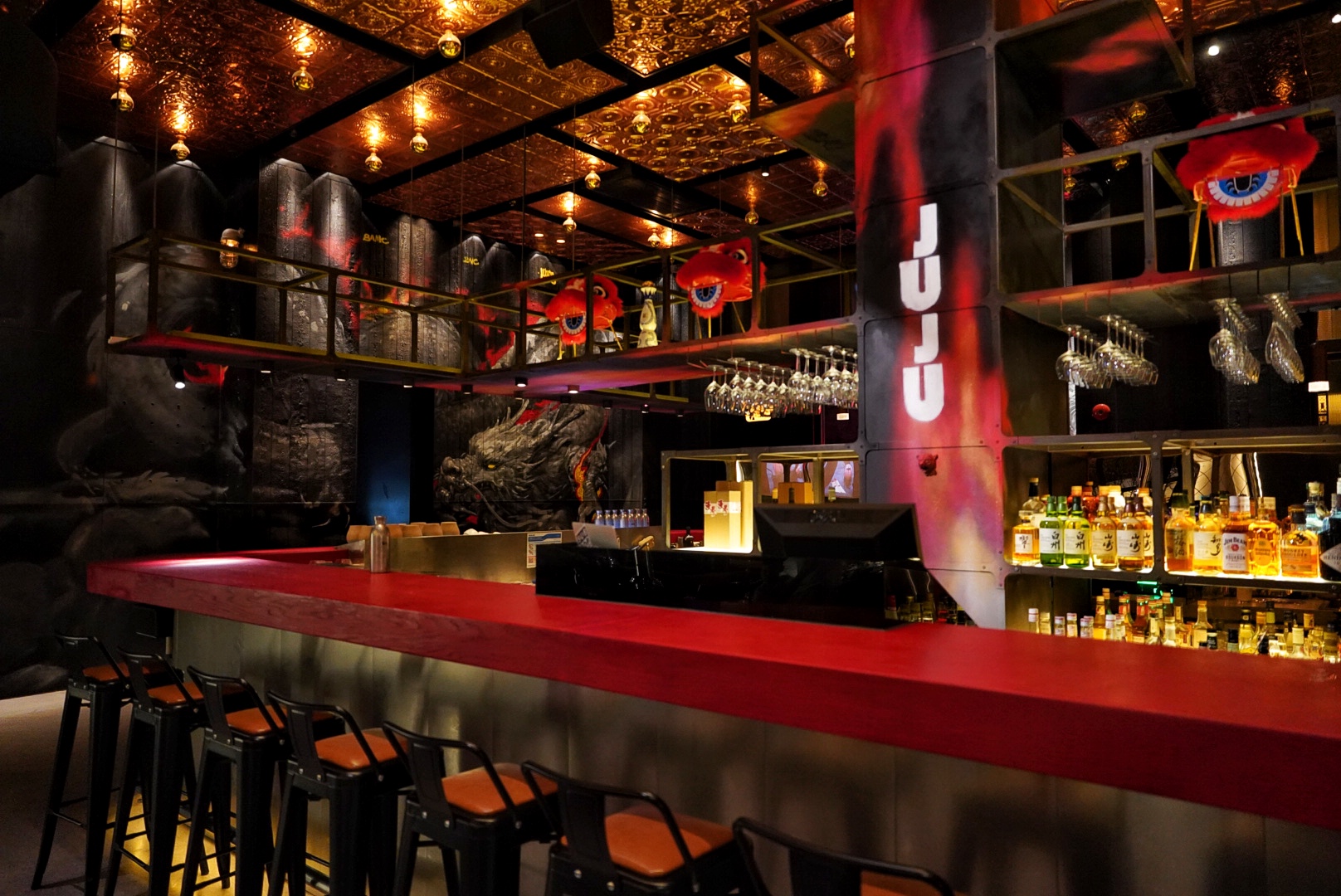
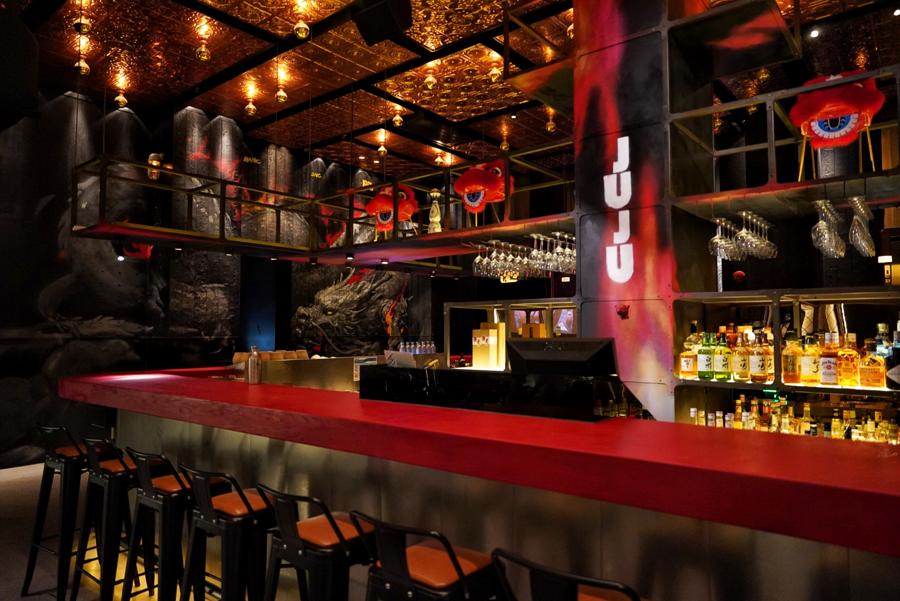
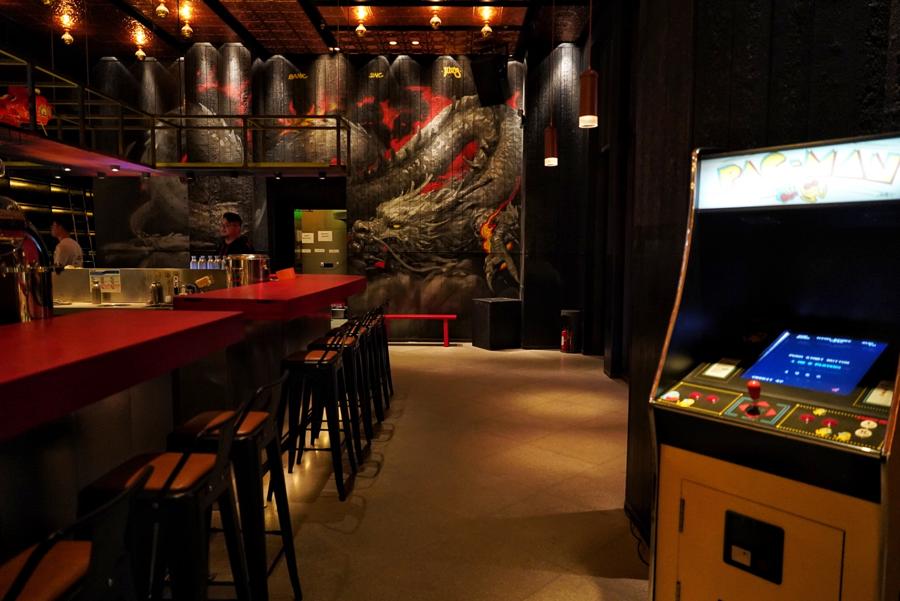
The sprawling space has undergone a dramatic transformation, swapping its predecessor’s Pacific Northwest aesthetic for something far grittier, louder, and more unapologetically urban. A massive graffiti mural by Shenzhen street artist WOOJS dominates the interior, while a striking red bar and DJ setup establish the restaurant’s party-first personality. The partially opened-up ceiling gives the dining room an expansive, industrial feel, while charcoal grills anchor the tables.
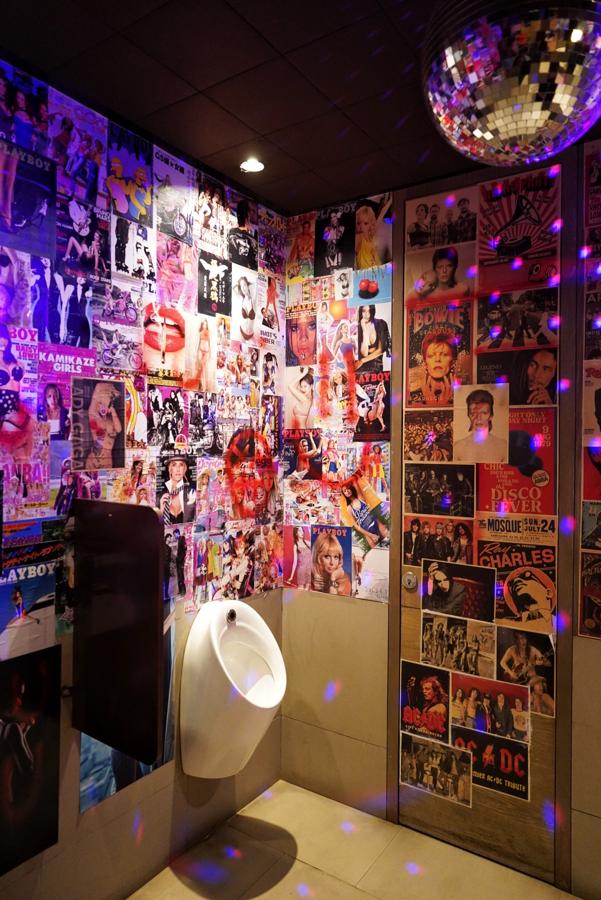
And don’t miss the bathrooms – we won’t spoil the surprise.
Retro arcade games add a nostalgic element, while karaoke offers an opportunity to showcase questionable singing abilities after a few rounds of soju.
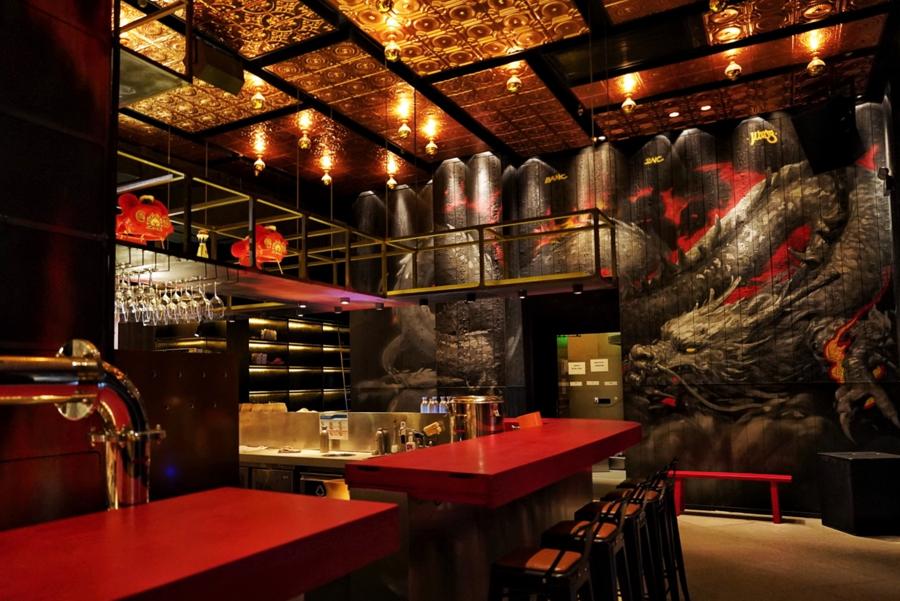
Musically, expect a heavy rotation of rap, hip-hop, and K-pop, with the occasional DJ session turning the volume up even further.
This is not the place for hushed conversations or romantic declarations whispered over candlelight. It’s loud, lively, a little irreverent, and all the better for it.
With 126 seats in the main dining area, there’s plenty of room for large groups, birthday celebrations, and evenings that escalate well beyond their original intentions.
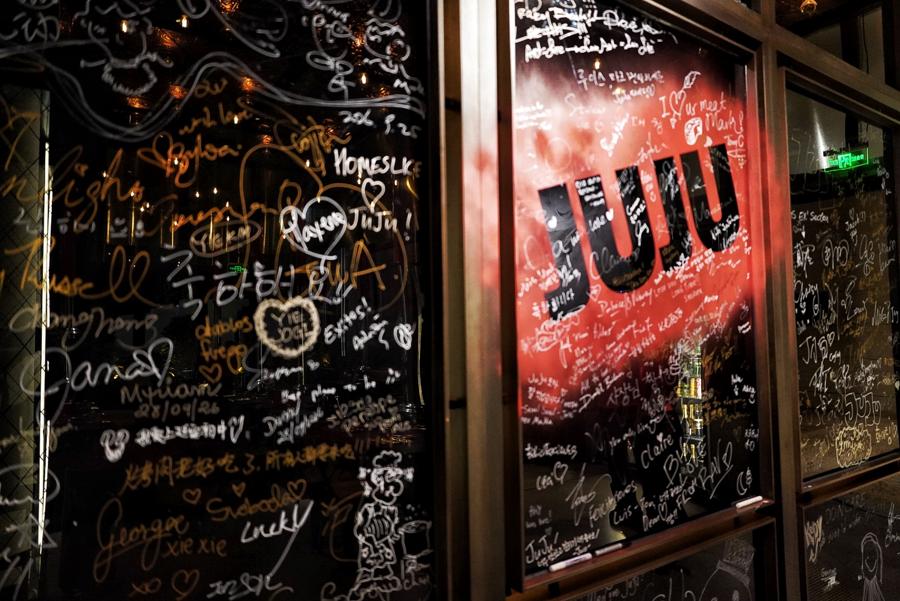
But beneath the party atmosphere lies a serious appreciation for good food. The beef is thoughtfully sourced, the marinades are well-balanced, and the menu manages to respect Korean culinary traditions while embracing the personalities and backgrounds of the people behind it.
That balance is what makes JUJU more than another Korean barbecue joint.
Shanghai’s restaurant scene has a habit of moving on quickly. One minute, a neighborhood institution is pouring its final drink; the next, a shiny new concept is waiting in the wings.
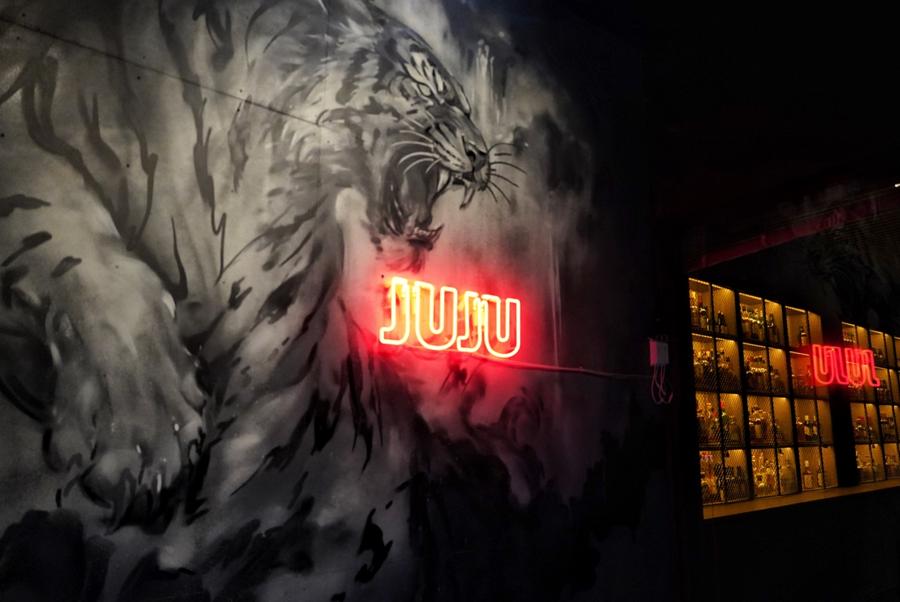
But JUJU’s return feels less like another opening and more like the revival of an old friend who’s come back with better beef, bigger speakers, and a few new tricks up their sleeve. There’s nostalgia for those who remember its Bund-era glory days, but plenty for newcomers to get excited about, too.
Come for the bulgogi. Stay for the bavette. Brave the buldak. Order another round.
And whatever you do, don’t make early-morning plans.
JUJU, Room 106, 1107 Yuyuan Lu, 愚园路1107号106室
Best for: Group dinners, birthdays, Korean BBQ cravings, soju-fueled celebrations, and anyone who believes dinner should come with a soundtrack.

My name is Sophie Steiner, and welcome to my food-focused travel blog. This is a place to discover where and what to eat, drink, and do in Shanghai, Asia, and beyond. As an American based in Shanghai since 2015 as a food, beverage, travel, and lifestyle writer, I bring you the latest news on all things food and travel.
Your email address will not be published.
Be the first to comment!

Sign up for tips on the latest Shanghai openings, and other food, beverage, and travel content
© 2026 Sophie Steiner
Privacy Policy