48 Hours in Shanghai: What to Do, Eat, Drink, and Explore
A curated guide to Shanghai's best kept secrets
January 29, 2022
And so we bid adieu to the Year of the Ox – a wild ride of high highs and low lows. Yet, the show must go on, and that means enjoying it in the way we know best – through good food and and plenty of drink. Here is an A to Z recap of some of the major restaurants and bars that had the tenacity to open as China's borders remained closed.
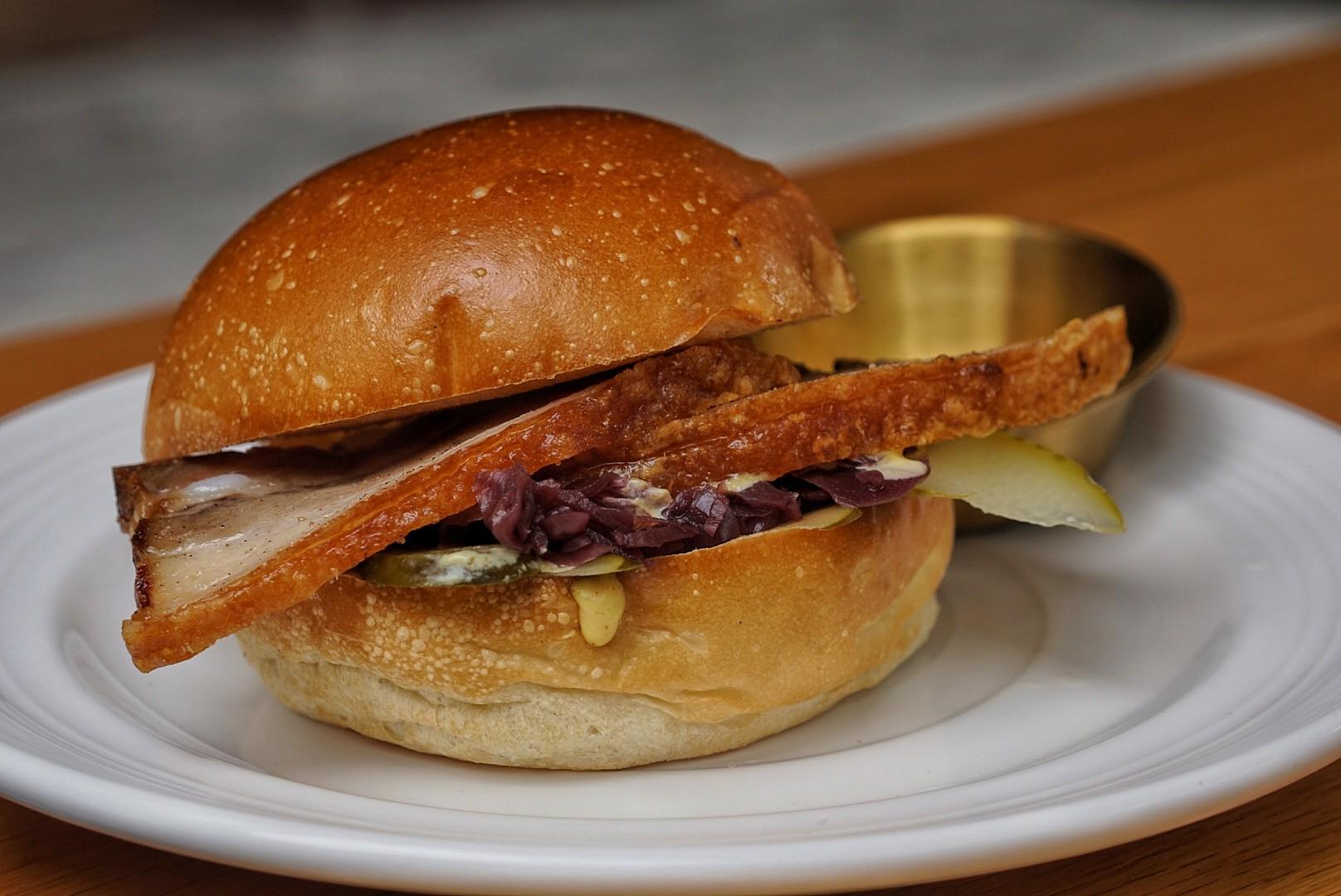
Agnes is a smoke and grill venue mixing together elements of the American South (think smoked brisket and roasted pork belly) and Nordic-inspired winter eats (pickles, slaw and soon-to-come smoked fish) with pretty much everything arriving between buns. Milkshakes, slushies and soft serve ice cream round out the sweeter half of the menu.
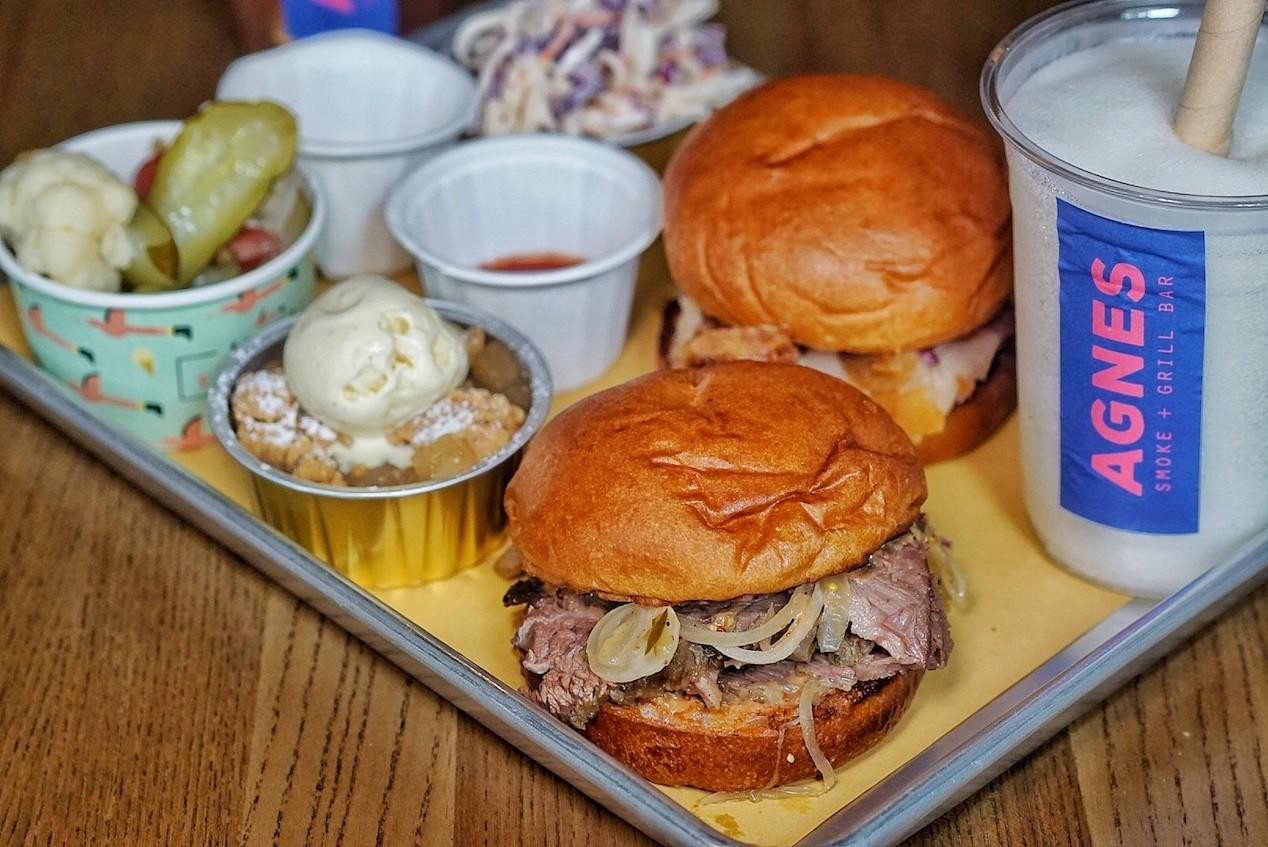
The man behind the magic is none other than Craig Willis (he's always up to something) who is currently building himself nothing short of a Wukang Market Empire, despite claiming to be in early stages of retirement. With multiple restaurants simultaneously opening this year, we're gonna call it out as the most productive retirement on record.
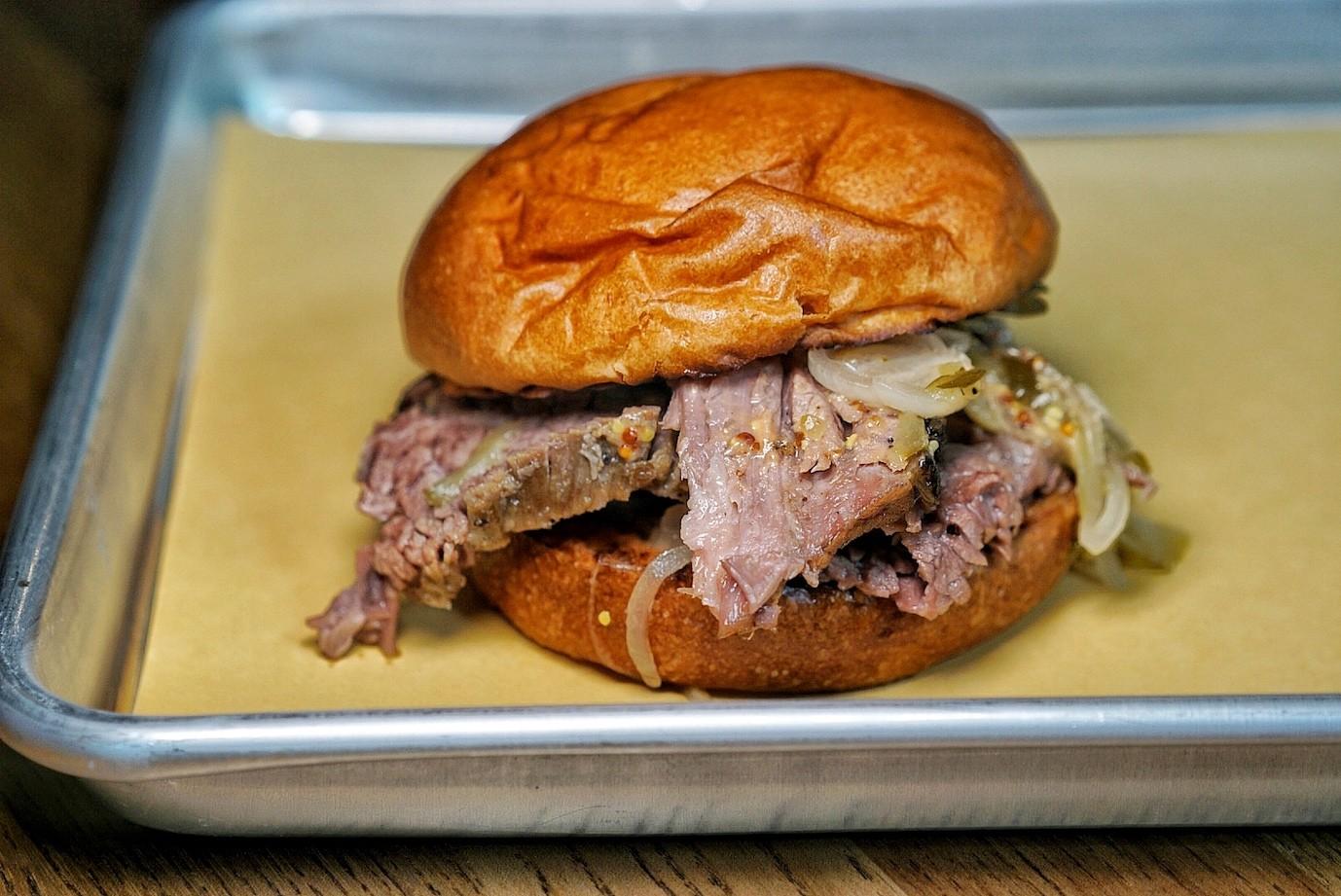
Located on the first floor of Wukang Market, Chef Alexander Bitterling, who is shared with upstairs' Something, has created a menu that is as simple as can be – two sandwiches to choose from, a few small sides – like fries and slaw – plus sweets and sips. That’s it. Stellar lunch fare, done well.
Read a full review here.
A.Mix Bistro&Bar opened above where Lost Bakery used to be on Julu Lu in More Than Eat. While you may not have heard of this one before, you’ve surely heard of the import shop Alex, a place to pick up everything the Avocado Lady has and then some, with stores sprinkled throughout downtown.
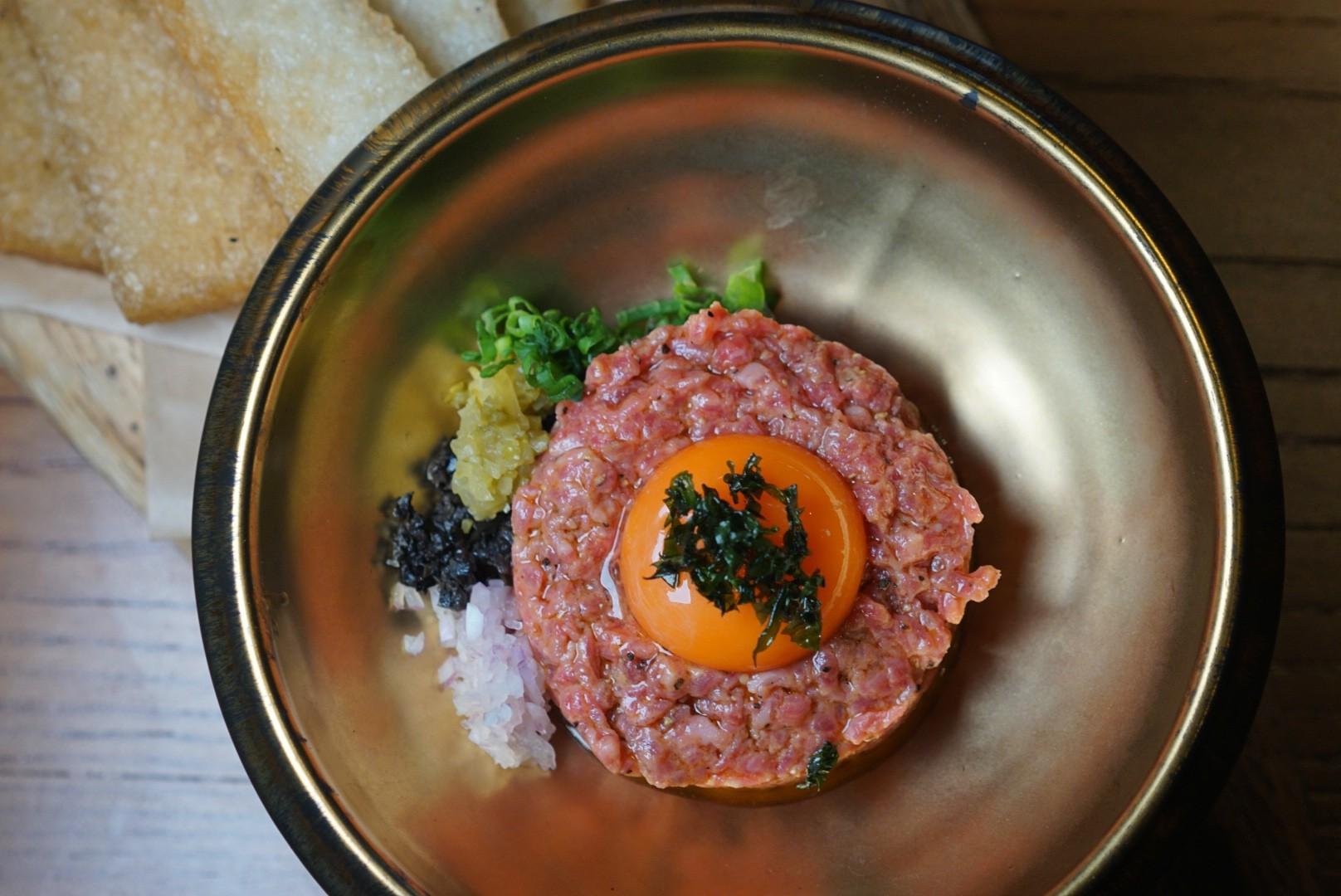
Well, it’s the same owners – the Alex himself – who is now branching out his product sales into the culinary world. No surprise here: the food has a Western focus; they’ve already got that import hookup.
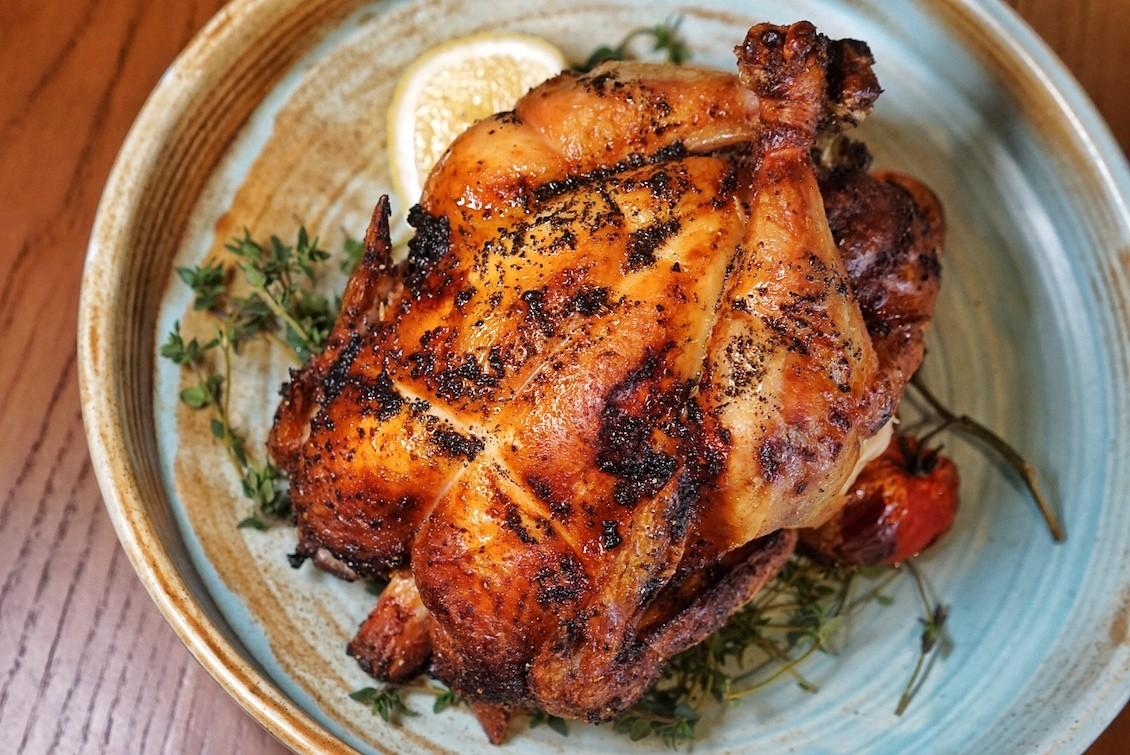
Chef Kenny Hong cut his teeth in Italy where he attended culinary school and launched his career. All proteins used by Chef Kenny are imported and available for purchase at Alex stores, along with the majority of ingredients that bring each of his plates to life.
It’s not exactly where we would take a date, but it would exceedingly improve a weekday lunch.
Read a full review here
At Daniel An’s (Taste Buds, Atelier by Taste Buds, Cocktail Palace by Taste Buds, etc.) Atelier Izakaya, industrial warehouse decor, exposed painted brick, rustic sliding barnyard doors and metallic aluminum chairs have replaced the now deceased Arch.
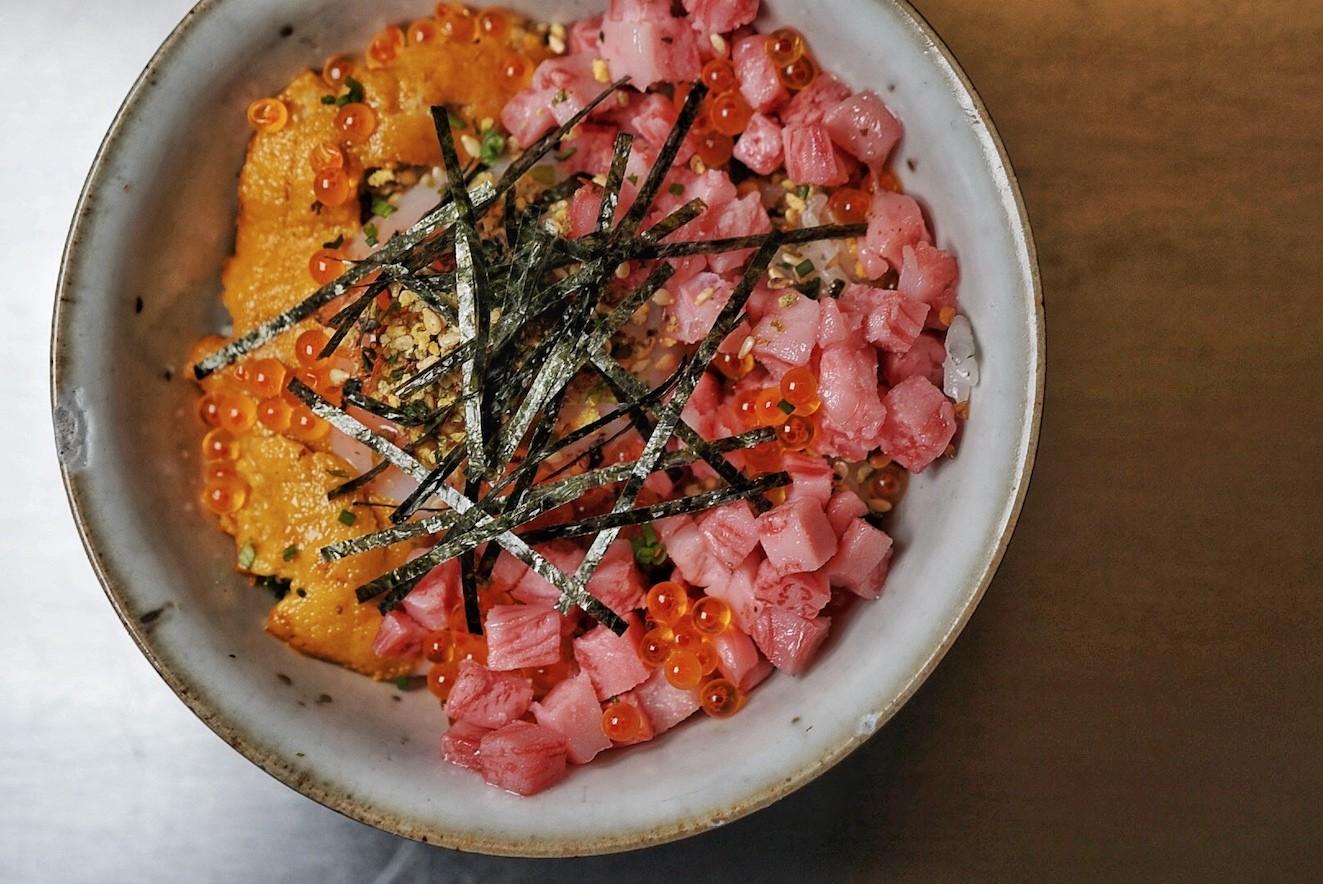
While other izakayas (*cough* Hundo *cough*) may take themselves a bit too seriously as an authentic Japanese izakaya, Atelier Izakaya is more hip and young, embracing its Japanese roots but still assuming a Chinese twist – like robatayaki-style yellow croaker, bone marrow with furikake and east China sea prawns – that makes the food more relatable to the Shanghai expat and hip local crowds.
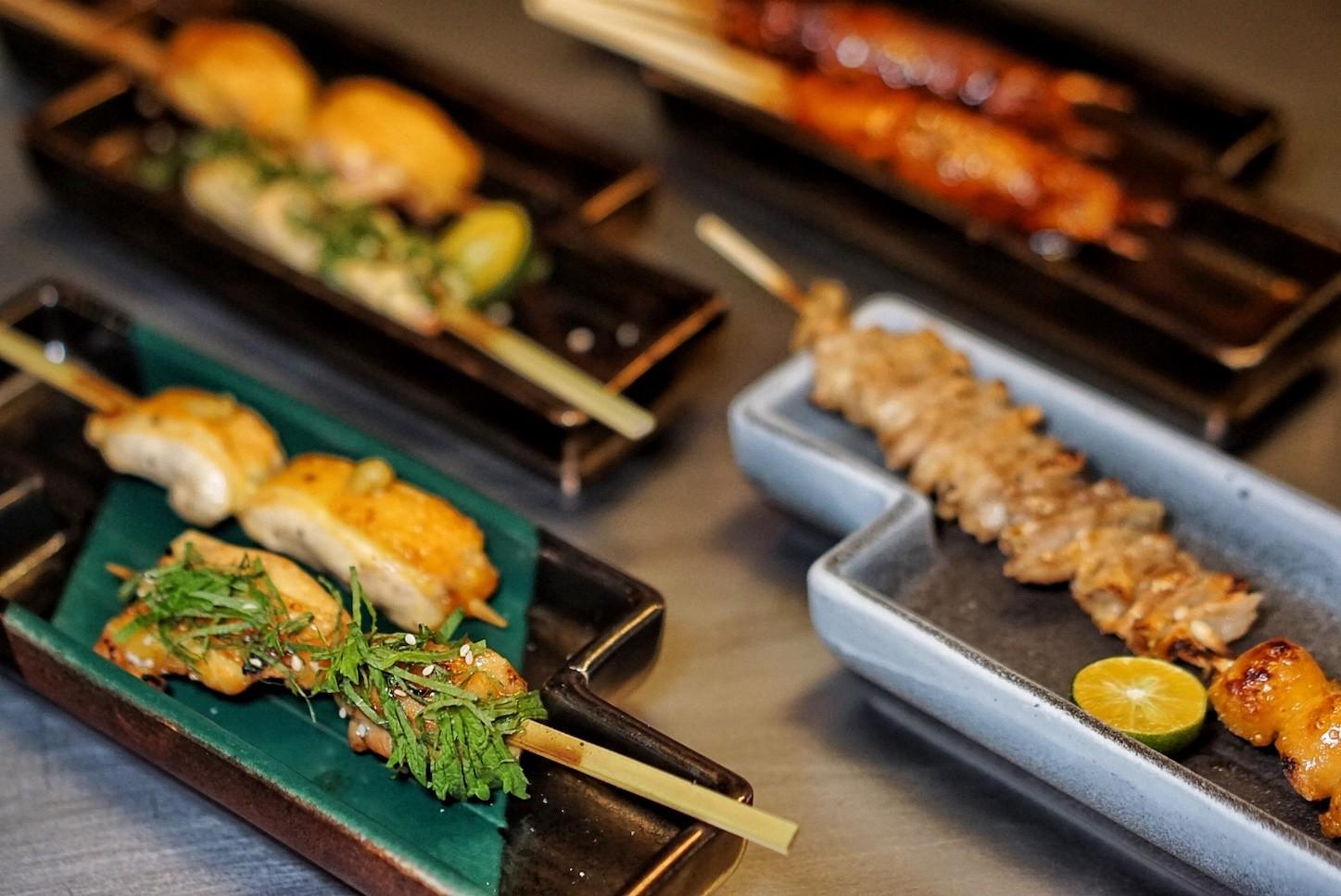
Despite the open layout and size, Atelier Izakaya has a bar vibe that makes you crave another round of sake. Whether it’s the groovy 70s jams pumping out beats that are hard not to bump and grind to or the black paint coating most surfaces that make you feel like a heathen of the night, something about the space urges us to drink…heavily. Yet somehow food is still the focus.
Read a full review here.
Azul Italiano opened up not one but two locations this year. First above Colca on the North Bund and again in the Tian’an 1000 Trees mall along Suzhou Creek.
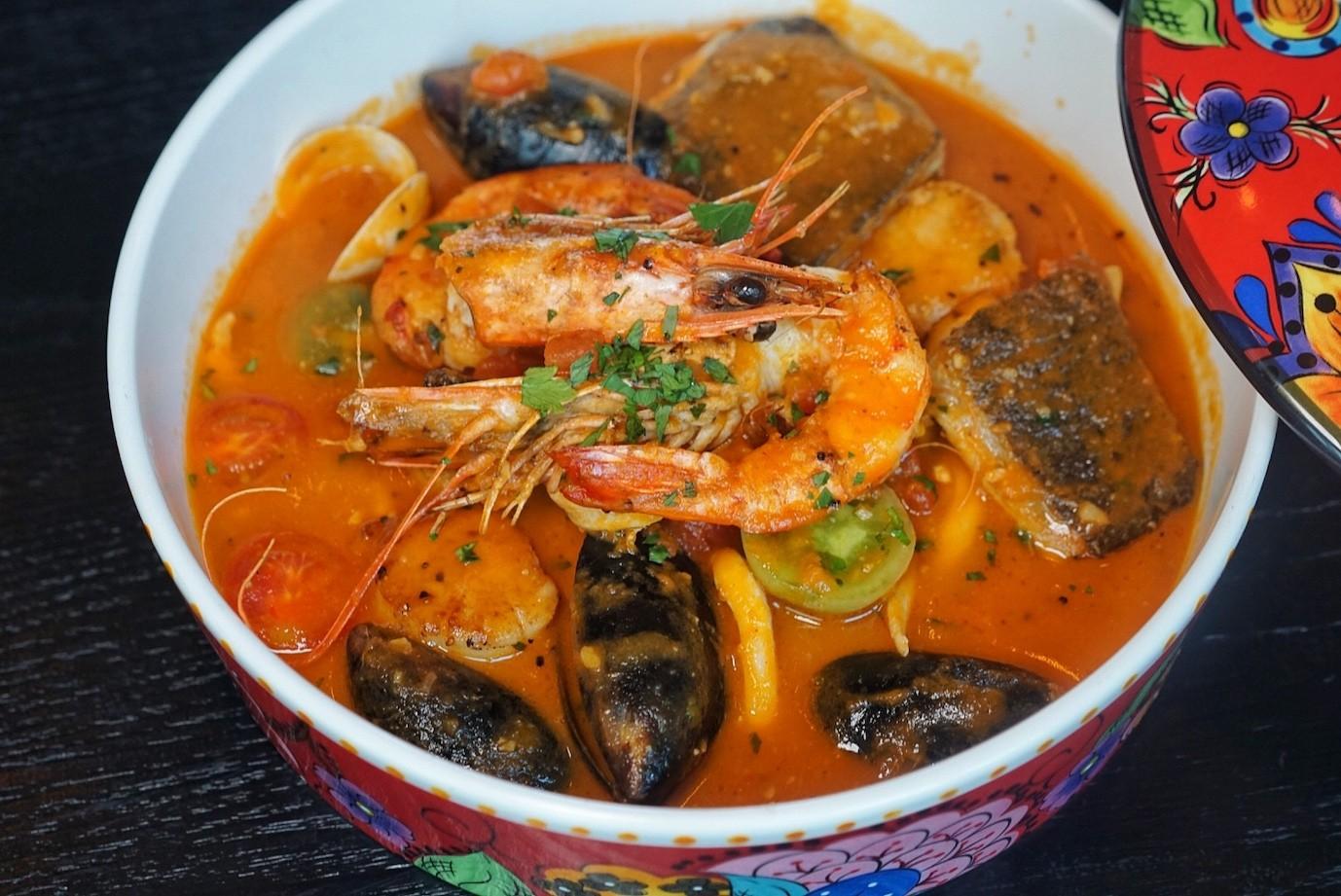
The goal is not to serve traditional Italian dishes, but rather use this carb-loving country’s cuisine as a jumping off point for taking creative liberties that appeal more to the Chinese palate.
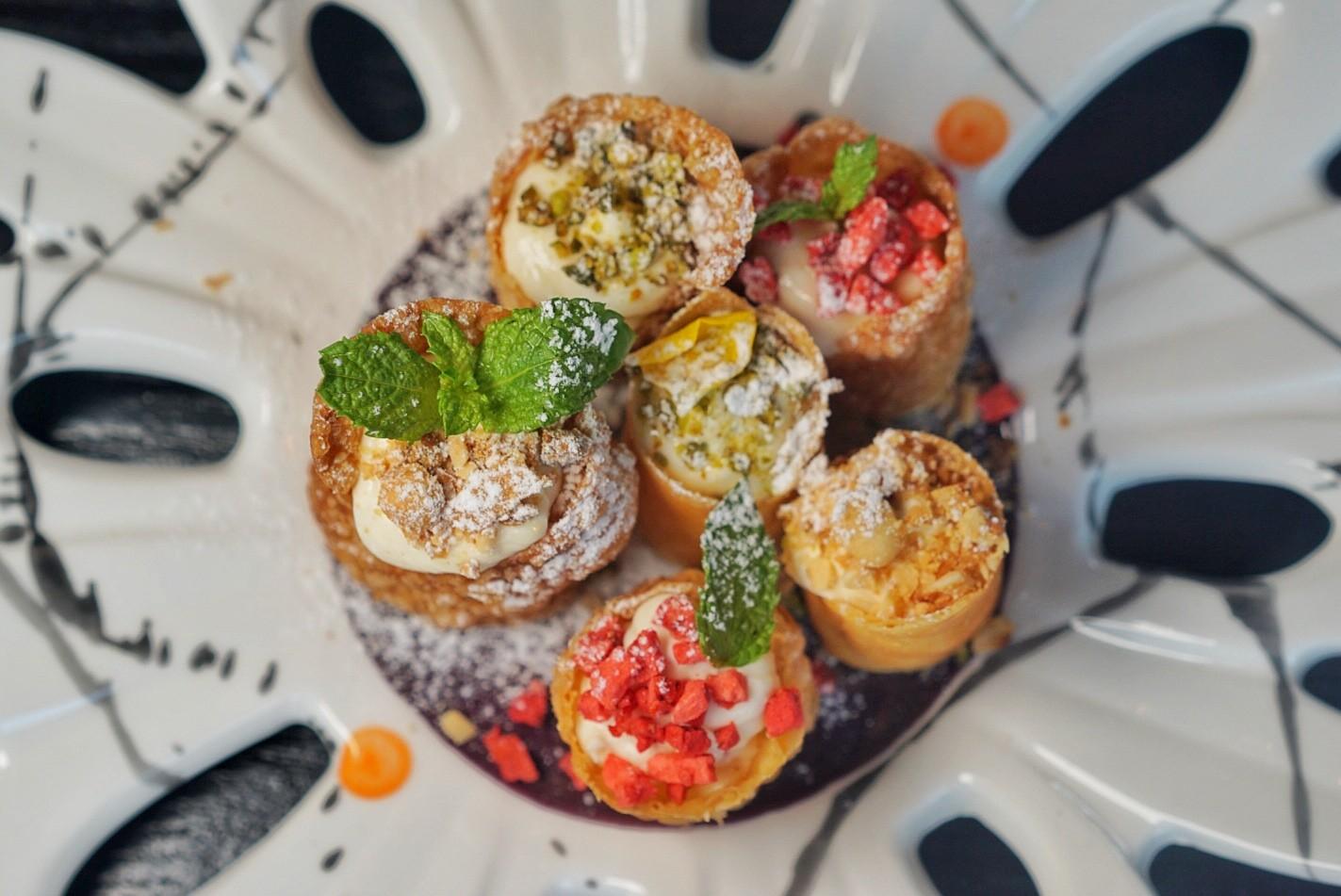
While you’ll find the usual Italian suspects on the menu – antipasta, pizza, pasta, etc. – many of them only share a connection to Italian dishes in name or general flavor profile, but the addition of seasonal ingredients or fusion elements connect it to the rest of the groups’ restaurants in regards to imaginative style and inventive presentation.
Expect to find simple, honest dishes with a very beneficial price to quality ratio.
Read a full review here and here.
Continuing the upcycled wood trend from the rest of the Armada Group space (housing La Mezcaleria, Tacos El Paisa, Loggia and Bonica), La Barra is modern, but with a lux lounge vibe: plush fabric couches, wicker chairs and tables of various heights and lengths to accommodate parties of all sizes.
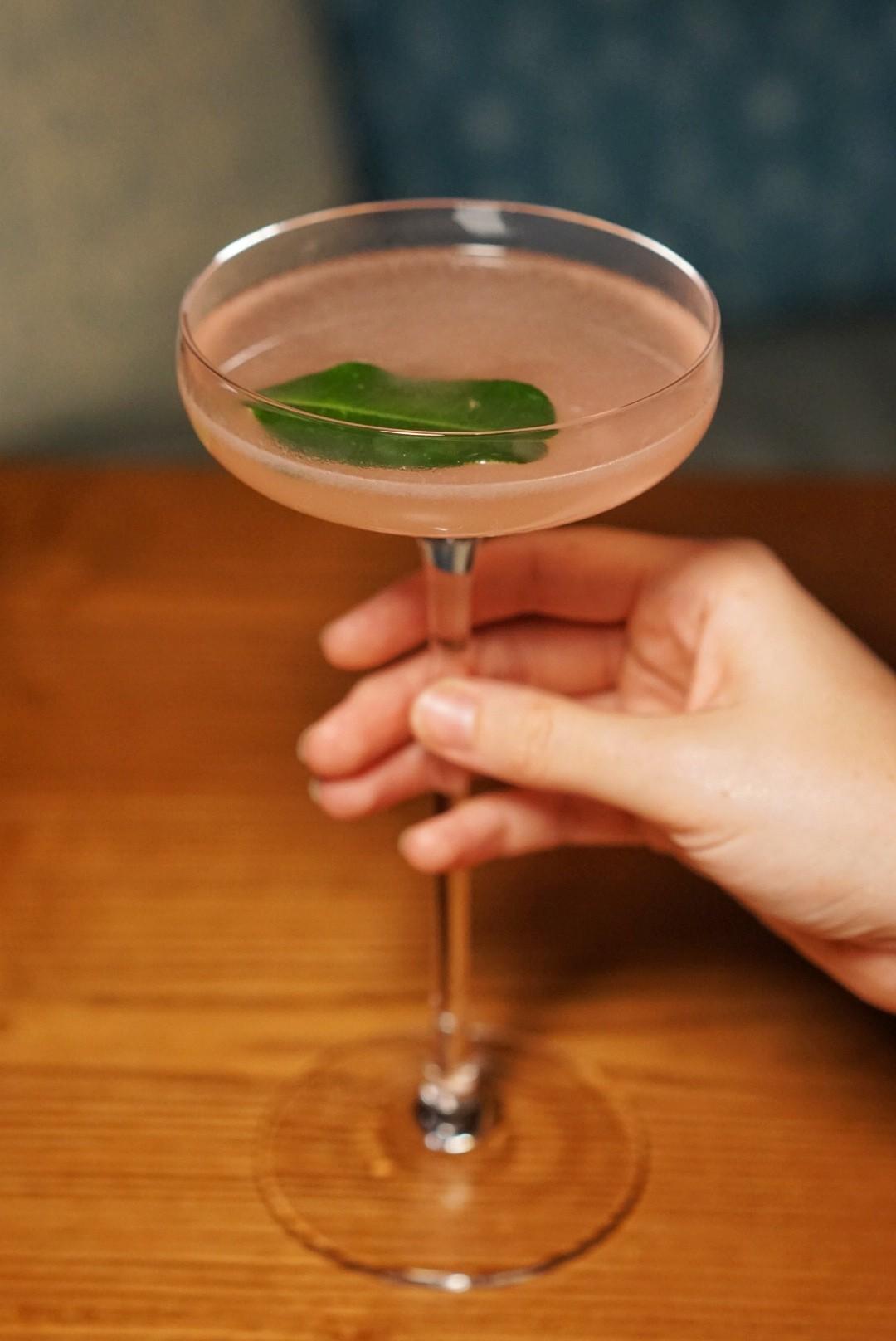
There is also a double bar situation, the second of which plays into the newest cocktail trend – a floating, eco-friendly bar. By floating, we mean that guests can come at it from all angles: there is no back. This is because there also are no bottles.
For simple mixers, like G&Ts and highballs, prices are kept affordable because of the use of ecoSPIRITS – a closed loop distribution system where high-end spirits are delivered to venues in large refillable containers, eliminating costs for bars and reducing packaging waste. A cost saving that also translates to better menu pricing.
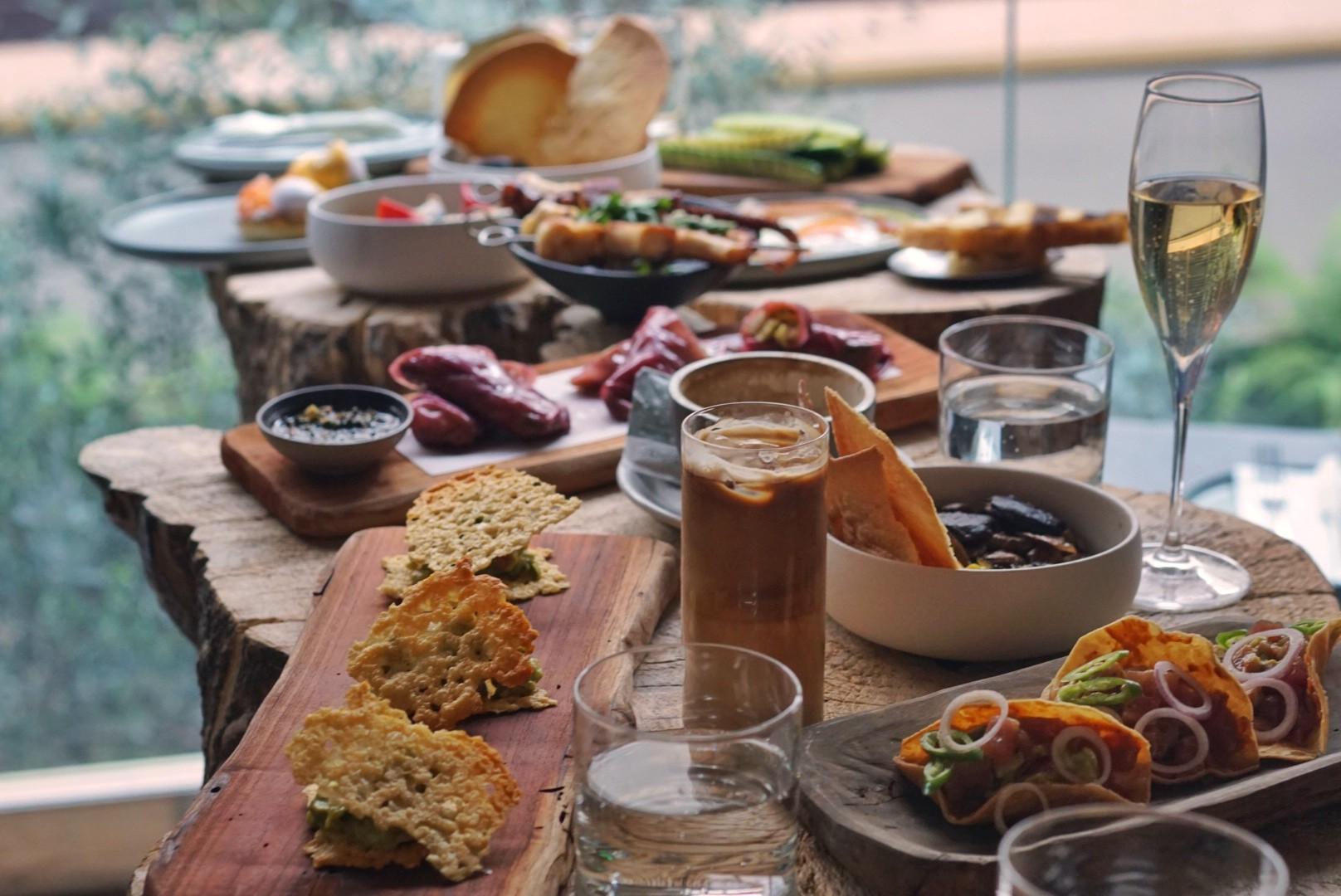
On weekend evenings, the live DJs play anything from house to synthetic techno to trance. Weekdays see specials, like RMB168 for a dozen oysters on Mondays. Sunday is all about a very bubbles and oyster-heavy brunch.
Read a full review here.
The fourth (yup, you read that correctly: fourth) China outpost of Bella Vita opened in Hengshan Fang in mid-October as a split-level Italian bistro plus expansive, sunny 40-seater patio.
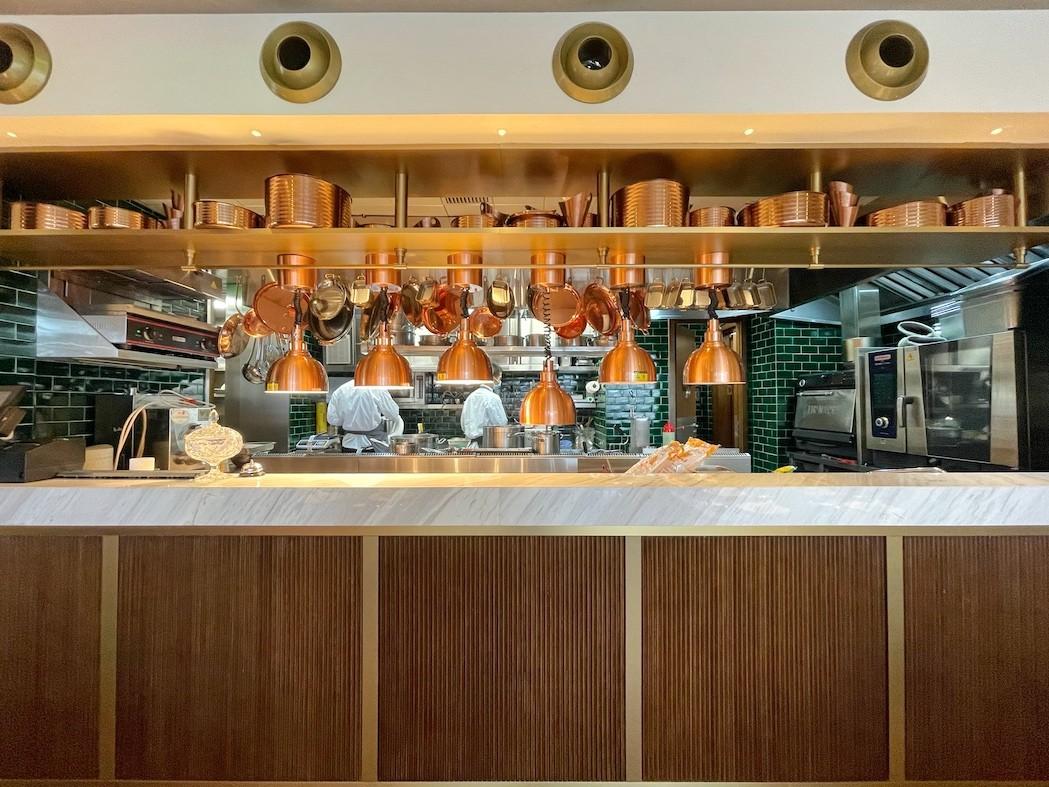
Think imported, high-end ingredients, homemade everything (pretty much a requirement for opening a successful Italian restaurant in Shanghai these days) and a lofty 70+ bottle Italian wine list spanning entry to expert palates (and price points to match).
The conventional, pan-Italian menu is curated by chef Andrea Botti, digging deep into hyper-traditional, uber-authentic cooking.
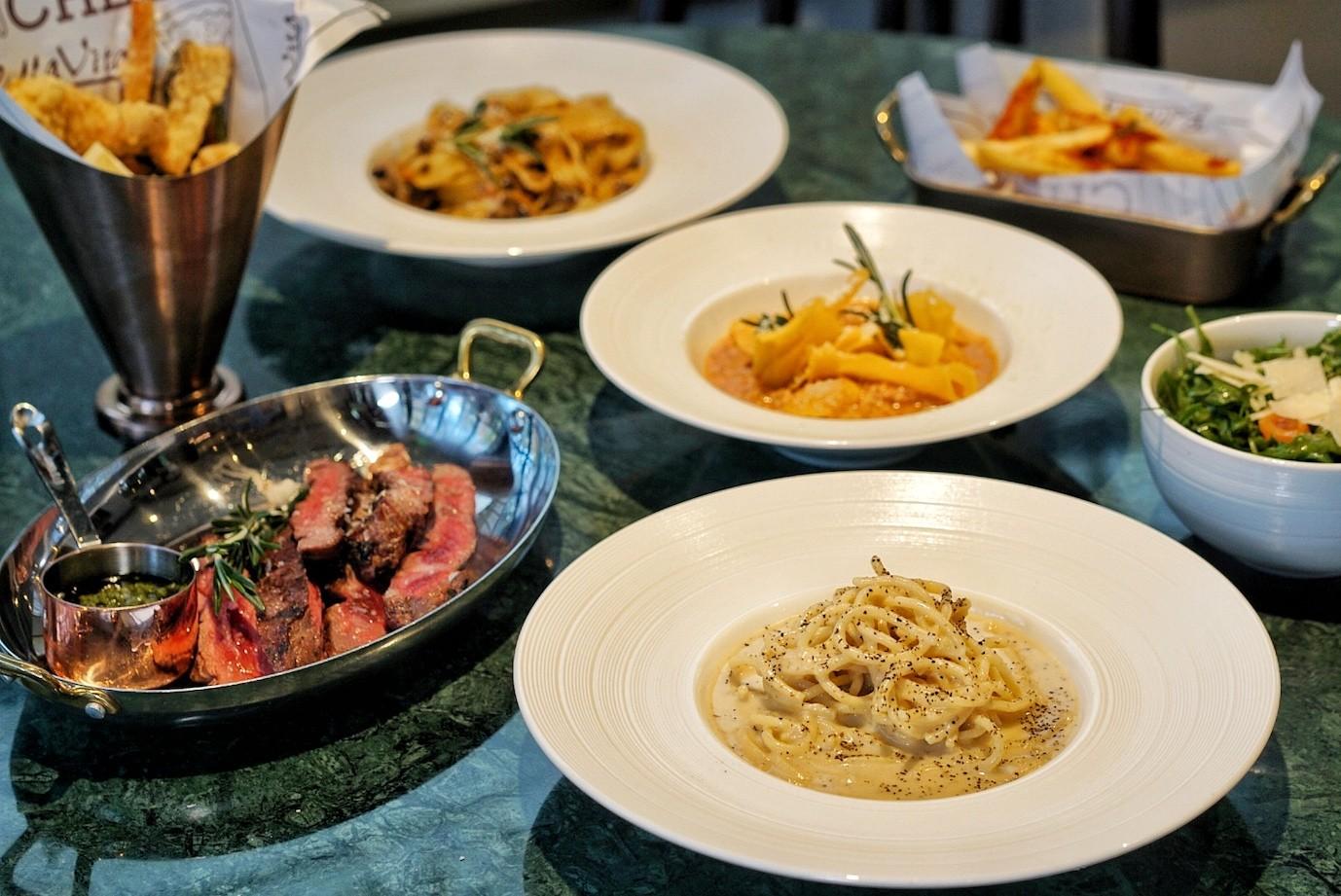
Bella Vita lives by the motto, “enjoying Italian cuisine is more experiential, not intellectual.” Here, they want to keep it simple, giving their guests exactly what they expect, in a cozy, familiar setting fit for celebrating special occasions, going on a nice date or engaging in a business dinner.
Read a full review here.
BISOU, a casual yet sleek French restaurant, opened in Taikang Terrace this past April with a lot of warranted buzz. The venue is split into two, BISOU and BISOU Rouge Cellar, a casual wine bar plus cellar, located across from each other.
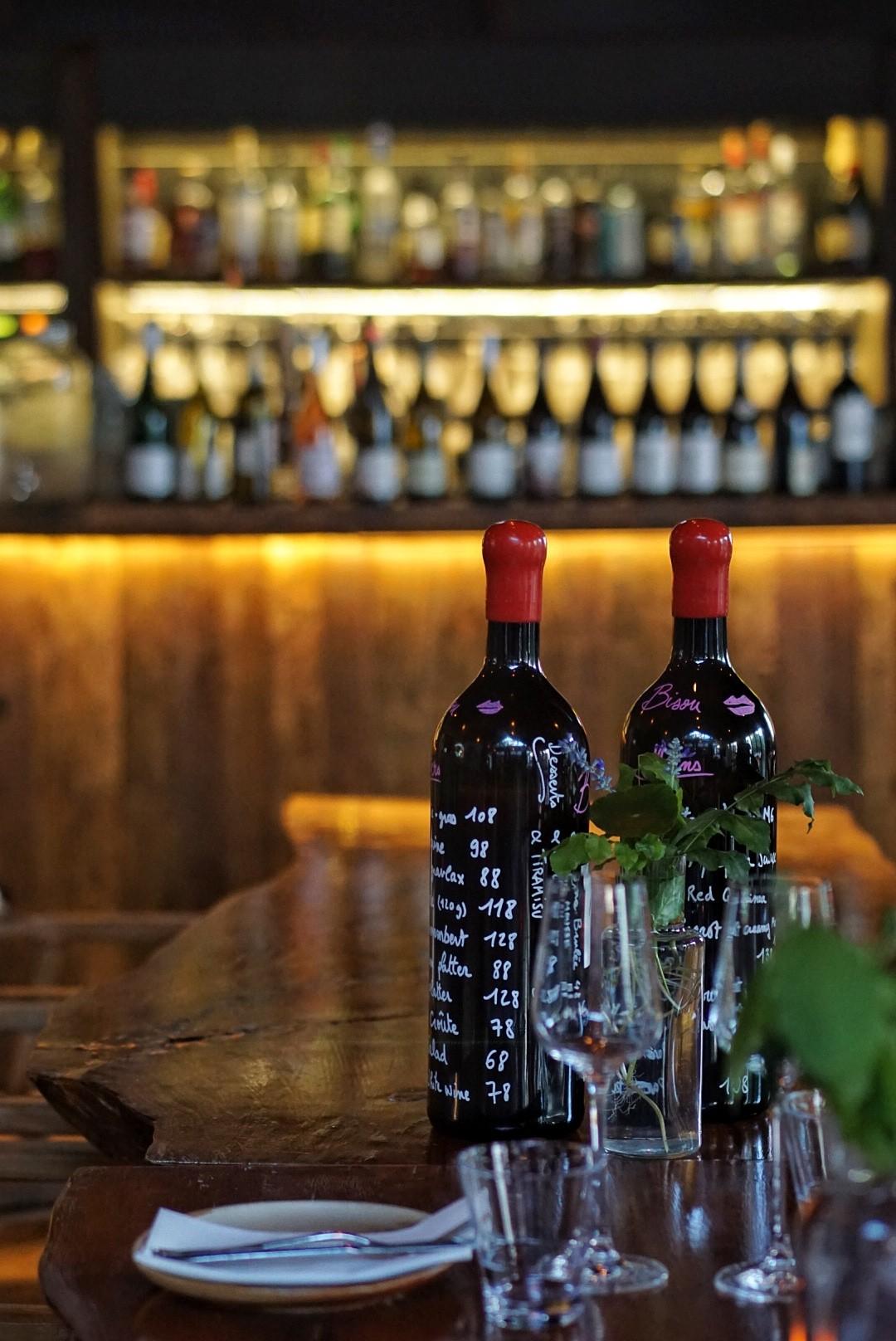
The space is marked by vaulted ceilings, a subdued, intimate dining room with an off-shooting airy terrace, comfy leather chairs and wooden furniture – ultimately resembling a hunting lodge rather than the timeless French bistro it is.
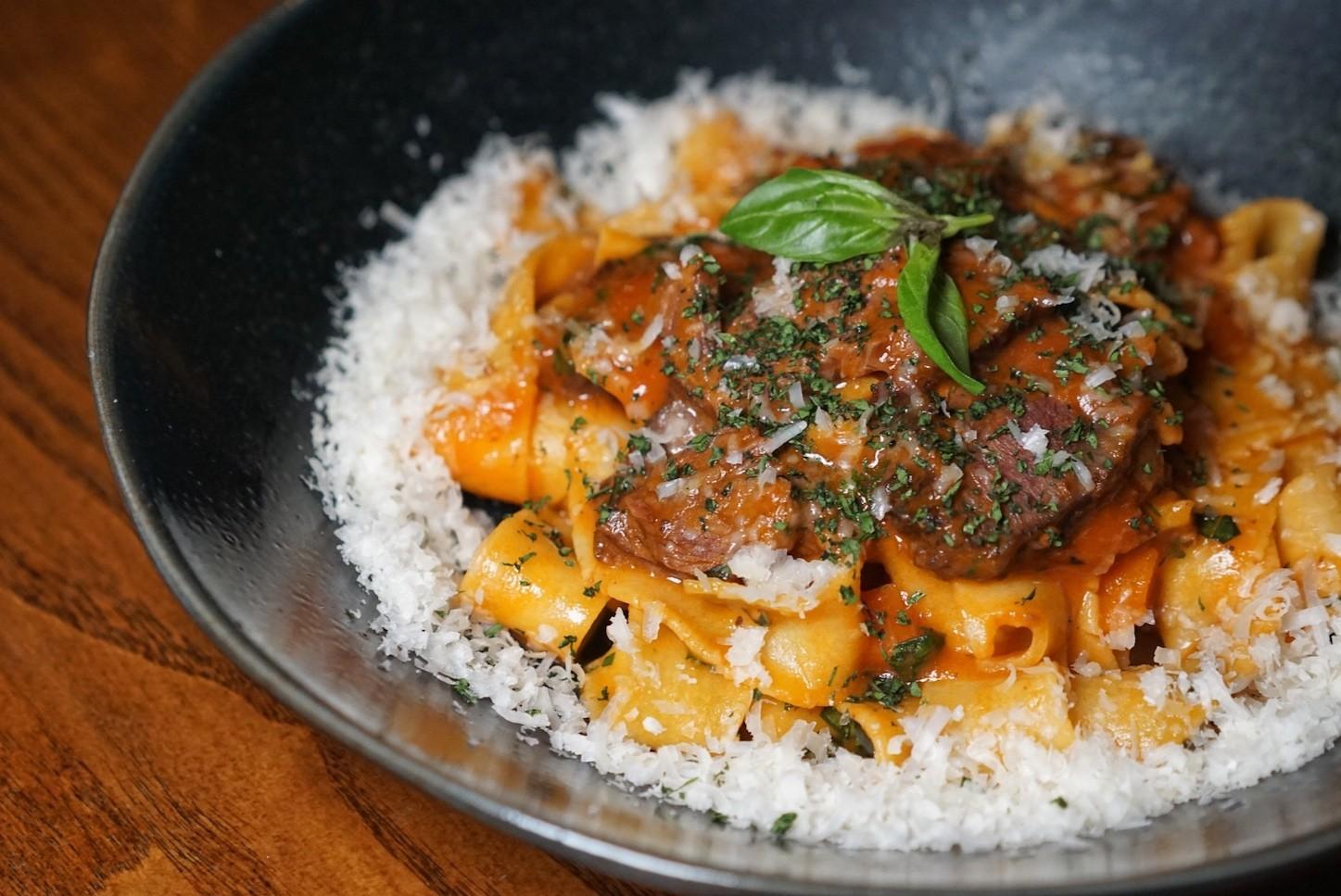
Despite the classically French menu and extensive wine list, BISOU is laid back, deserving of its reputation for high value. It feels like dining in your friend’s living room... if your friend happened to have a beyond impressive wine cellar and a critically-acclaimed chef on hand.
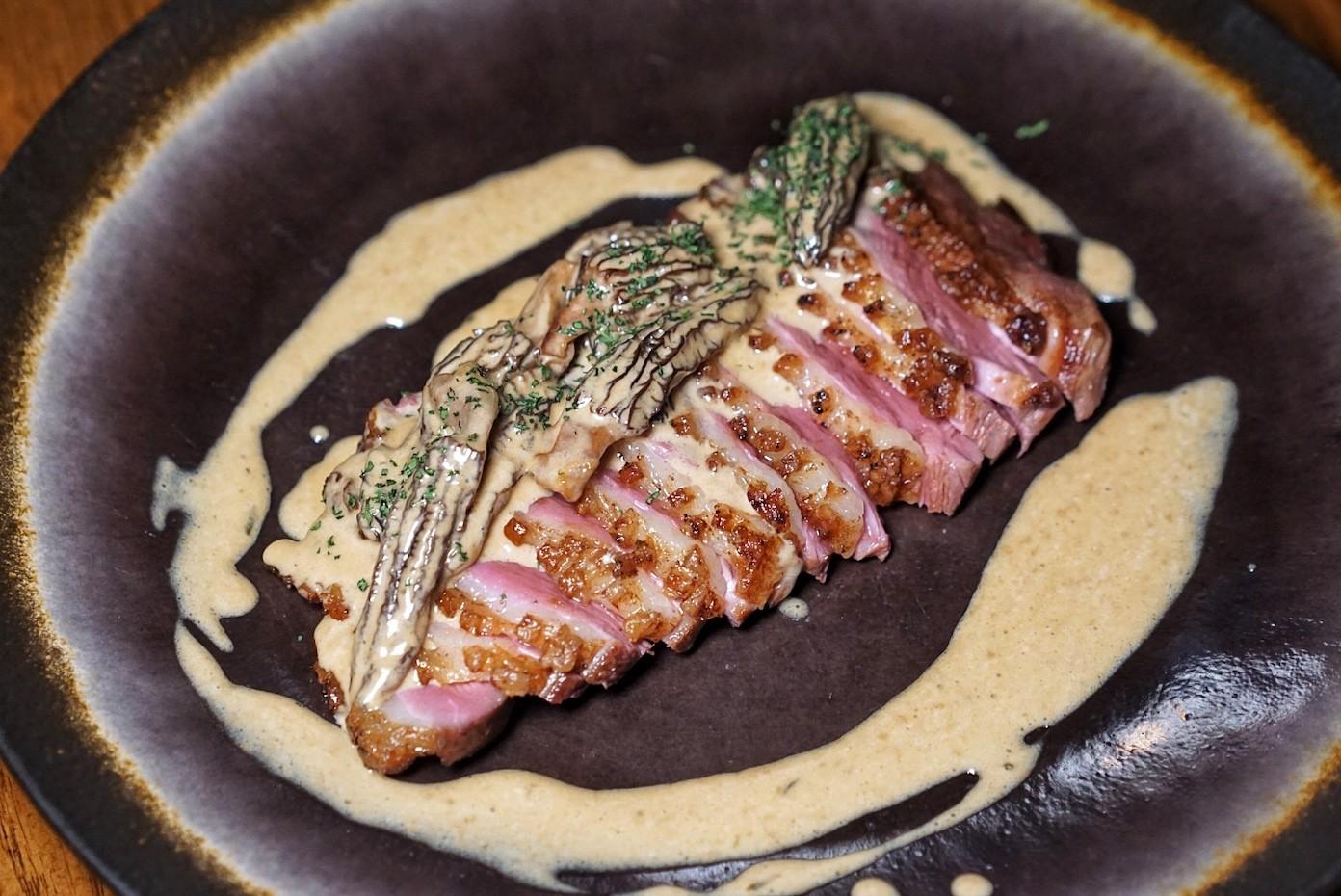
The food menu is designed by chef/partner Rembrandt Van Der Laan (previously of La Creperie), drawing on his experience working at both the Eiffel Tower restaurant and at Alain Ducasse’s 3-star Le Plaza Athénée.
Seven main courses and about as many appetizers and sides are scrawled in white letters on a chalkboard that is carried tableside for ordering convenience. Flavors are oh so French, making it easy to form a coherent meal, complimented by mostly Old World wines.
Read a full review here.
A transplant from London, Black Rock is a shining temple dedicated to all things whisky, scotch and bourbon. Sleek and sexy, the predominantly low-lit, onyx space is outfitted in a range of oak, leather and slate, designed to fit 60 patrons by none other than Shanghai-based interior design firm hcreates.
It is a whisky and cigar lover’s wet dream.
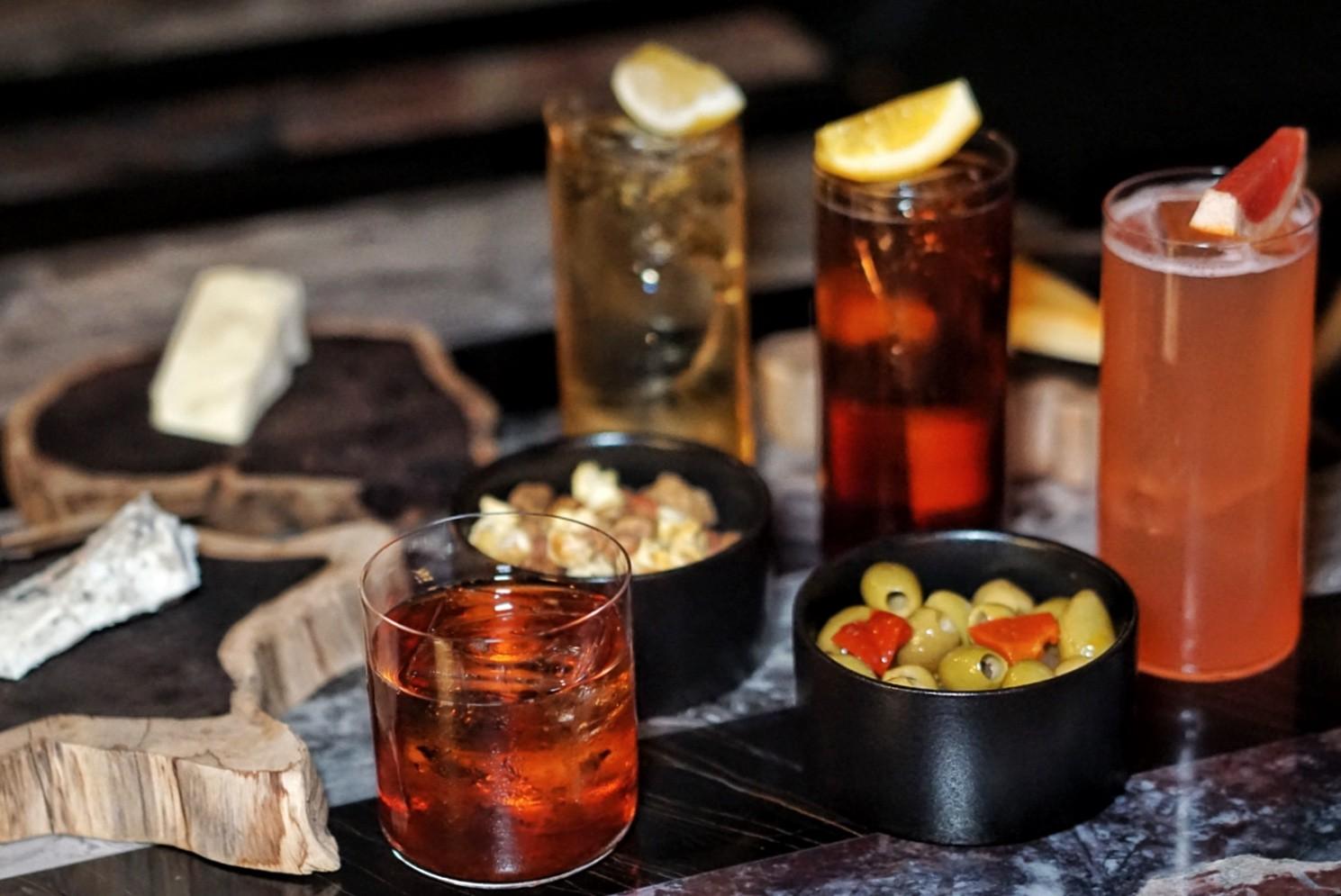
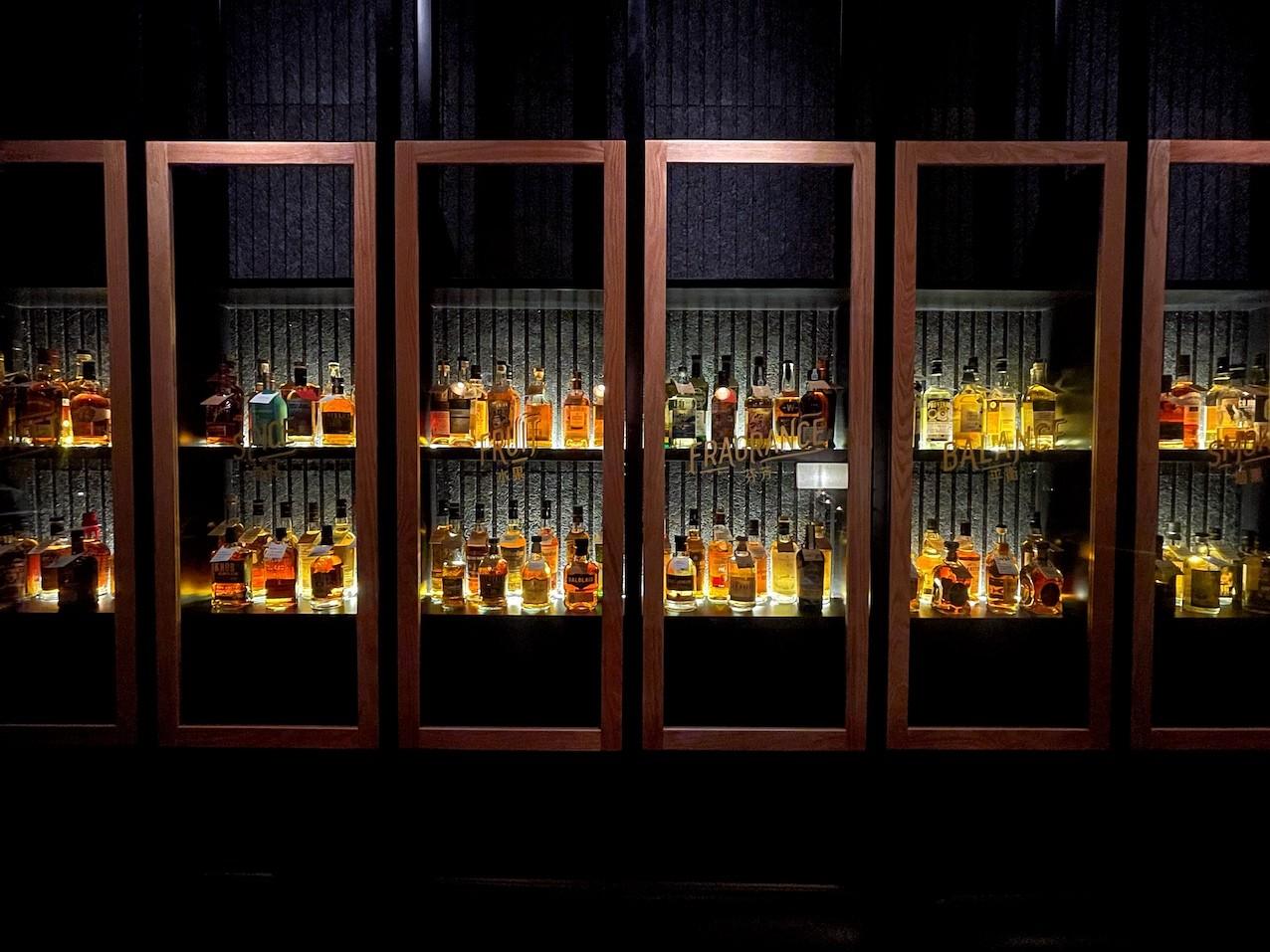
The Shake team (Colin Tait and Danyi Gao) have taken the reins on this Black Rock project, organizing their library of over 180 whiskys from around the globe into six tasting categories – smoky, sweet, spice, fragrant, fruit and balance – making this spirit accessible to whisky nerds and noobs alike.
Beyond the in-table blended whisky and boulevardier, the menu also sees six upgraded highballs and six cocktails, broken into the same tasting categories as the whisky library.
More like a wine bar, the experience is meant to be interactive – approach each cabinet, pick up a bottle, inspect the label, take a whiff and ultimately decide which fits your fancy. But the interaction goes beyond that. Currently, bottles are organized in their categories by Colin and his team – but the beauty of the whisky world is that it is open to interpretation and individual perception.
Read a full review here.
After fast becoming one our favorite openings of last year, we happily returned time and again to dip our toe into Mediterranean grill, Bonica.
The space is broken up into courtyard dining, a cocktail bar illuminated by hanging Edison bulbs at various heights, open-air seating at repurposed wood tables (overlooking the open kitchen led by Executive Chef Marco Chavez), a walk-in 360° wine cellar with over 220 bottles.
It’s a lot of dark wood, slate, granite and cool-toned fabrics, accented by sea-inspired illustrations, while plants abound – basically it’s straight out of a Restoration Hardware gallery.
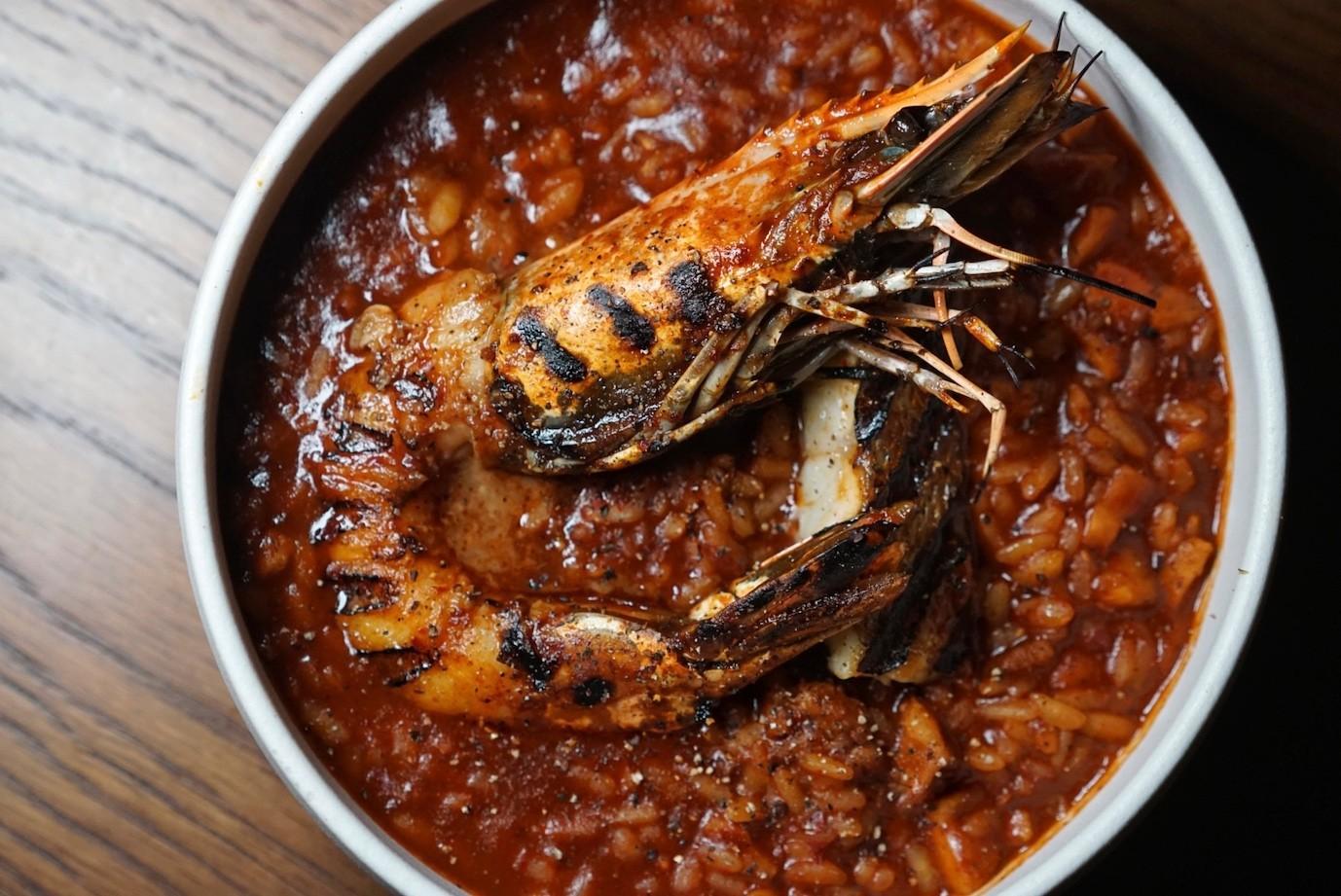
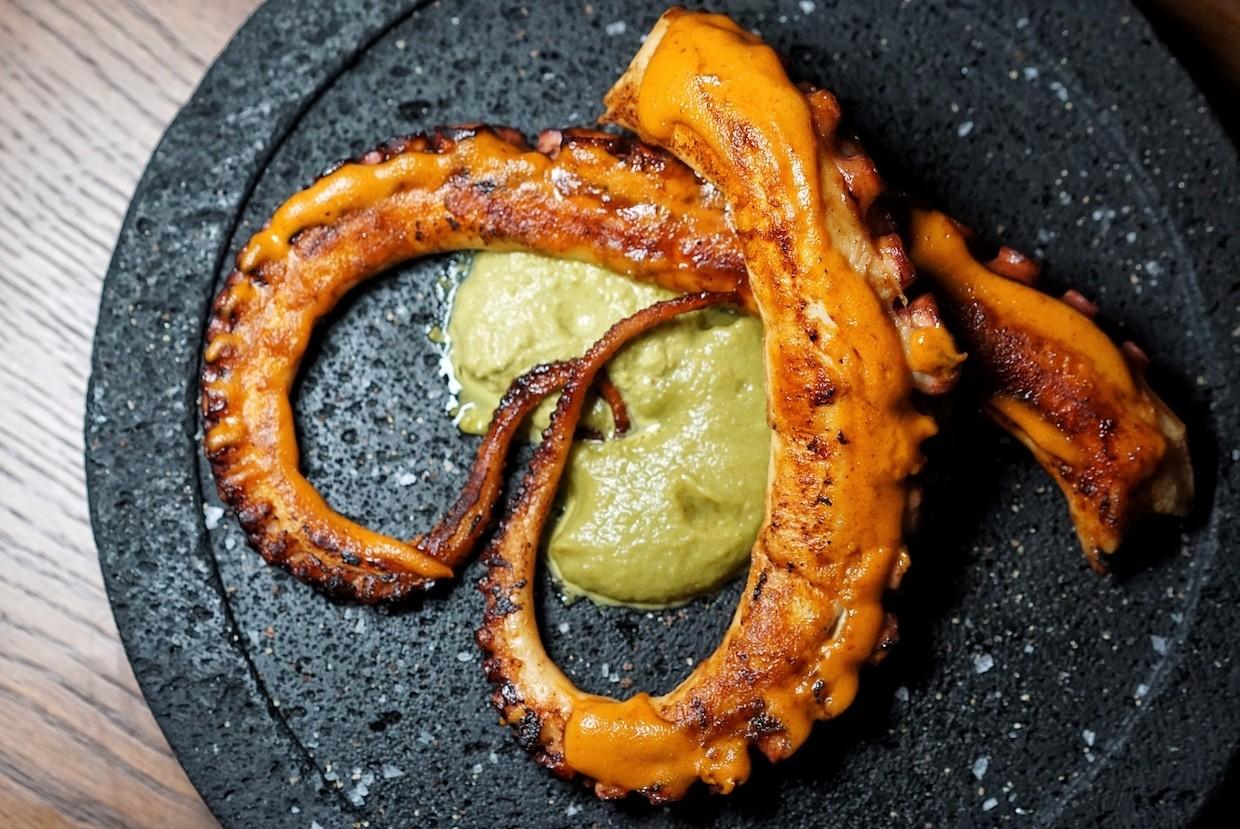
The cuisine concept is heavy on Mediterranean-style grilled and roasted proteins, with meat, seafood and veggies aplenty, plus a curated wine list, cocktails and fantastically knowledgeable and focused staff, many of which cut their teeth at The Shanghai EDITION.
Because of the multi-level layout, the dynamic space is less pretentious; inviting, with an air of exclusivity that lures in an interesting cross-section of local and foreign guests to sip, chat and dine. Essentially, you come here to see and be seen.
Read a full review here.
The newest Russian hangout, Borsh & Kompot, grew from a March 2021 meeting between Jenya Boyar – who was previously running a pop-up concept named after the Slavic fruity, non-alcoholic beverage Kompot – and Xenia Sidorenko, who followed her father’s universally-accepted advice “the way to a man’s heart is through his stomach” to perfect her borsh recipe.
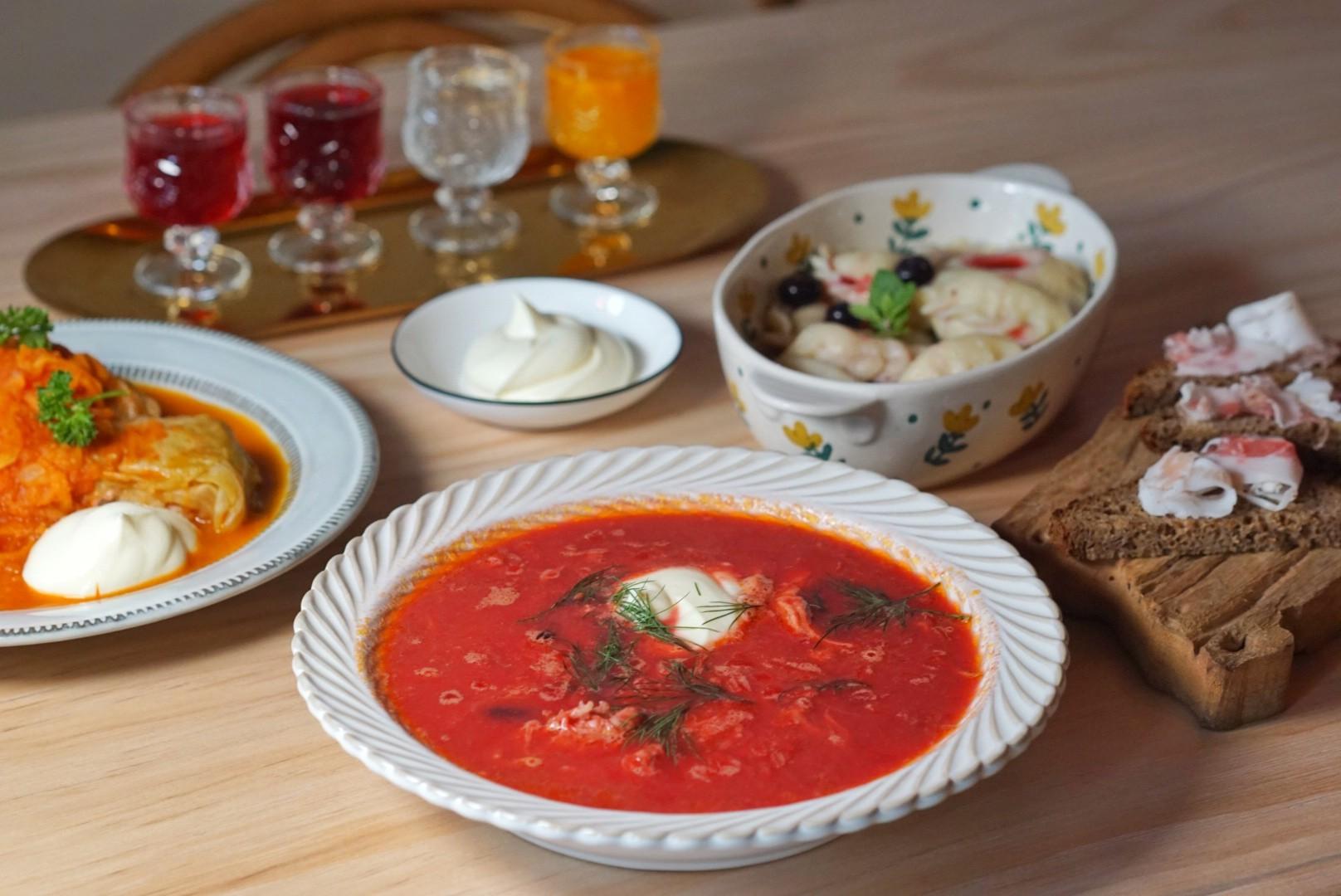
And thus, Borsh & Kompot was born, two key elements that form the backbone of Slavic cuisine that are also commonly served together as part of a Russian canteen lunch set. Together, they embody Russian comfort eats and what Borsh & Kampot is all about – gathering friends together in a communal space to enjoy nostalgic, home-style Russian food.
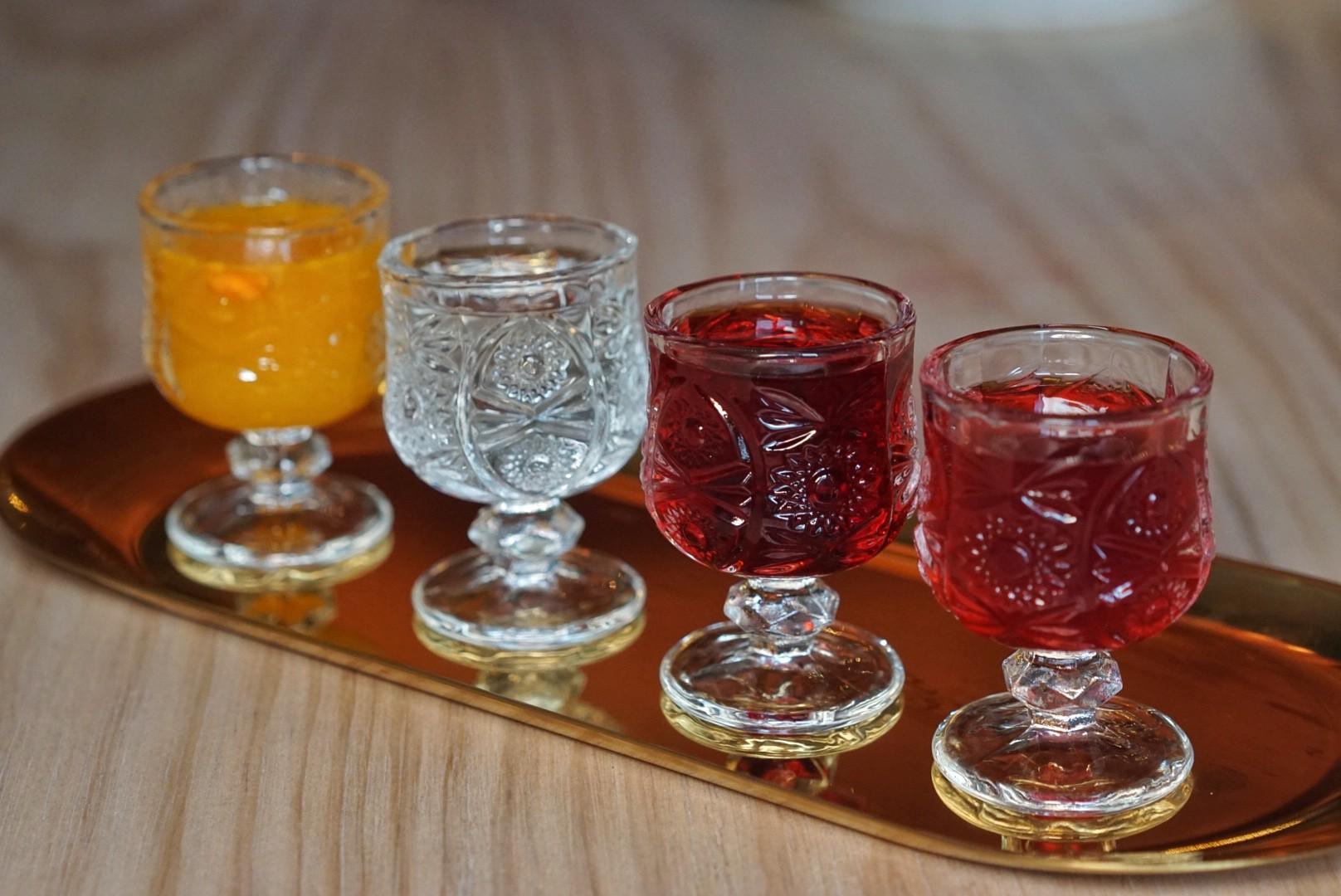
The menu is all about honest, home-cooked Russian cuisine you’d be served by your babushka: dumplings, blinis, stews and cakes, plus an ever-growing array of house-infused vodkas, available by the glass or as a ‘vodka train.’
Read a full review here.
Miss Green, a plant-based organization focused on sustainability and vegan-friendly options, was started by Vivian Chang – one of the pioneers of plant-based, conscious consumption options in Asia – seven years ago.
Since its inception, the company has grown from a vegan blog to a full-on movement for healthier, more ethical, sustainable eating that now encompasses Carrot & Cleaver, a vegan-friendly, dog-friendly and mostly gluten-free grab-and-go and food delivery option through Elema in the Shanghai Centre.
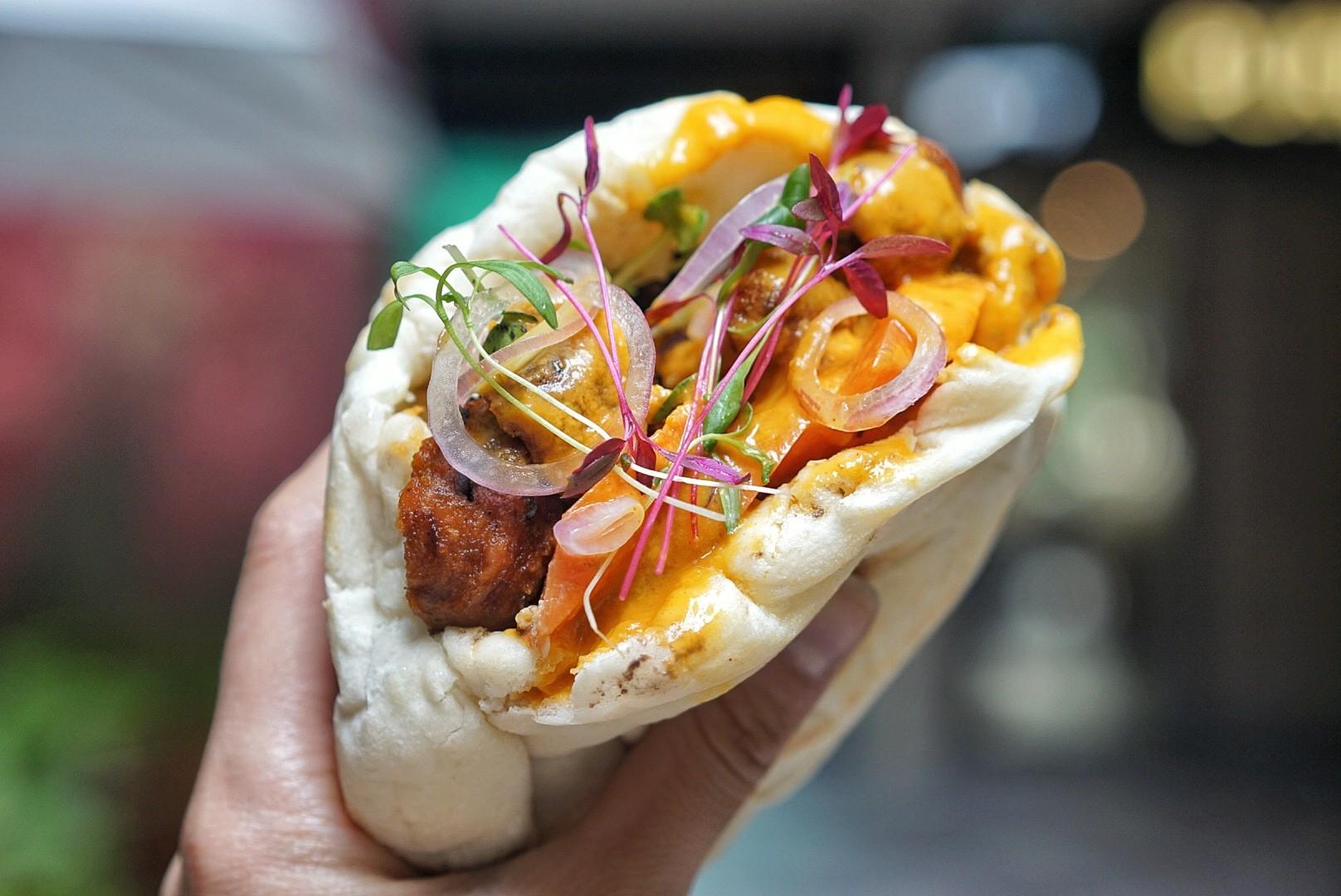
The name Carrot & Cleaver comes from the concept of a vegan (carrot) takeaway butcher (cleaver). Working closely with Vivian, Chef Guillaume Comparat applies techniques learned through his fine dining background to create seasonal, resourceful and flavorful meals that won’t weigh you down in the middle of a workday nor negatively impact the globe.
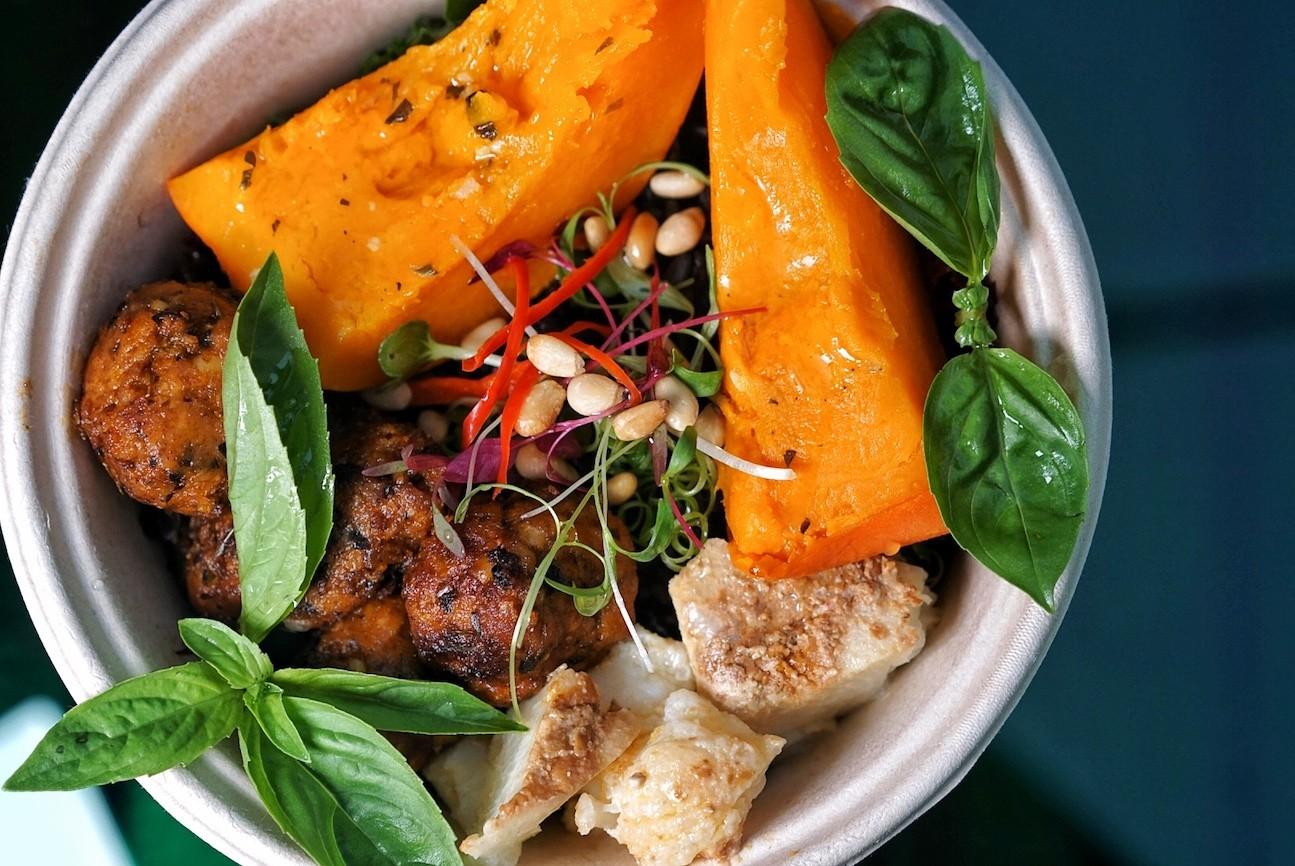
Sustainability is a major focus of the concept, with zero waste as the goal. By crafting a closed loop process and fully utilizing all parts of an ingredient, this also pushes creativity to new limits – it’s no wonder the menu is kept small on purpose, but constantly rotating on a nearly weekly basis to keep it interesting for repeat customers by using only the most in-season produce.
Read a full review here.
Chaoyi Buer is a trendy, luxury space housing a café with imported beans and French pastries designed by an award-winning French chef, a florist shop and a retail pop-up space with rotating collaborative exhibitions and displays.
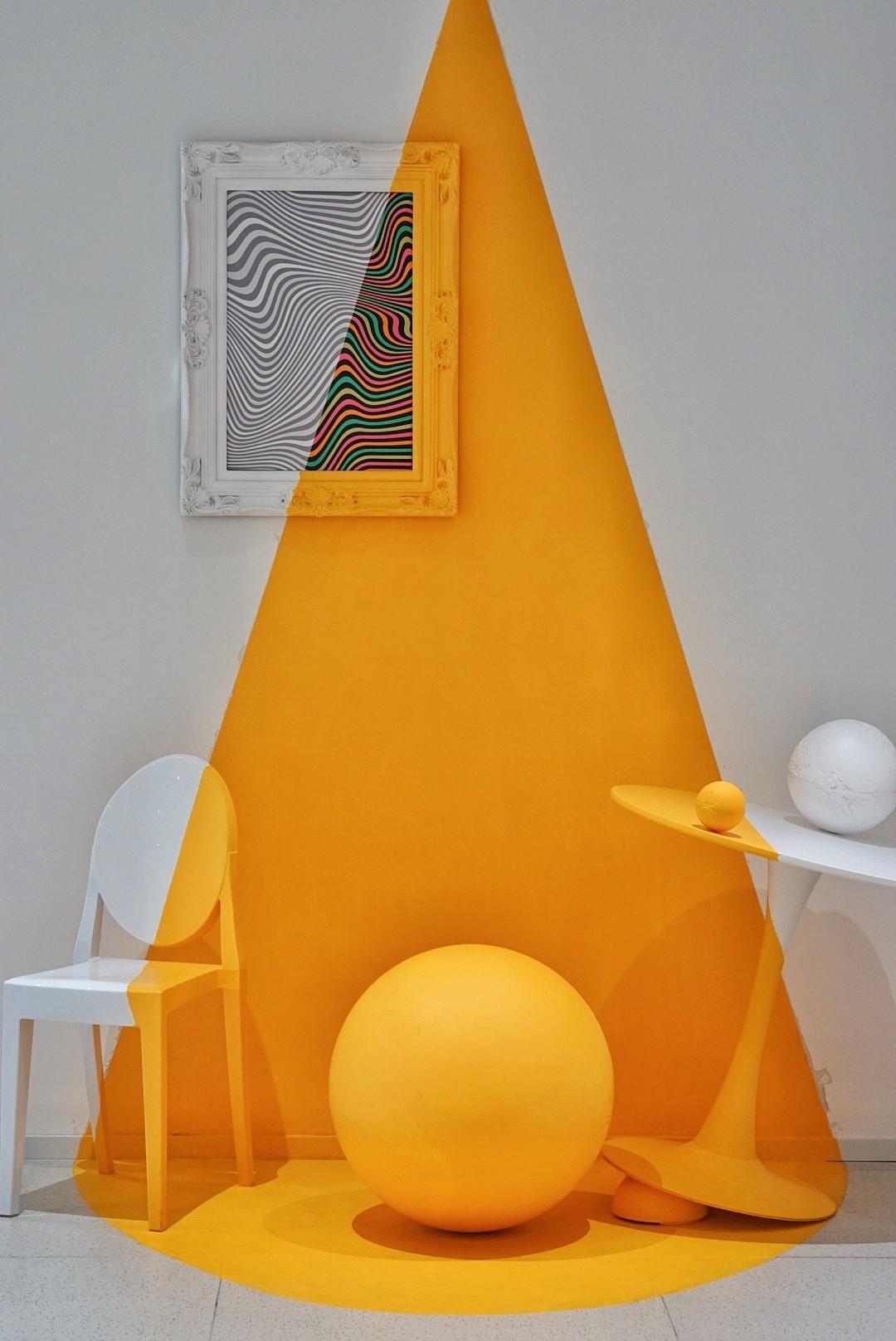
Attracting the hippest fashionistas, the 800-square meter space combines lifestyle, the arts, design and food in one place, with both indoor and outdoor seating options.
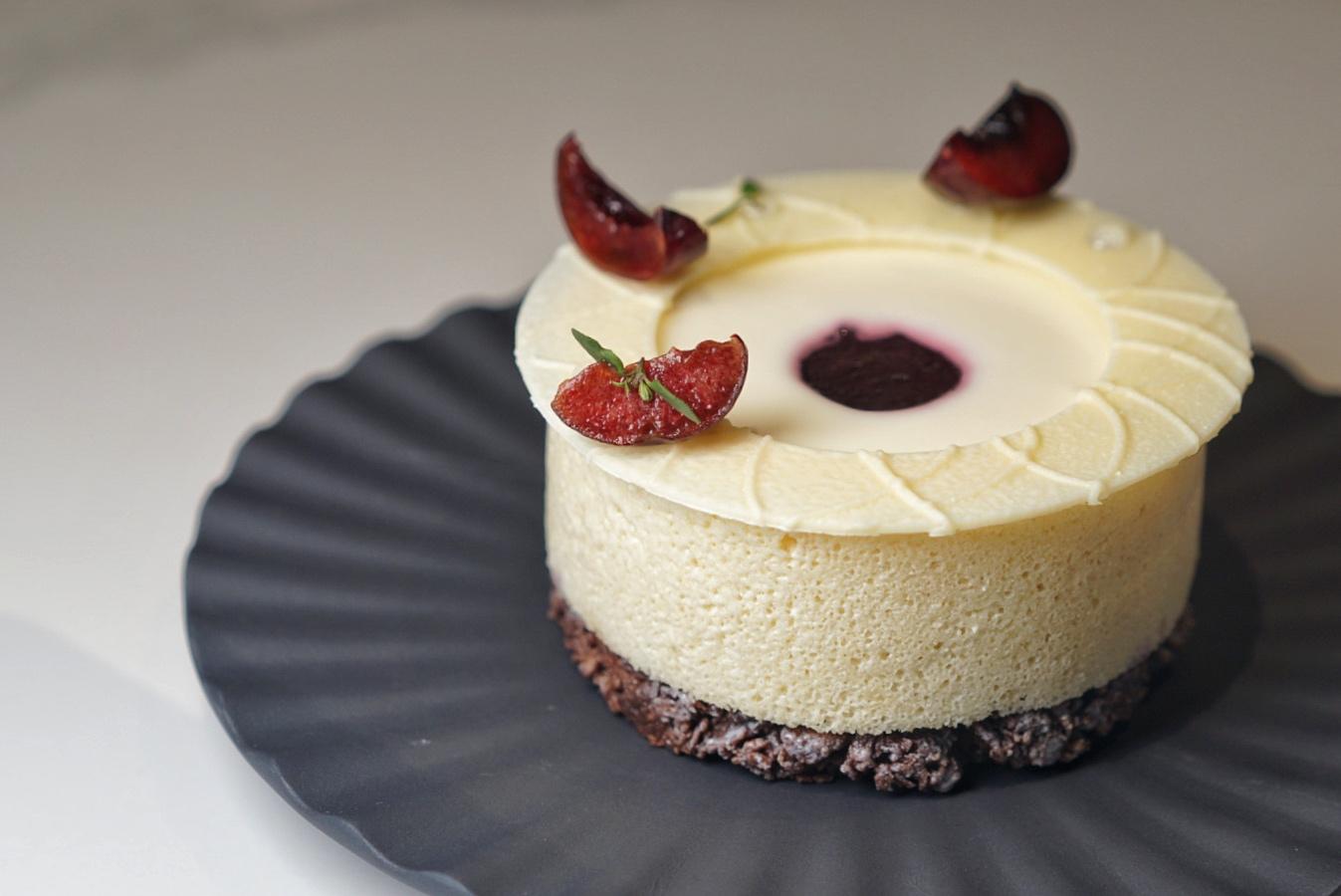
The current menu is all about the pastries, coffee and drinks, bringing the true flavor of the key ingredients to the forefront, with an emphasis on varying textural contrasts. Fresh fruits, light creams and homemade crumbles are the main forms of sweetness, as minimal added sugar ensures diners won’t experience the dreaded mid-day crash.
The welcoming space serves as an ideal location for brunch, afternoon tea and exclusive, private parties, with custom-designed desserts, snacks and drinks into the night.
A modern tribute to Sichuan cooking, Charcoal Player opened in TX Mall in December, presenting a refined taste of one of China’s most famed cuisines. Offering a 9-course set menu for RMB780, diners can expect color-coordinated plates, each highlighting distinct aspects of Sichuan cooking techniques and flavors. Think The Peacock Room or The Pine but more contemporary.
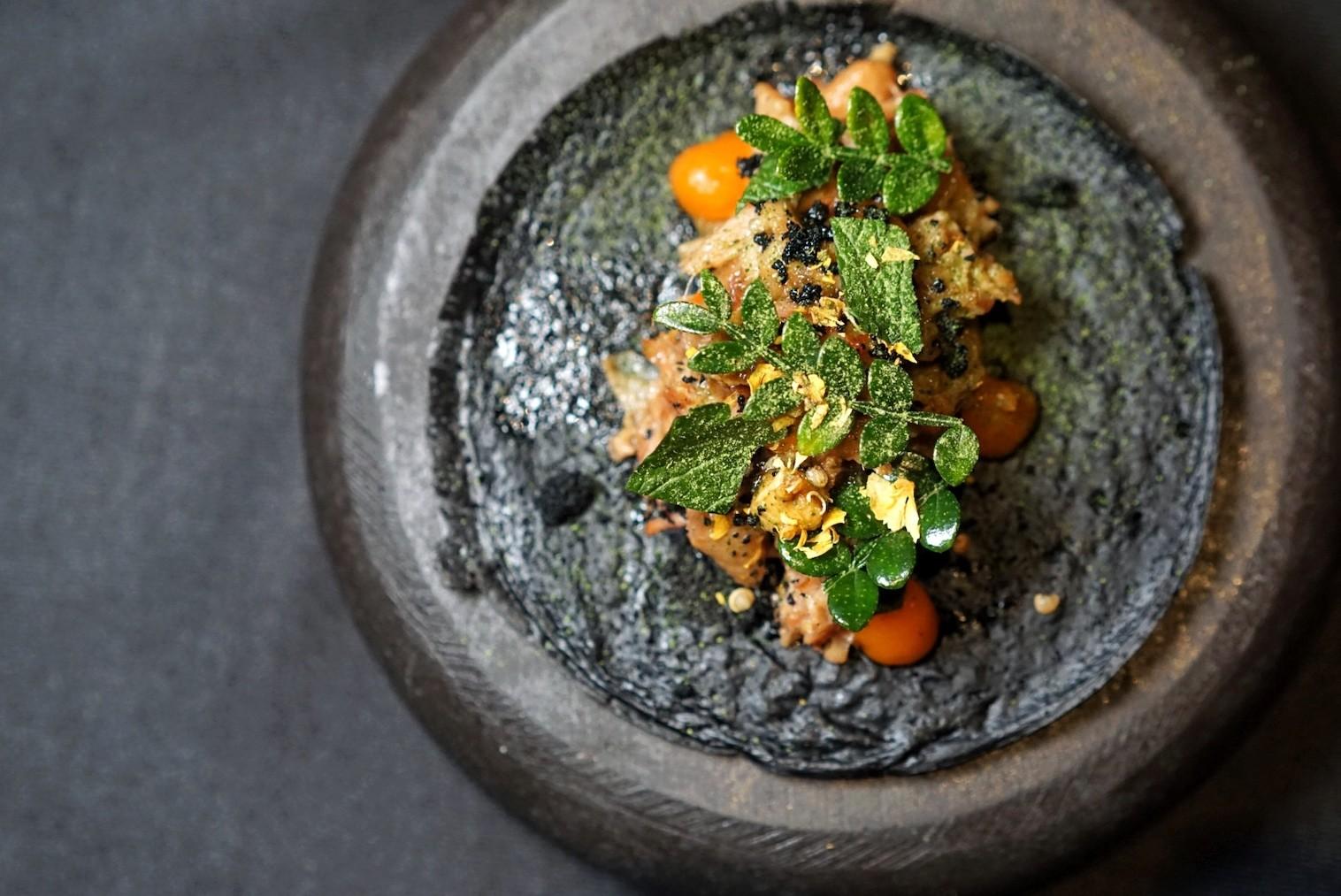
The current menu is a prelude of what’s to come, a smattering of cooking styles and ingredients from all over the province.
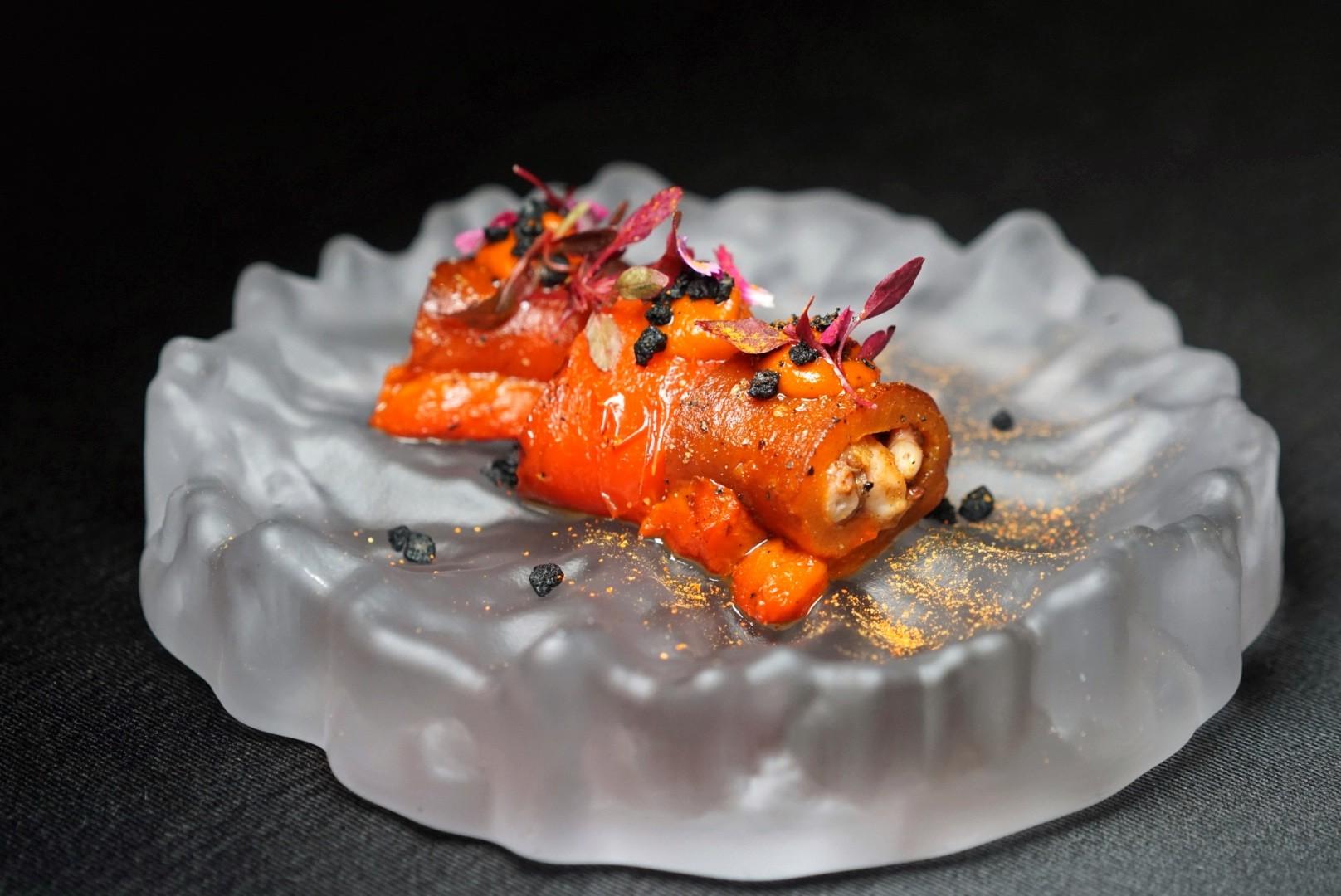
However, in March, the menu will begin to focus on various regions of Sichuan, divided by altitude rather than geographical location. For example, first up will be the Mountain menu, followed by the River menu and eventually an Ocean menu.
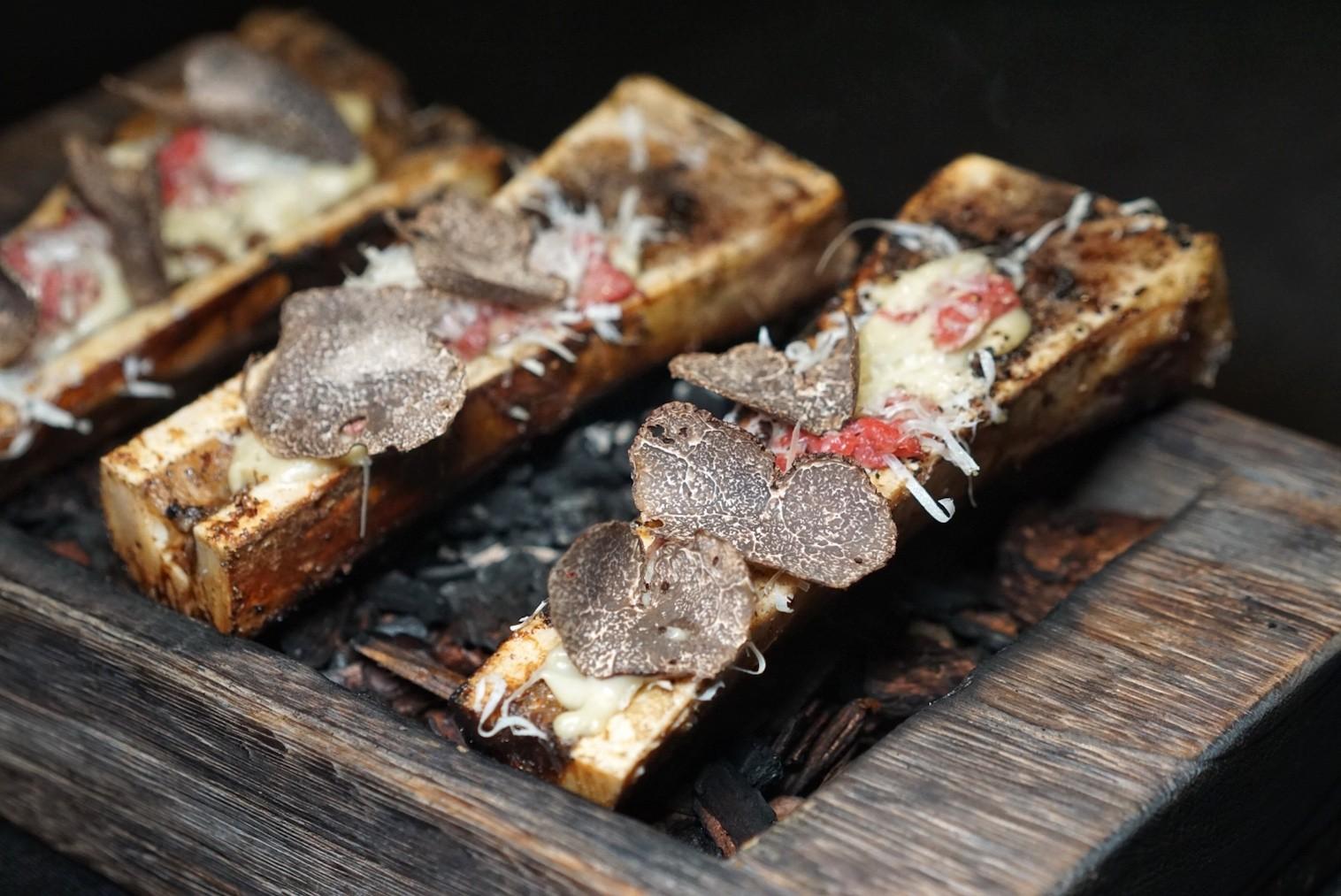
Each dish is presented in a monochrome color palette, showcasing a traditional Chinese color – good fortune red, royalty yellow, healing green, authority black, love purple, etc. A key component of the menu is balance – a balance of yin and yang, a balance of light and dark, a balance of spice and sweet, a balance of soft and firm.
Read a full review here.
Set on the Pudong bank of the river looking back over the Bund, Chili's American Restaurant and Bar is a US institution, famed for its sizzling fajita plates, Texas-size ribs, burgers, buffalo wings, the tasty, tasty margaritas and much, much more.
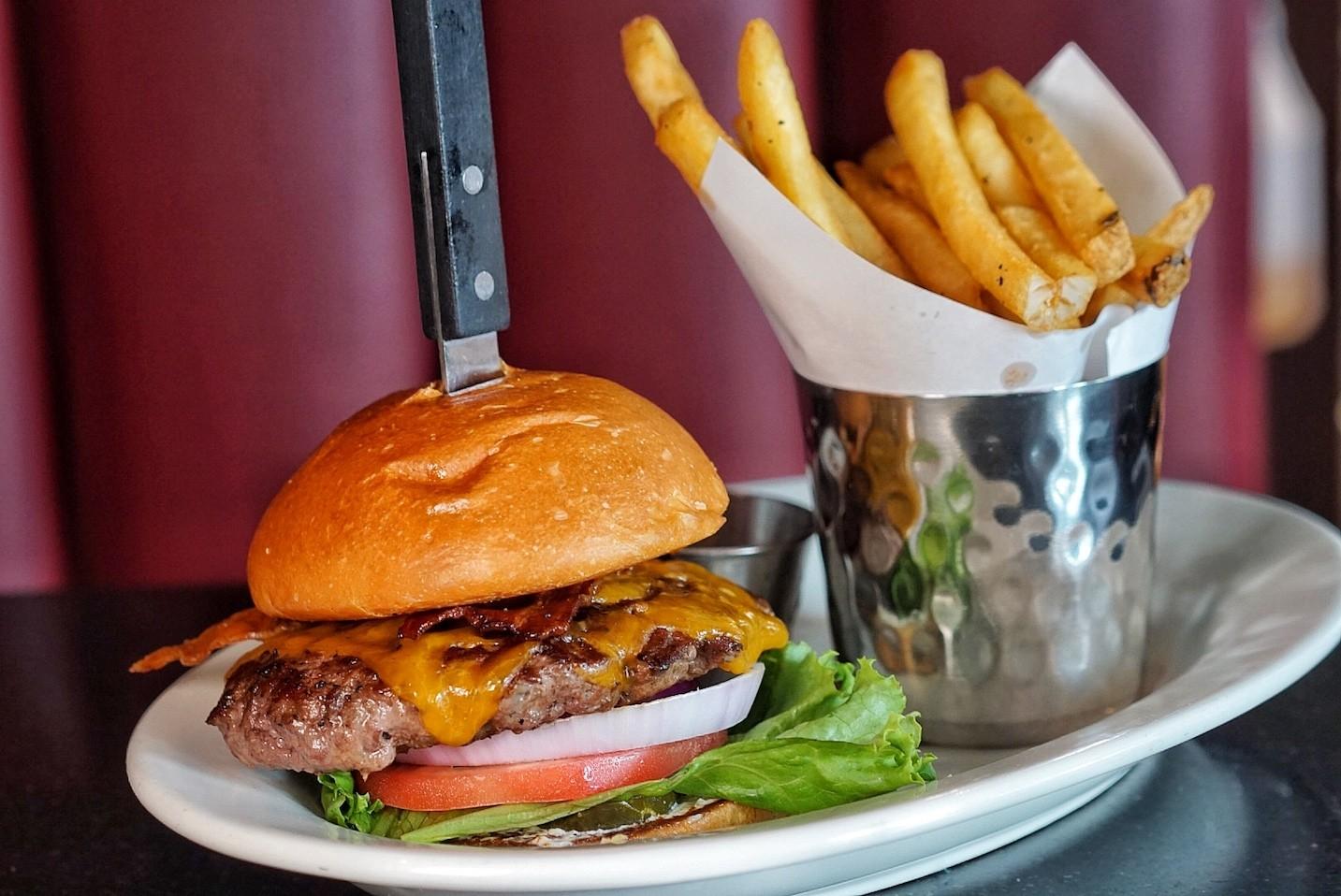
Chili's is an unadulterated taste of Americana, pure comfort in all of its nostalgic glory. The sprawling menu of Big Mouth Burgers are no exception. Made with Australian Angus beef, these burgers are hand-smashed then grilled on a flattop grill to seal in all of the flavors, and served on a toasted brioche bun with melted cheese and fries.
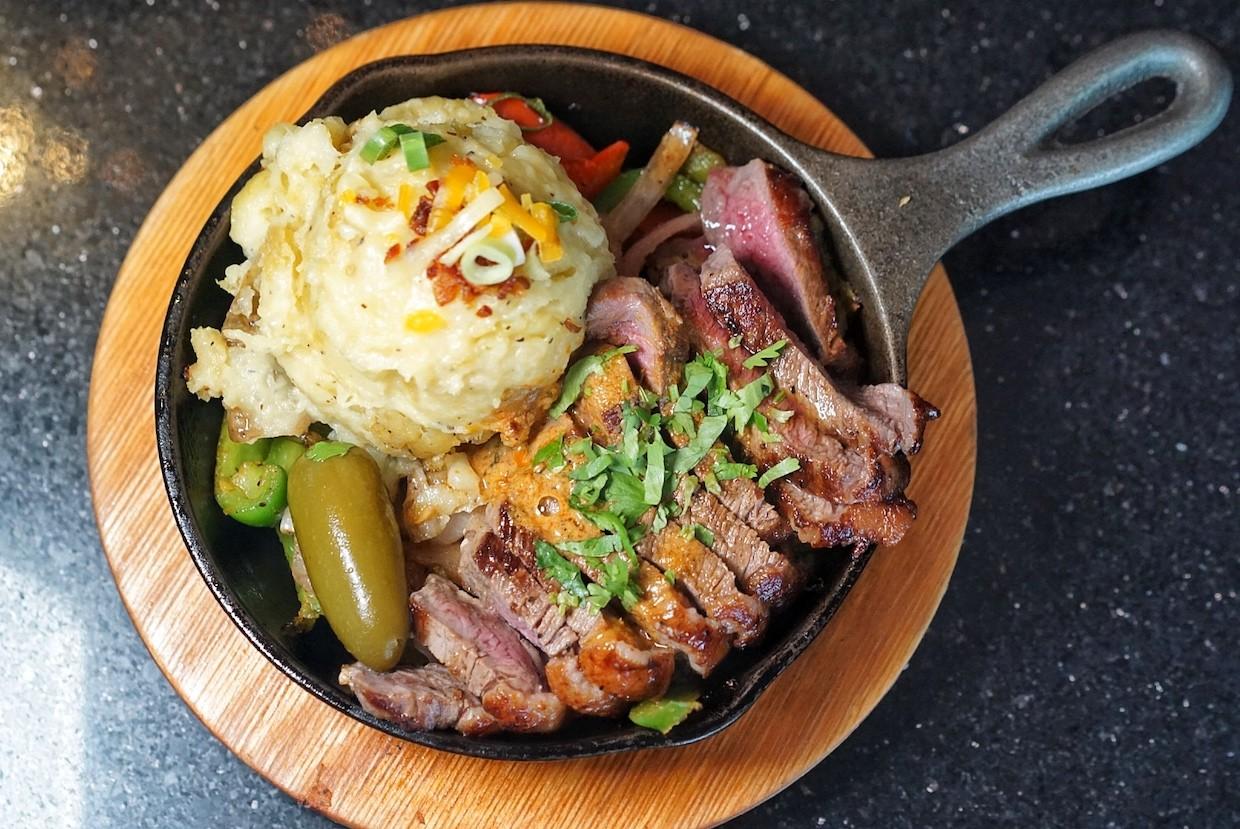
The lunch deals bring in a steady flow of eaters for a leisurely feed, while nightfall sees the venue turn into a watering hole, with people sticking around to drink off a long working day or get together with family and friends, followed by a sumptuous dinner. When the weather steps up, there’s always a gaggle of people on the patio, sipping coffees in the morning, sweetened iced teas in the afternoon or cocktails in the evening, ensuring a crowd at all hours.
Despite housing more than 7,000 coffee shops (the most in one city in the entire world!), Shanghai – and specifically the Xinle/Donghu Lu intersection – saw the soft opening last month of another coffee-centric venue, Crave Café & Wine Bar, by chef Holly Lian (CouCou). Crave currently offers coffee, wine, pastries and simple lunch fare, but will expand into dinner at the end of the month.
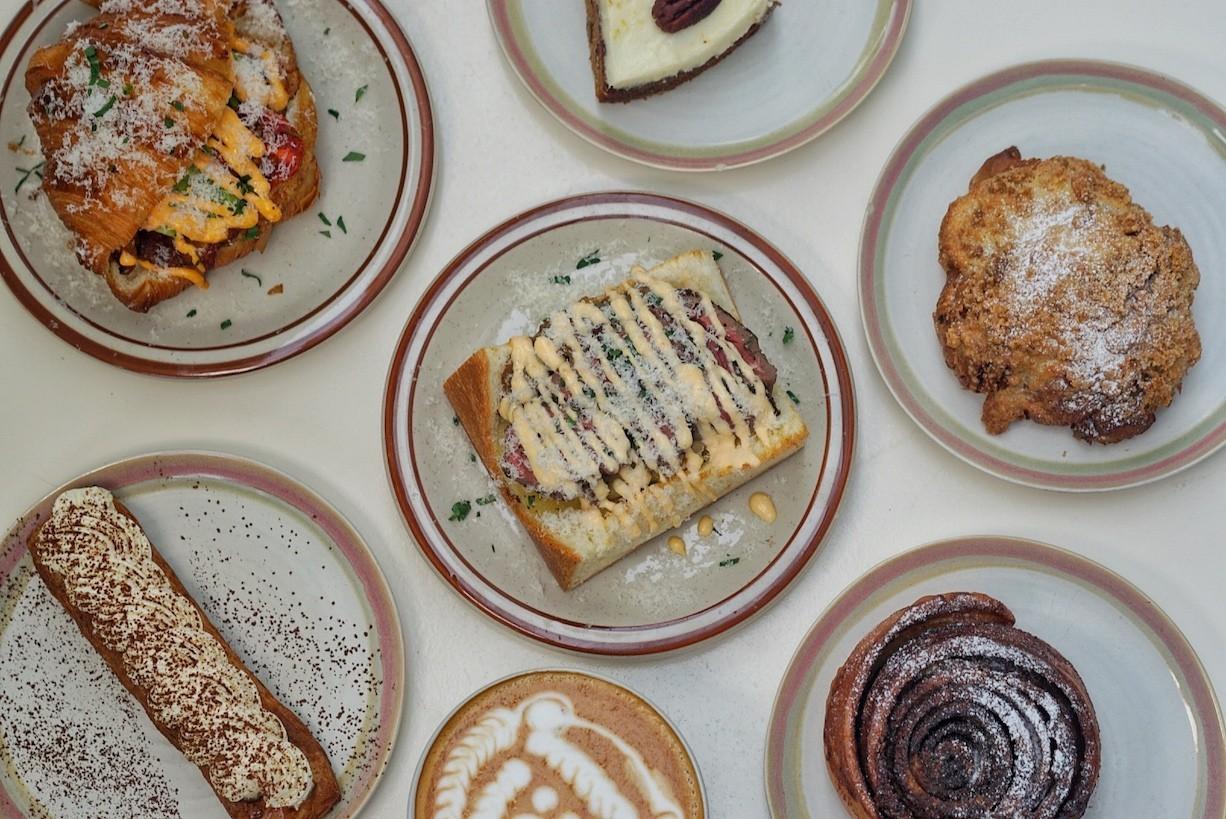
Partnering up with Olivia Xu (Holly’s old classmate from French pastry school) and sommelier Yannick De Brouwer (previously of RAC), the three decided to put their specialties together in one space, with an added emphasis on music.
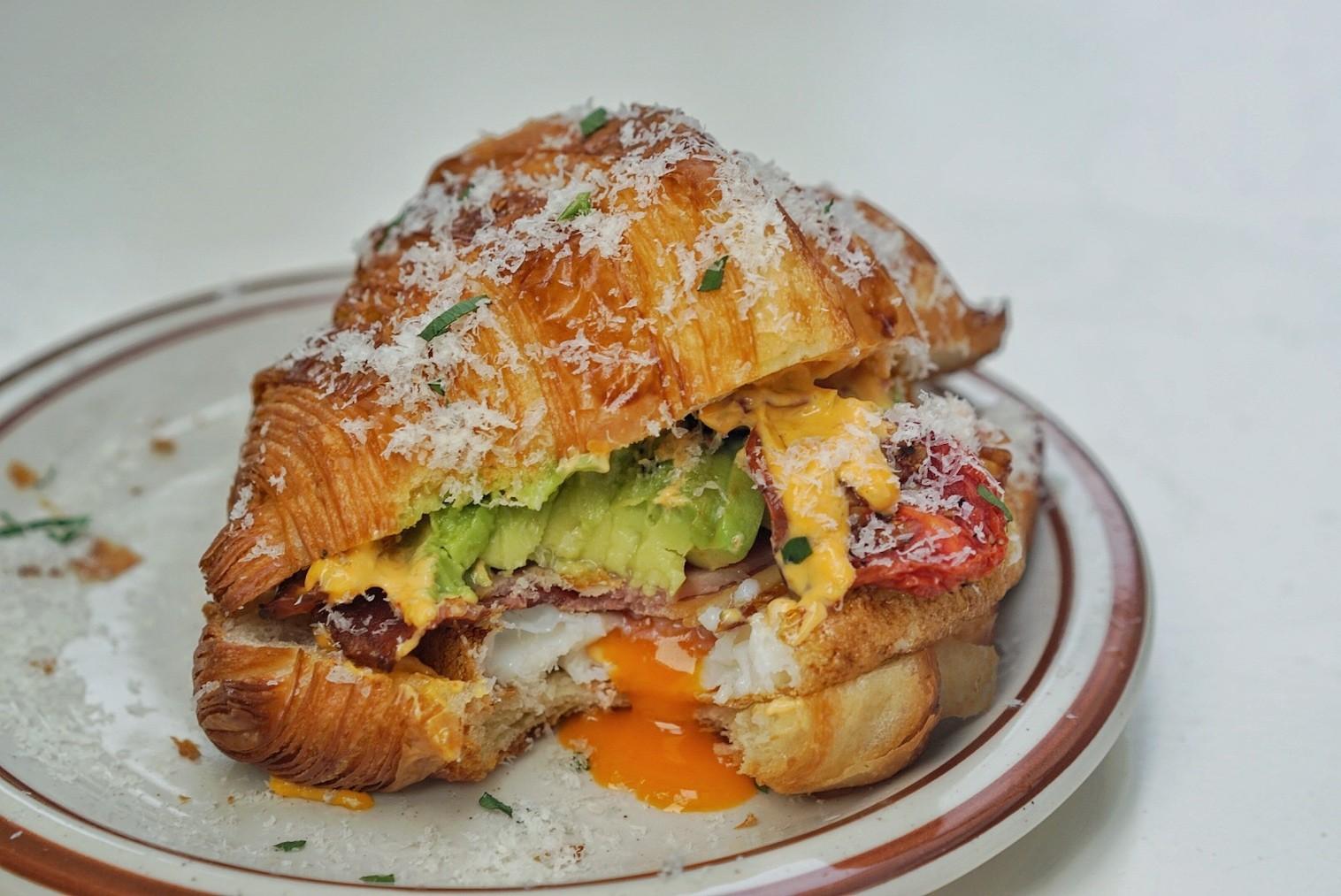
The food centers around daytime café eats – baked-daily pastries, Instagrammable sandwiches, brunch plates and the like. It’s a lot of carbs but also a lot of cute.
The warm, yeasty aroma of freshly-baking bread mingles with the smell of treacly pastry glazes wafting through the small window leading to the back kitchen – confusing your senses, and causing you to purchase enough carbohydrates to feed a small army.
Read a full review here.
Le Daily’s all-star lineup of Francois Seguin (SOiF), Michael Chen (The Cannery, Laiba) and Andrew Moo (TasteCollective) make a team that oozes creative deliciousness. And there is a reason that, since soft opening began in mid-April, they have succeeded in packing out every one of the 20+ seats at all hours of the day; they are crushing it, pumping out shining, glorious tributes to all things lunch that we haven’t seen the likes of since Madison Kitchen.
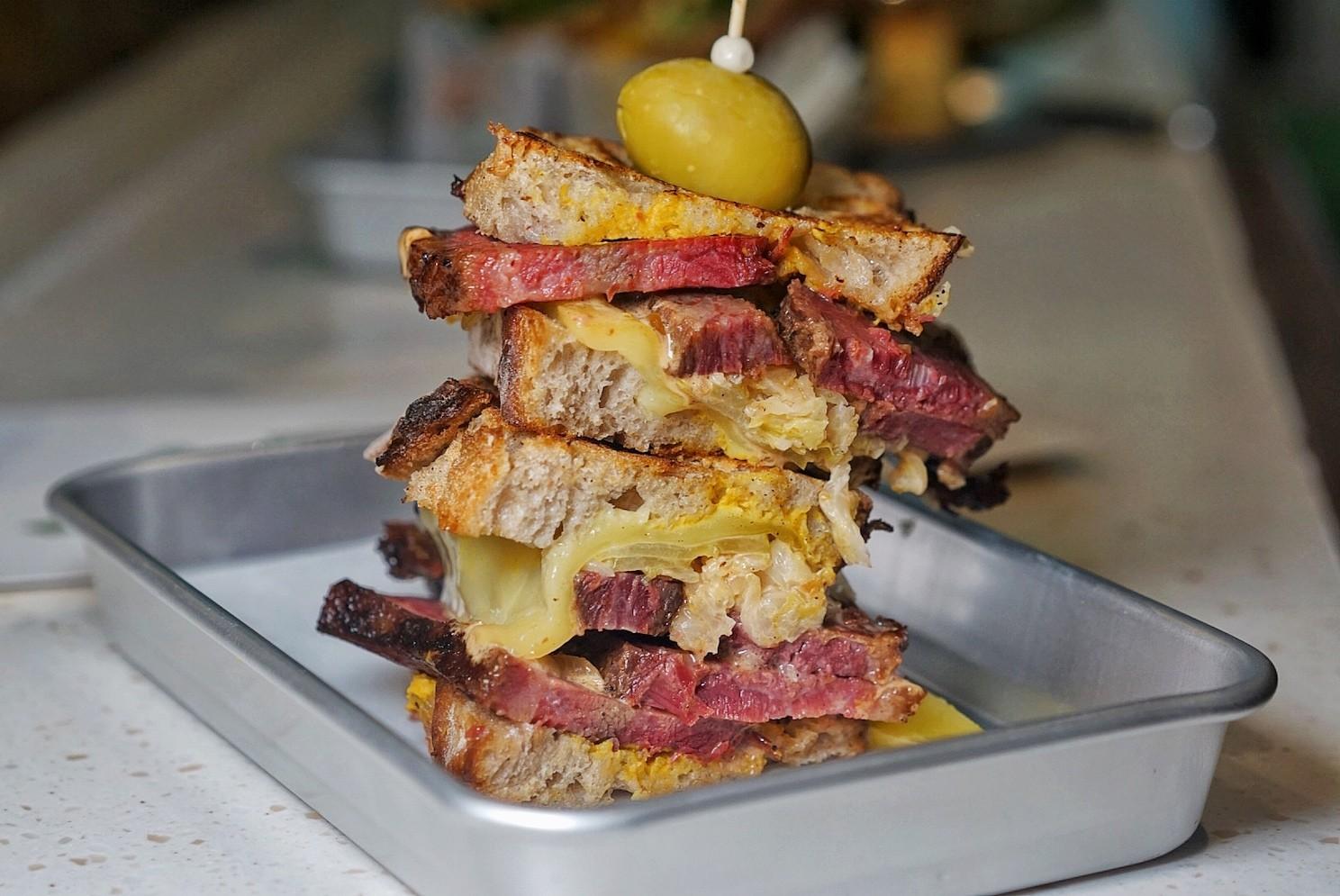
Le Daily is technically a deli, but that’s sort of like saying Prince was a musician. In reality, it’s a homage to the deli tradition, whose gluttonous, cholesterol-laden pleasures are elevated with unrivaled ingredients. If it can’t be made, sourced or presented in the absolute best way, it’s not going on the menu.
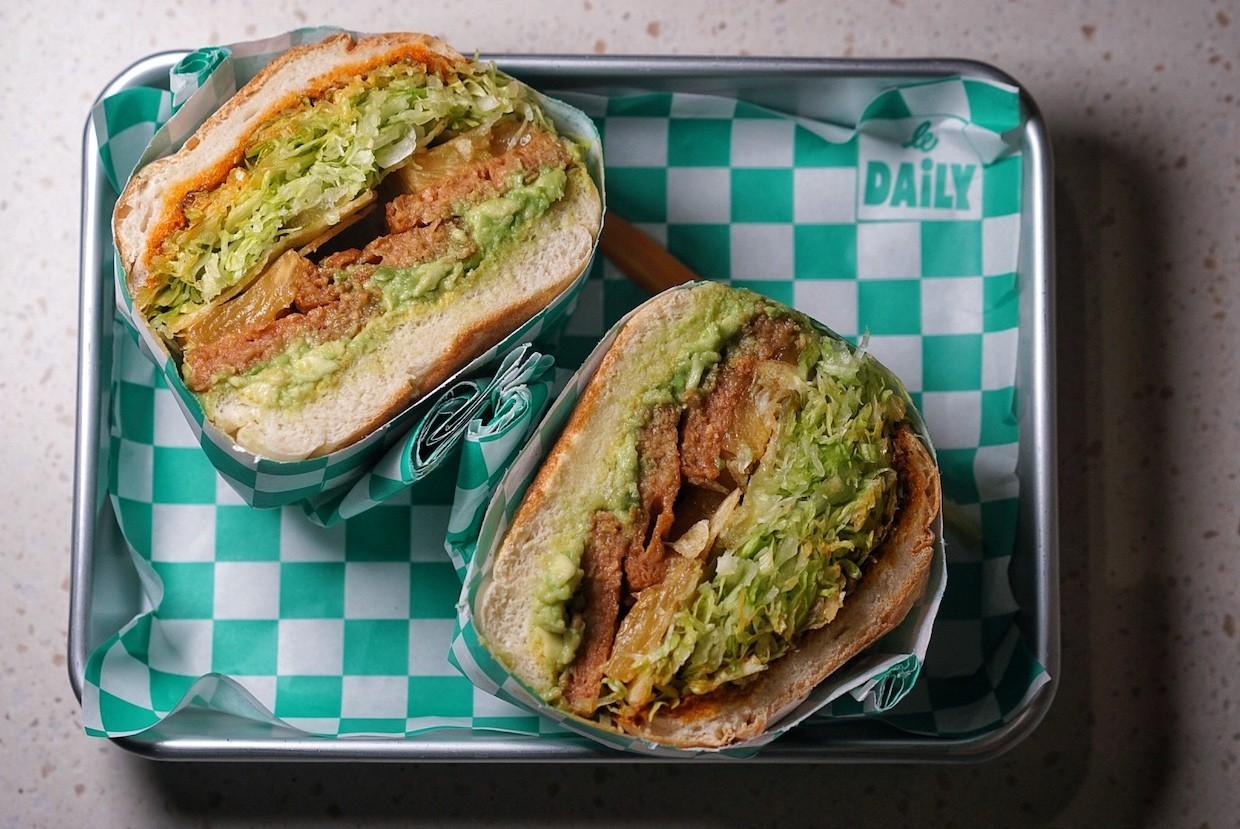
Consulting chef and idea man, Andrew Moo, understands deeply that the first step to a great sandwich is great ingredients. If it can be homemade, it is. From bubbling kombucha to tangy dollops of labneh to zesty pickles – no corners are being cut.
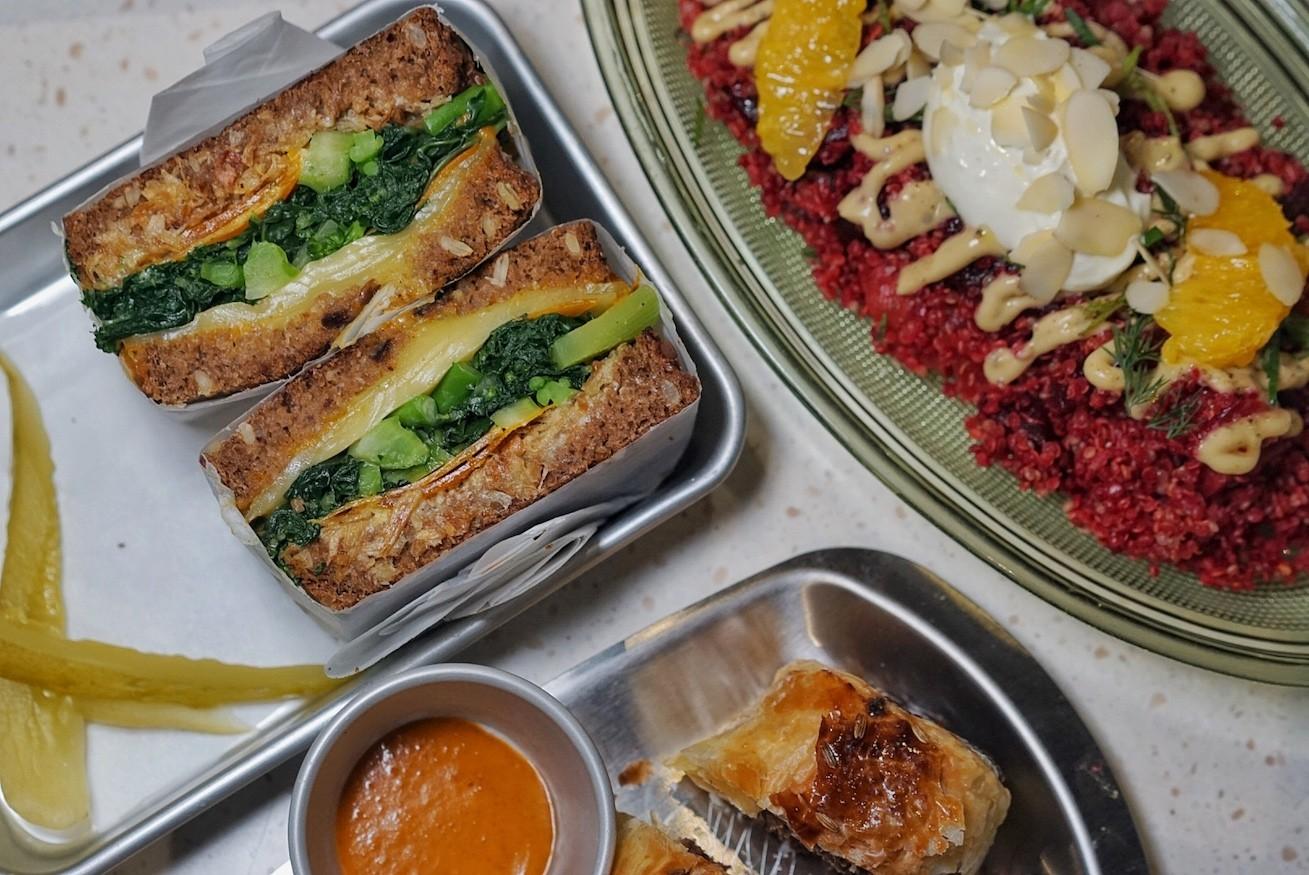
Le Daily is all about featuring something that seems pedestrian at first glance and making it inimitable, causing diners to constantly do a double take. Unique nuances elevate this little deli to more than just a sandwich shop.
Read a full review here.
Like the counterculture-era phrase popularized by Timothy Leary (the father of psychedelics), The Drinkery – Shanghai’s newest casual hangout bar, reminiscent of an old school house party – embodies the motto, “turn on, tune in and drop out.” Even the logo is a damn light switch.
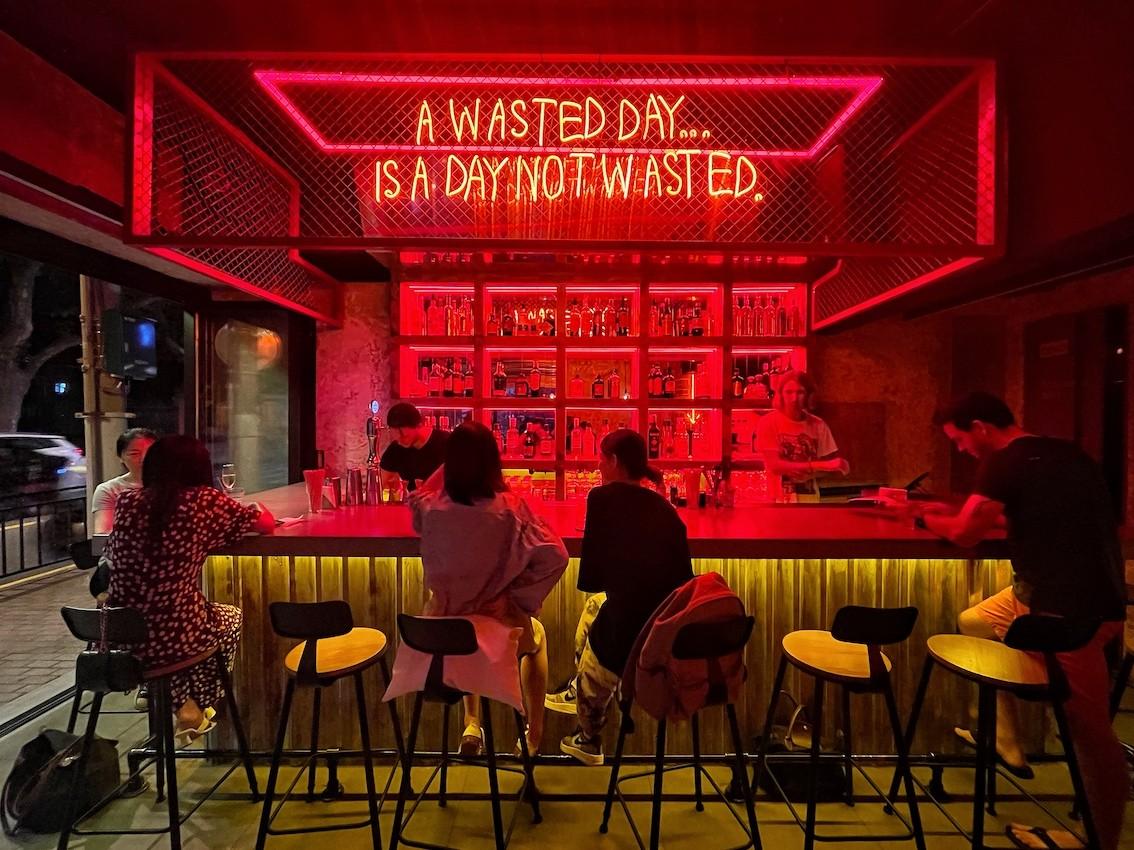
Started by bar consultant and mixologist Ilyà Khokhlov (Ray's, Botanical Basket) and his partners Igor Mustafaev and Becky Wang, the three launched the venue to embody the space they want to head to after a long night working behind a bar. Situated on Ruijin Er Lu, just south of Huaihai Lu, the bay doors open to the street, with guests spilling out while still vibing to music that feels like Elevator light. Like if Elevator took a Xanax.
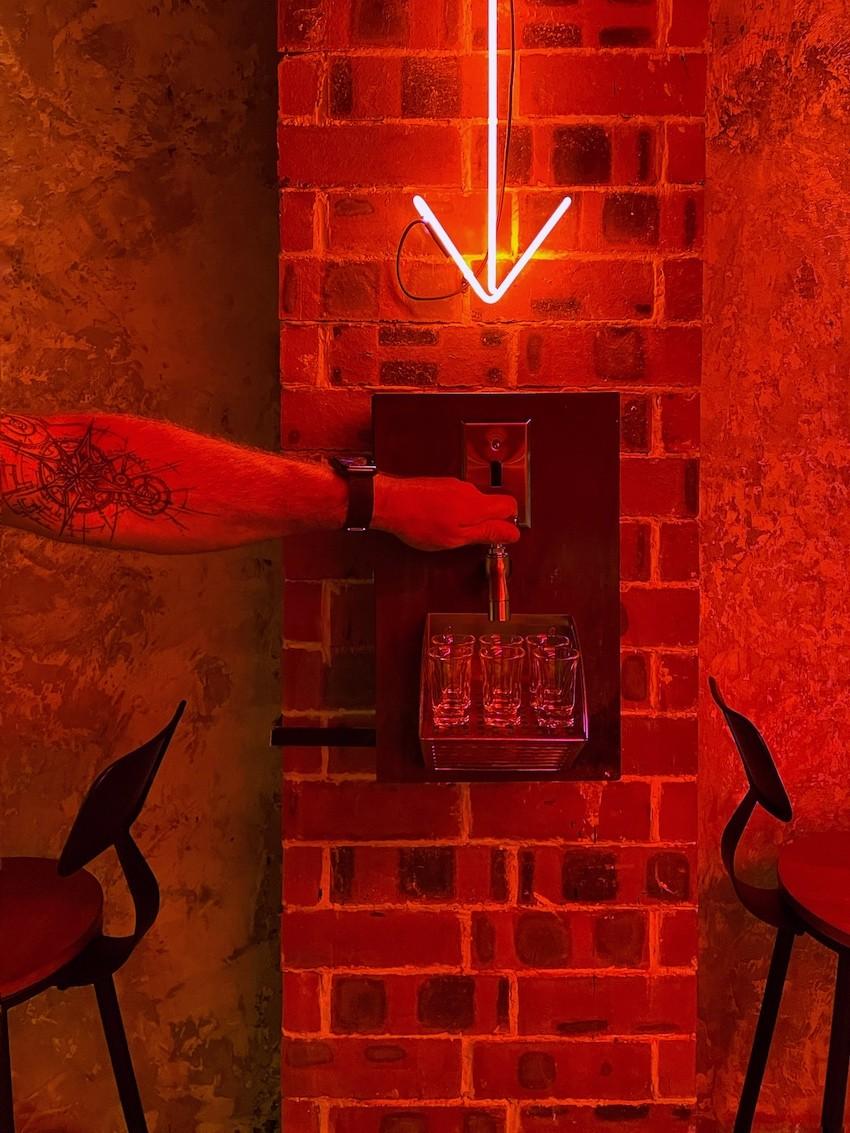
The menu itself is about simple cocktails and affordable bar snacks – no wheel reinvention. If you want a foofy drink that involves rotovap this, infused that, and molecular gastronomy-level garnishes, look elsewhere.
Read a full review here.
Adding to the allure of the Donghu Lu corner, Eldivino – the second location of an authentic high-end Thai restaurant – moved into the old Bistro Burger spot. Owned by Jean-Claude Terdjemane (previously at The Peninsula) and Thai chef Nui Ratchaphibun, the two aim to bring the finest flavors of Bangkok to Shanghai in an upscale lounge setting.
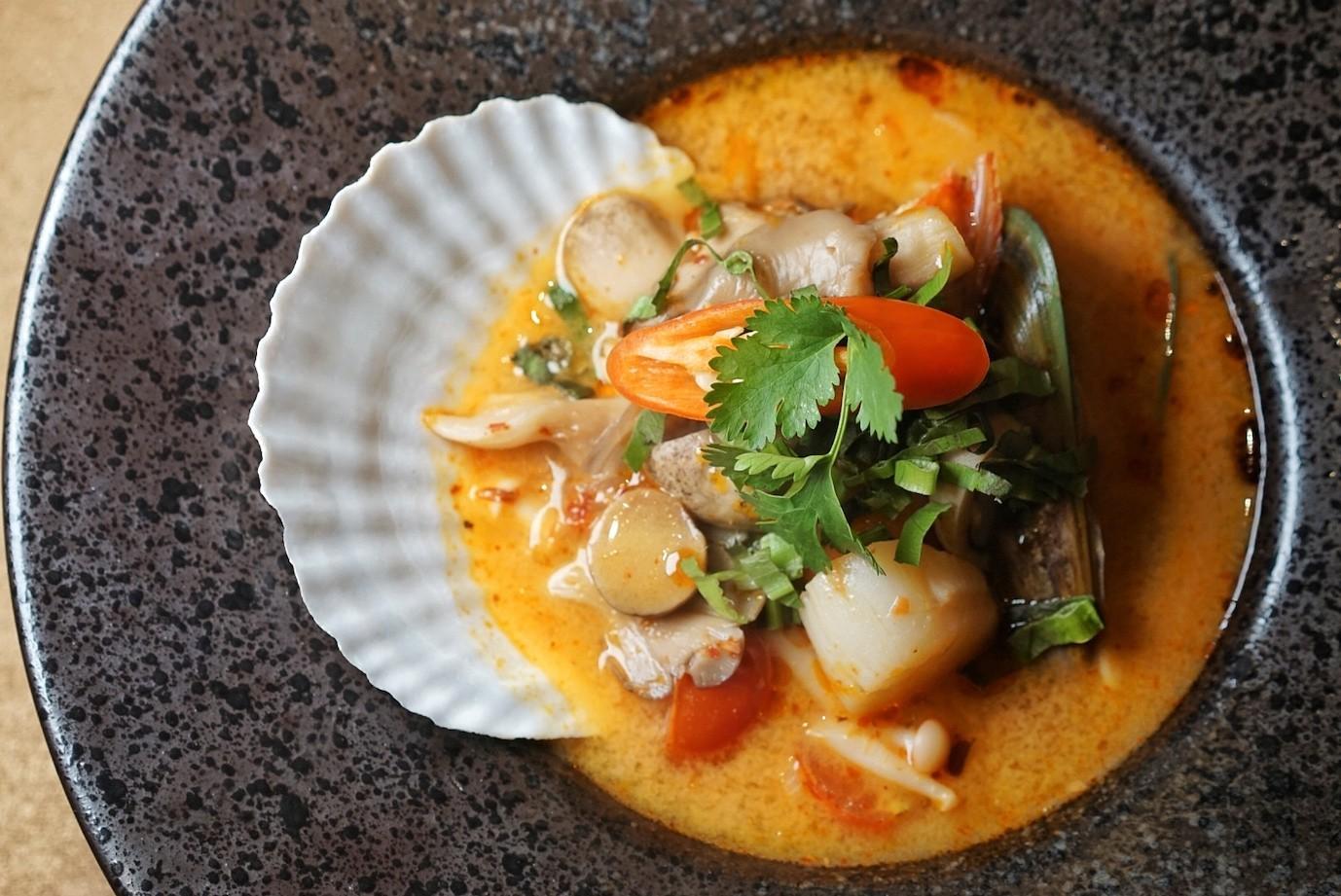
The restaurant's signature dish, the Classic Tom Yum Goong Soup can be seen on nearly every table; as it approaches the table, wisps of lemongrass and fresh seafood permeate the air.
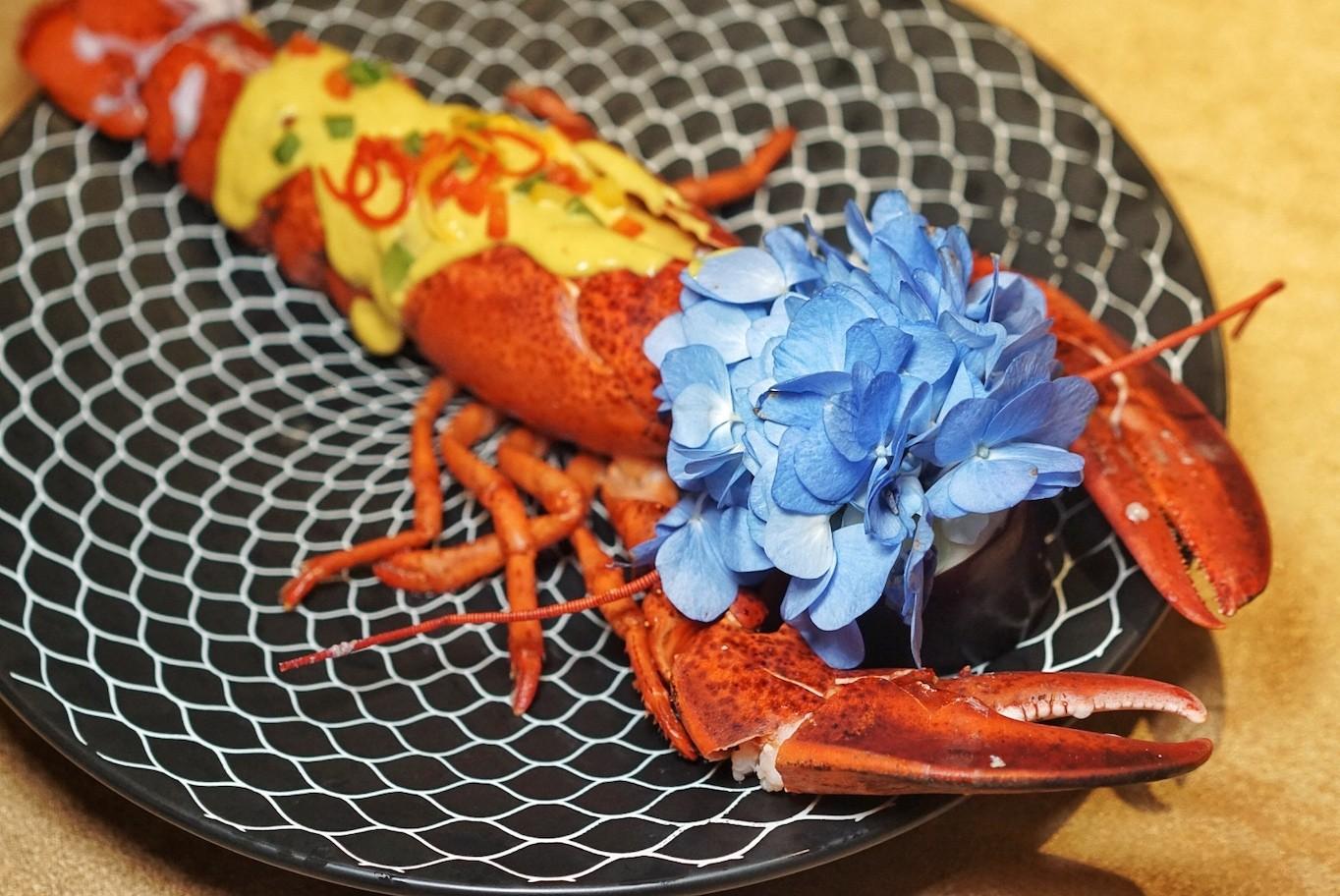
Refreshing ingredients, imported proteins and authentic flavors is what makes this new Thai spot a place worth visiting.
Read a full review here.
In the US, Five Guys serves its purpose in the food chain hierarchy as an affordable fast food burger, available at all hours, made with comparatively fresher ingredients. But, it still acknowledges what it is – a greasy, cheap burger ideal for soaking up late night booze or a filling lunch to get you – physically and emotionally – through a shit workday.
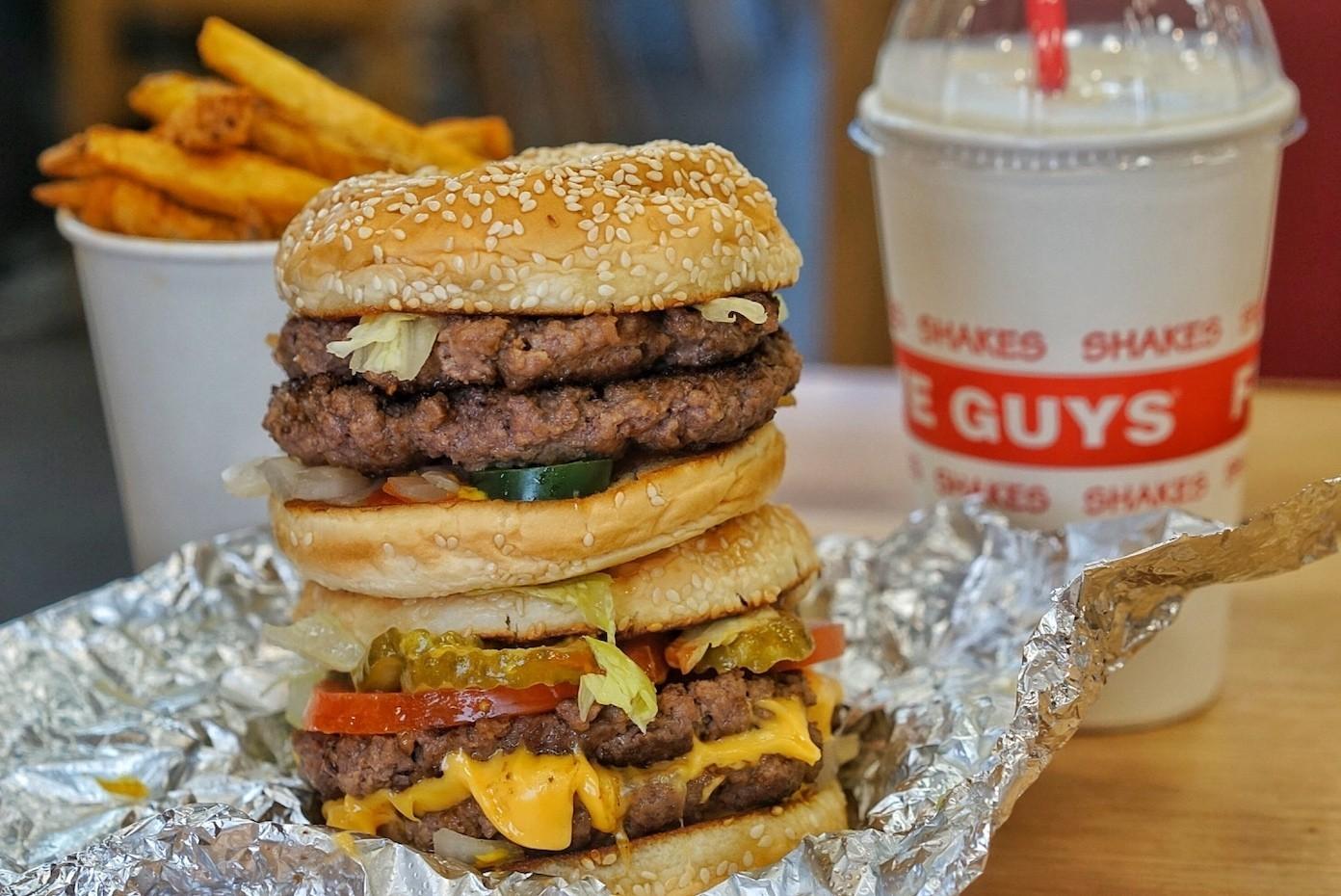
In Shanghai, however – and like Shake Shack – Five Guys is not a corner burger shop in Middle America packed with drunk college kids; it’s the hottest new American chain, filled with Wanghong-obsessed wannabes changing outfits every five minutes for another round of photo shooting.
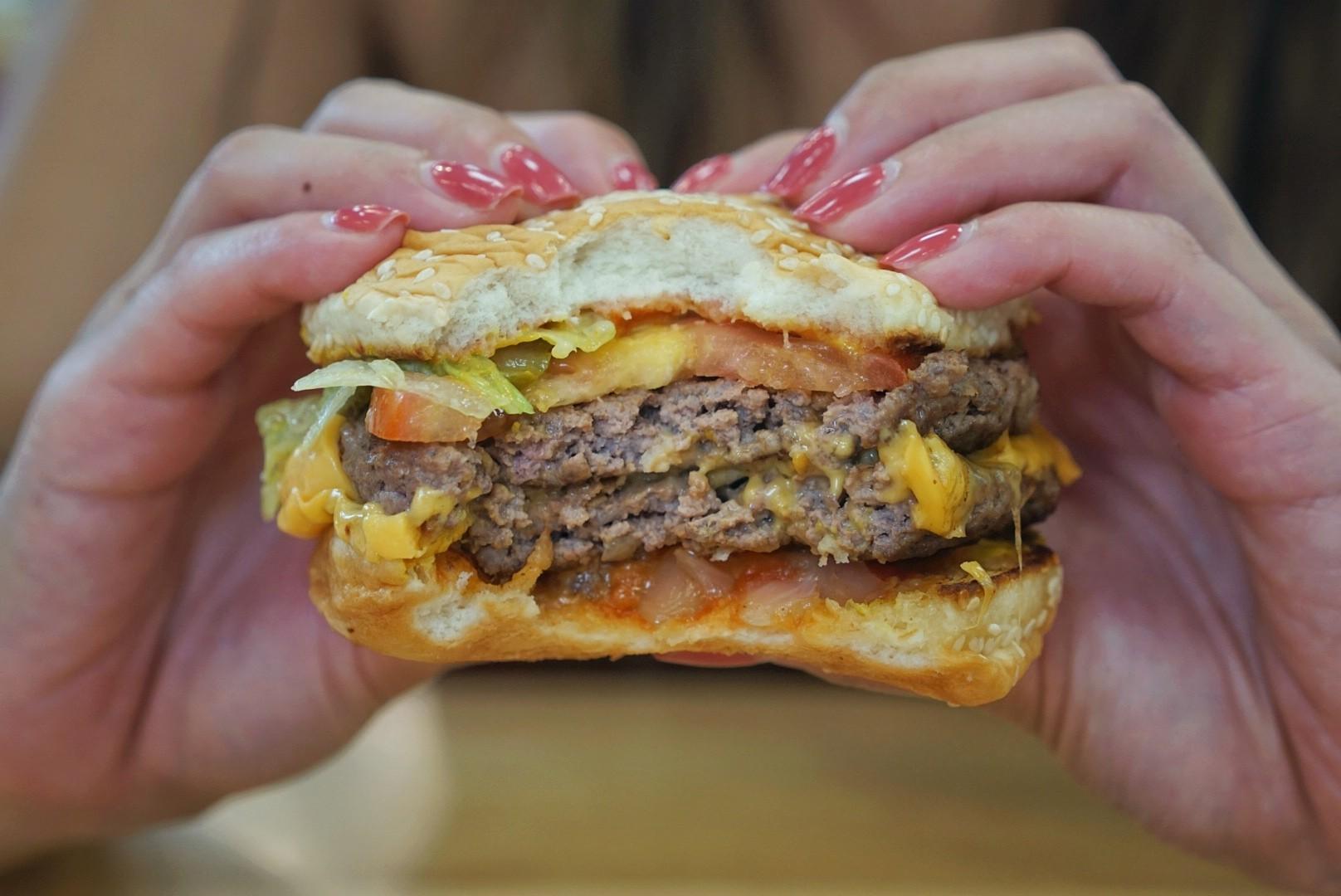
Nearly two months after opening, lines are still over an hour at peak times, and staking out a seat is like the opening scene in the Hunger Games.
The menu is – as you guessed it – burgers, fries, milk shakes and hot dogs, plus a lot of ephemeral hype.
Read a full review here.
Positioning themselves as modern-day food and wine rebels without a cause, Forage owners Jill Jiang, Fan Gao and William Zhu (SOiF) want to be the anti-boring kickback at what they feel has taken over the wine industry in Shanghai.
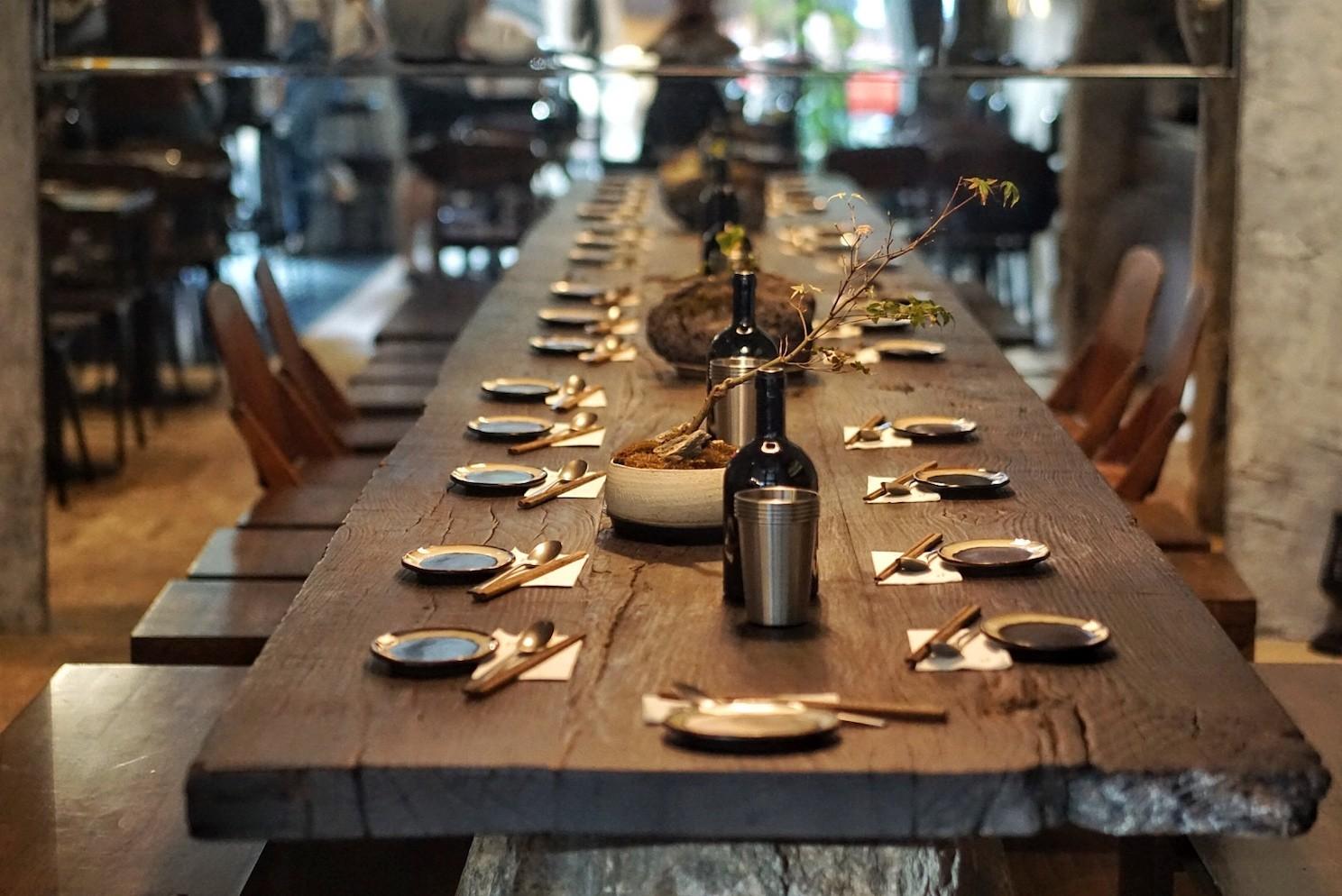
Coming from a background of high-end kitchens (including Ultraviolet and Maison Lemolaise), the hodge-podge group of friends aim to create a funky wine bar that is unabashedly independent, with the main goal of doing something niche and purely experimental – the kind of place they themselves would choose to hang at.
The wine program is the focus, designed by William Zhu to show his attitude towards the nectar of the gods – clean on the palette, well-made and interesting in regards to winemaker, region or flavor.
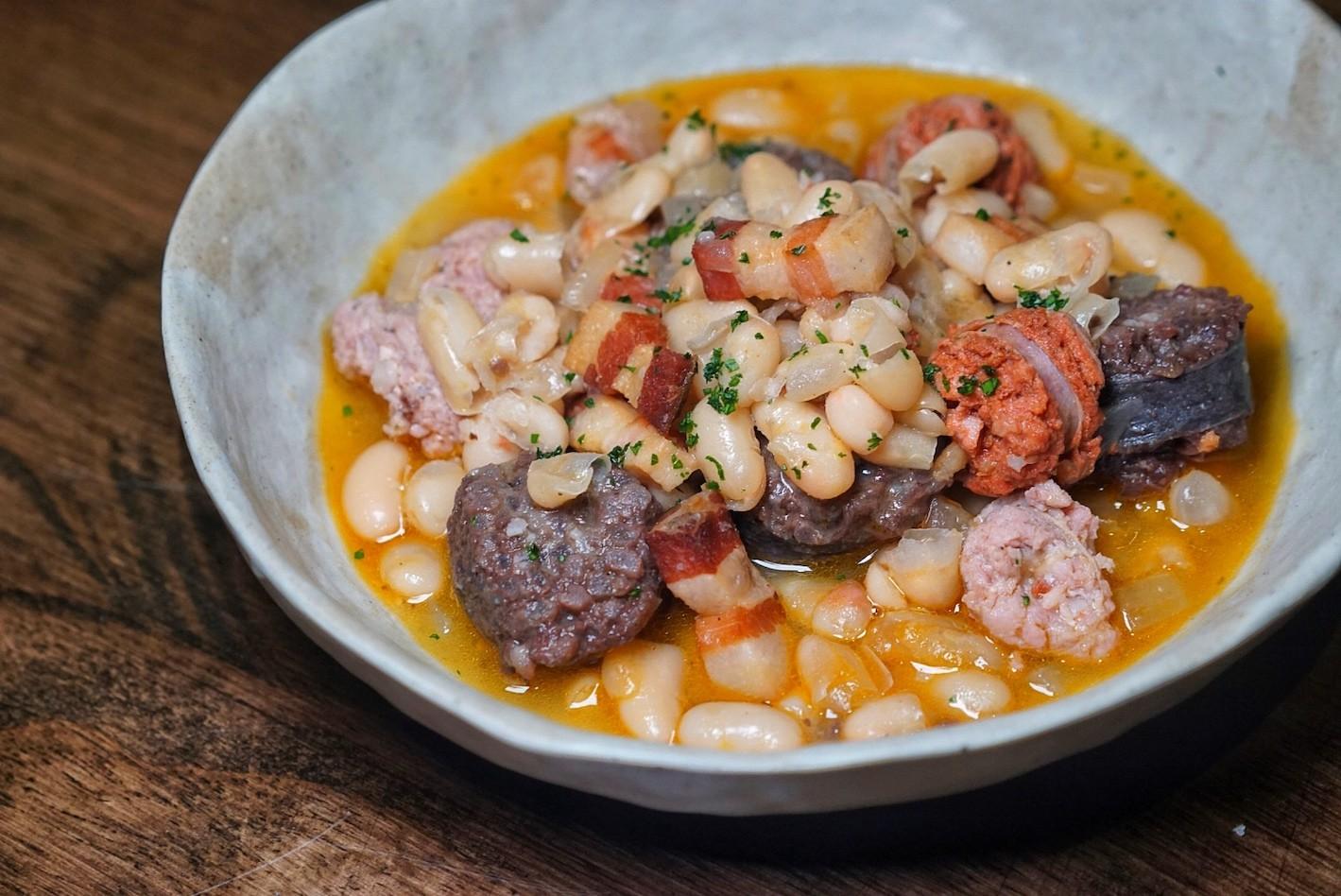
Chef Mario Fu (Grand Banks) leads the charge on food, combining his avant-garde style that stems from experience working in Michelin-star restaurants in Spain, Nordic Noma’s sister restaurant in Tokyo and his Chinese heritage for a mishmash of cuisines that are not defined by one particular style.
Read a full review here.
Genesis, in collaboration with restaurateur Mark Klingspon (The Nest, The Cannery, Rye & Co.), Chef Tom Ryu Taehyeok (Jeju Izakaya, Professor Lee, Belloco, Botong Sikdang) and Michael Chen (The Cannery, Laiba), opened their first contemporary Korean restaurant. Onjium, a Michelin star restaurant from Seoul and New York, is also contributing on the menu curation.
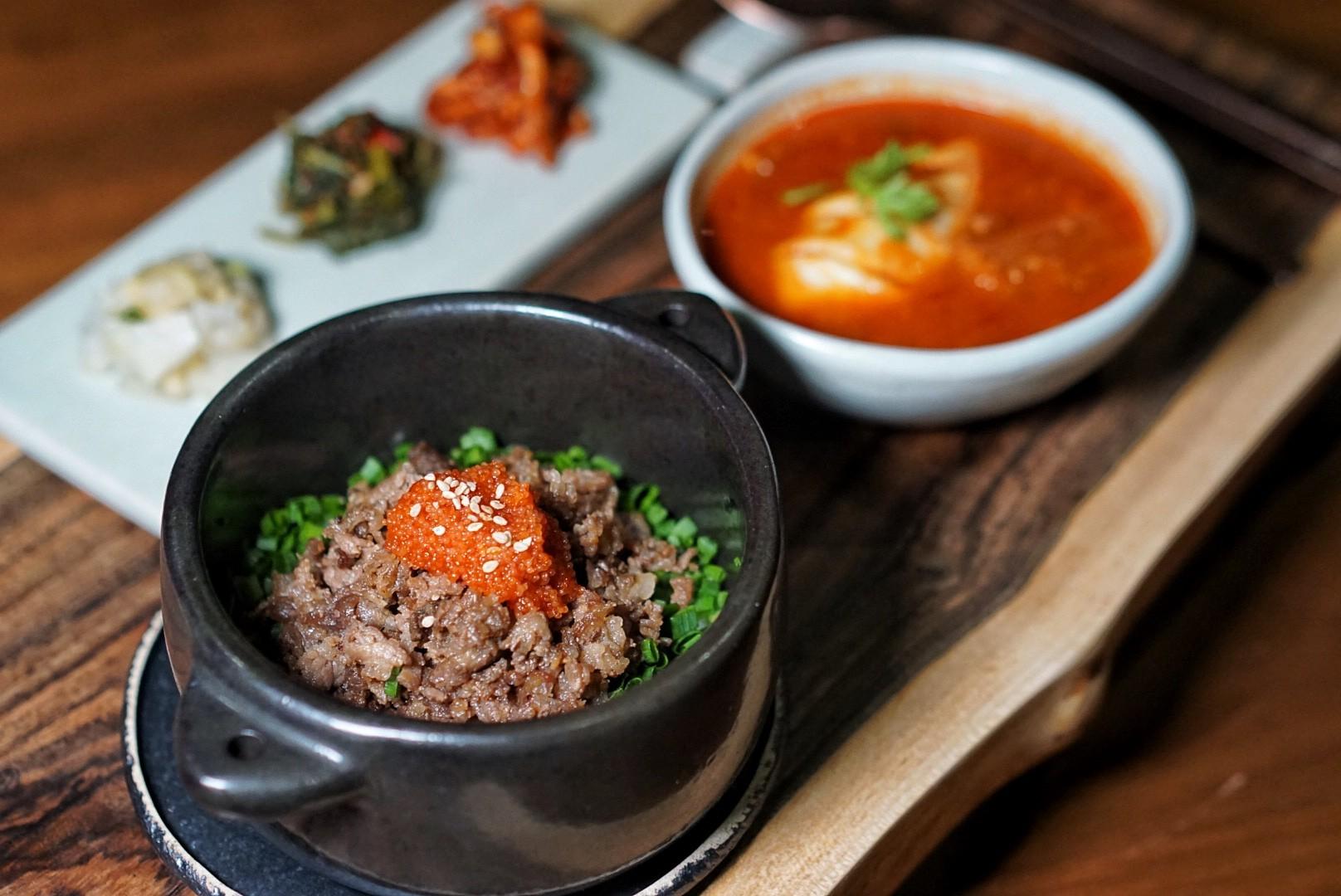
The restaurant fits the luxury car experience mold – sleek modern décor, minimalistic with curved lines and dark detailing, streamlined layout accented by nuanced design elements. Everything has its purpose; nothing is superfluous.
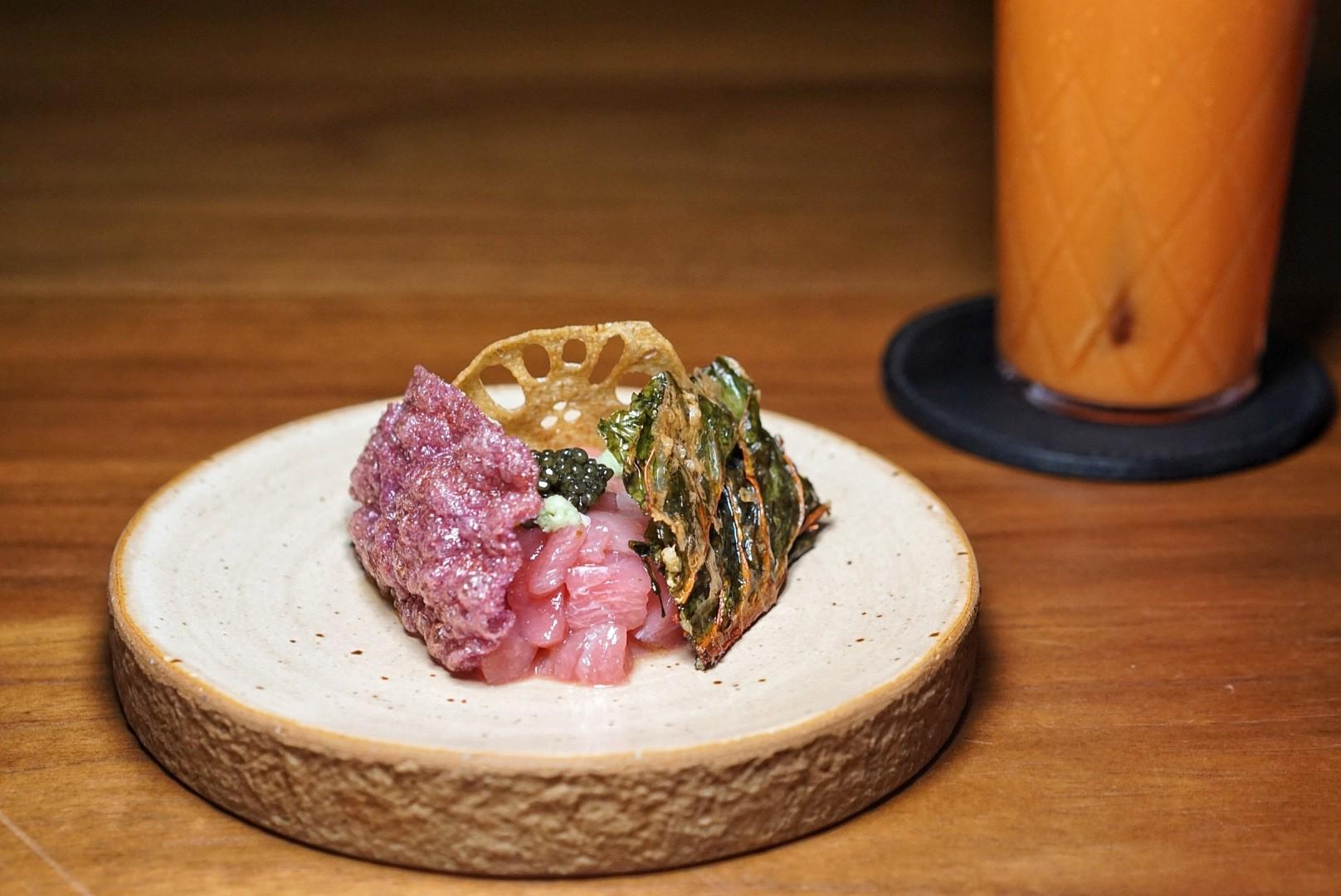
The menu focuses on two sets that balance current and classic Korean cuisine – one curated by Onjium and one by Chef Tom. Together, they provide an elevated take on Korean food that carries diners through the past, present and future of Korea.
Genesis captures the concept of modern Korean cuisine – concurrently nostalgic and ingenious – constantly being refined to highlight the country’s history, regional produce and resourceful flavor pairing.
Read a full review here.
Based on the blaring rap and hip hop-centric playlist, one would think Gin & Pork – Jing’an’s newest Korean BBQ spot on the increasingly popular Anyuan Lu – is named after the American rapper and personality Snoop Dogg’s 1993 hit Gin & Juice.
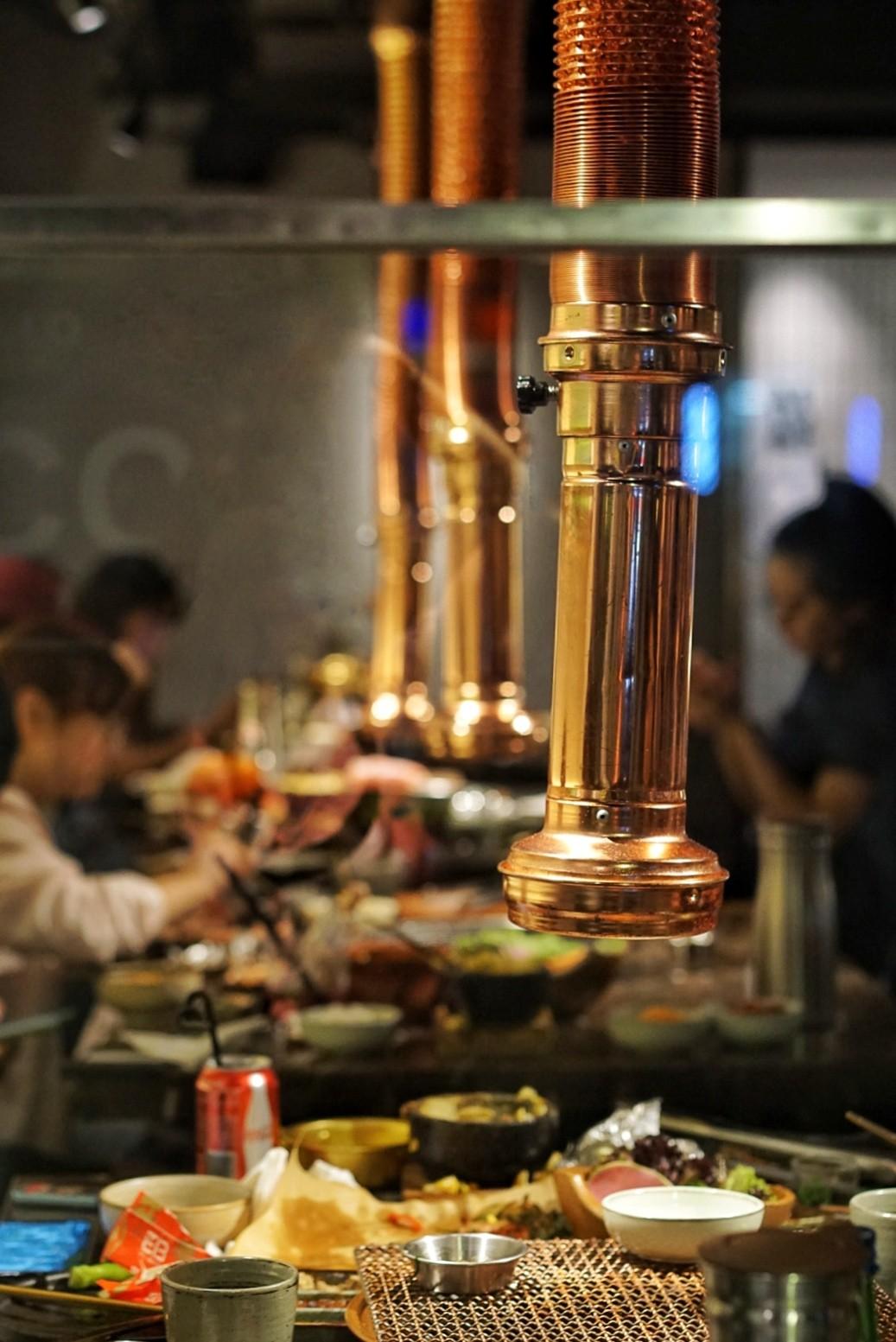
However, a quick glance at the Chinese characters in the name – 金猪 – reveal that it’s really just a poor phonetic transliteration of jin zhu, meaning the Golden Pig, arguably a better name for a pork-heavy BBQ joint.
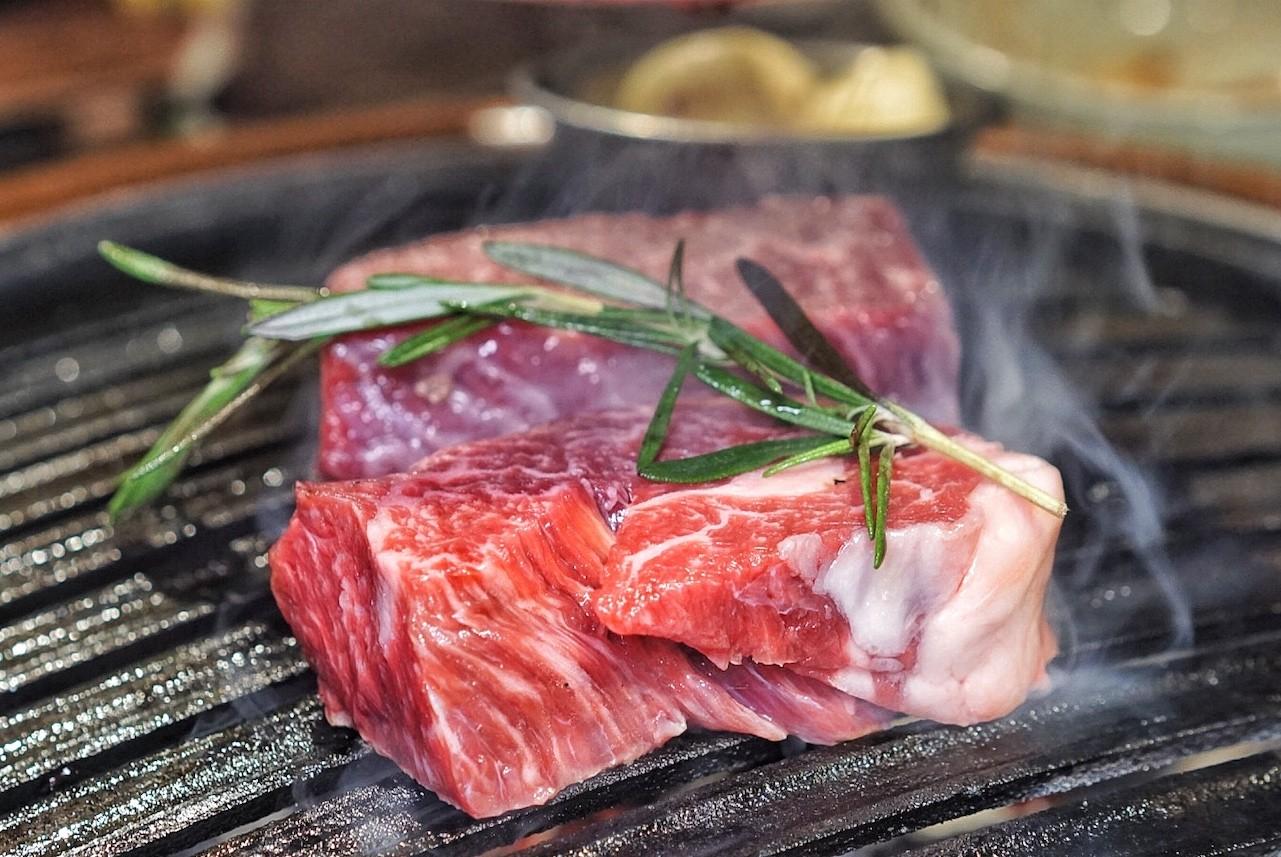
Get seated at a table already stacked with KBBQ banchan – pungent kimchi, pickled cubes of daikon and mashed sweet potatoes, along with a smattering of sauces and spices for your soon to arrive meats.
It’s BBQ so – no surprise here – it’s all about the meat. Sorry vegan friends, you’re going to want to pass on the invite to this one. Pork, pork and more pork is what coats the menu, along with some standout cuts of beef and a few seafood plates sprinkled throughout.
Read a full review here.
Named for the international bank that this 100-year-old, neo-classical building was designed to house, Grand Banks – an NYC aesthetic lounge on Sichuan Zhong Lu – feels like walking into a Tribeca loft. Vintage revival pieces, original artwork, quirky room dividers, art deco sconces and cool-toned accents are heightened by a liberal dose of Manhattan chic. The soft lighting is muted, dim, sexy – adding to the aura of exclusivity.
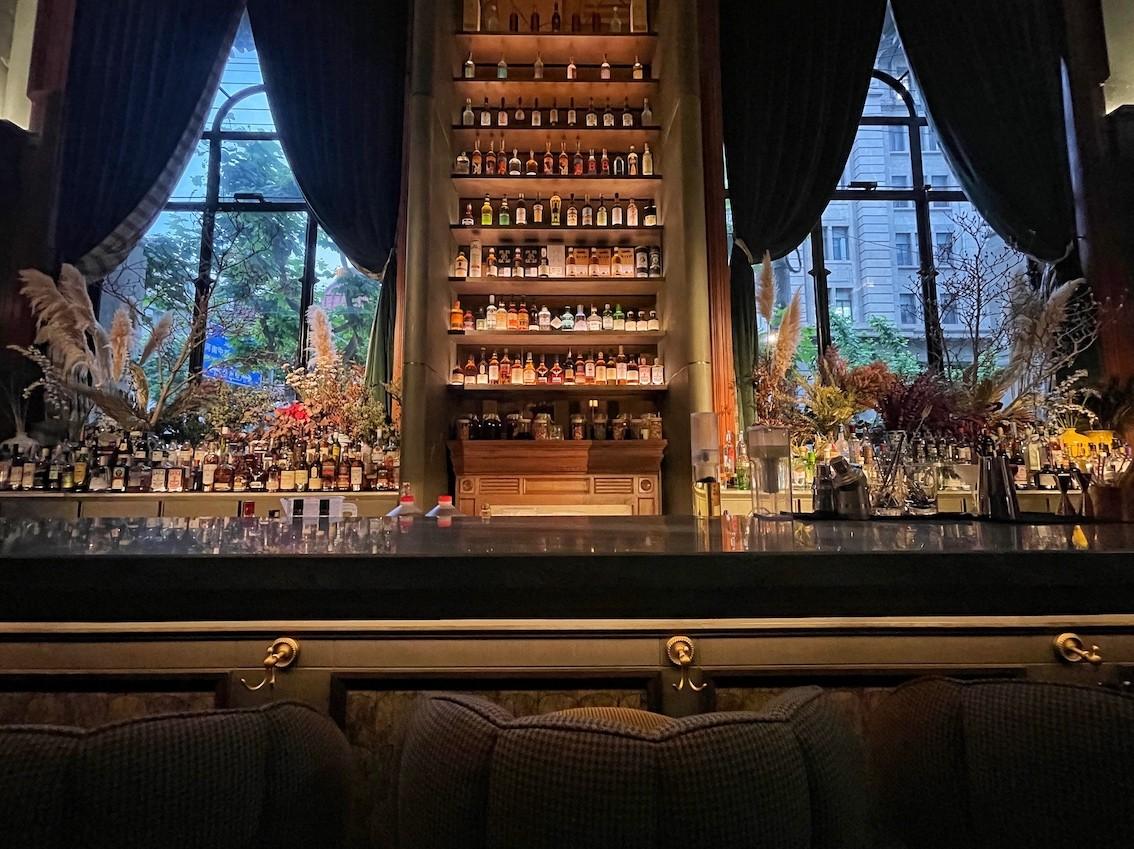
The restaurant is the brain child of interior designer Chris Shao (Objective Gallery and Chris Shao Studio) who also owns the art gallery on the fifth floor of the same building.
The concept is to enhance the synergy between interior design, art, furniture and cuisine, creating a comforting yet lux space for young creatives that acts as an alternative to other overly-hyped Bund venues.
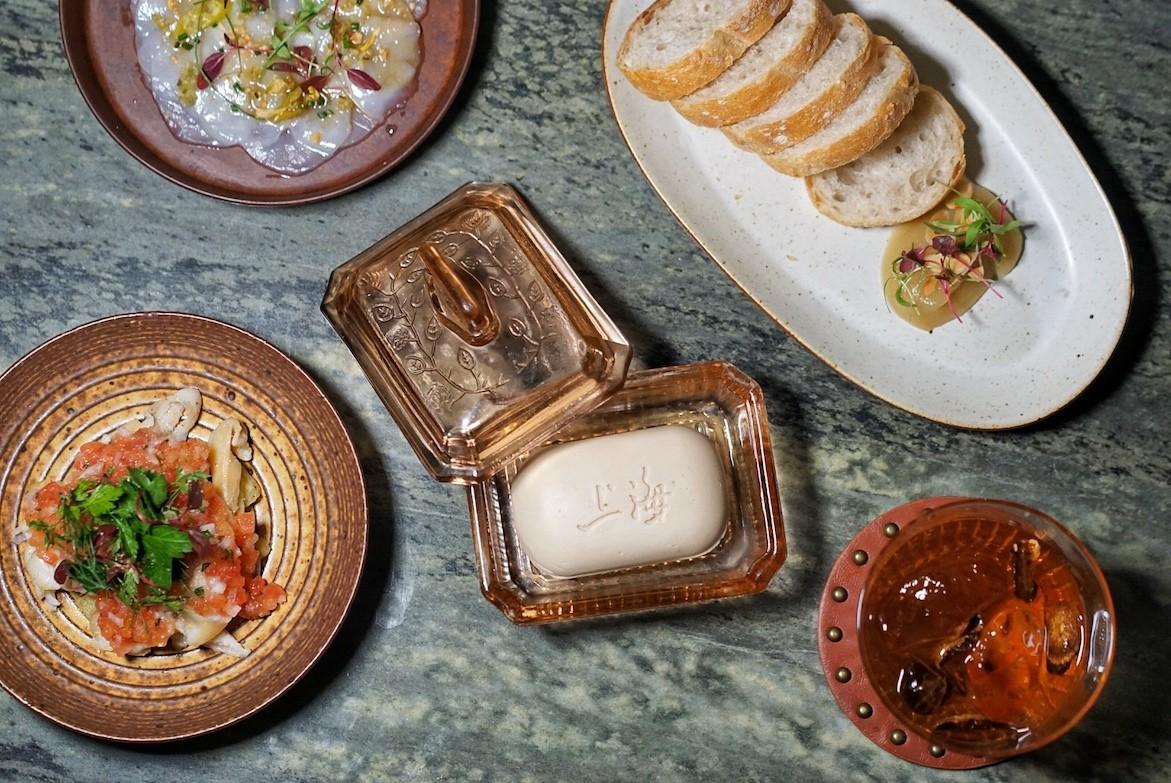
Chef Danny Lee (previously of Stay in Beijing and Le Jardin) is trained in French cooking. He intermingles this with his own Chinese roots and other pan-Asian cuisine elements to create approachable small plates that pair with the Chinese-ingredient inspired crafted cocktails shaken by Klaus Yiu (previously of the Shanghai EDITION) and extensive wine list, curated by a Hakkasan and RAC-seasoned sommelier.
Read a full review here.
Another wine bar to open, Gula is a wine bar for families – two concepts not usually put together; dogs are allowed inside the busy space; the wine program is pretty lax; the menu is even looser, described as Chinese fusion yet seemingly lacking the Chinese side of said fusion; the logo is a cartoon puppy; and the name means gluttony. Phew.
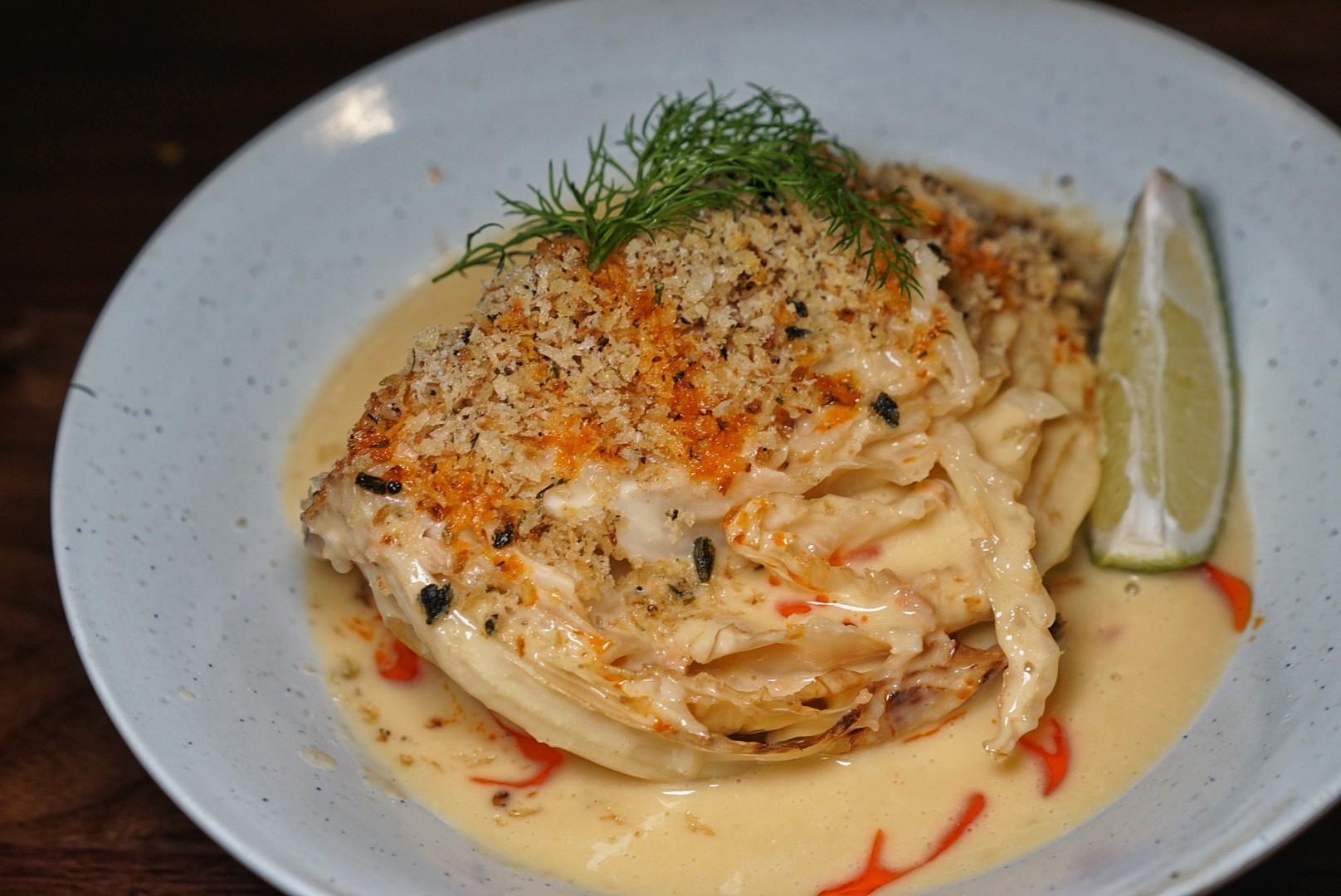
It's busy, possibly due to one of the owner's KOL status, possibly due to ephemeral hype and possibly because some people are into this place's vibes. You can be the judge as to which category you fall in.
Read a full review here.
The first floor of craft cocktail lounge Ars & Delecto has been transformed into modern Korean bistro, Halu – the second outpost of this K-Town favorite. Situated along the leafy Jinxian Lu amidst many local restaurants, the space feels familiar and welcoming, even for first time visitors.
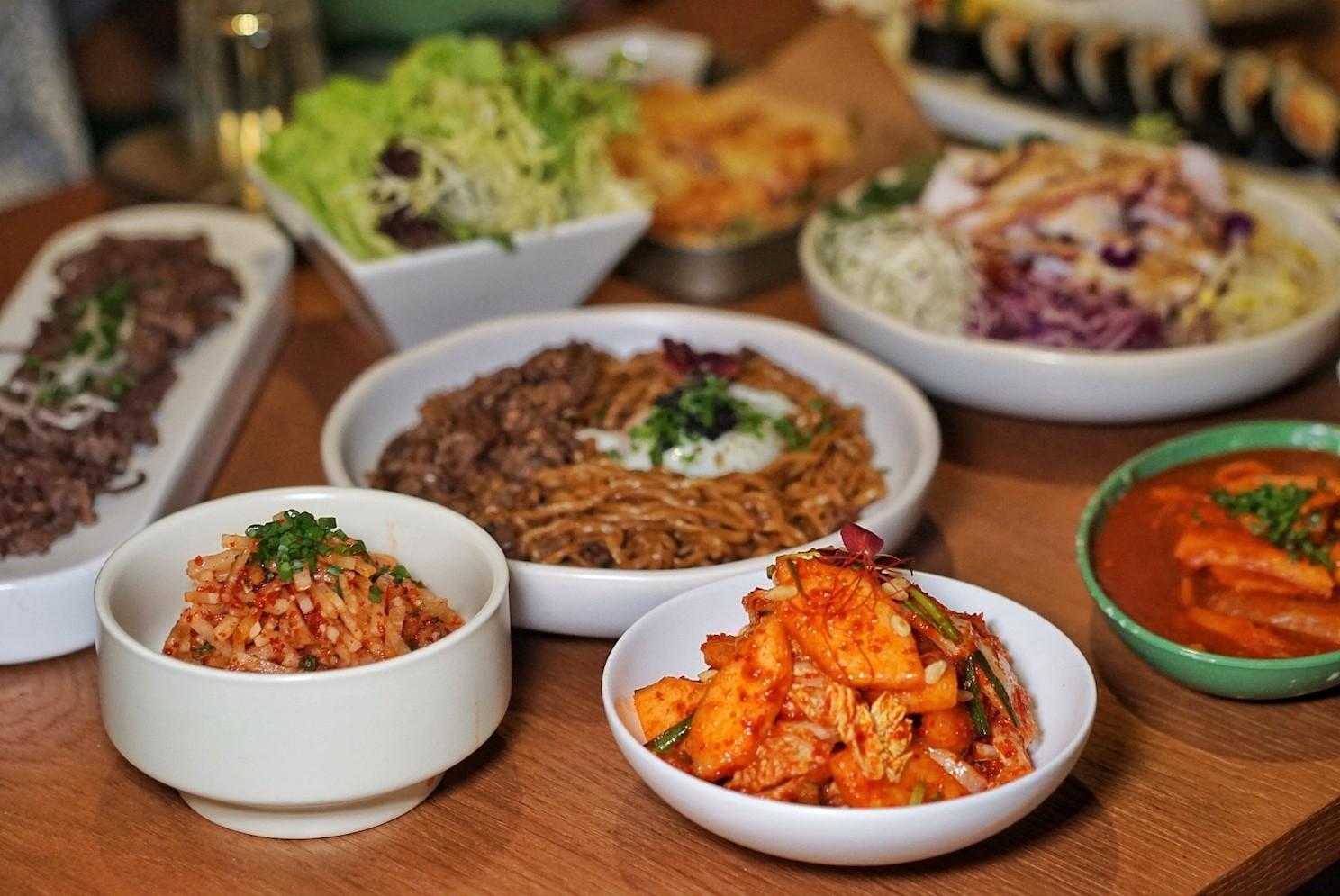
In collaboration with Halu owner Joonsam Park and Chef Rosie, the team culled down the menu to a simple one-pager of Korean fried chicken, stews, kimchis, fried jeon (savory pancakes), seafood dishes and street fare like tteokboki and gimbap, that are best experienced with a post-dinner nightcap of Korean seasonal-inspired sippers on the second floor.
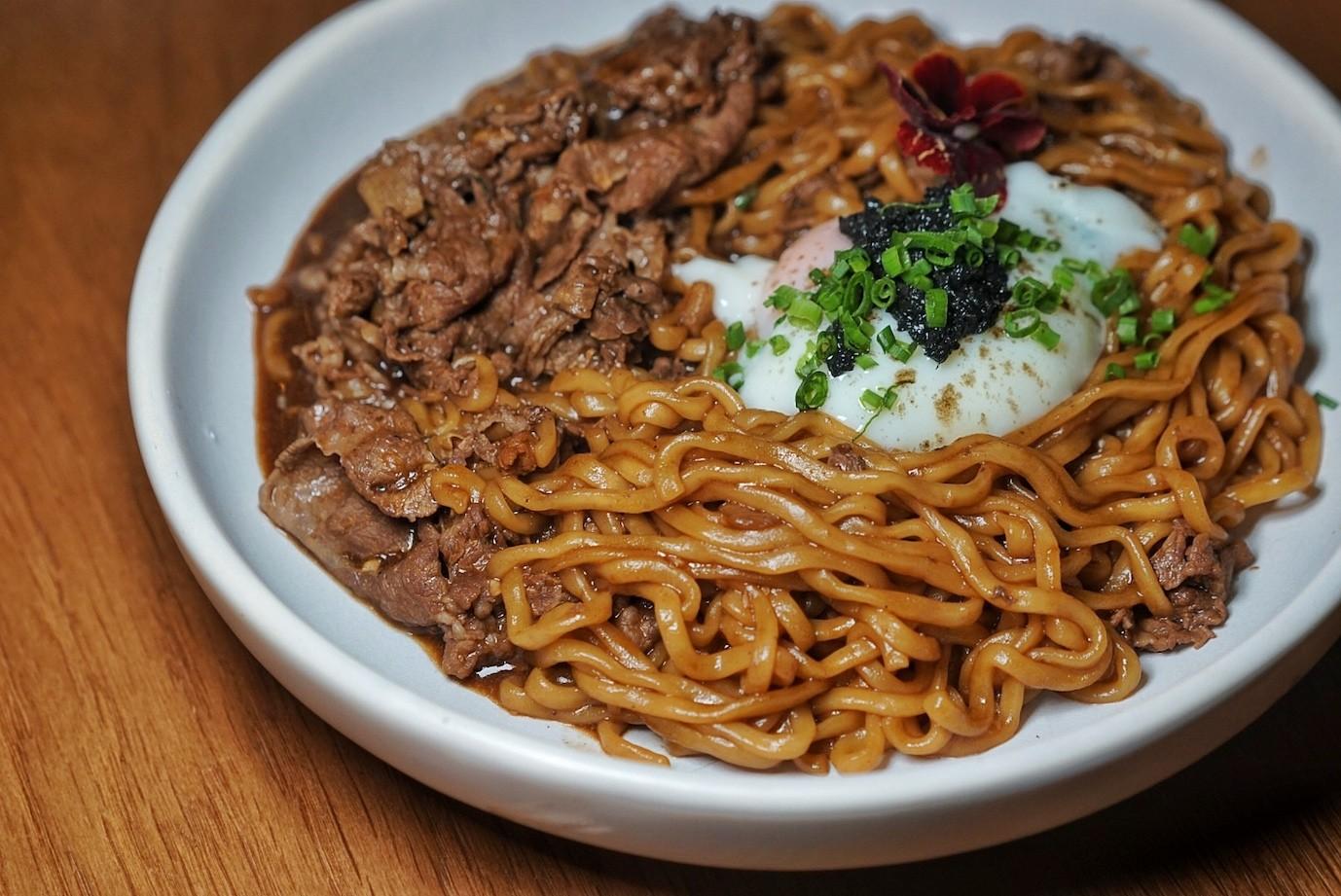
The old school Korean rap and hip hop that reverberates from the speakers, coupled with brimming bowls of boiling pork and seafood soups, dishes of assorted kimchi and gochujang-laced plates, adds to the eccentric ramen and soju lined walls.
The juxtaposition between trendy, casual Korean bistro and art deco-inspired cocktail lounge somehow works. The two seemingly opposite components amalgamate into a whole that is greater than the sum of its parts. Plus, the calorie to kuai conversion rate is on point, if you ask us.
Read a full review here.
At Huma, the fresh, clean ingredients found in Southern Yunnan cooking are easily recognizable in every dish. Veggies and herbs are no longer an afterthought, but rather one of the main focuses.
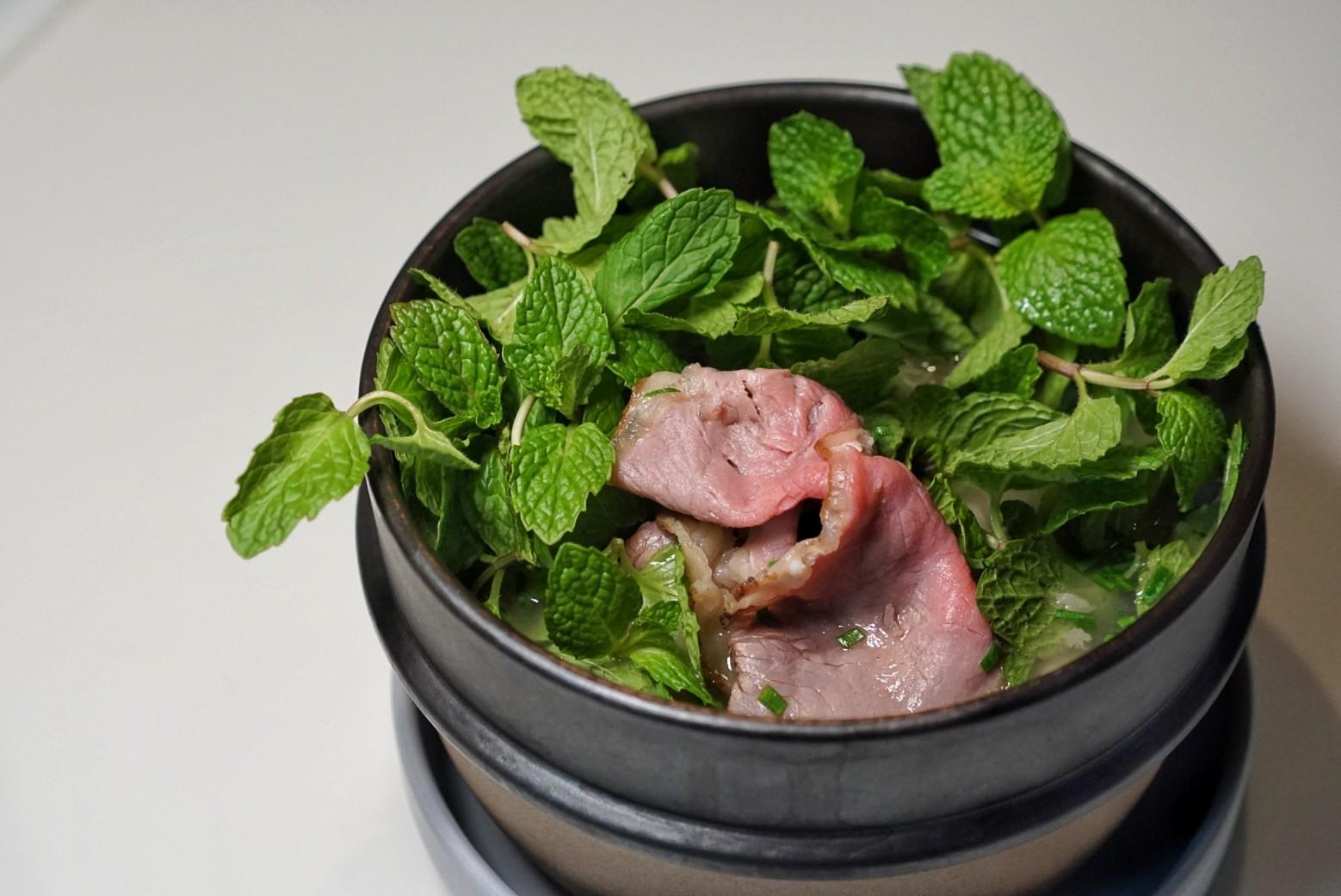
Designed by Tom Yu Studio, the same architect that put Bloom on the design map, Huma joins the long list of whimsical spaces decked out by this originally London-based designer, once part of Heatherwick Studio.
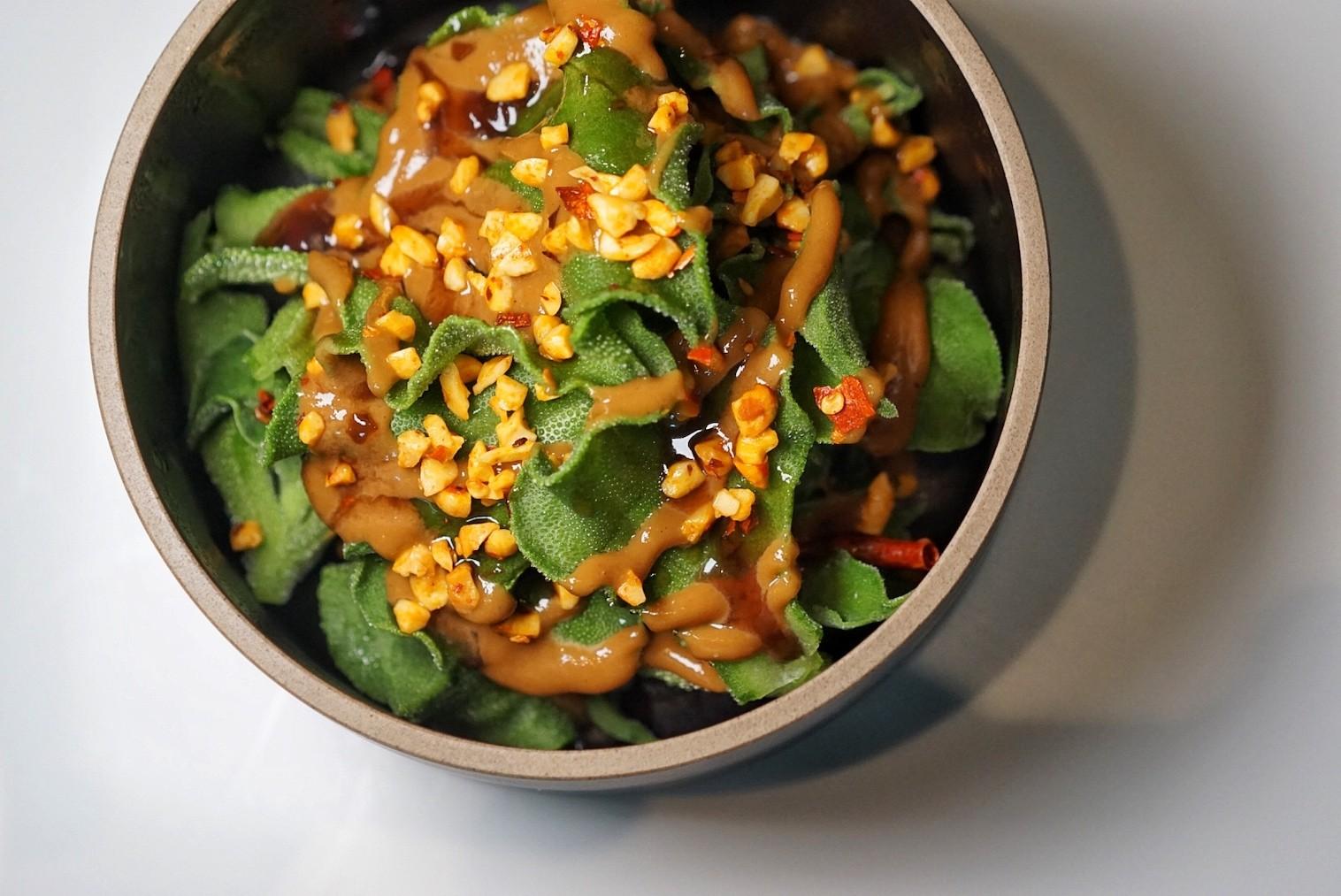
The restaurant’s main dishes involve Yunnan-style noodles in all forms, plus Yunnan-style pickled and grilled proteins.
Read a full review here.
Climb the stairs of the 20 Donghu Lu villa, leaving behind ‘mini France’ in the form of Cellar to Table and Blaz, and you enter the dimly lit Hundo – where you’re instantly transported out of Shanghai and into a bustling yakitori joint in the heart of Tokyo.
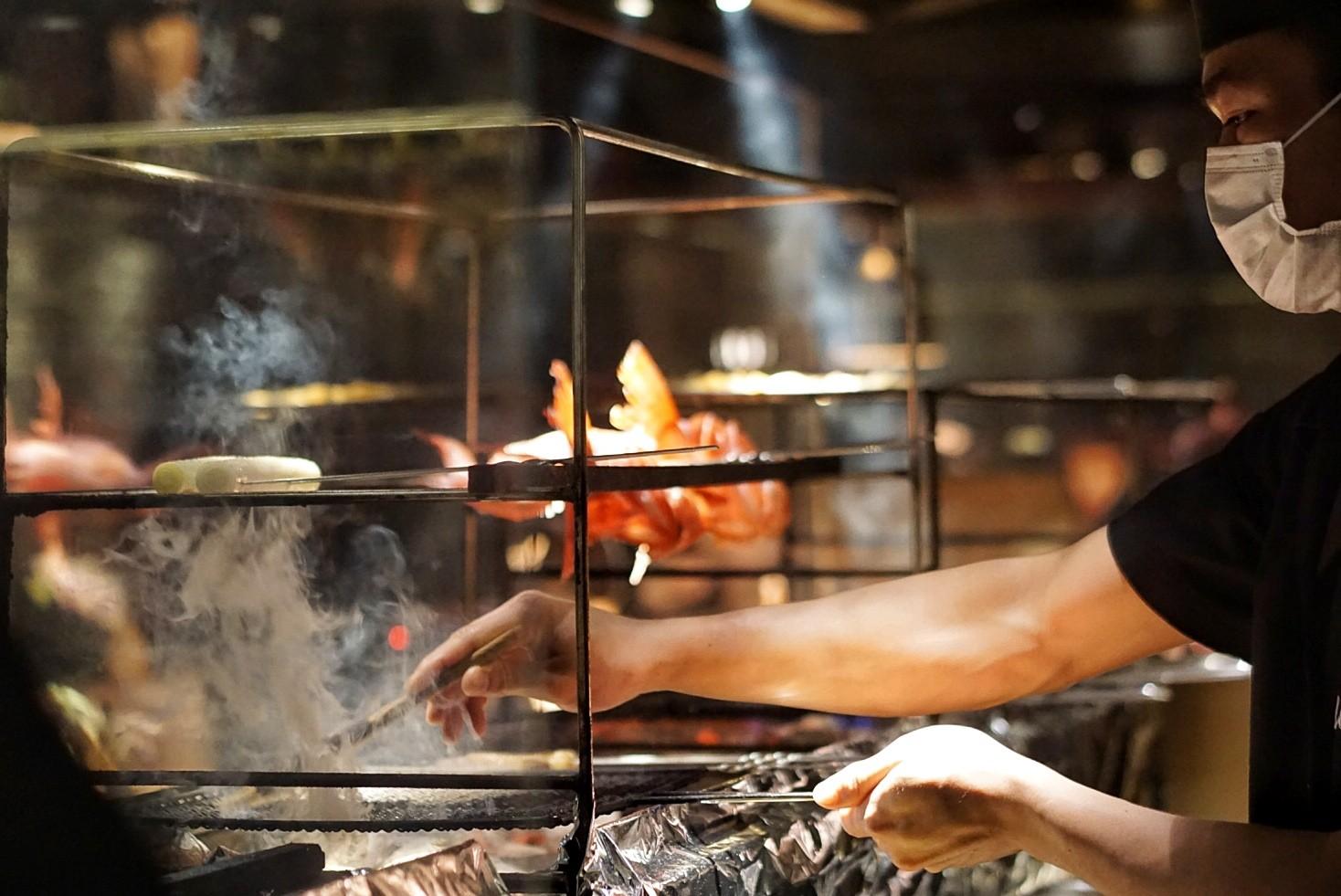
Your field of vision takes in a dark wooden bar lined with chefs scoring sashimi, slicing steaks and serving sake and shochu, all while the aroma of roasting snapper, charred chicken skin and a hint of yuzu fill your nostrils – the authenticity makes you feel like you should be paying in Japanese yen.
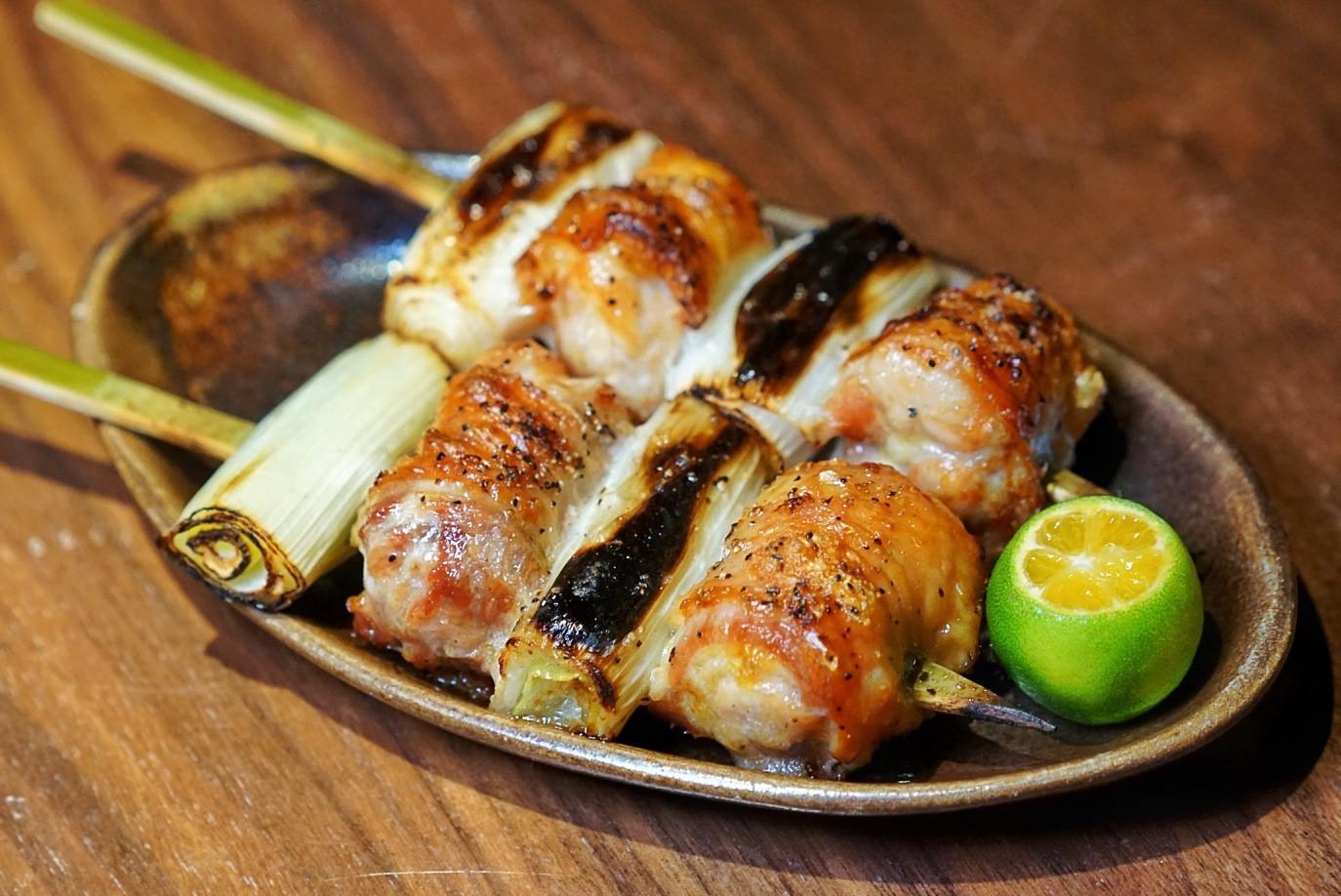
The warming atmosphere is emphasized by the overly friendly staff and controlled chaos within the open kitchen. Here you see dozens of skewers, holding every part of a chicken you could possibly think of (and even some you can’t) roasting on an open binchotan charcoal-grill flame.
Although much larger than Justin Xu’s previous projects (Nakama – now closed because of landlord issues and reborn from the ashes like a phoenix as High Yaki), because the space is split into two main rooms and further sectioned off with private alcove-like seating, the feeling of exclusivity still remains.
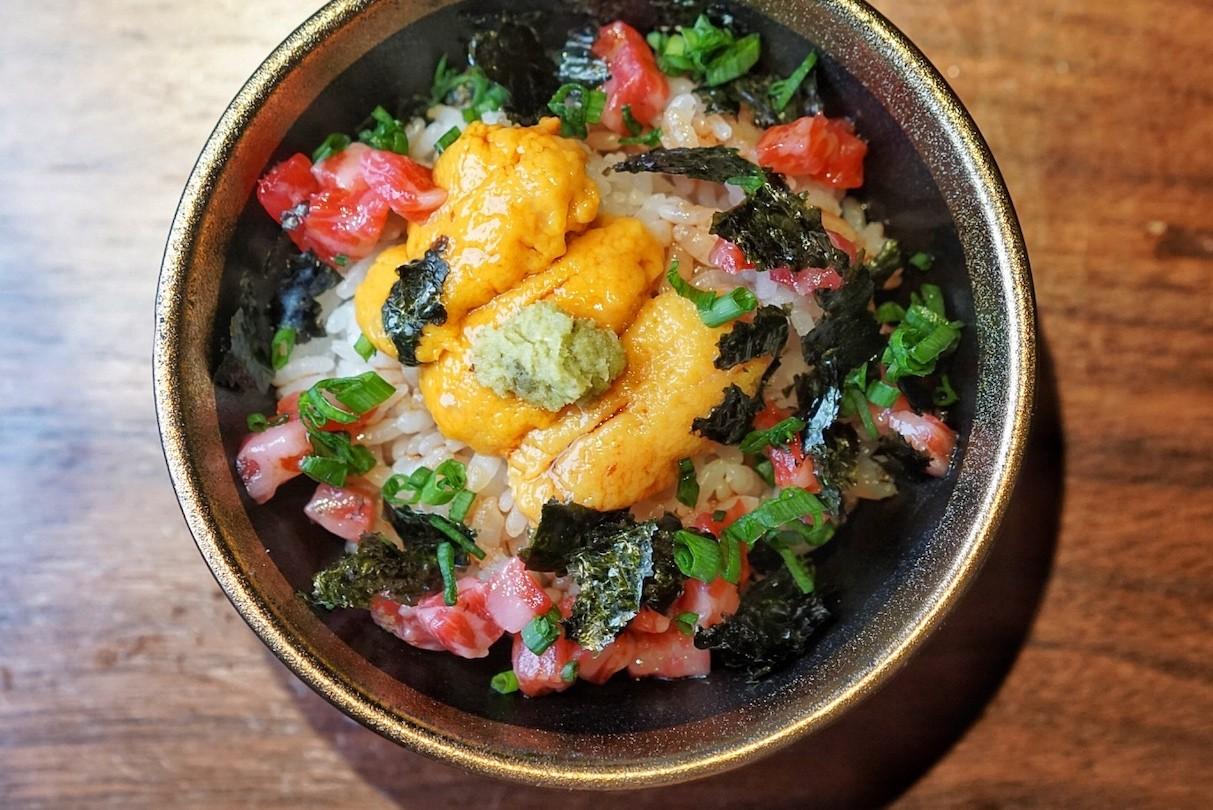
The menu spans sashimi, cold and hot bites, charcoal grilled dishes, yakitori, kushiage (deep-fried skewers), tempura, yakiniku (grilled meat) and rice. It sounds like a lot, but as most are small dishes or skewers, you can do some serious damage with just two people.
From mastering the basics to rewarding the adventurous, Hundo is the dream destination for a Tokyo getaway that costs far less than a plane ticket.
Read a full review here.
Gosia Modlinska – one of the co-founders of Pierogi Ladies – spun off with her own concept this year, rebranding as Jar Bar, a cocktail bar with Eastern European food. While she still offers pierogis, the focus is more on Polish mains that could get you through a Slavic winter, driven mainly by recipes from her grandma.
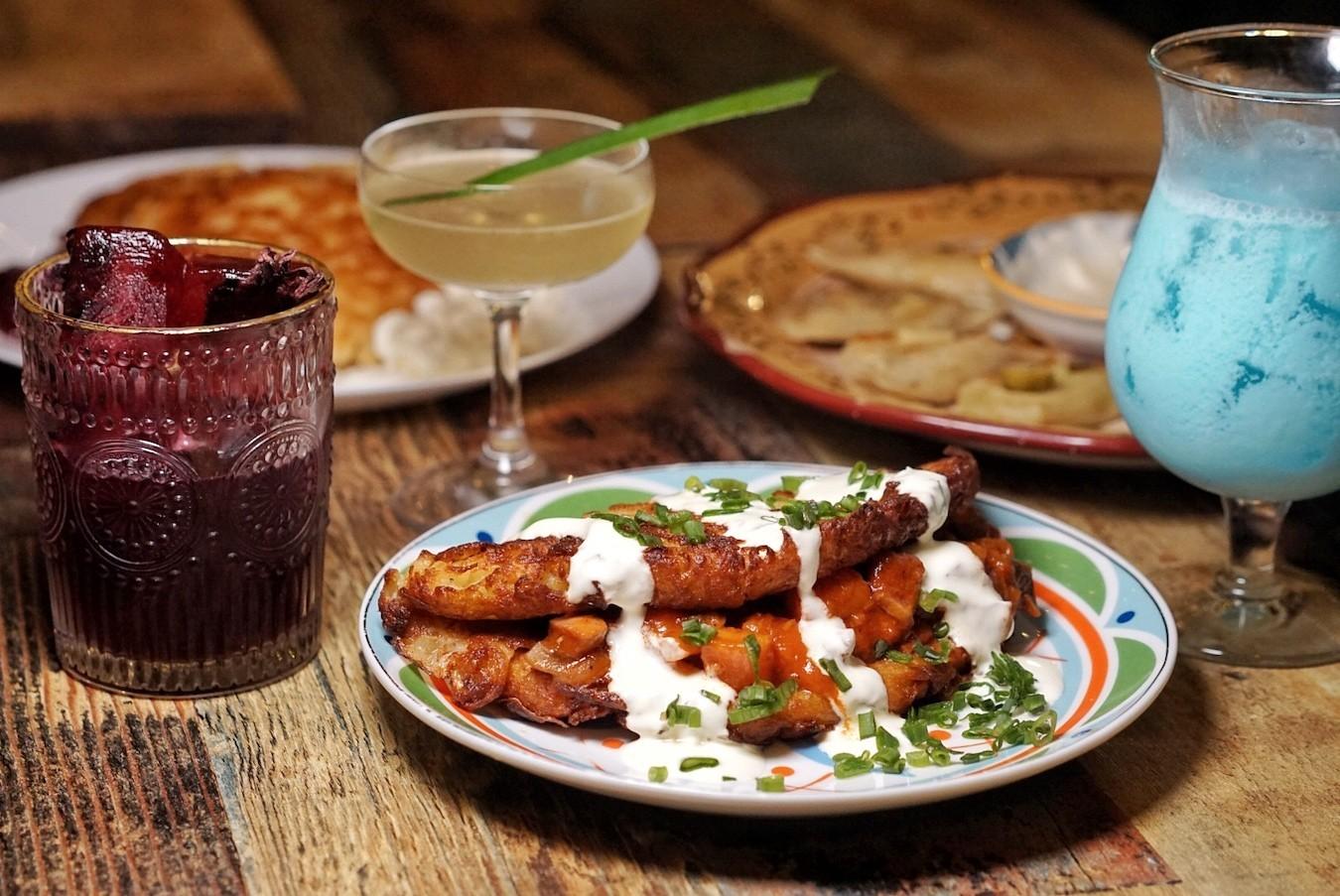
Given the name, it’s no surprise that there are lots of things in jars, spurred from Gosia’s jarring obsessions. Expect to find all manner of pickling vegetables, fermenting produce and infusing alcohols and vinegars.
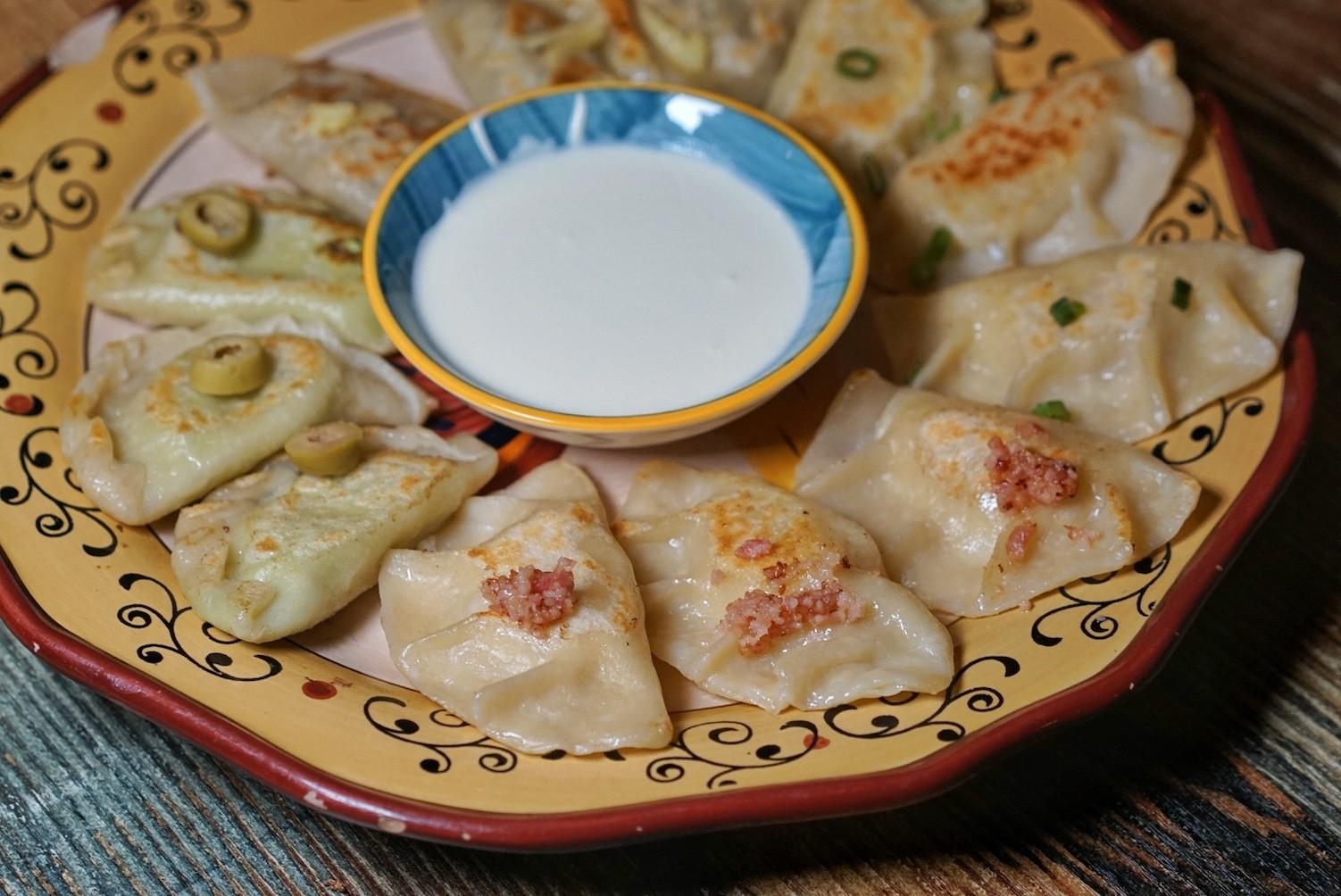
The spaces boasts a backpacker hostel atmosphere – twinkling string lights hung about, maps adorning the walls – dumping and pickle world maps to be more specific – travel books stacked on shelves, jars filled with all matter of this and that, board games, off-centered framed photos of cooking class attendees and a free roaming cat, making friends with all the patrons. It’s all very unpretentious, DIY and welcoming.
Read a full review here.
Juke, a neighborhood eatery headed by popup master and chef Michael Janczewski (previously of Canton Disco in Shanghai and Ho Lee Fook and Michelin-star Belon in Hong Kong) and Sebastien Dallee (previously of Heritage by Madison, Italo/Funka Group), opened early December in the old Pirata digs on Dongping Lu.
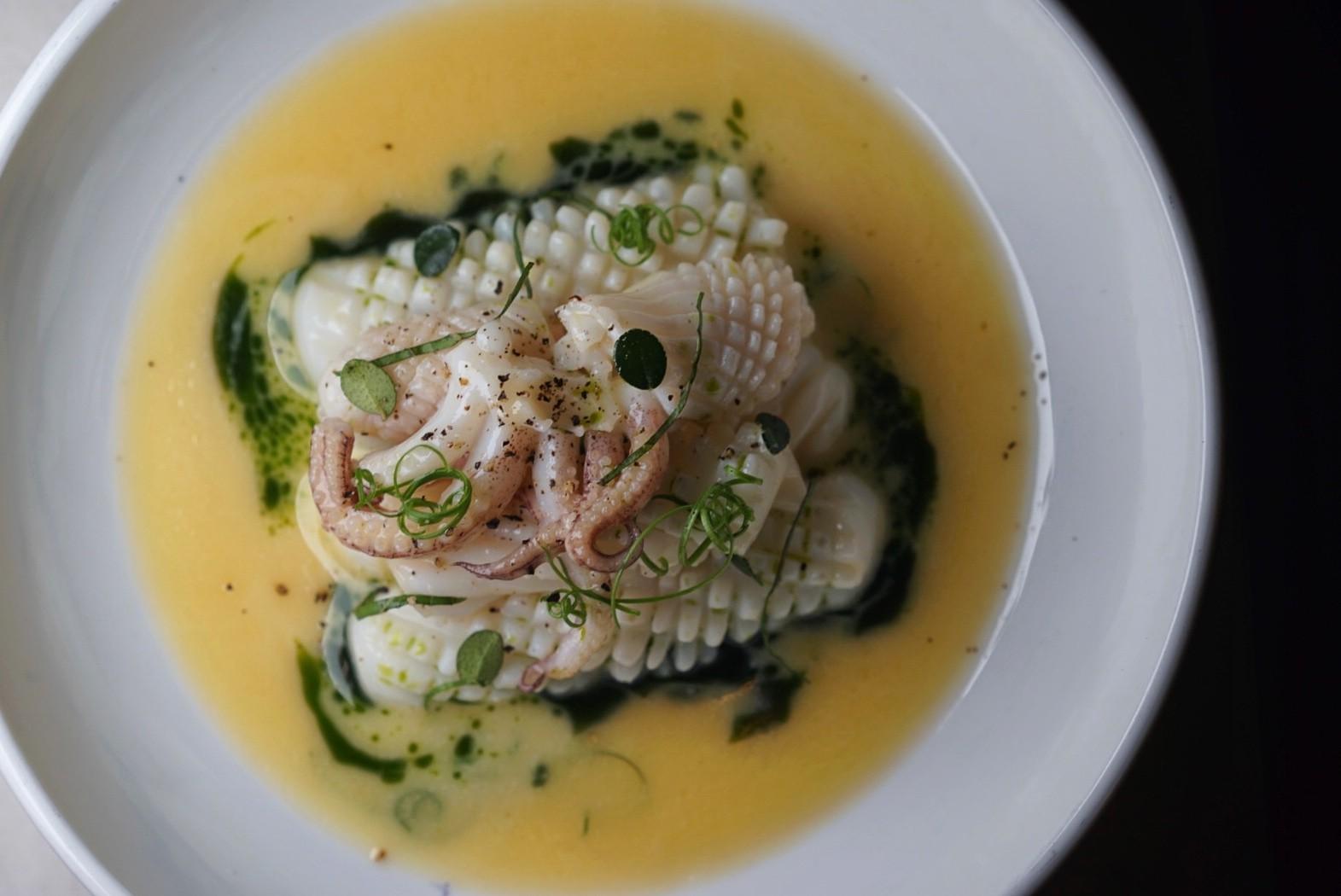
The 18-seater serves a tight menu of neo bistro fare that focuses on Mediterranean flavors with an Asian twist.
Juke – coming from the old English word meaning ‘to trick’ or ‘fake out’ – rings true in the playful nature of the menu.
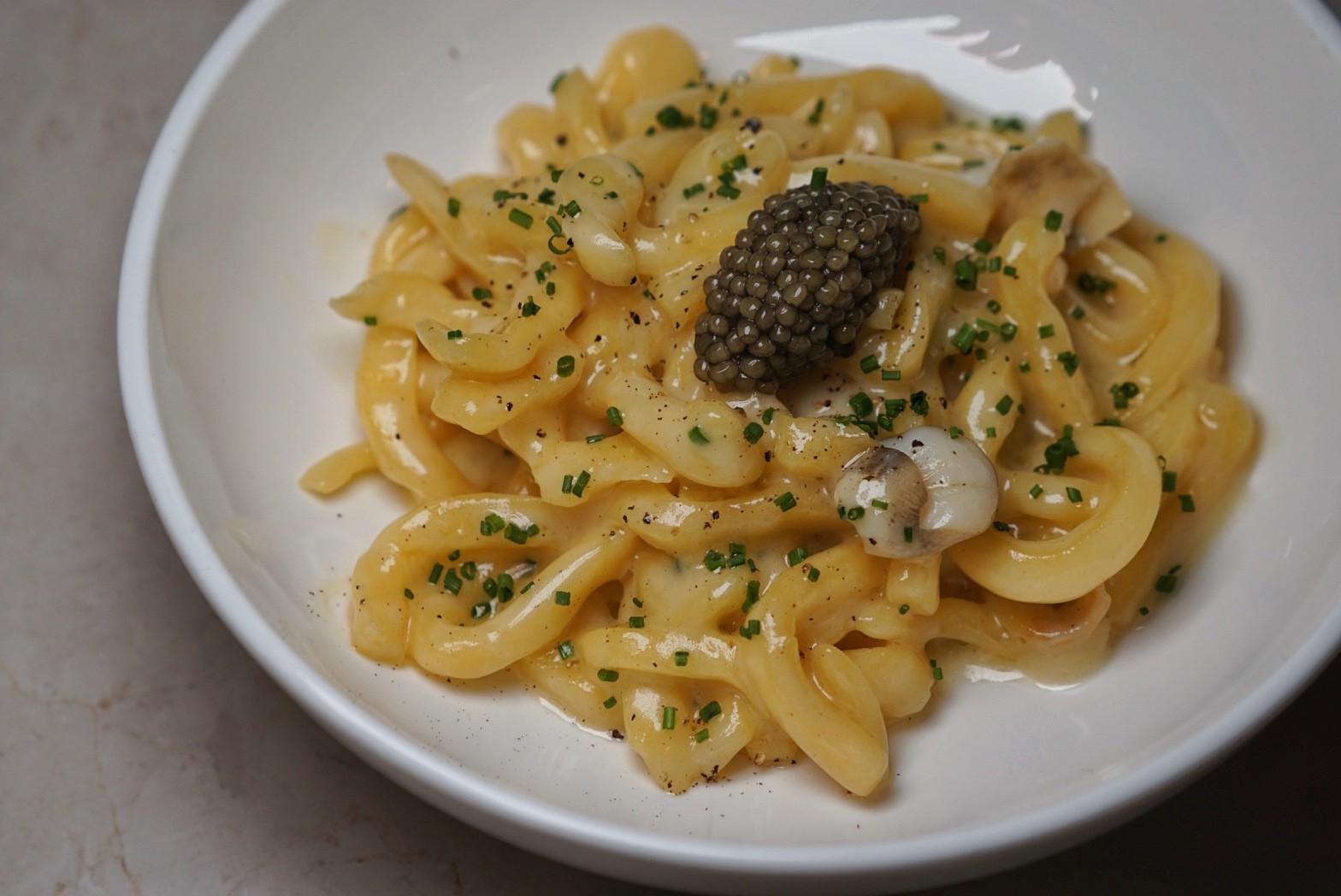
In other words, expect the unexpected: a lashing of smoky olive oil, pickled celtuce ribbons, clarified tomato and butter water, mapo tofu gravy, hand-ground polenta, miso paste hidden beneath layers of caramel and dots of activated charcoal spiked with kumquat, to name a few.
Bites aim to deceive the senses and change the notion of what you may assume.
Fusion is a card trick that has long been overplayed, but when you’re holding a royal flush, you play to win. Juke’s menu is the royal flush in this metaphor.
Read a full review here.
The sister venue to Suzu, Kaisha auspiciously opened on August 8 in Shankang Li. The space is divided into two parts – the front, known as West, is a casual cocktail restaurant, while the back, named Higashi (meaning 'East' in Japanese), is a classic Japanese cocktail bar.
Not the kind stacked with suit-clad salarymen pounding sake and skewers after a long day at the business factory, mind you, but a high-end, perfectly curated experience bar, where you are acquiescingly forking over all the yen in your wallet for another drink.
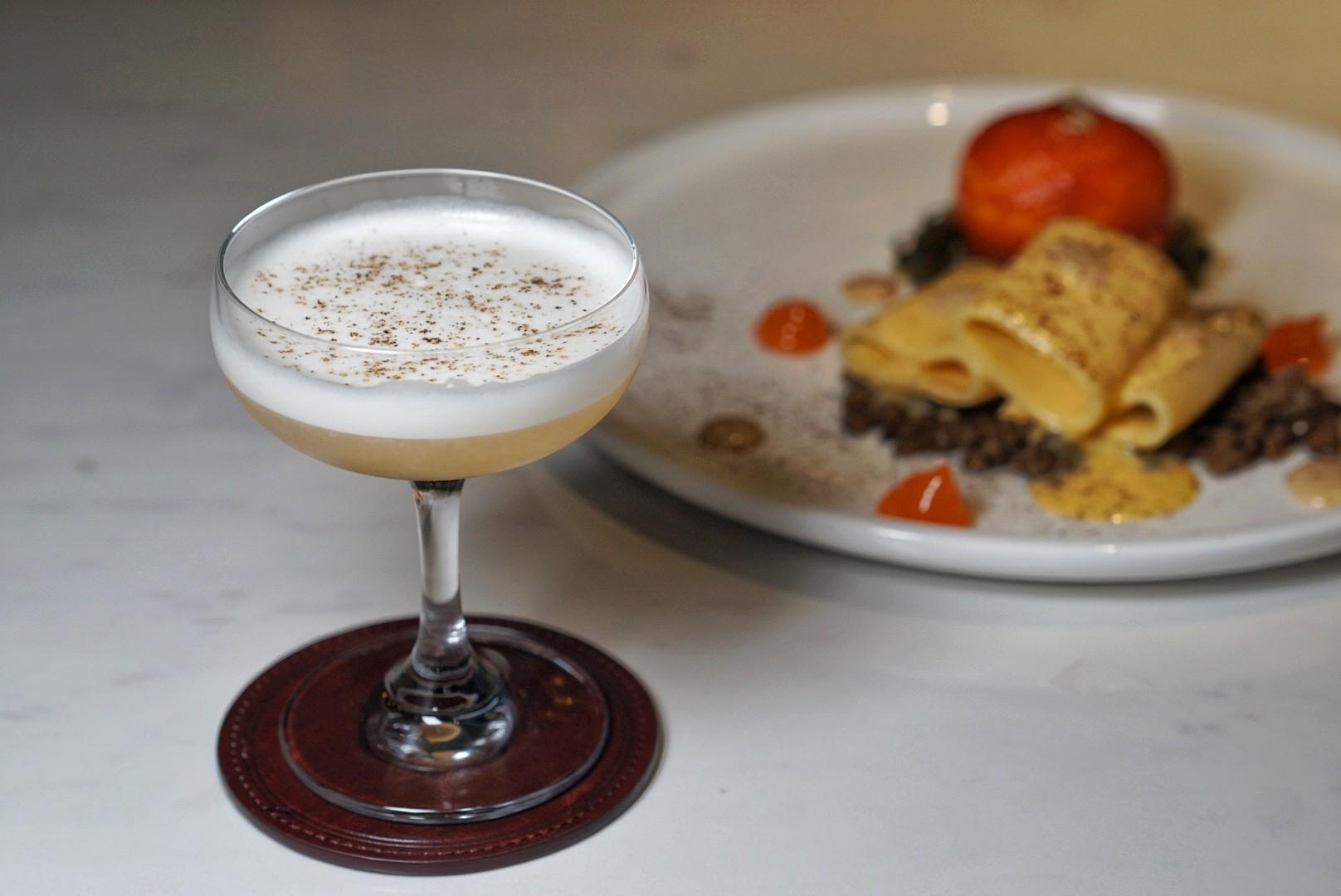
Barmen Tomo Shinoda and Naoki Toyodome are behind West’s cocktail menu, made up of classics with a twist (divided into tasting cues like sweet, strong, sour or hot) plus a world tour menu where drinkers can choose which city they’d like to ‘visit’ and receive a beverage representing said location.
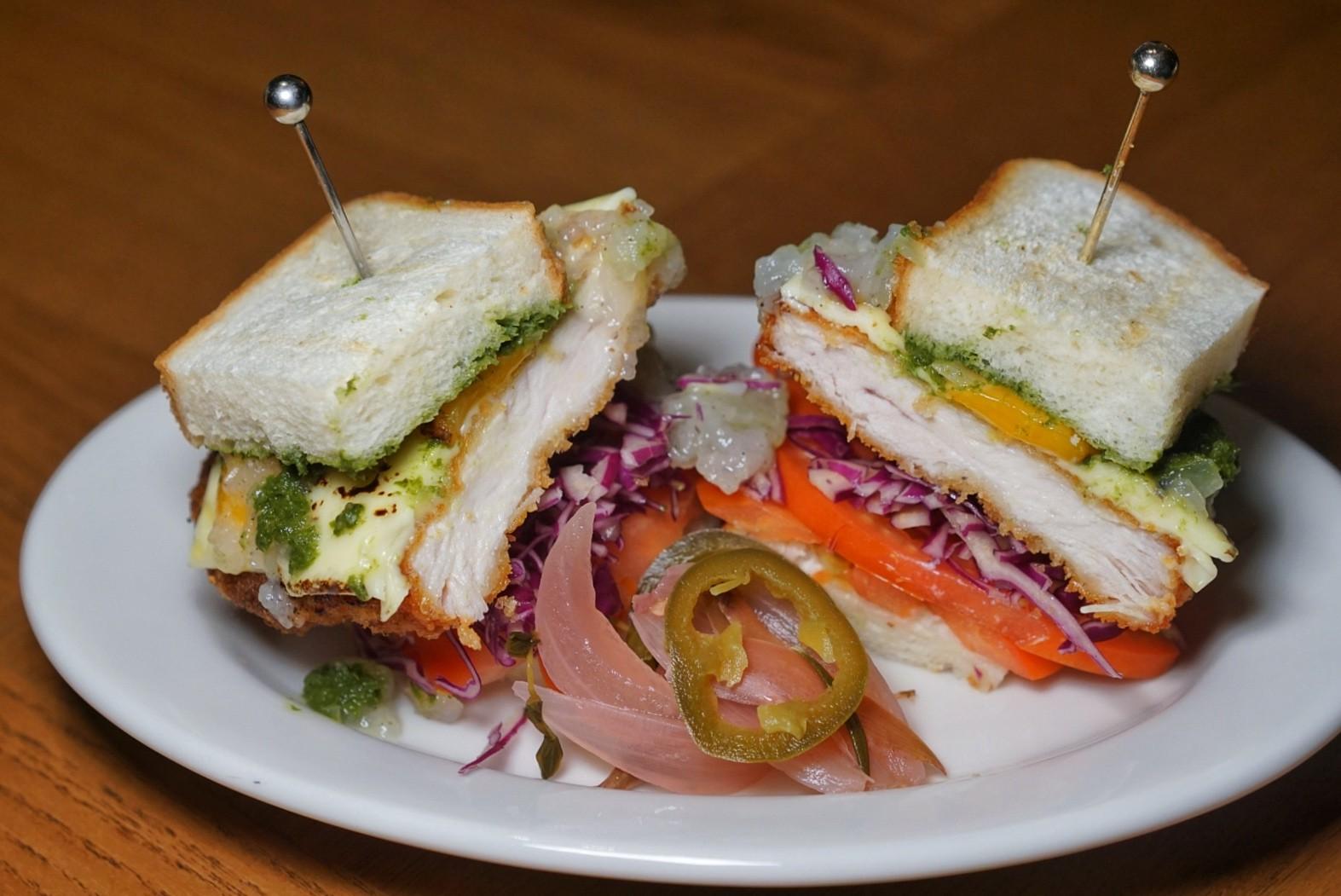
Meanwhile, Shunojo Iyuda and Kohei Yoshimura have designed an international cuisine menu, drawing on Shunojo’s experiences working in both San Francisco and Sicily. The menu is eclectic, plates – and sometimes even bites – jumping between Asia and Europe. Yet, it works, and fully compliments the cocktail drinking vibe.
Read a full review here and here.
Step off the 8th floor elevator of Parkson Mall and you’ll find yourself greeted with a steaming, frothy glass of chai at Khan Chacha – a contemporary Indian and Middle Eastern restaurant that opened its second Shanghai location this past February. We eagerly took our seats at the new space – ready to indulge in the recently released updated menu with seasonal favorites – and left hours later beyond satisfied.
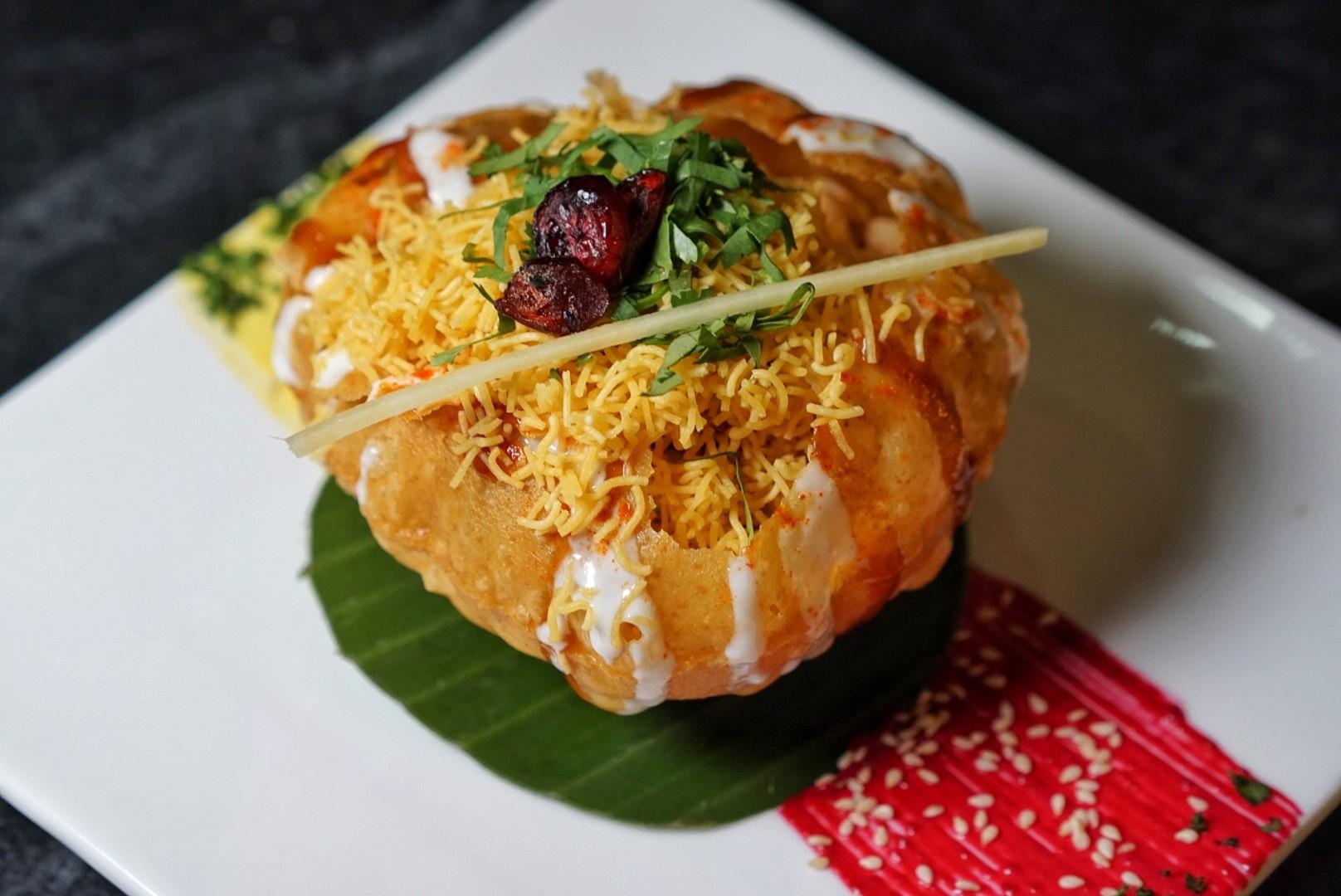
Peruse the sprawling menu of dishes that span New Delhi in the north to Kerala in the South to Tamil Nadu in the east to Rajasthan in the west. Northern style buttered curries sit adjacent southern versions redolent with mustard seeds. A modern-day interpretation of French-style Duck Confit Vindaloo is casually placed alongside Lucknowi Biryani, a Mughal legend.
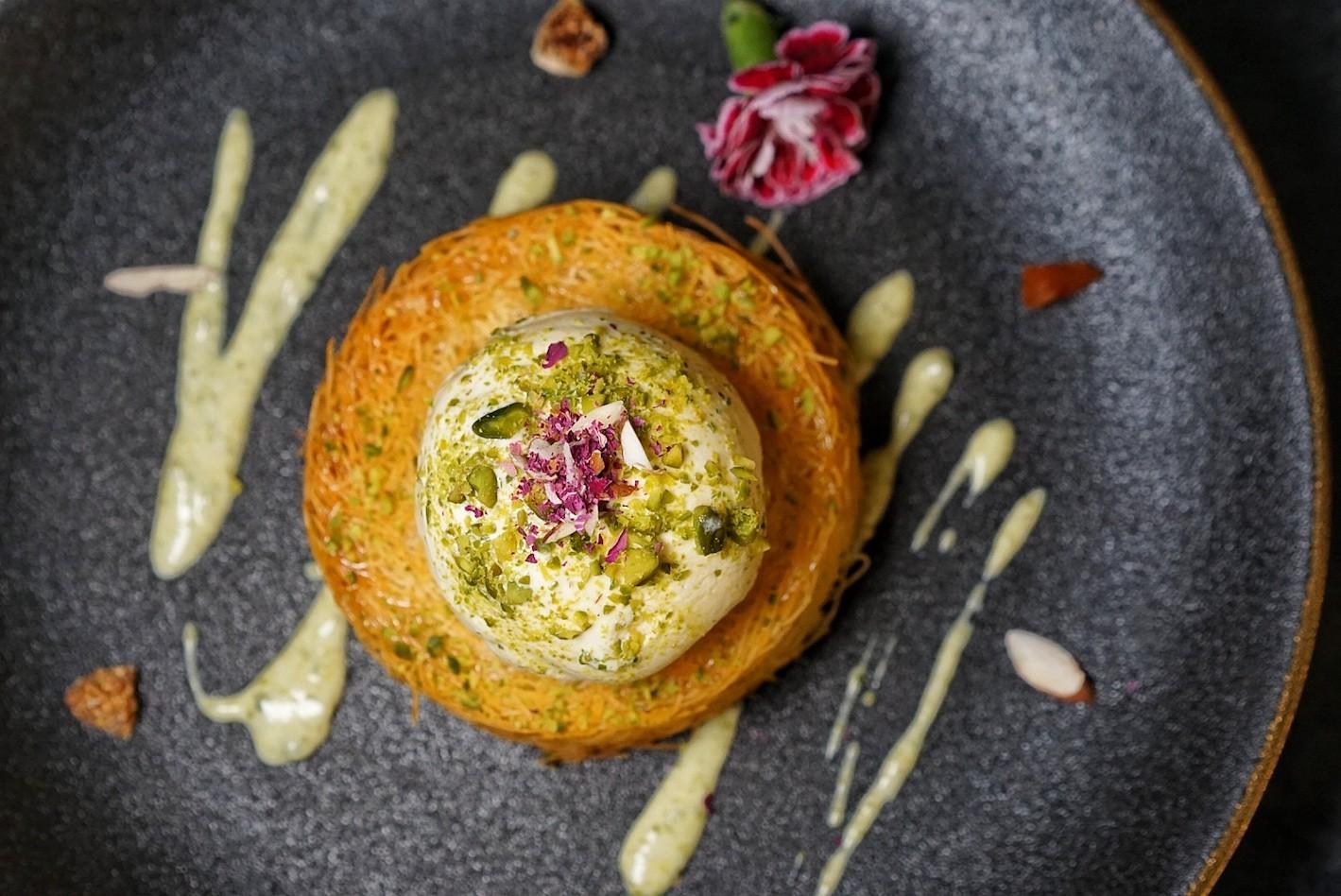
Founder and chef Jibin Arjunan jumps further west to the Middle East, with dishes inspired by Iranian, Pakistani and Turkish cuisine. If you’re overwhelmed, just close your eyes and point to the menu – after trying over half of it, we found you really can’t go wrong.
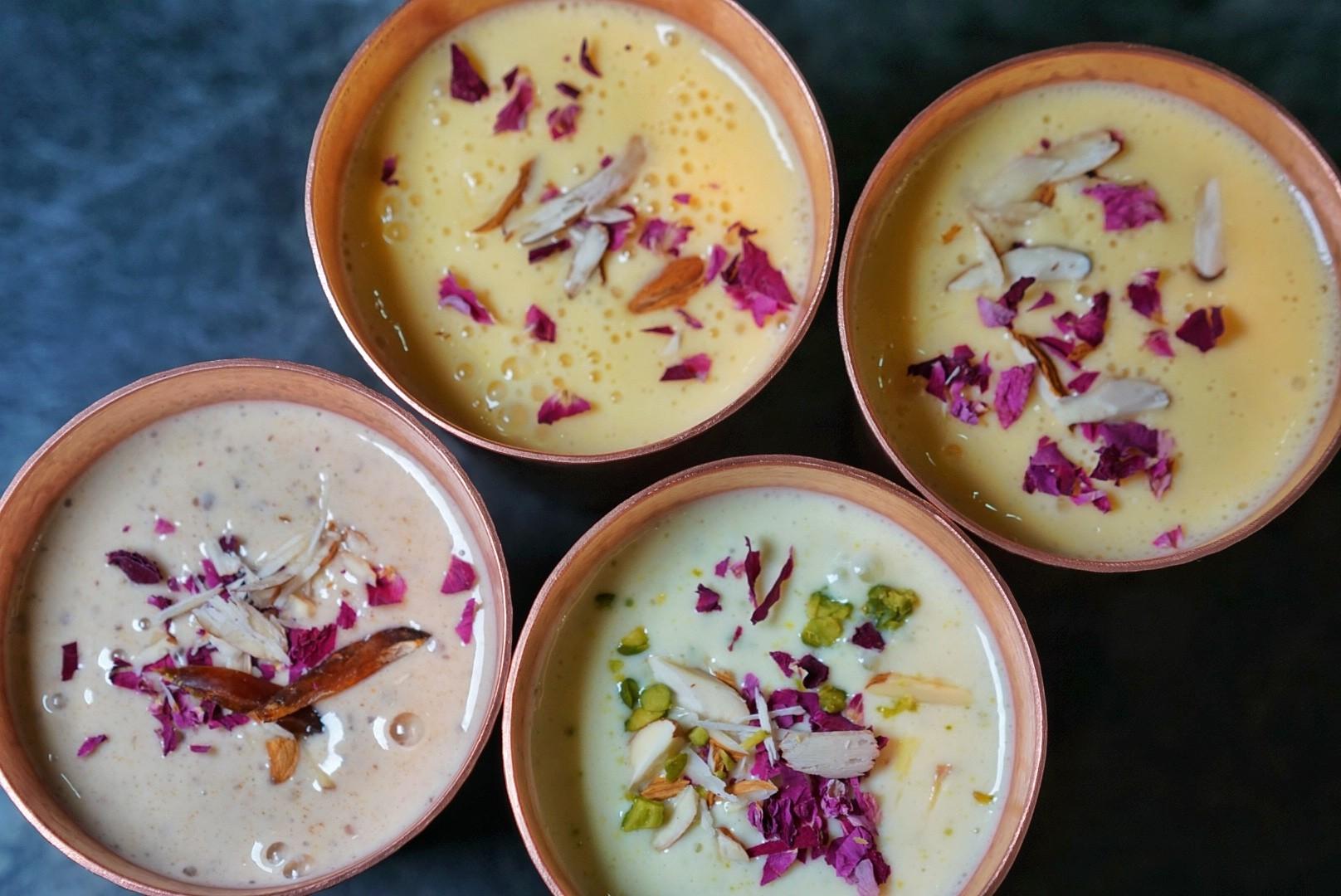
Aromatic pods of cardamom, Iranian saffron, European vanilla and dried rose flavor everything from basmati rice to milk-mustache forming lassis to treacly desserts.
Read a full review here.
Arguably one of the biggest openings of the year, chef Hardeep Somal’s Klay, a contemporary Indian restaurant serving small plates and highballs inspired by the many ingredients and spices that run through India’s underbelly, has been packed since day one.
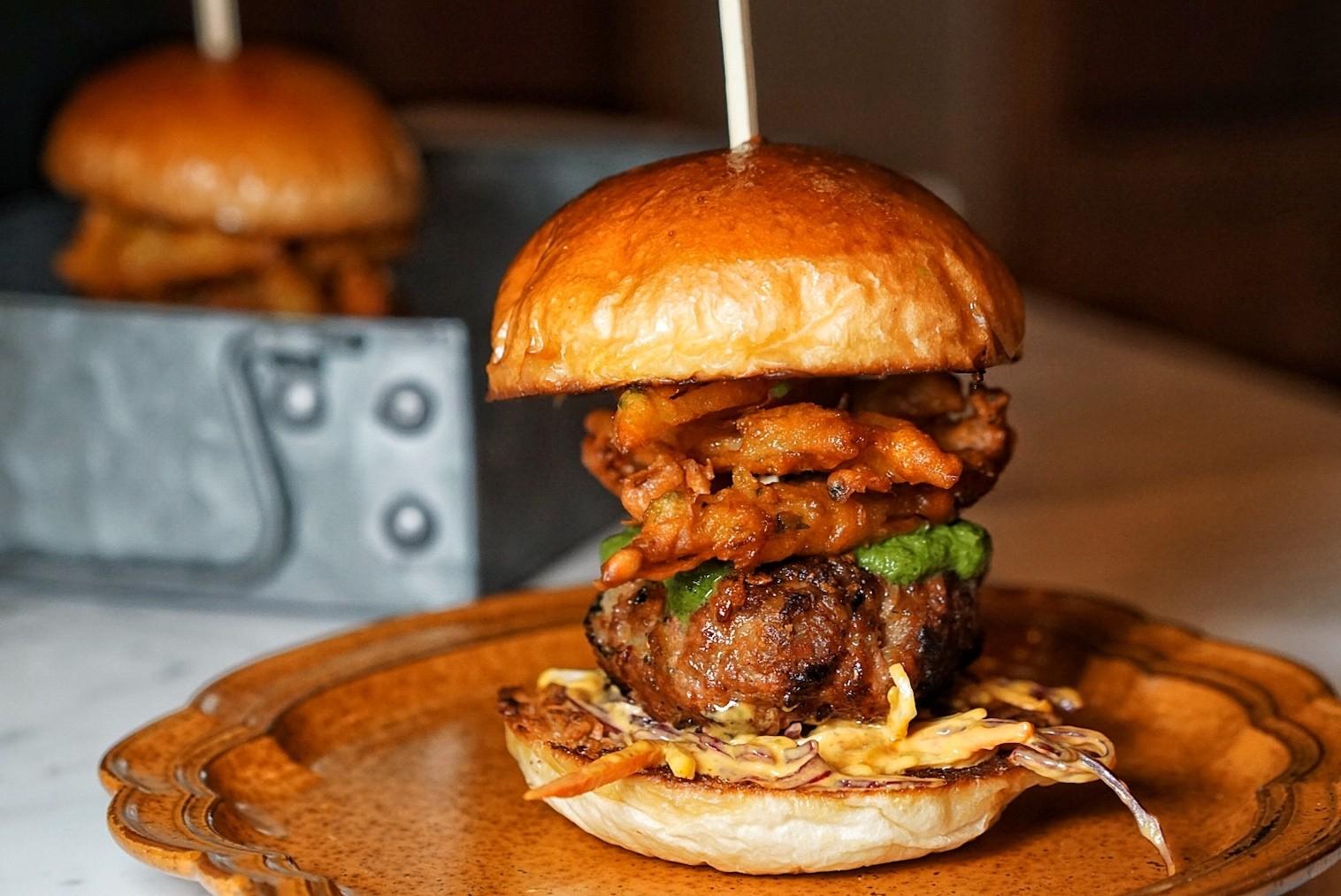
The bistro-esque venue is decked out in contemporary art by crative design agency The Orange Blowfish, with displays of abstract art and hanging woven lanterns.
Like what’s happened with contemporary Indian restaurants in other foodie cities like London and Singapore, Hardeep aims to show Shanghai what Indian food can really be.
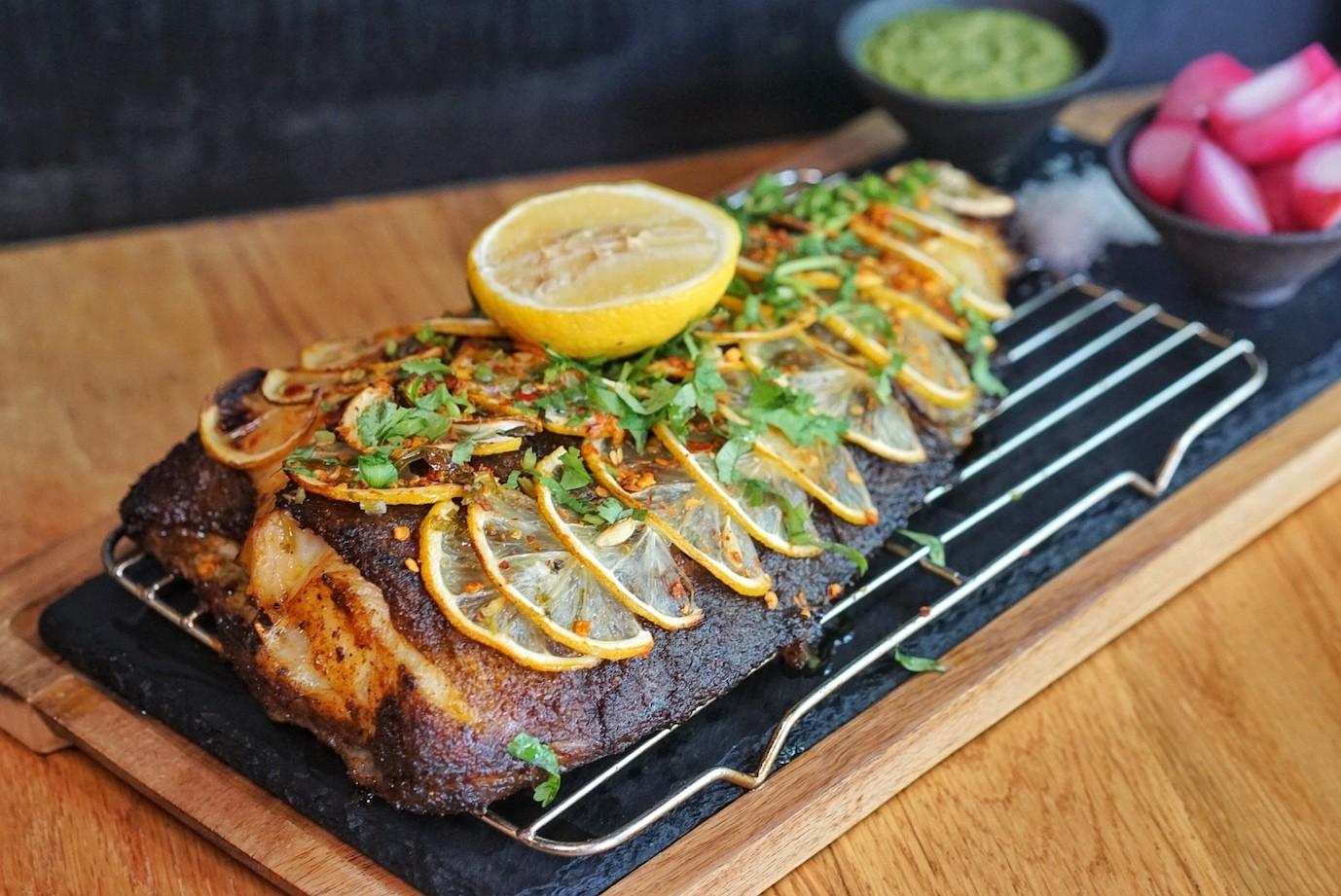
Since opening, the menu has expanded from reinterpretations of Indian favorites to include lunch and brunch offerings as well.
Read a full interview here.
The second floor of Shanghai Brew House in Wheelock Square has been converted into LatinLand – a collaboration between Bourbon Group and LatinLand festival and events company. The space used to be 10 Corso Como, a hip multi-level bookstore, but now it’s all things dedicated to Latin America – from Peruvian lomo salatado to Colombian empanadas to Chilean Pisco sours, all flowing out of the kitchen and bar to the beats of reggaetón, salsa, bachata and merengue.
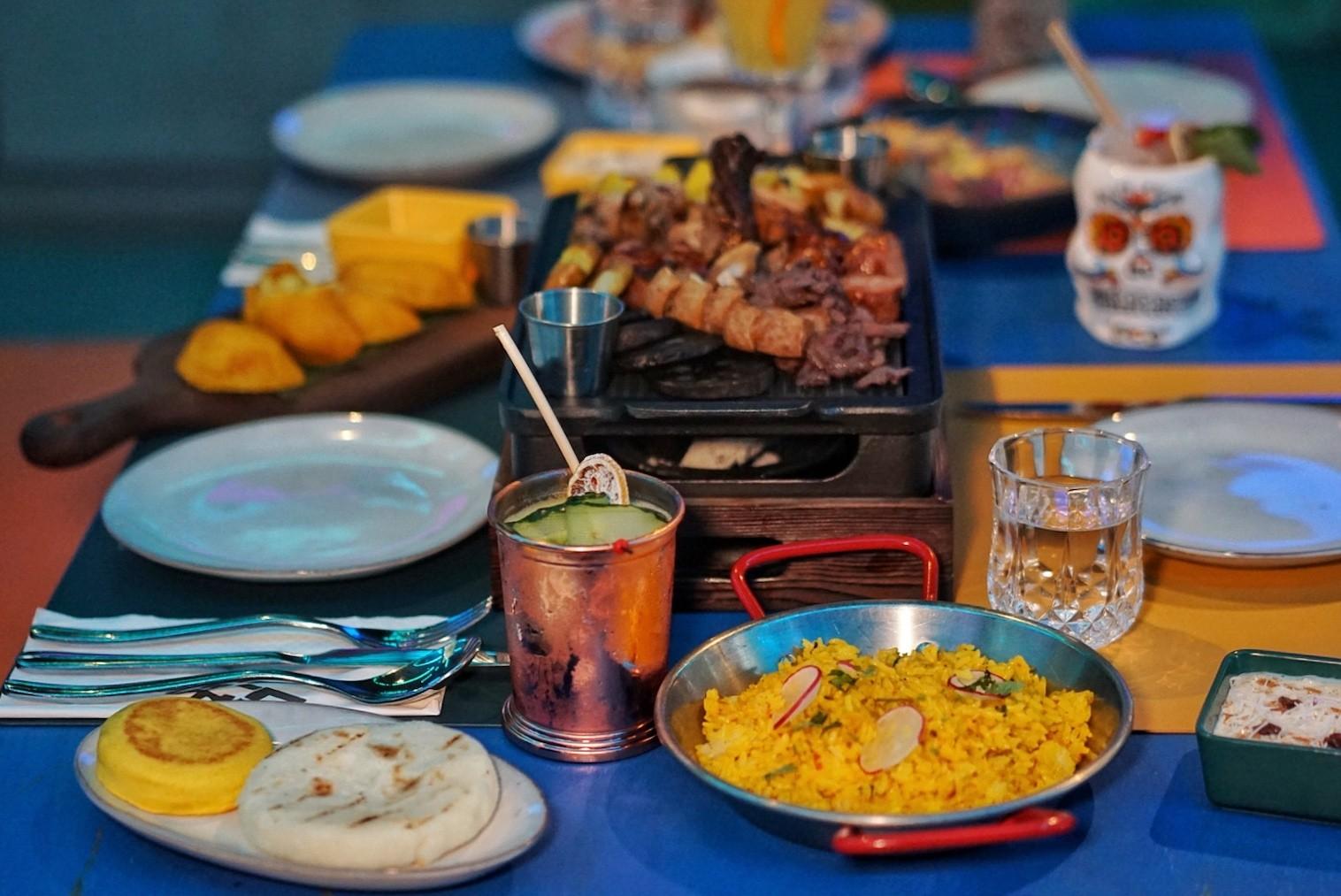
The atmosphere screams beach vacay – something all of us need right about now – with custom projectors creating visuals of moving waves that lead up to the ‘swim-up’ Besame Mucho-branded bar. Lounge ‘beachside’ under a straw umbrella, sipping on any of the 20 holiday-inspired cocktails created by Head Bartender Artëm Zuev, and as evening turns into night, prepare to bust out your best dance moves as the restaurant is transformed into a full on discoteca.
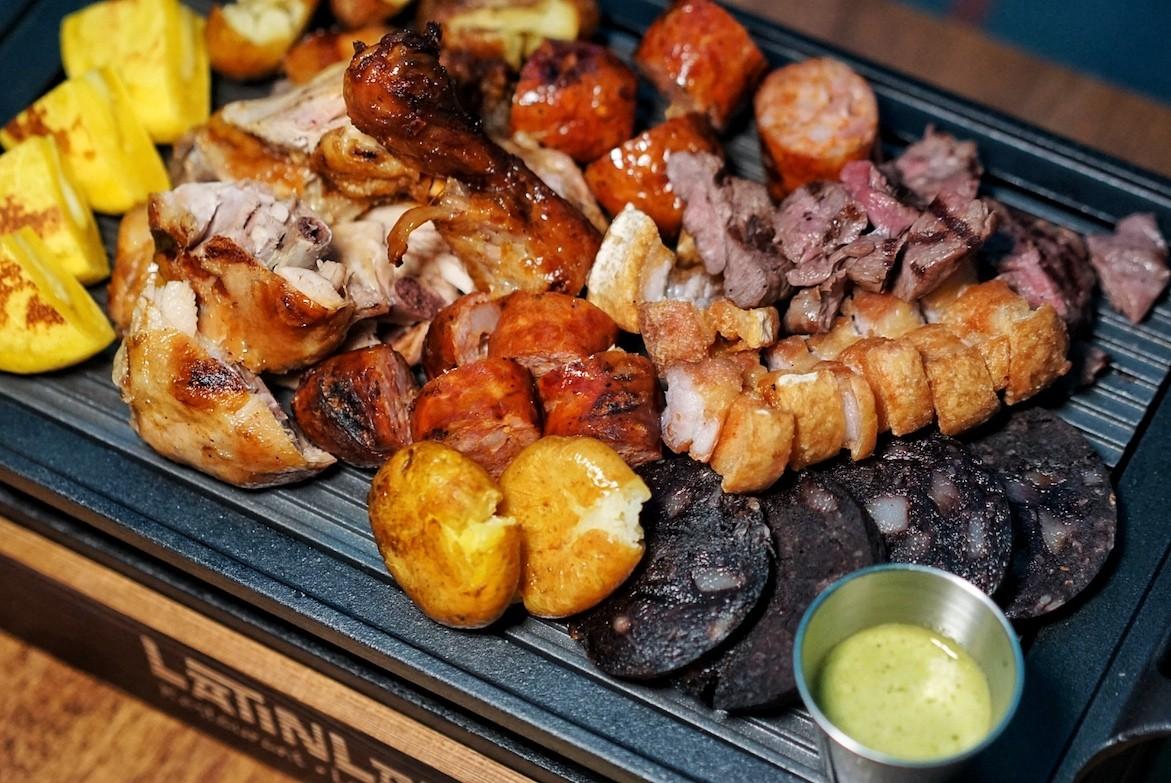
The kitchen is manned by the two Hugos – consulting Chef Hugo Rodriguez (Funkadeli, Heat) and Head Chef Hugo Sazón, churning out South and Central American comfort eats like it’s their job. Oh wait, it is.
Read a full review here.
A transplant from Melbourne, Machi is riding the Asian fusion train, set on a Japanese cuisine track. Opened by partners David Qui and Michael Mi, this is actually the fourth restaurant owned by the duo, but the first of its kind in China.
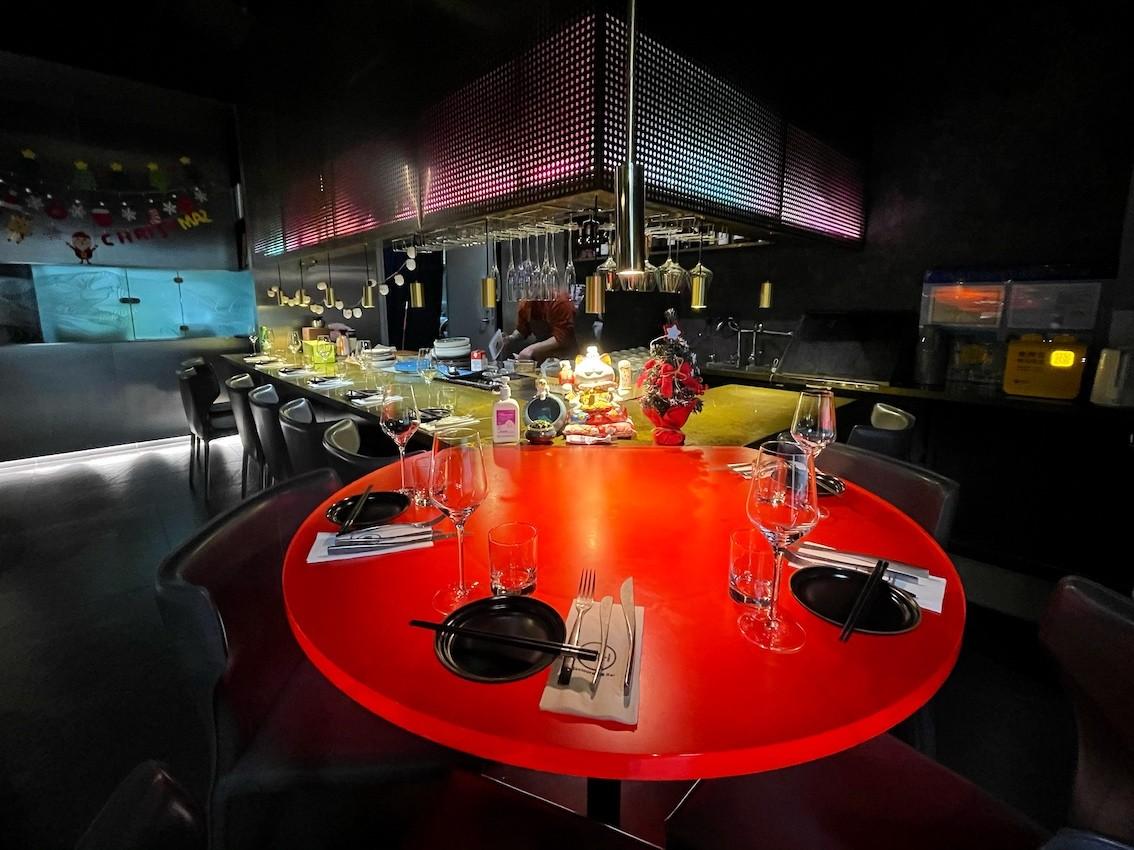
The space is notably – and purposefully – small, to mimic a ‘pop-up’ feel; seating only 22, over half of the spots encircle an open sushi bar.
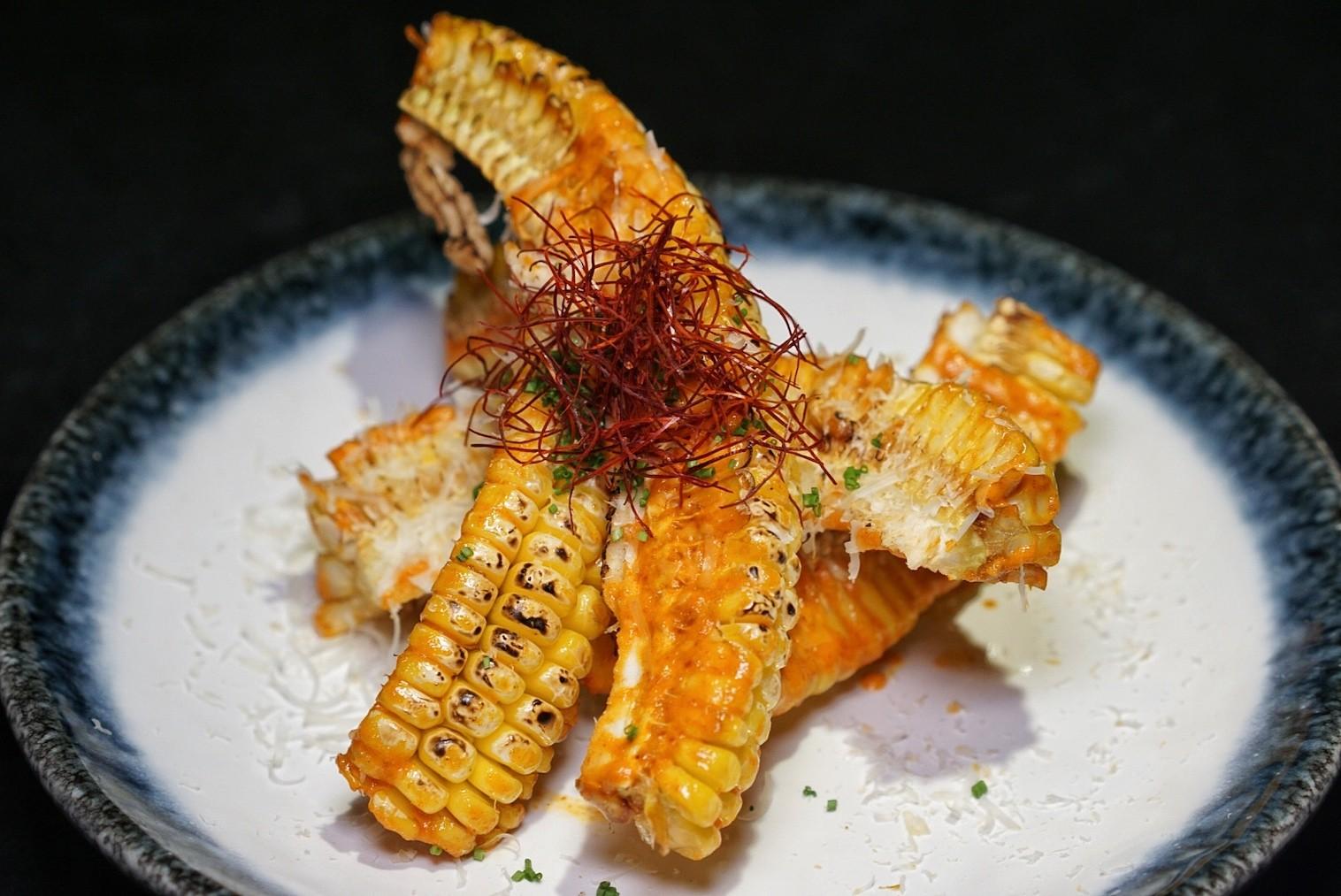
The menu shares a number of dishes with its sister location down under, as the Melbourne sous chef, David Zhang, has come up to lead up the kitchen here in Shanghai. Dishes lean towards lighter, with strong umami undertones running throughout – flavorful, without being overly filling.
It’s sleek, dim and sexy – three necessary components of an ideal date spot.
Read a full review here.
It’s a bold move to name a restaurant after a vine tomato. But when a restaurant’s signature dish is all about showcasing said Guizhou-grown vine tomato that forms the base of the region’s most famously addicting fermented sour, spicy fish soup, then we get it.
Maolago, the newest venture from the Oha Group (Oha Eatery, Dead Poet, Bar No. 3, Pass Residence, 404), is a sanctuary to all things Guizhou comfort food, with an emphasis on Miao cooking heritage.
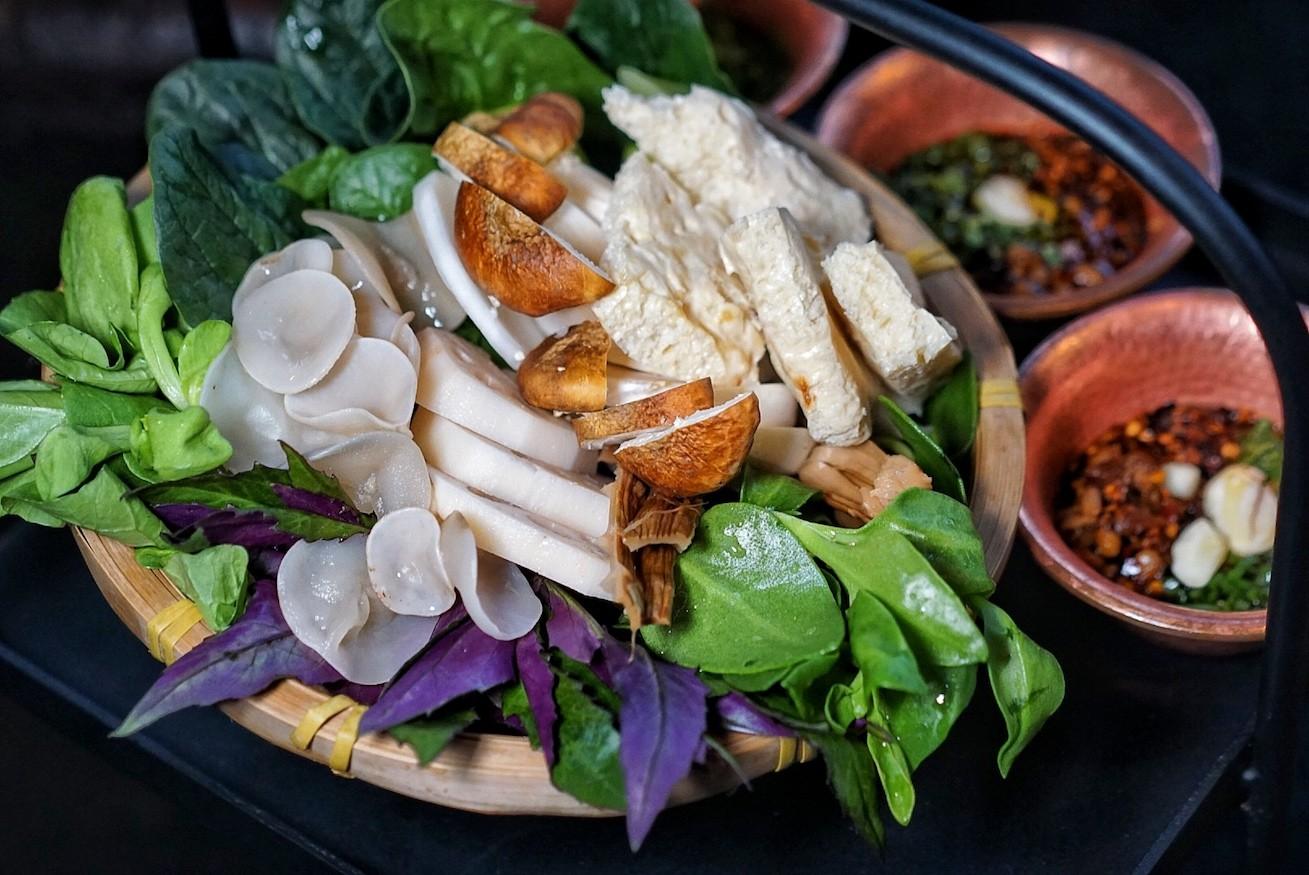
Residing in the space that used to be Daga Brewpub on Fuxing Lu, and decked out by OHA Design, this three-in-one concept: Bar Maolago on the first floor – focusing on a wide selection of low interference wines from around the world, as well as cocktails and small plates; Guizhou hotpot dining on the second floor; and a terrace plus rooftop herb and vegetable garden on the third floor, that grows seasonal produce to compliment the menu.
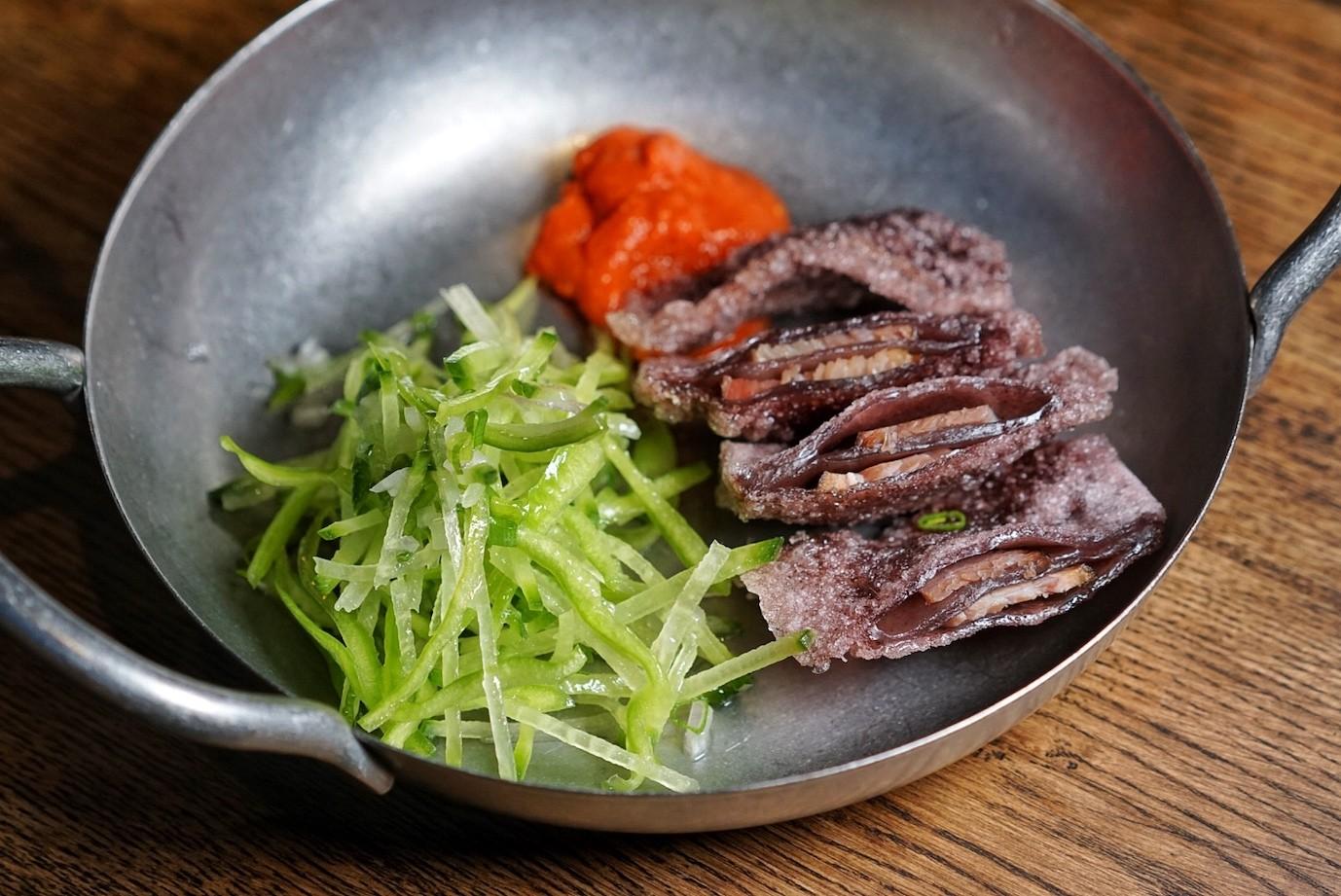
Chef Zou Mingyang, who worked with and learned from Blake Thornley at Oha Eatery, is behind the menu’s inventive design. Where Oha Eatery can sometimes go off the deep end – think smoked ham covered in moss and fried tree bark – Maolago is more refined, with a strong focus on honoring regional ingredients.
Maolago is not another 'modern Chinese' restaurant where the aim is to make food more appealing to Western palates, insinuating that Chinese cuisine – as is – isn’t good enough. It’s the opposite; showcasing how memorable and distinct Guizhou food, a mostly unexplored cuisine by the average Shanghaier, can be by utilizing air-transported local produce and region-specific vegetables to make the entire experience as authentic as possible.
Read a full review here.
One of the most anticipated openings of the year, La Mezcaleria, launched with the largest mezcal selection in all of China.
Partners Alyssa Cockrell, Macià Monterde Combaret and Chef Marco Chavez Jaime (previously of Polux, The Chop Chop Club and Mr & Mrs Bund), along with GM Nico Yang (The Shanghai Edition), simultaneously opened La Barra – a club-lounge, Tacos El Paisa – a taco bar, Bonica – a Mediterranean grill and Loggia – a cafe, all in the same multi-functional space designed by Daniel Uribe and Francisco Nicolas from Ortiz Leon.
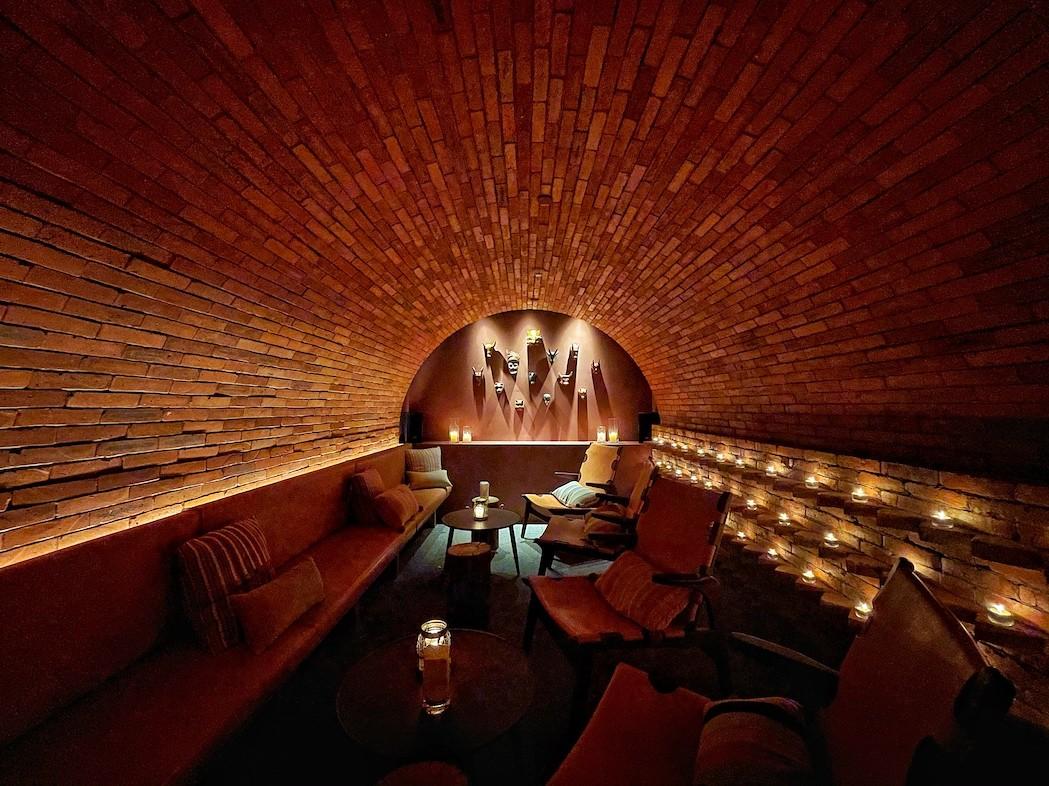
La Mezcaleria is an homage to all things Mexico, but not in the exaggerated, trite manner you’d expect – there are no paintings of Frida Kahlo, no sombreros nor imagery of mariachi bands. Instead, it is warm lighting – mostly emitted from flickering candles that illuminate exposed brick walls – wooden detailing and a live maguey plant – what liquid agave is processed from – affixed inside an actual table.
La Mezcaleria focuses fully on – no surprise here – mezcal. With over 70 SKUs currently available, the number will increase monthly as new varieties arrive, all imported via collaborating partner, Mestizo. Cocktails highlight the many different flavor profiles one can experience in mezcal, with a menu curated by Mark Lloyd (J. Boroski).
Read a full review here.
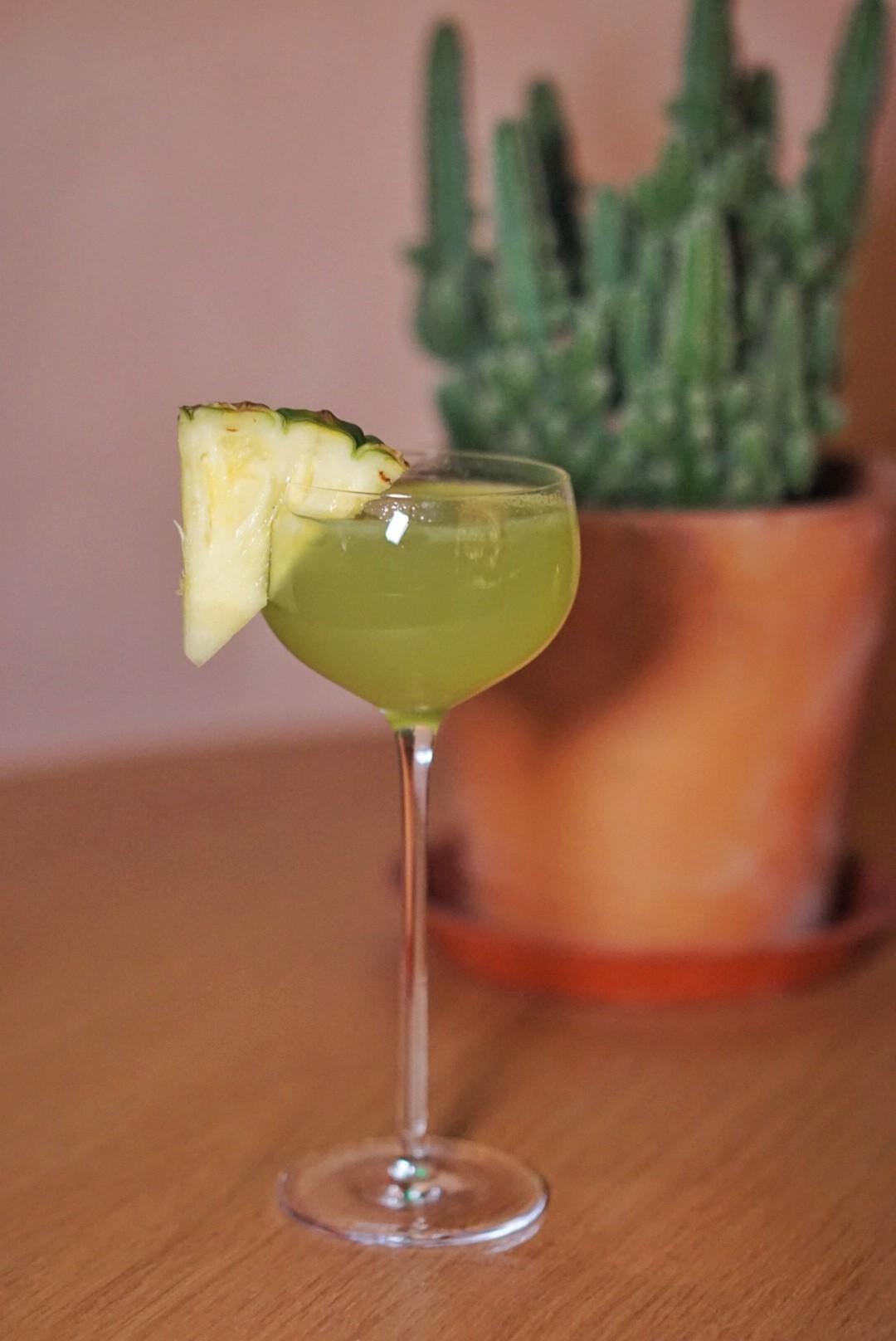
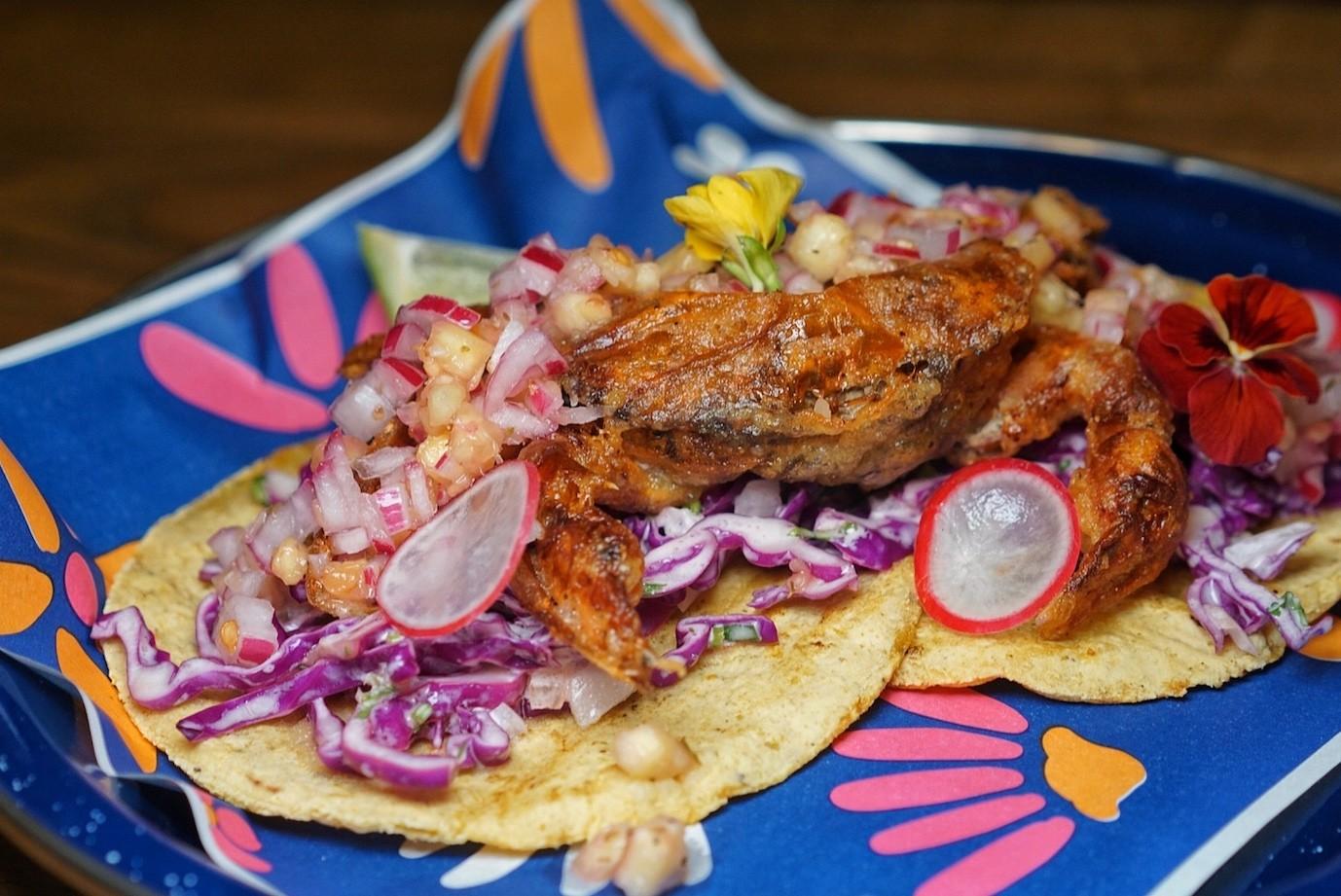
Mezcalito, a new Mexican bistro focused on all things taco and mezcal, just soft opened in the old Dodu spot on Changshu Lu. It's backed by Hugo de Mondragon (Dodu, Espíritu), who is going full in on the agave plant front with his second mezcal-themed venue.
The downstairs seating has been rearranged to allow for more group seating and standing around the bar, a now central theme of the space’s concept. And with that comes a variety of mezcal-focused sips in every form – long drinks, cocktails and alcohol-spiked bevvies to be enjoyed with casual eats, available on weekends until 2am.
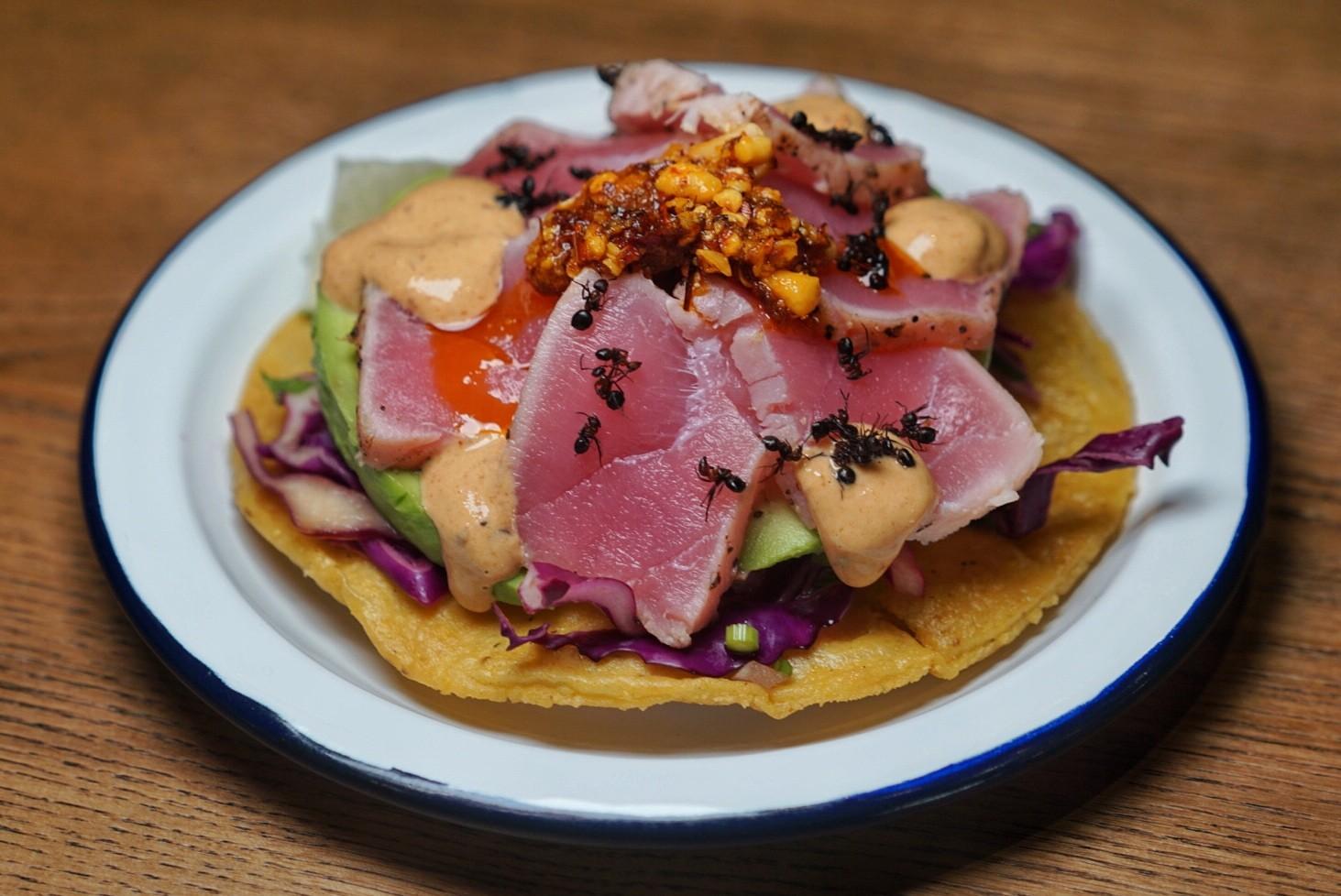
Other than some lighting changes, a colorful paint job, an updated playlist and a spit for roasting al pastor pork, the layout is still the same as the Dodu we knew and loved, now just with some Mexican flare. The upside is that the new concept works for both daytime and into the evening. Tacos for lunch or tacos late night? Both are a win in our book.
Read a full review here.
The Danish brewery and beer brand Mikkeller made its way to China last year, with its first location off Yanping Lu. With over 20 taps, a beyond extensive bottle list and every weekend events appealing to any interest imaginable, it's no surprise that this beer outpost has garnered quite the following.
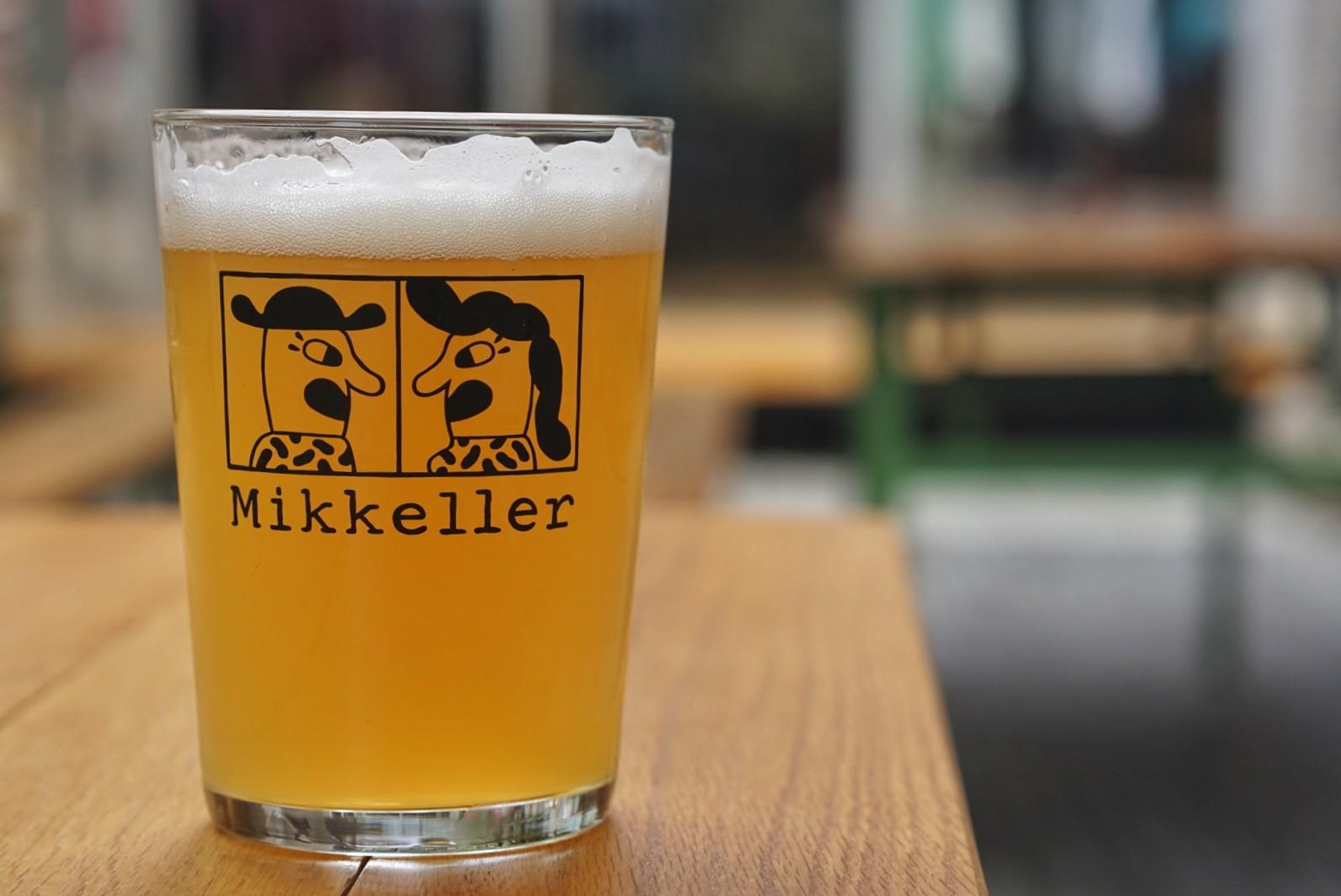
Riding on the taproom’s success, Mikkeller – led in China by Martin Aamodt (previously of Inferno, Roxie and Stone Brewing) – just opened a second spot, Mikkeller Xintiandi, in the old El Luchador space. Split across two levels, the beer bar features Danish comfort food for brunch, lunch and dinner, along with spirits, wine and champagne.
The main floor sees 10 well-curated beers on tap, along with a fully stocked beer fridge sporting upwards of 60 different varieties of imported cans and bottles – living up to its reputation as a beer nerd mecca.
Mikkeller Xintiandi's food menu is all about paying homage to Nordic comfort eats. This is the kind of food your Danish grandma would serve you (if you had one).
Read a full review here.
But dim sum within Shanghai’s dining scene spans the gamut, with everything from dingy hole-in-the-walls crammed with angry ayis rolling pushcarts over your toes, to upscale Michelin star restaurants where steamer baskets are placed atop pristine white tablecloths by waiters wearing equally crisp white gloves.
Enter Mi Mian Hui Xin in Wukang Market a middle of the road, everyday dim sum and Hong Kong diner focusing on nailing the classics with just a few surprises.
The woman behind the scenes is none other than Michelle Zhou (Mi Thai) who also has her hand in Wagas, as the owner's wife.
The menu is large, spanning steamed and fried dim sum, roasted meats, diner fare, sharing plates, Canto soups, desserts and drinks. Whether someone of Cantonese descent would fully approve of the state of dim sum at this diner is up in the air, but the fact remains that, regardless of rustic authenticity, it’s tasty.
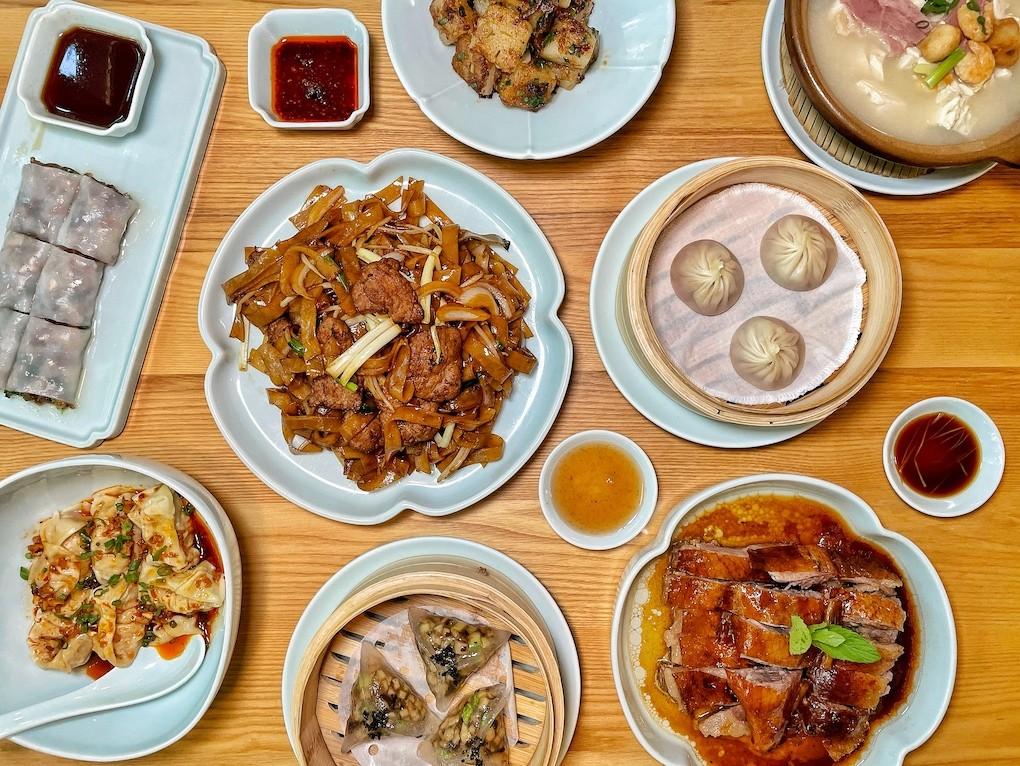
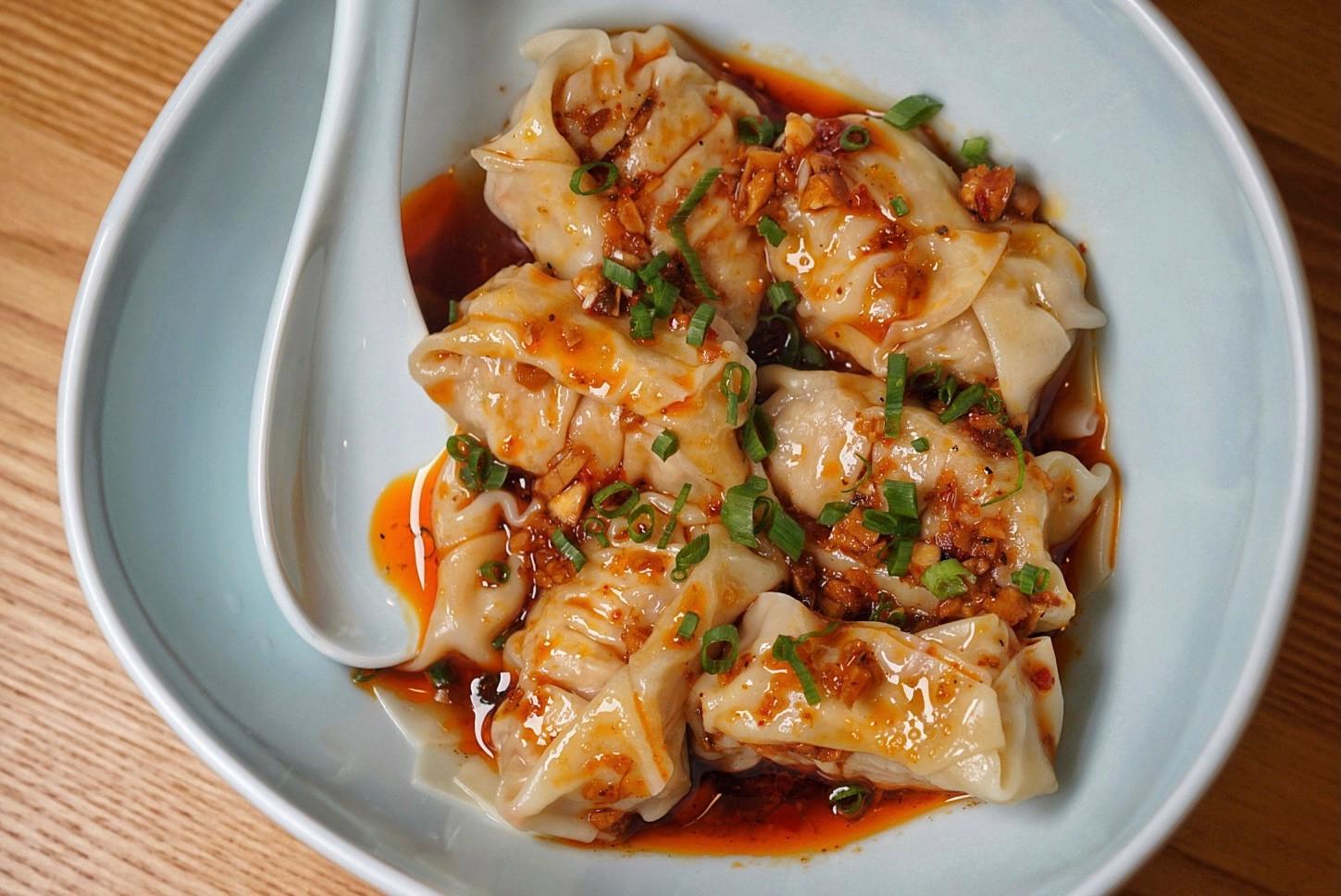
Not necessarily transcendent, but the range is laudable, with classics well represented – steaming baskets of pork fat-filled, thin-skinned xiaolongbao, crimped shrimp wontons bathed in chili oil, pleated har gow, diced pork belly tightly wrapped in a translucently thin rice roll and crispy fried cubes of radish cake robed in crustacean-flecked XO drizzle.
Mi Mian Hui Xin is more upmarket, yet unpretentious, welcoming for anything from casual dates to large gatherings.
Read a full review here.
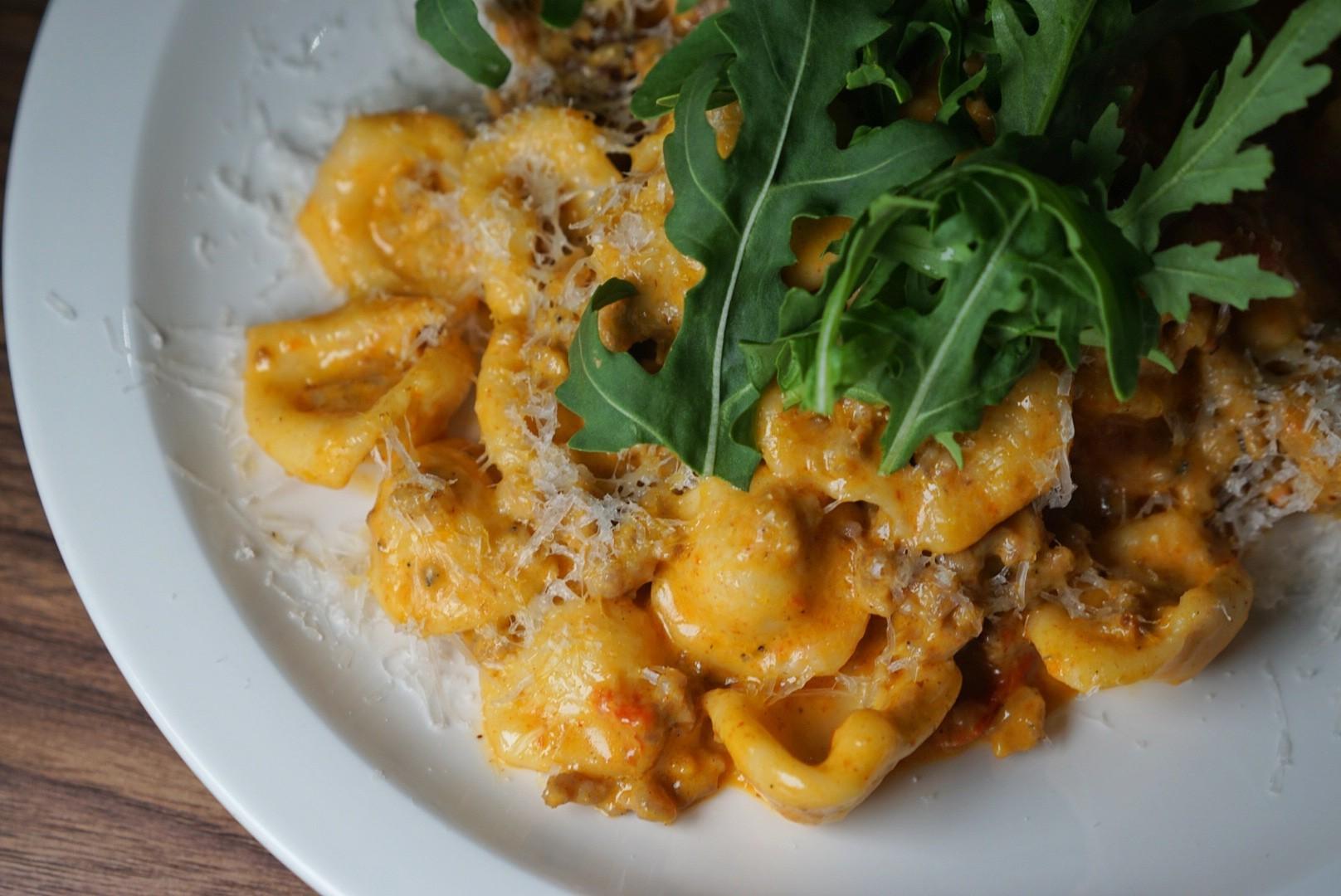
Italian comfort food seemed to be the it trend of summer, and Pici, a Hong Kong chain that expanded to Shanghai as part of the Pirata Group, fits right in. Opened in the Jing’an Kerry Centre, the made-fresh-daily pasta at wallet-friendly prices makes up for the fact that you’re in a mall basement.
General Manager Borja Martinez Otero is running the show, a member of the team from Pici’s very first location, while Hong Kong-based chef Andrea Viglione set up the kitchen and ensured consistency with their other nine outposts.
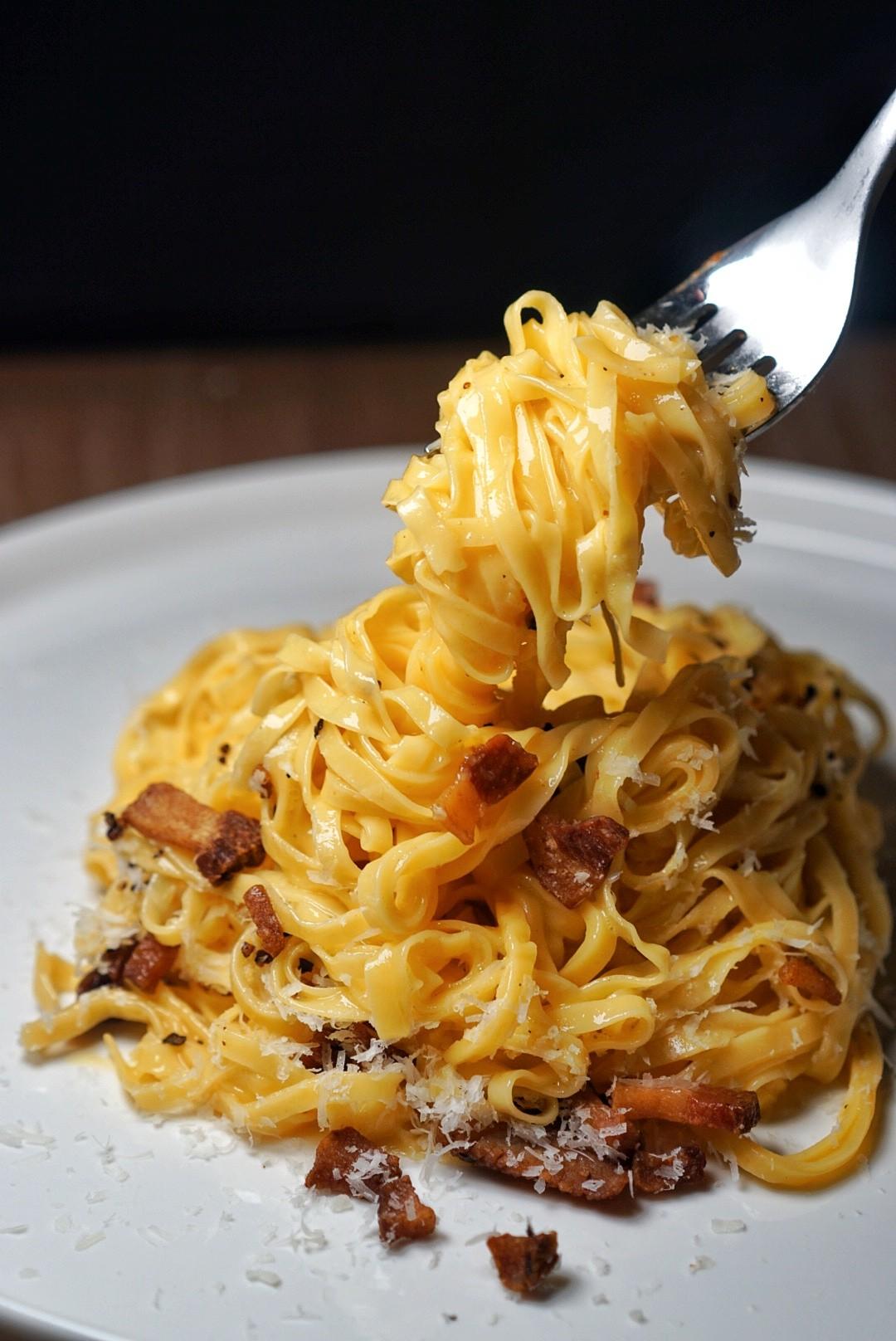
The concept is as straightforward as the food – honest Italian comfort eats your nonna would make in a fast, casual setting to satisfy both the lunch and dinner crowd.
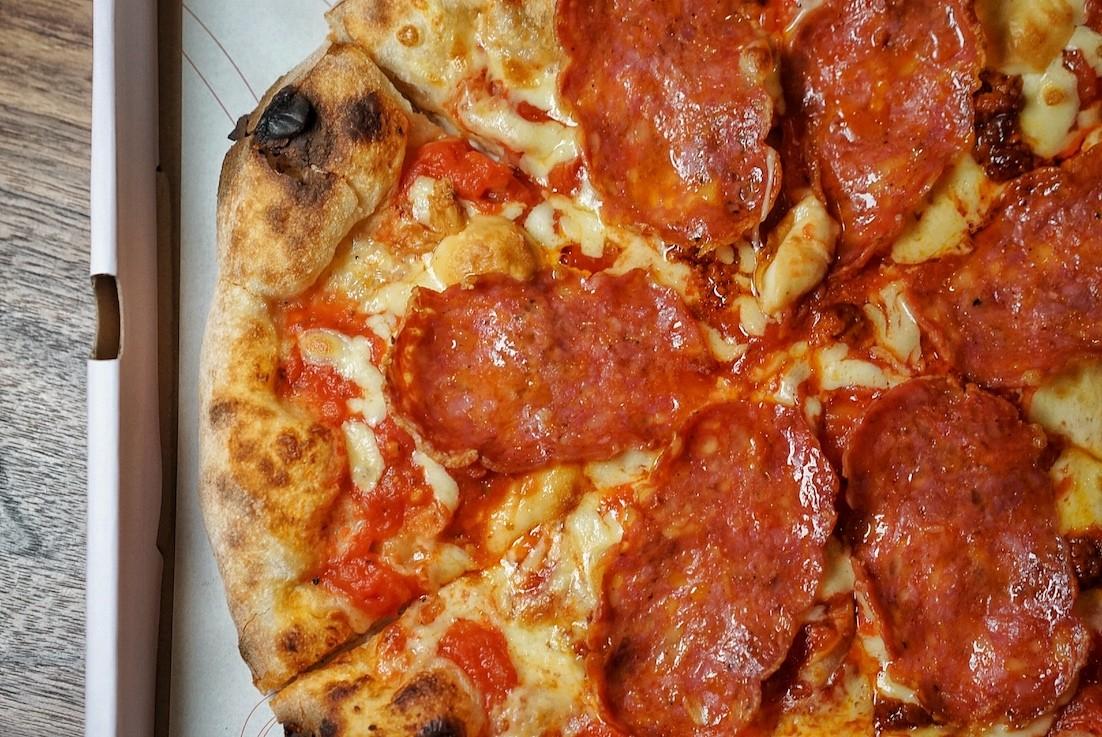
Shanghai sees Pici and The Pizza Project come together in one space where diners can order from both ‘venues’ to the same table. Originally designed just for takeout, diners caught a whiff of that pizza-oven charred crust and wanted a slice or two for themselves. Happily obliging, the two became one for all that carb consumption in the same sitting.
Read a full review here.
Shanghai institution Scarpetta is branching out with a new sister restaurant, Pizzeria S. The boutique venue, in the style of Capri in Southern Italy with a hint of Japanese influence, offers limited seats for lunch and dinner.
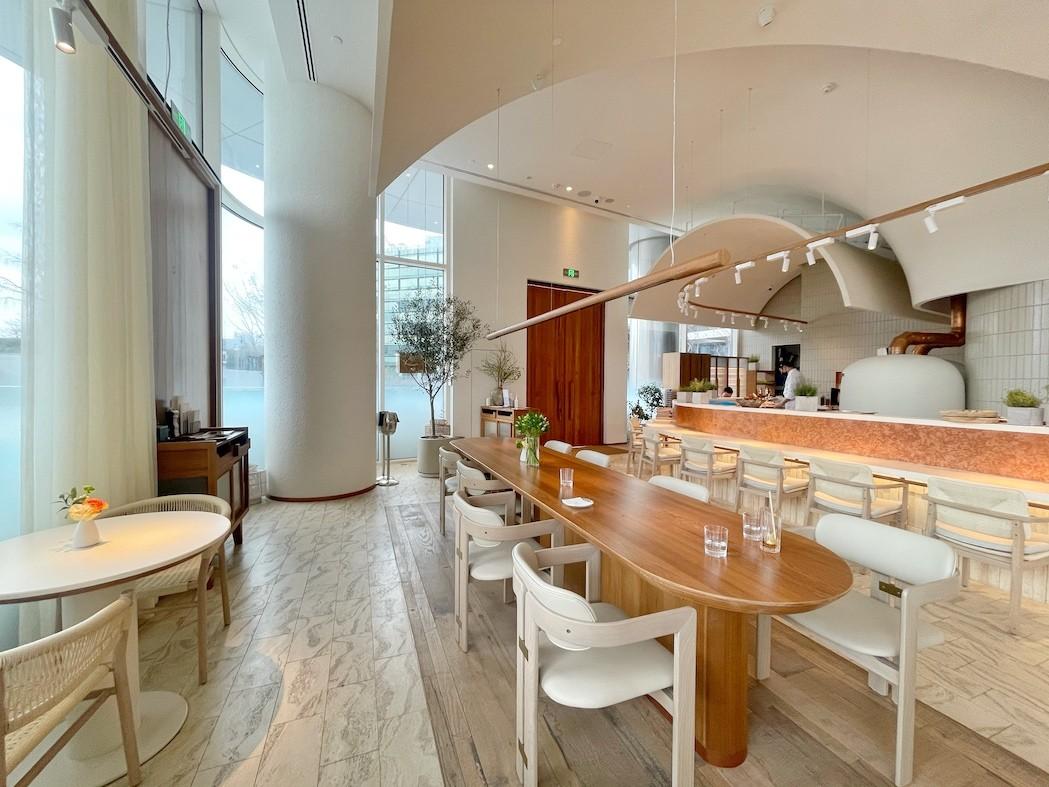
The open pizza kitchen is outfitted with bar seating, allowing diners to witness the magic, taking in the yeasty scent of rolled out dough and bubbling cheese, curving around to the bar, were guests can sip on aperitvos or digestifs, depending on the time of day. Outfitted in warm hues of cream, dusty rose, light wood accents and plants abound, the domed ceilings – inspired by Italian cathedral architecture – add to the airy feel, with views of the Huangpu River.
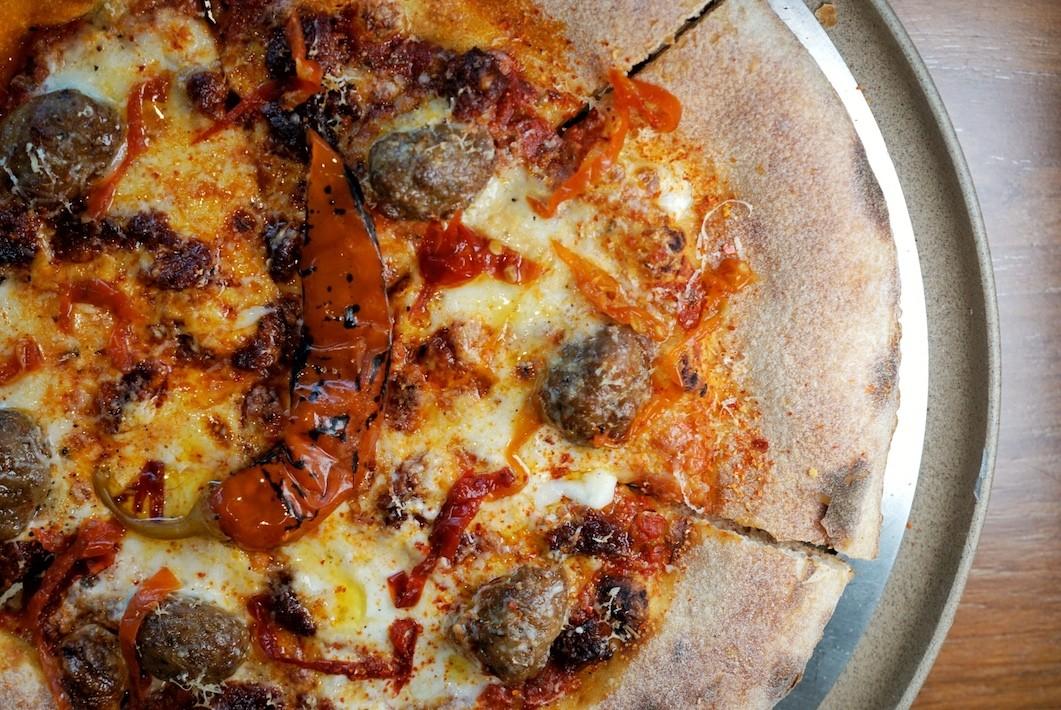
As one can surmise from the name – the restaurant focuses on pizza, with two upgraded state-of-the-art pizza ovens affording each pie’s crust the ideal balance between crispy and light. There is some overlap with Scarpetta's menu, but quite a few new lighter plates, fitting the brightly lit, café-style space.
Read a full review here.
Gregarious Giampaolo de Santis (Zozzo, Porcellino) is living out his dream of opening a casual neighborhood Italian hangout plus alimentari supermarket – an all-purpose mini shop where everything is made from scratch. Its name is Roma, and it is now open on Kangding Lu.
The design is super industrial chic: exposed ceiling piping, concrete walls illuminated by globular orb lighting, low-hanging Edison bulbs intertwined with a terrarium-esque display of suspended greenery and backlit arches, a common design motif throughout the restaurant that pays homage to the Colosseum of Giampaolo’s hometown of Rome.
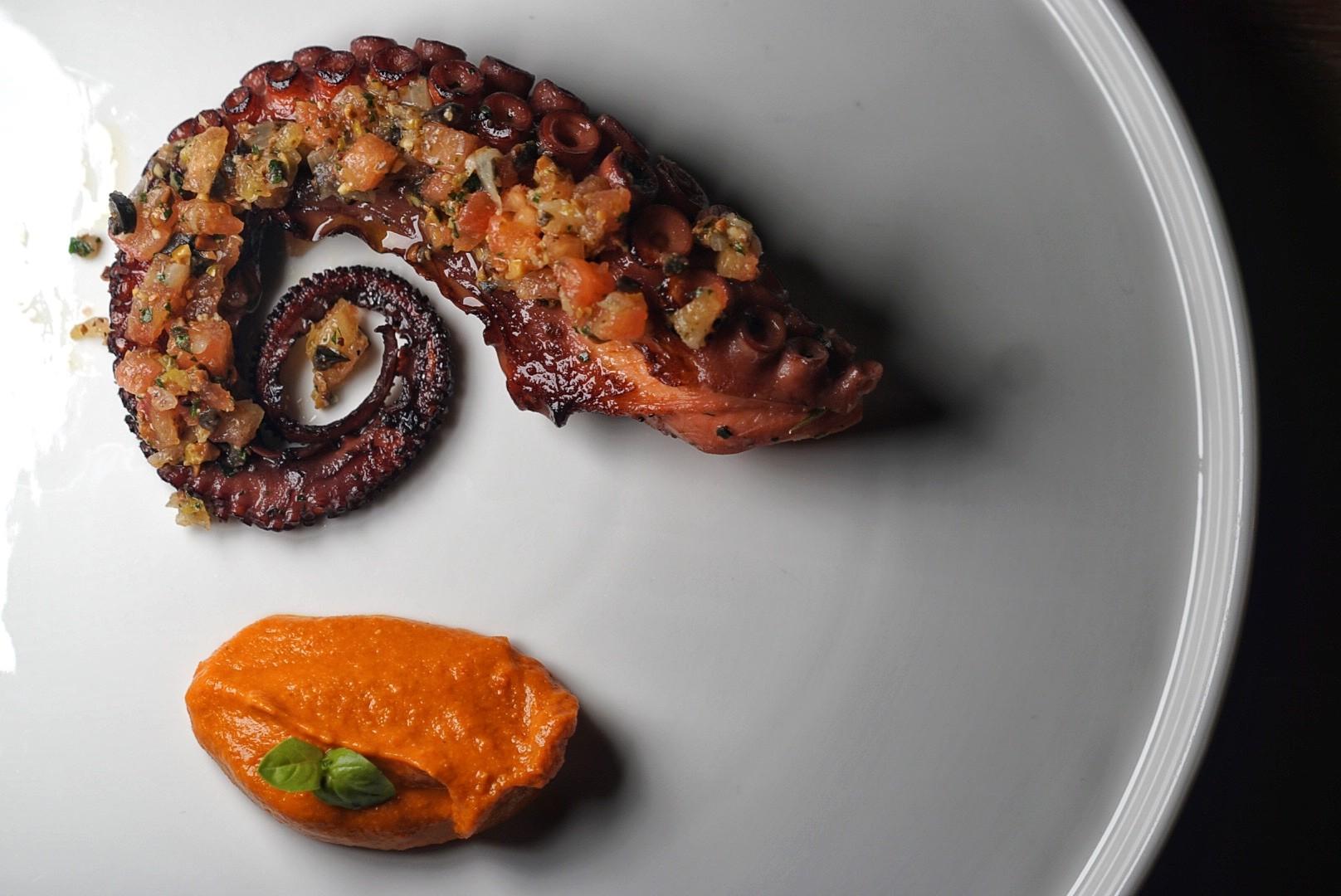
Consulting chef Andrea Calducci (executive chef of 101 Centuono in the Shanghai Tower) is helping to offer a range of dishes that take diners on a journey through Italy.
Roma feels like a neighborhood spot – in Shanghai, in New York, hell, even in Rome; it just feels like you’ve been here before, and that’s comforting. This isn’t where you'd go to party. It’s not a place to wow a business client. But it’s not going to give you sticker shock when the bill comes either.
Read a full review here.
Rozo is a chic spot with a tight menu of Latin-inspired plates accented by a creative Asian touch. The wine cellar in the back offers just over 100 distinct vintages, exhibited on shelves like rare books in the most treasured kind of library. The only thing missing is a rolling ladder to reach those tippity top ledges.
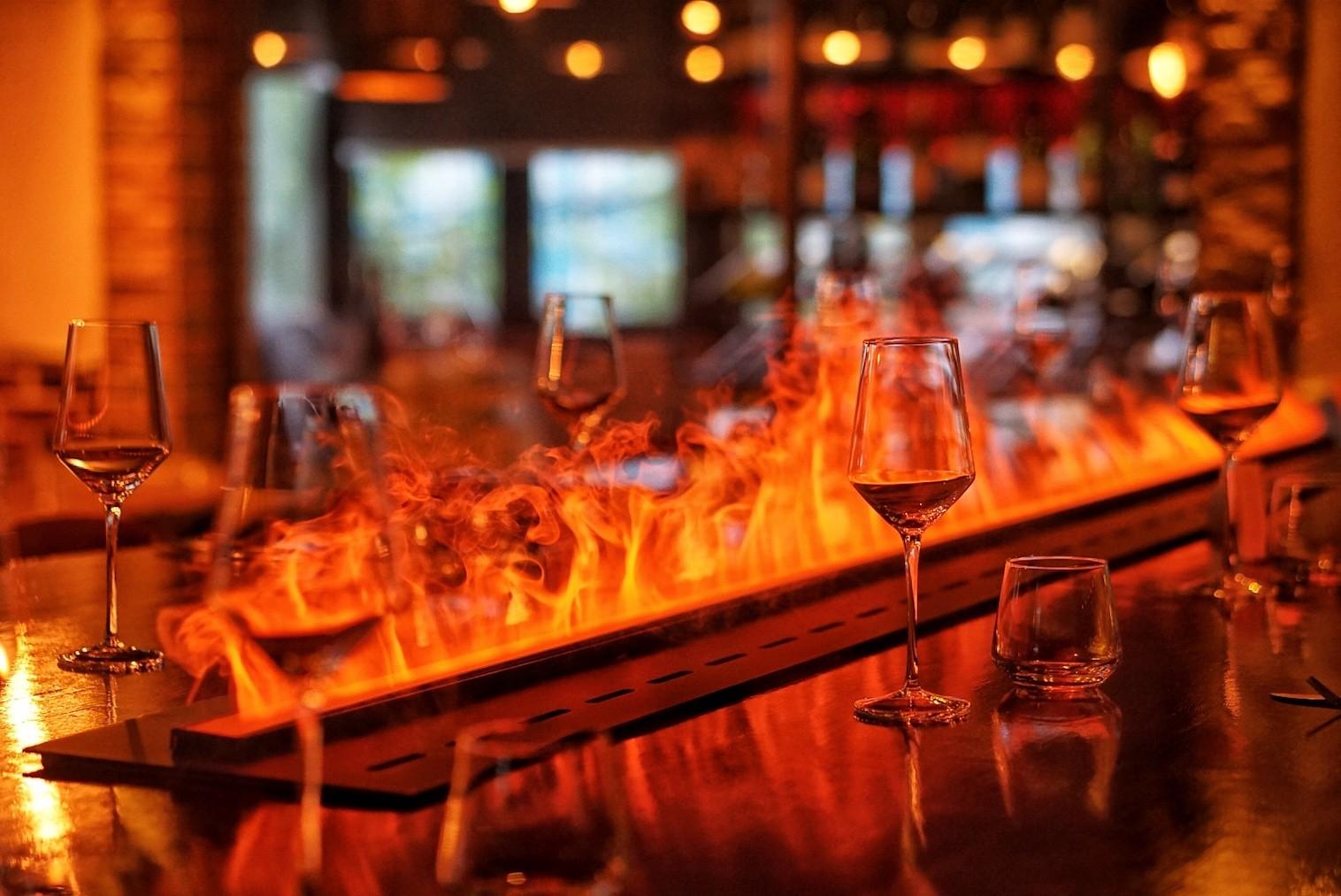
Operating partner Matthieu Thomas (Must Grill, Blanche, Dr. Wine, Raw Eatery), along with three friends, came up with the idea to open a wine bar that they themselves would like to hang out at. Together with business partner Alex Souzy, he designed the mainly French wine program. However – to be clear – this is not the focus. In fact, there is no set focus of the wine program. “Whatever we try and like, we stock. Simple as that,” offers Matthieu, in between sips of a punchy Cabernet from Loire Valley.
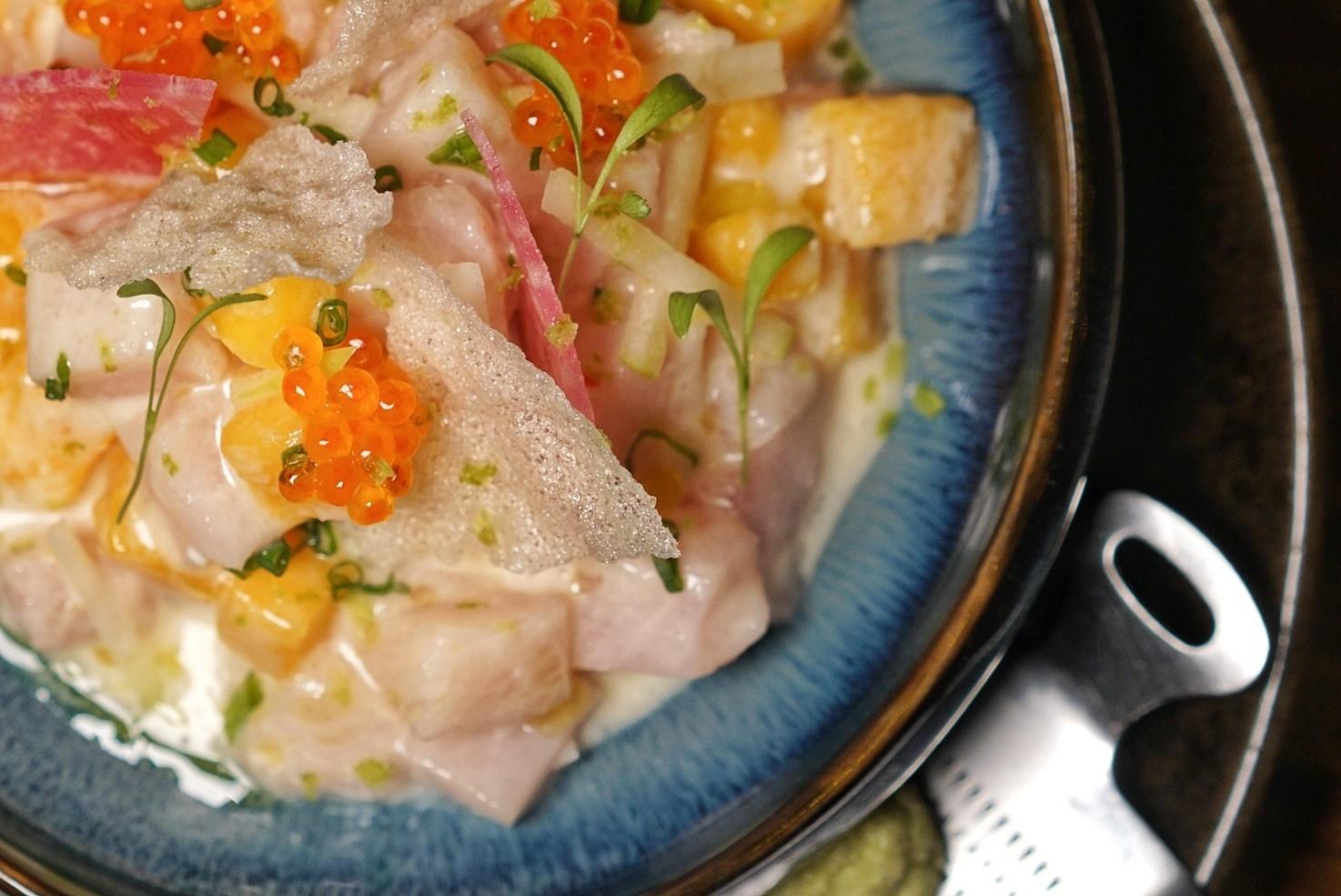
The menu is tight – 10 dishes plus meat and cheese platters, and the plan is only to add a handful more in the coming months. Like the wine program, the food, designed by consulting chef Carlos Sotomayor (Blue Plate Consulting), is direct and to the point.
Read a full review here.
Malabar shut its doors back in June after being open for nine years, but – don’t worry – it was just for a short stint of renovation and rebirth that has now bestowed upon us Sakaba Malabar.
While design and layout have been upgraded, Malabar's core energy still remains the same, housed in a chic lounge setting that converges around a communal, elliptically shaped bar crowned with hanging glassware.
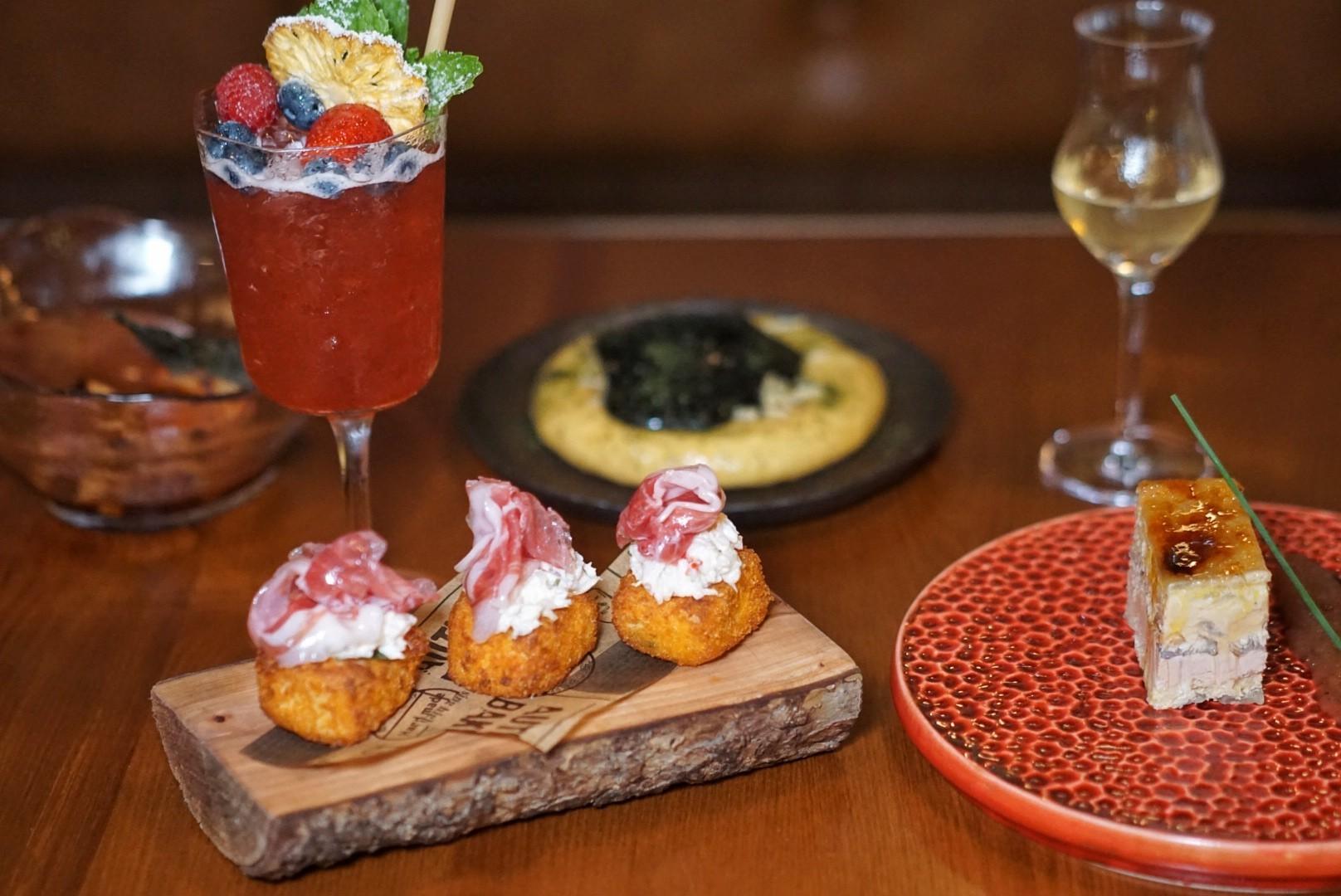
The name Sakaba, loosely translating to “bar” in Japanese, represents said Japanese influence, while the beloved Spanish roots name of Malabar remains, converging in Sakaba Malabar to embody what the concept is all about – Japanese meets Spanish in food, beverage and social dining atmosphere.
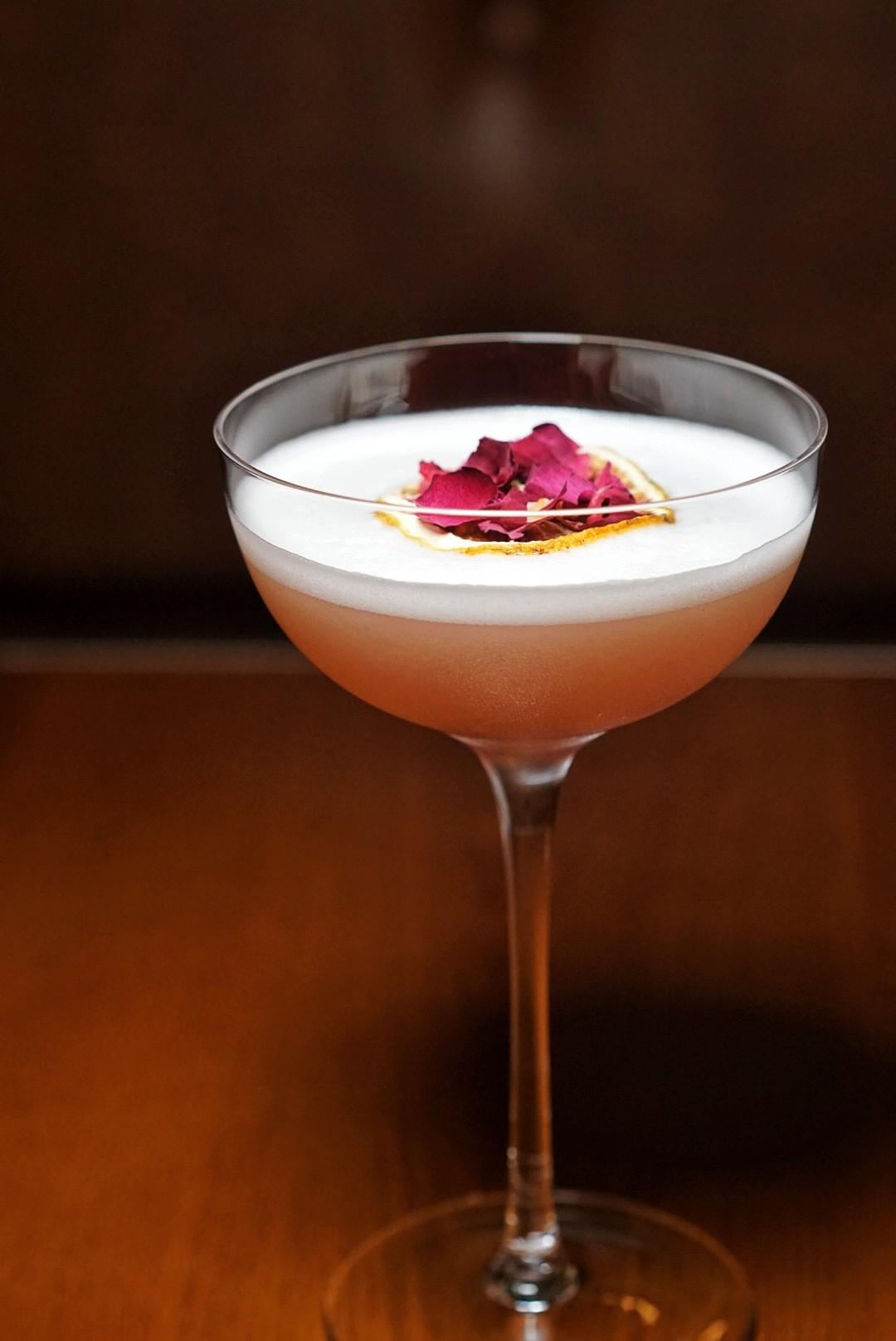
The Spanish tapas menu, developed by executive chef and co-owner Juan Campos (RAW Eatery) and his sister, head chef Ana Campos, has a Japanese thread running through it, in the form of ingredients, flavor profile and inspiration.
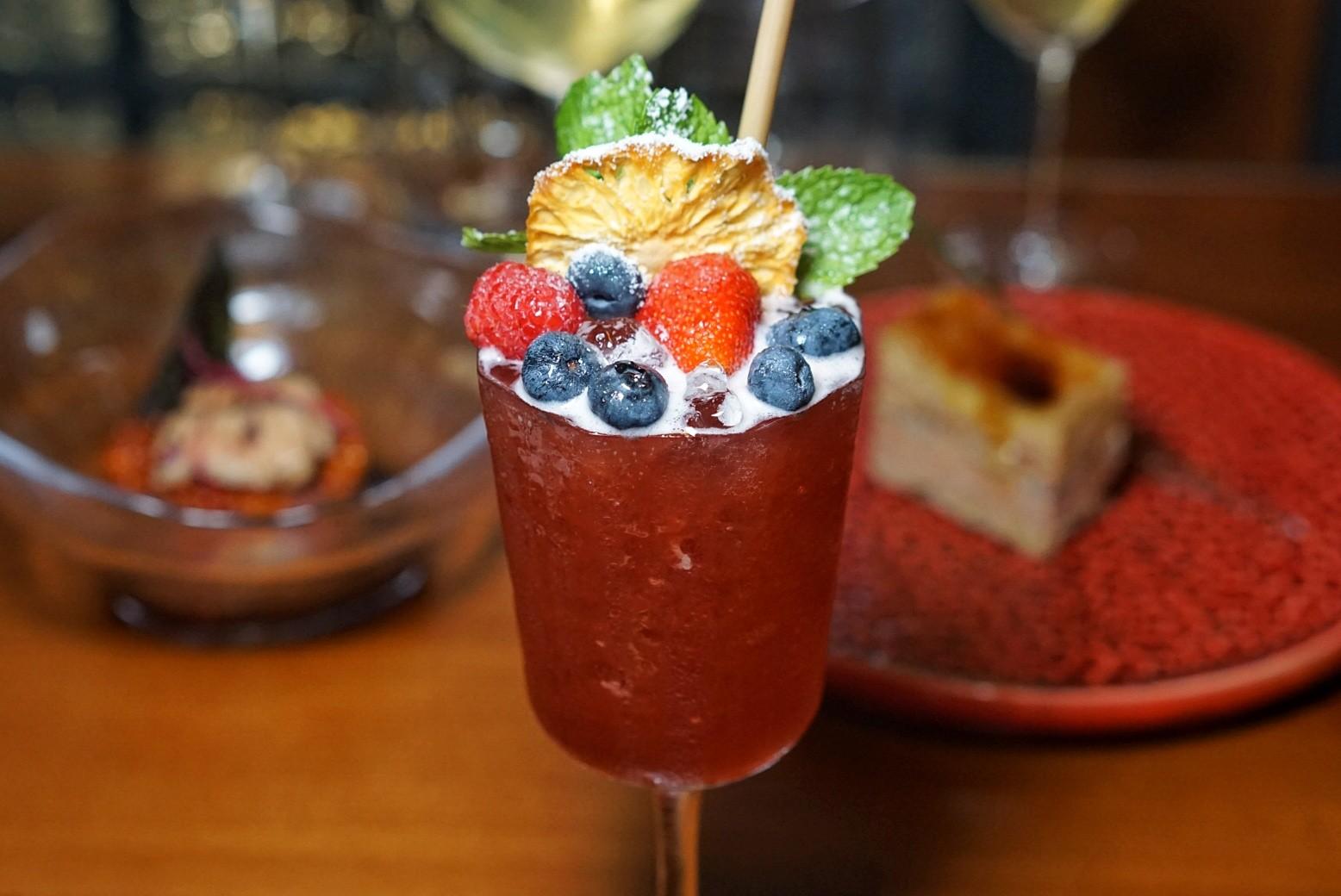
Drinks are curated by Yao Lu (Union Trading Company), combining bold Spanish tastes with high-quality Japanese ingredients.
Read a full review here.
What started out as a craft beer brewery known as Shanghai Love has evolved over the last five years into a beverage brand with a full lineup of spirits, mixed drinks and bottled bevvies, and even further into a lifestyle brand encompassing large-scale beer festivals, charity events and – most recently – a brick-and-mortar restaurant in Fengsheng Li, where White Castle used to be.
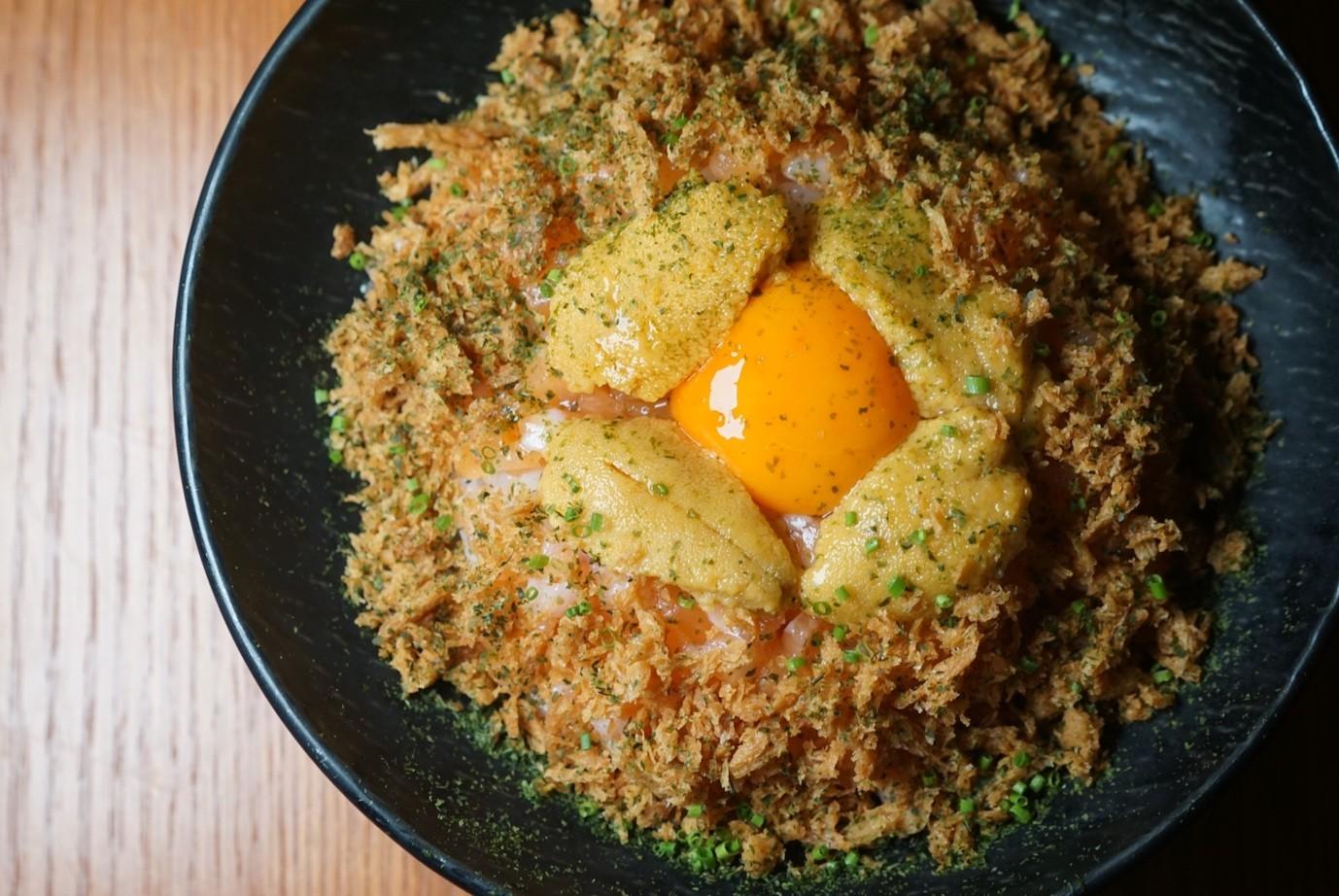
However, unlike your typical taproom sporting pub grub, owner Kia Parsai is interested in fine dining, centering around Asian tapas designed by consulting chef Michael Janczewski (Juke, Canton Disco). The restaurant also embodies the ‘support local’ motto, offering only Chinese beers, wines and ingredients sourced mainly from China, Japan and Southeast Asia.
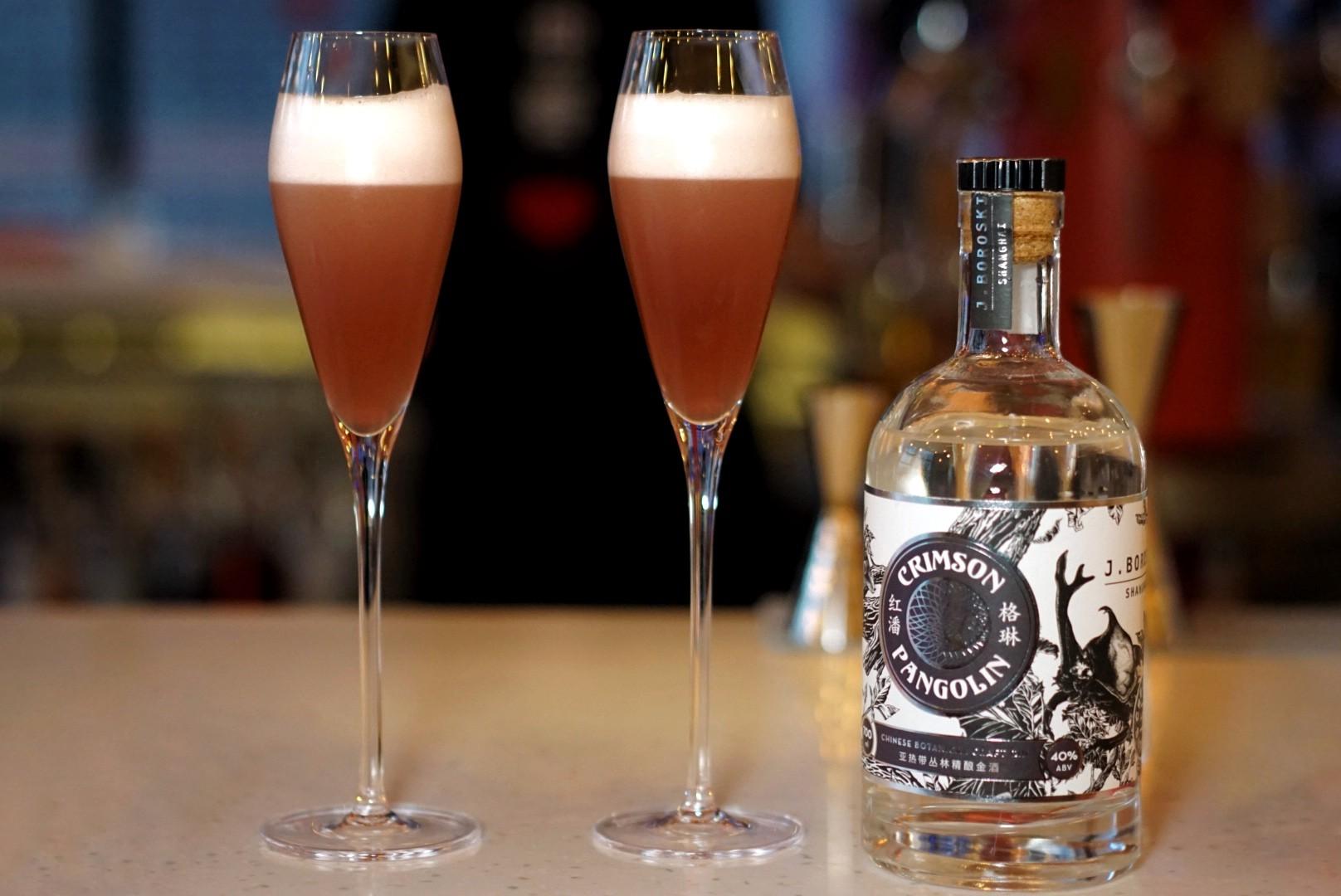
The cocktail menu, curated by Sean Shao (Atelier, Taste Buds), follows in the same vein, with each drink highlighting a key Asian product or flavor profile. Plus, no surprise here, the 12 Shanghai Love beers on tap are brewed in – you guessed it – Shanghai.
Read a full review here.
Picture an expansive Sopranos-chic space packed with Shanghai’s glitziest and most glam expense accounters. The type of people who (pre-COVID) would fly to the Maldives for a midweek golf tournament.
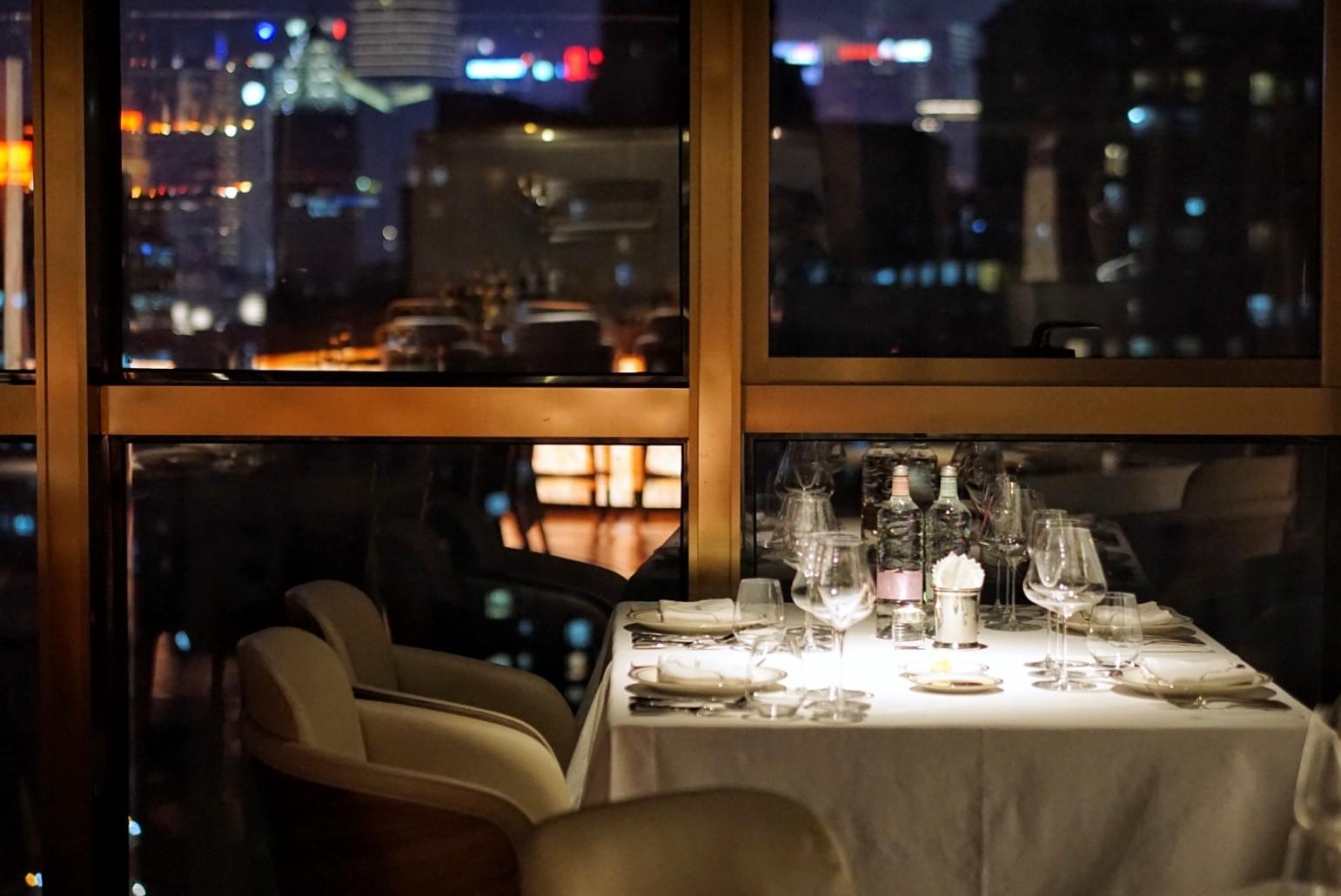
Floor-to-ceiling windows offer a sprawling view of Shanghai’s downtown, while a low set onyx ceiling guides the eye to a glowing, gold-lit spiral staircase centered on a marble platform, flanked by shelves stacked with more than 400 varietals of wine.
But this isn’t the first Shaughnessy. Originally opened by Calvin Su and his business partner in Shenzhen in 2018, both outlets are their personal interpretation of a modern, New York-style steakhouse, with a boutique-like, personal touch.
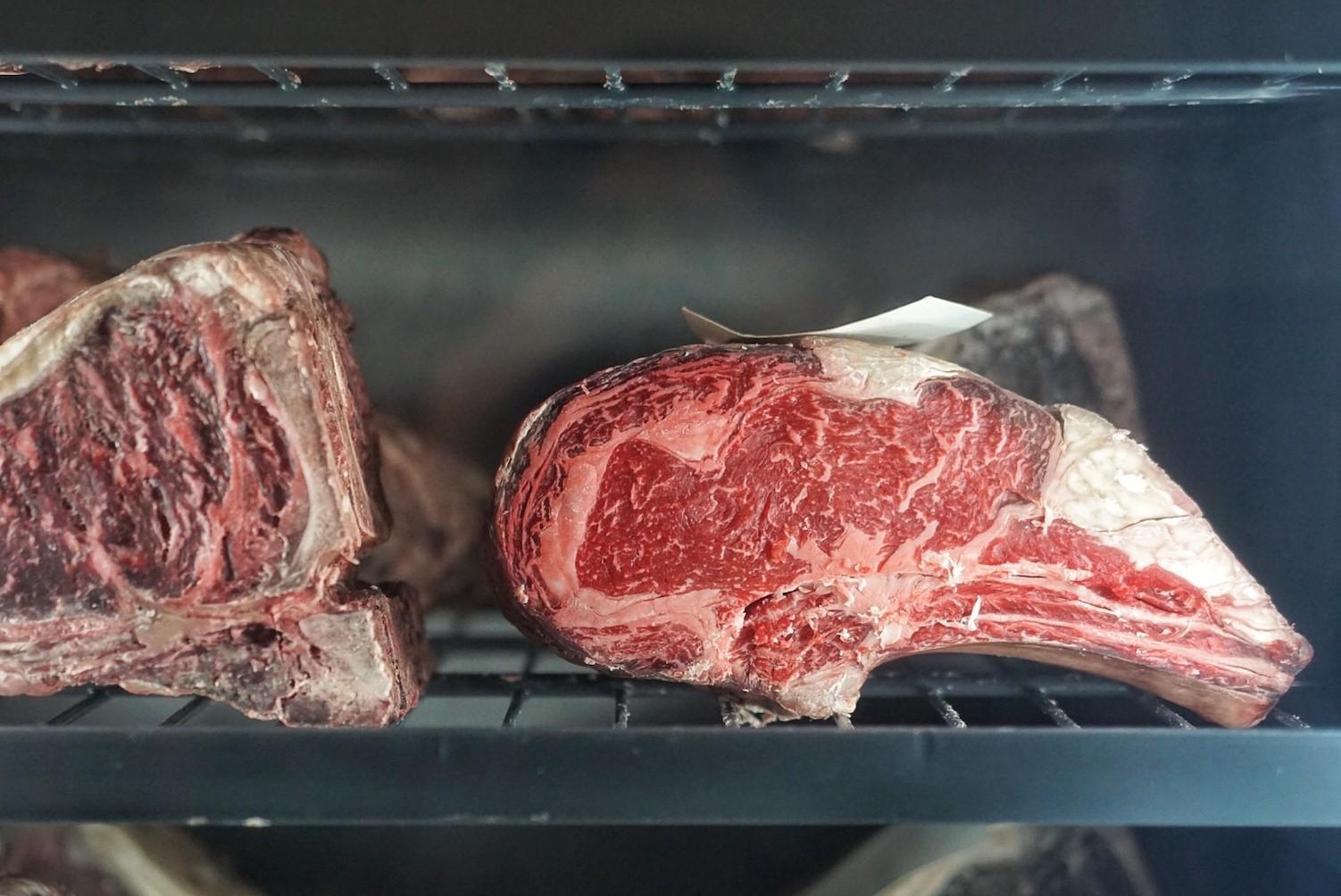
We expected the menu to be full of hulking porterhouses and tomahawk chops only the highest or rollers would eat in the privacy of hidden rooms, baked potatoes from some freakishly large alternate universe and knife-stabbed slices of cake big enough for a sumo wrestler’s weigh in.
And it is just that.
Plus a raw bar. And pasta.
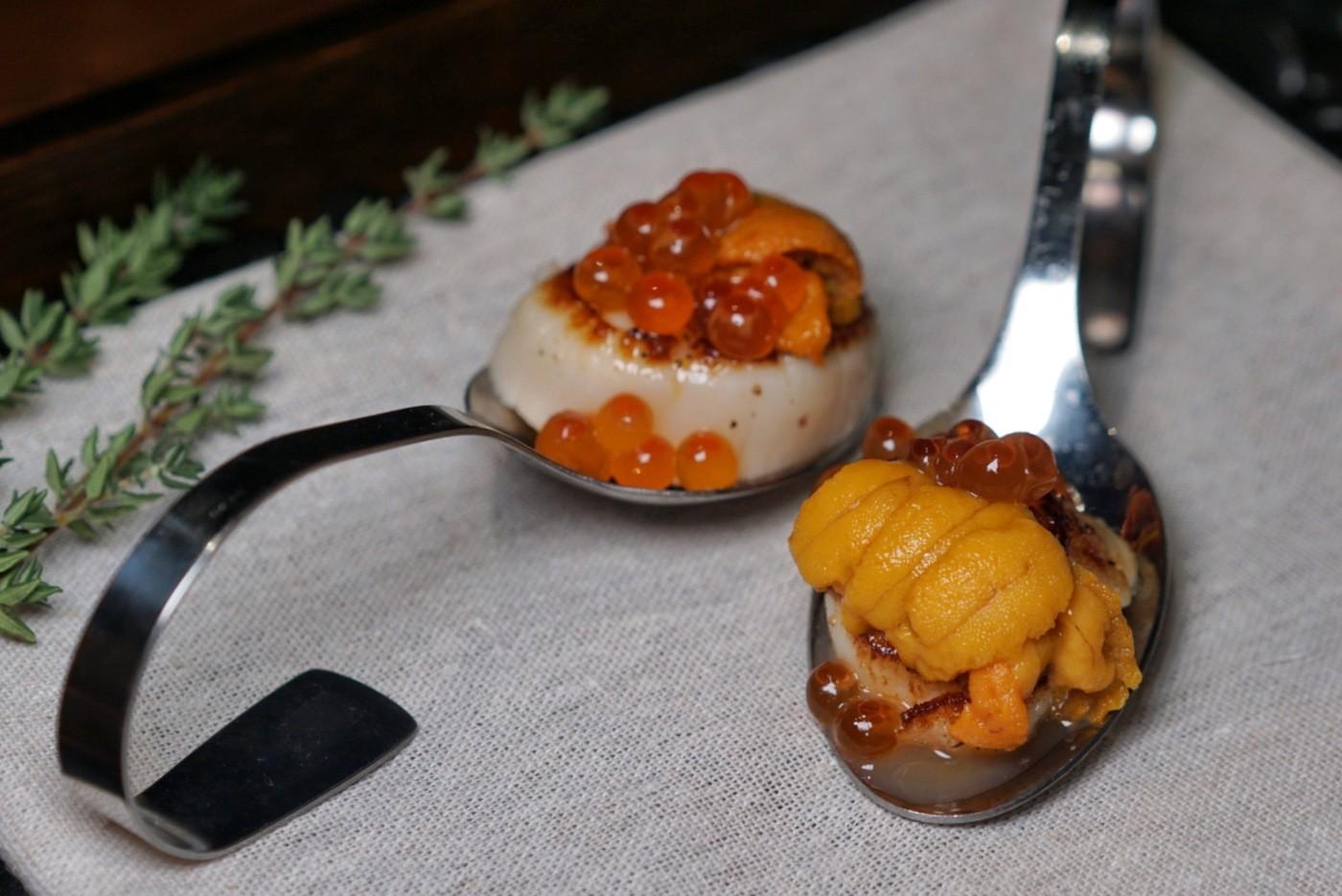
Read a full review here.
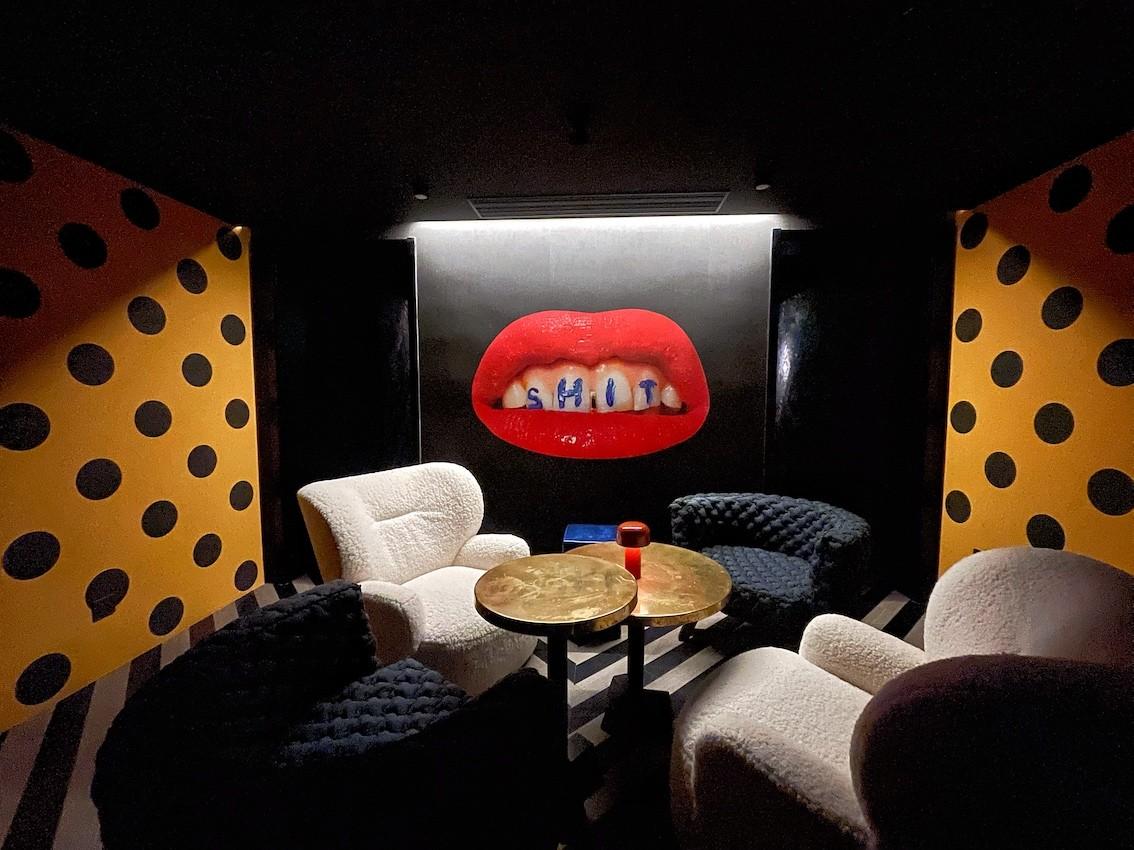
Walk through an Italian furniture store on Jiaozhou Lu, pull back the velour curtains and enter The Showroom – a Narnia fantasy land of vibrantly bold art, textural installations, lingering scents and trance-like beats, unfolding across a maze of eight different second floor rooms.
Co-owned by Richard King – a wine connoisseur with years of F&B experience – Oscar Zuffada – an Italian specializing in F&B and hospitality – and Edoardo Petri – a famous Italian architect focusing on the interplay between design and fashion, the trifecta brings together their areas of expertise to craft a whole better than the sum of its parts.
The space used to house an old hotel, and with zoning laws that prohibit tearing down walls, the new owners were forced to think imaginatively about a semi-divided space with a long corridor down the middle. Thus, the multi-sensorial room concept was born, presenting Shanghai with an experience it has never had before. And an experience is just what it is.
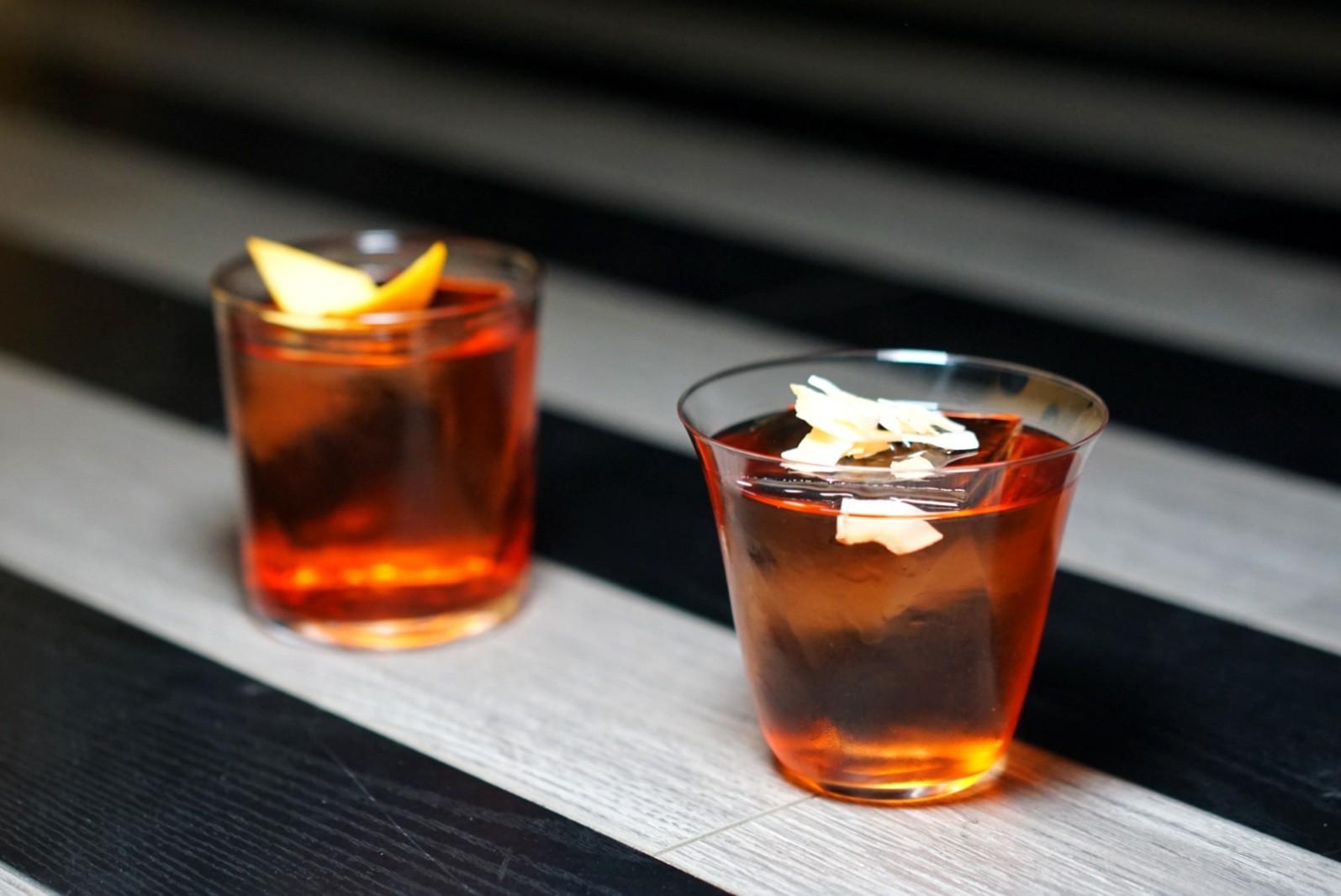
Unlike your average new bar visit, The Showroom is just as much a bar as it is – as the name suggests – a showroom. All things interior design, art, lighting and architecture come into play, so that as you sip your cocktail inspired by that particular room’s eclectic layout, design and distinct fragrance, you can also scan the menu’s QR code to peruse the furniture on which you sit.
We will take another martini, with a side of teal leather-upholstered Italian Gervasoni armchair.
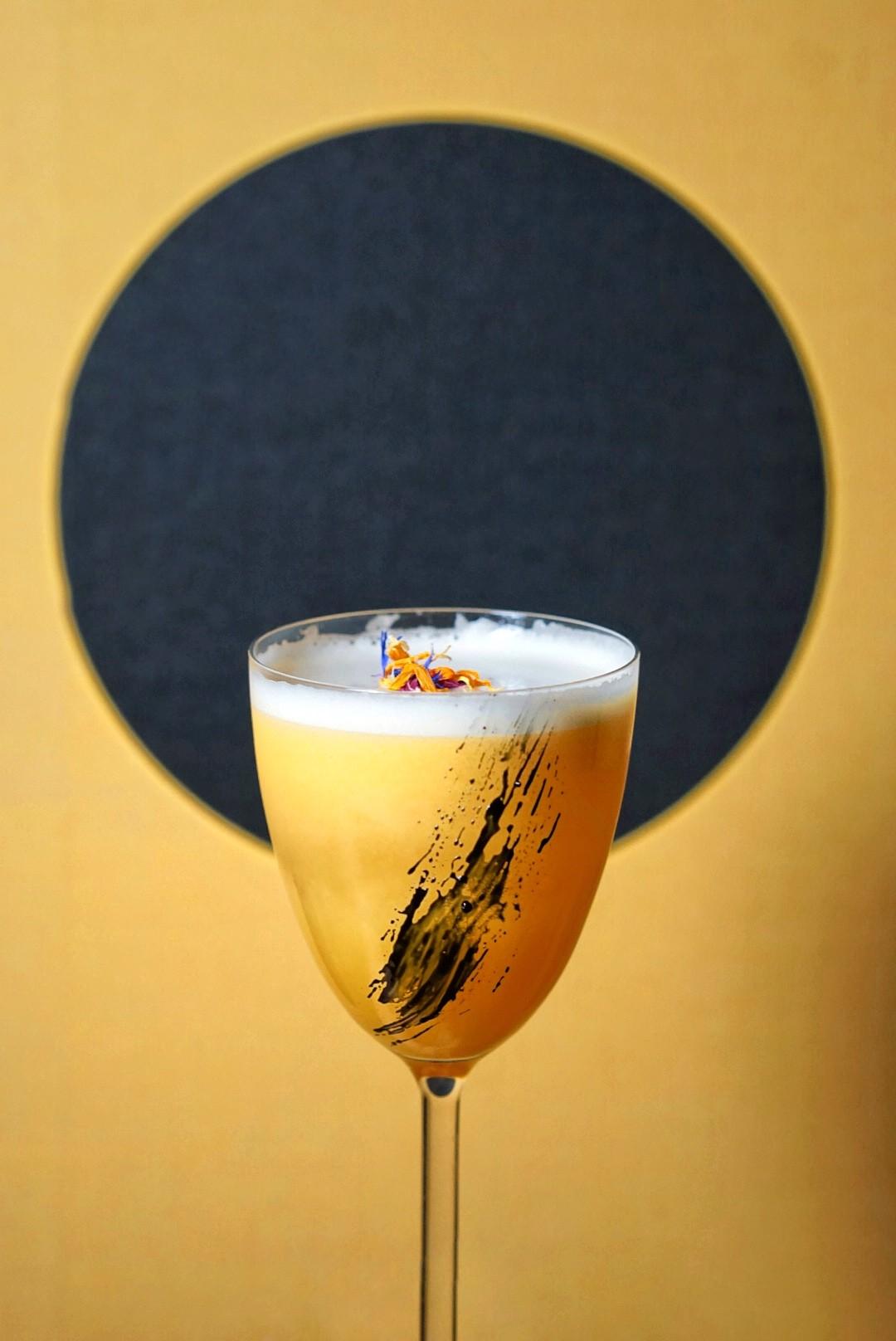
Regardless of the room you choose, you will find yourself in a space that can only be explained as a designer’s hallucination, making it admired amongst art collectors, bar dwellers and Instagrammers alike.
Read a full review here.
Last year, due to landlord BS (we all know the drill), The Camel was forced to relocate to an arguably better location on the corner of Xiangyang Lu and Changle Lu. After being open for almost a year, Camel Hospitality opted for a massive menu revamp, teaming up with Matty Waters, owner and founder of Smoke KCQ, to launch The Smokehouse x The Camel.
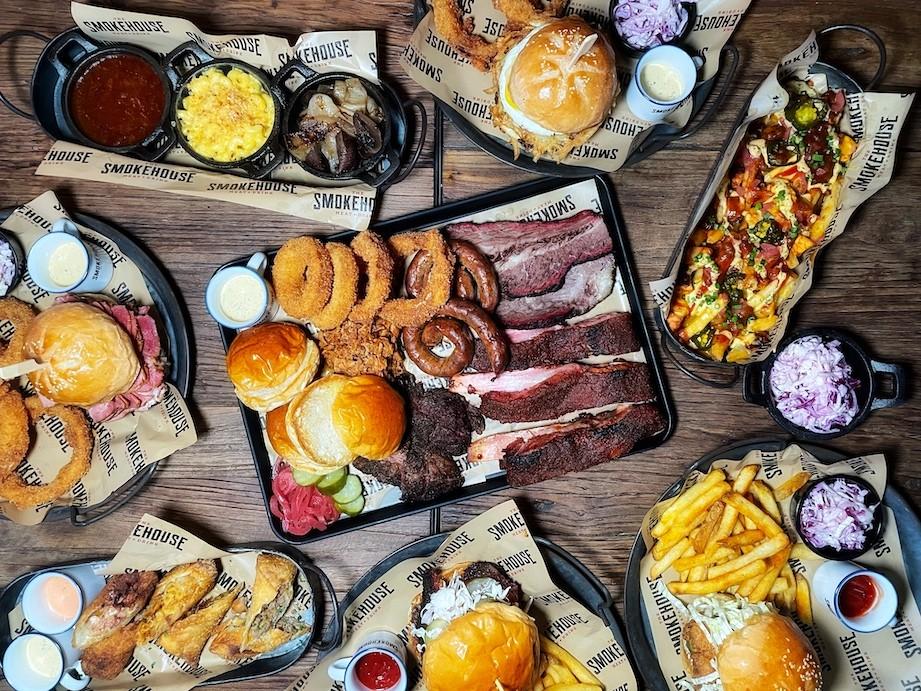
Surprise, it’s a lot of meats. All the meats. Meat for days. #meatporn. It’s regional agnostic American ‘slow and low’ BBQ (with a strong emphasis on Kansas City, Matty’s hometown) with all the grease-dripping, heart-clogging, finger-lickin’ good fixings that are best enjoyed in Daisy Duke cutoffs or overalls, shotgun in hand.
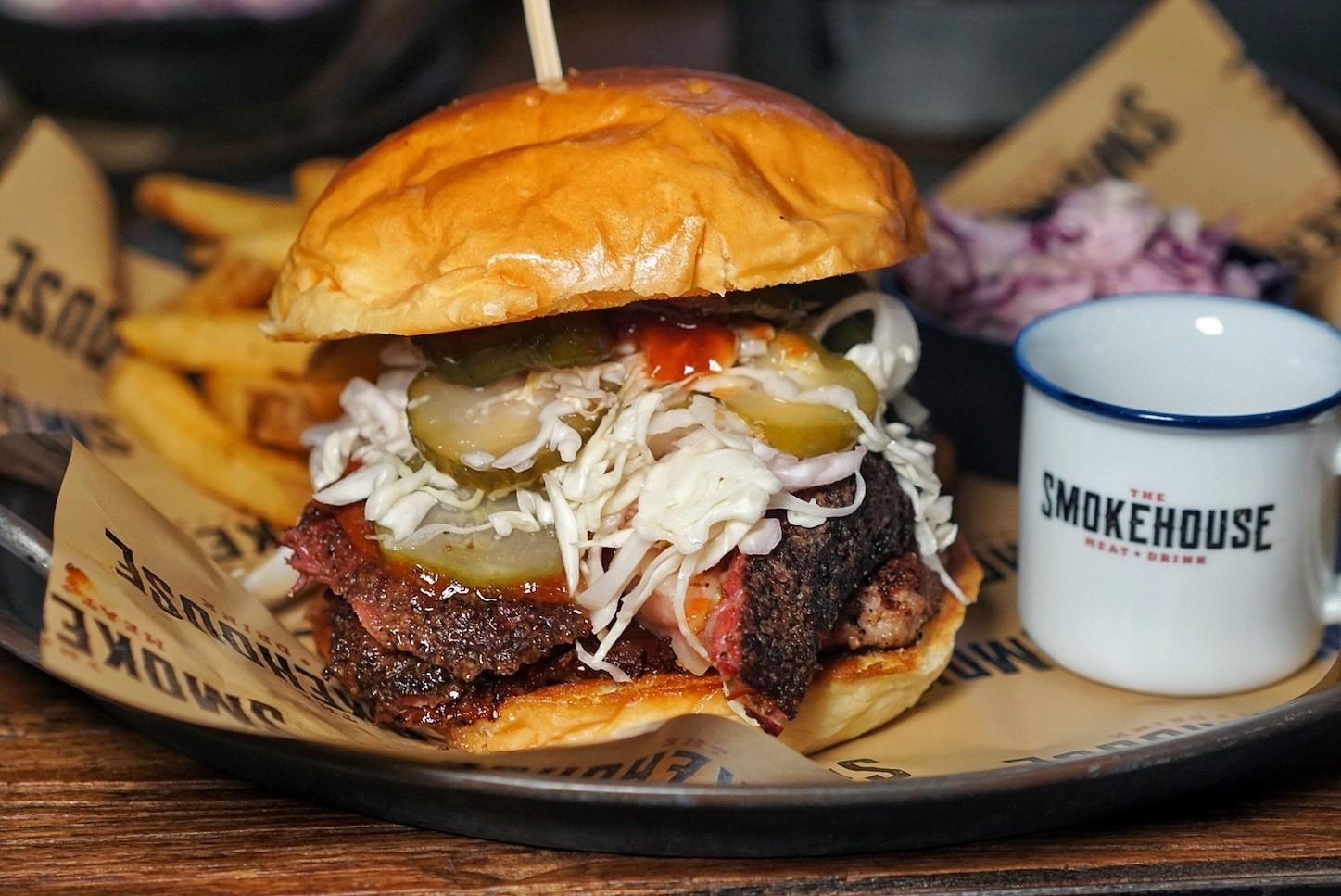
Matty’s first move at The Camel was to install vertical six-rack smokers – laden with aromatic Apple Wood. This is where the magic happens, and this is what the first page of the menu is all about – secret recipe dry-rubbed, no frills smoked meats done right, clearly impressing even the most casual ‘cue eater.
Read a full review here.
Dusk Till Dawn was a new speakeasy hidden behind an also brand spanking new Thai street food cover restaurant called Soi Thai – with legit Thai food. Both venues were brought to you by seasoned restaurateurs Ina Yang (Heat, Botanical Basket), Eric Almazov (Botanical Basket) and Nico Yang (La Mezcaleria, Bonica, La Barra).
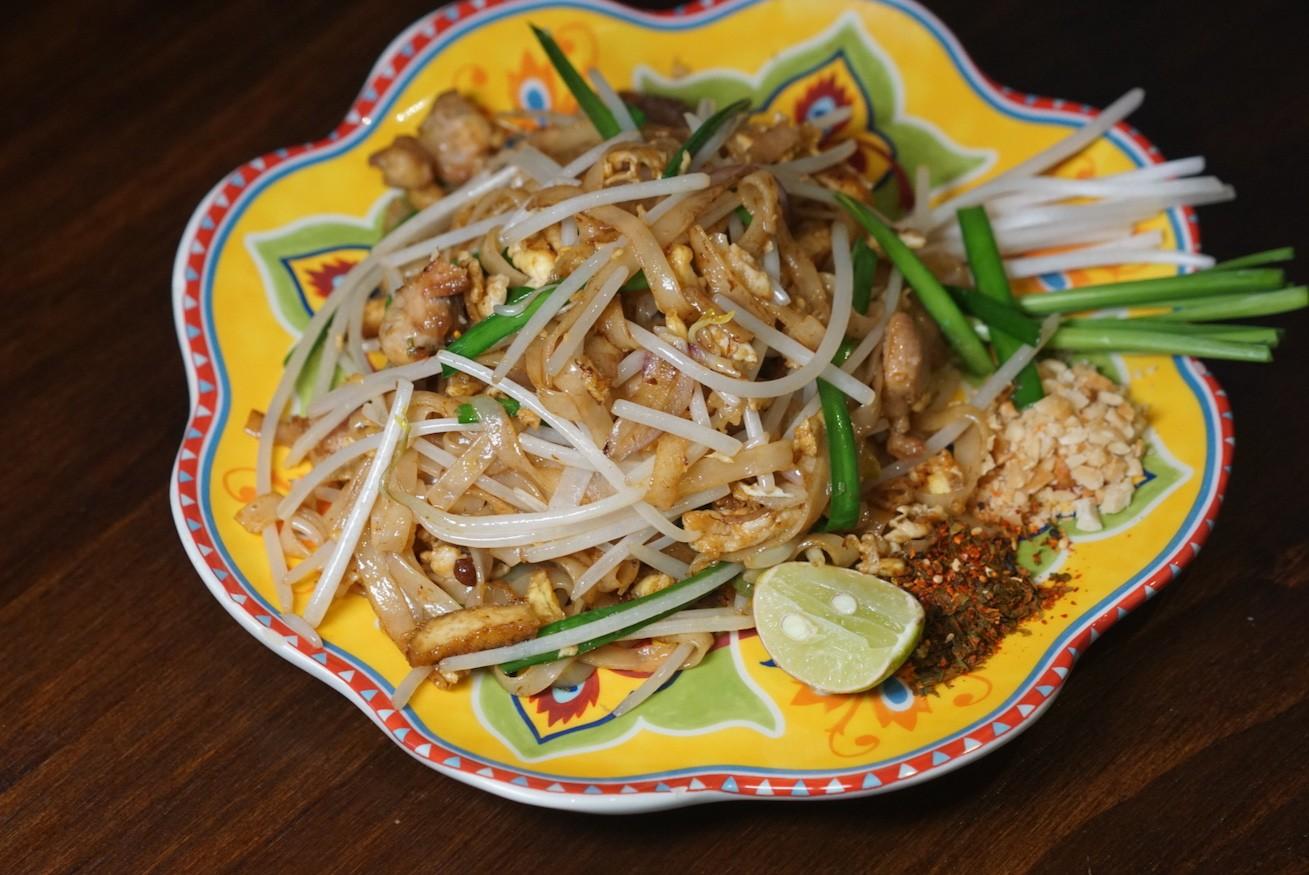
The fast, casual food focus was pan-Thai cuisine, meaning that instead of finding more niche plates like northern khao soi and laab, you’d find solid mainstays. Think stir-fried chicken with cashews, pad Thai, papaya salad and pineapple fried rice – the kind of thing you’d grub up on while covered in neon glow paint before heading to a full moon party on Koh Phangan.
If you were looking for a culinary Thai immersion, look elsewhere. If you were looking for fast, casual Thai in a shotgun-style venue, this was your new favorite lunch hangout. Bonus, they were open late – we’re talking 2am on weekends. So sip up and tuck in, this was a place to hang out at for a while (or so we thought).
A semi-hidden Buddha-painted black door then led you from Thailand to Amsterdam’s red-light district – with a Tokyo twist – at Dusk Till Dawn...
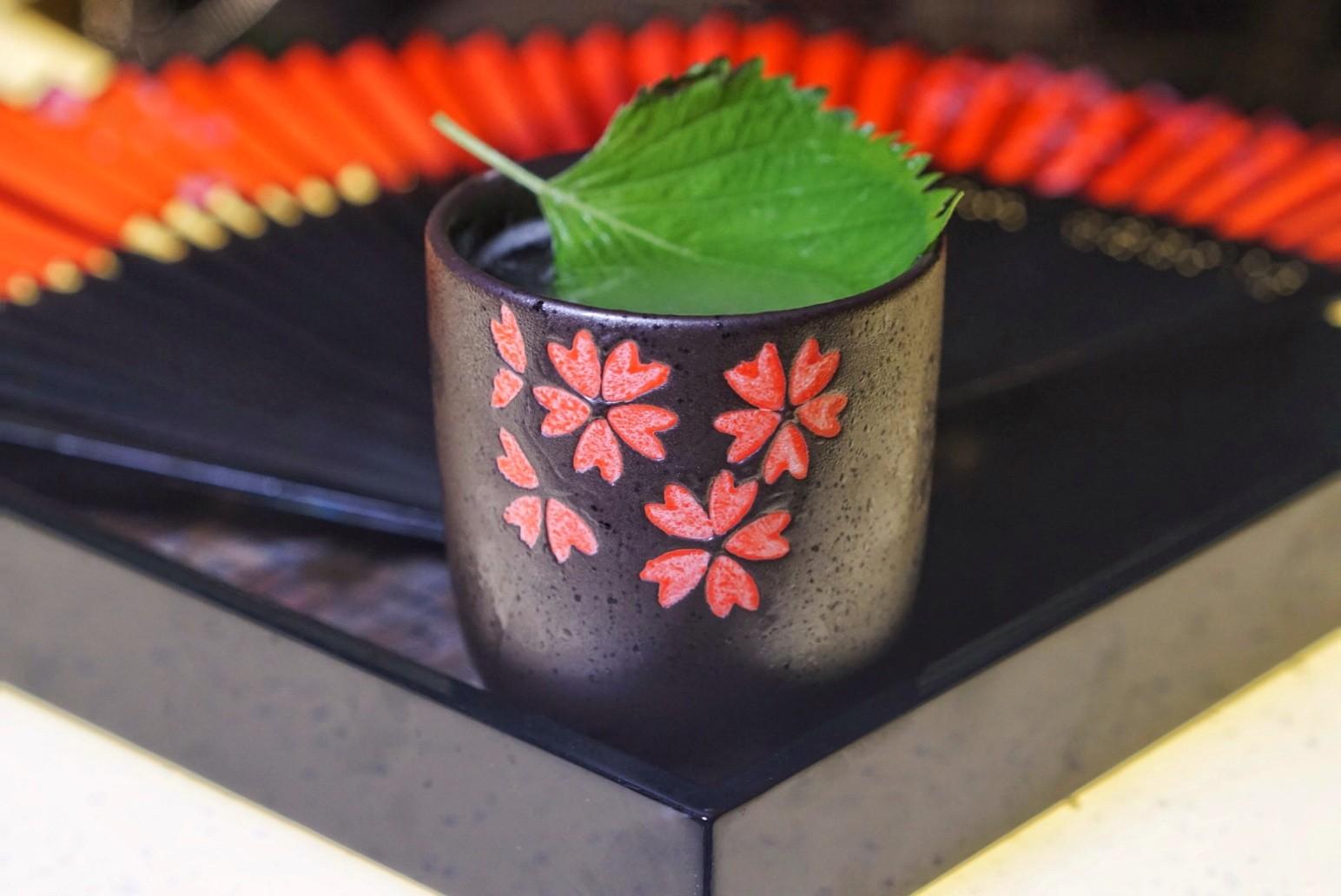
There, all cocktails focused around cult movie classics or TV characters, with drinks chosen from gaming cards. There were laser lights, cyber punk leather studded trunk tables, vampire glyphs, electronica music and glass skulls full of various infusions lining the wall. Basically, it was every teenage boy’s fantasy come to life, with the welcomed addition of ingenious alcoholic libations.
But then, suddenly it closed. Like a flash in the pan, we said hello and goodbye to both Soi Thai and Dusk Til Dawn during the Year of the Ox.
Read a full review here.
Something – a brunch café, wine and cocktail lounge and global cuisine-inspired restaurant – is housed in an airy space in Wukang Market. Somehow, each concept works both on its own and as a collective – a textbook example of how the whole can be greater than the sum of its parts.
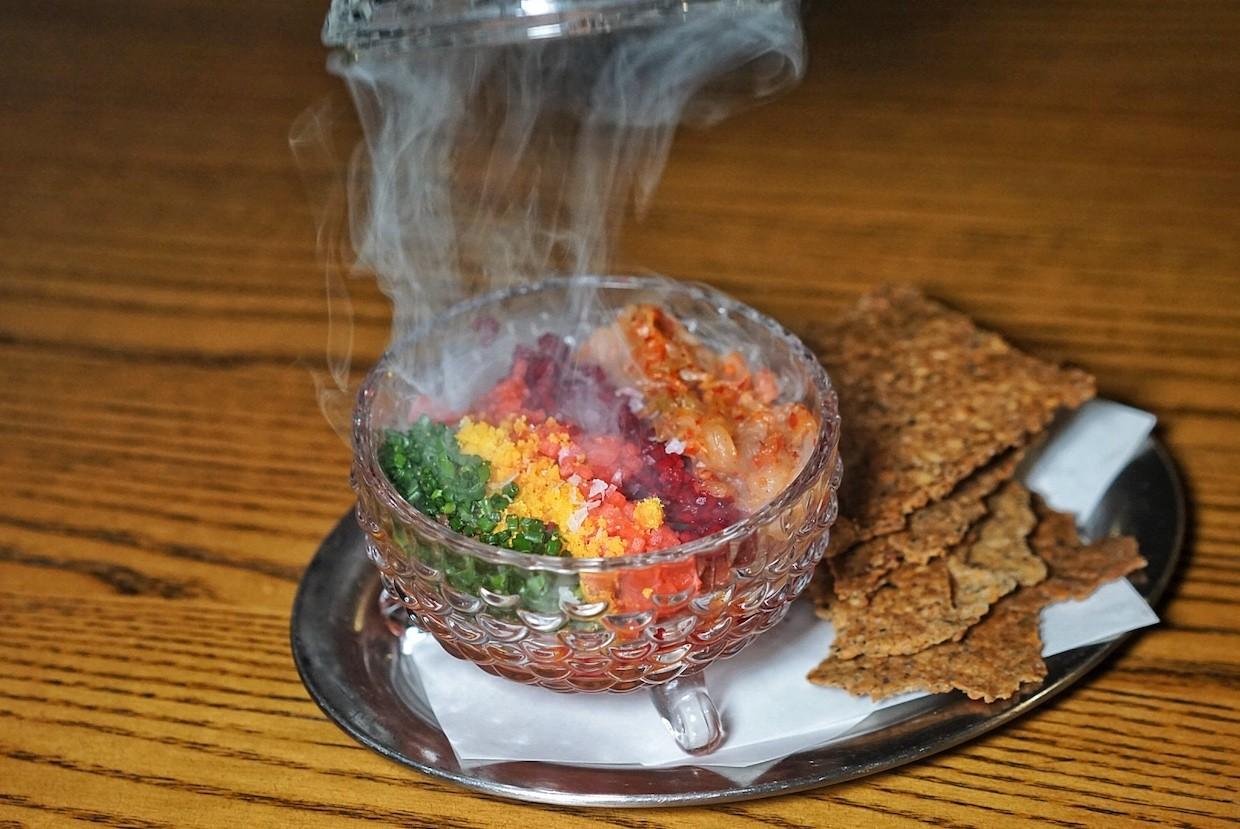
Although seating fits over 80 people, the dining area feels intimate because it's divided ergonomically into four sections – imploring aesthetically pleasing elements like a fish tank filled with succulents or an intricately carved table laden with a multi-tiered candle and floral display.
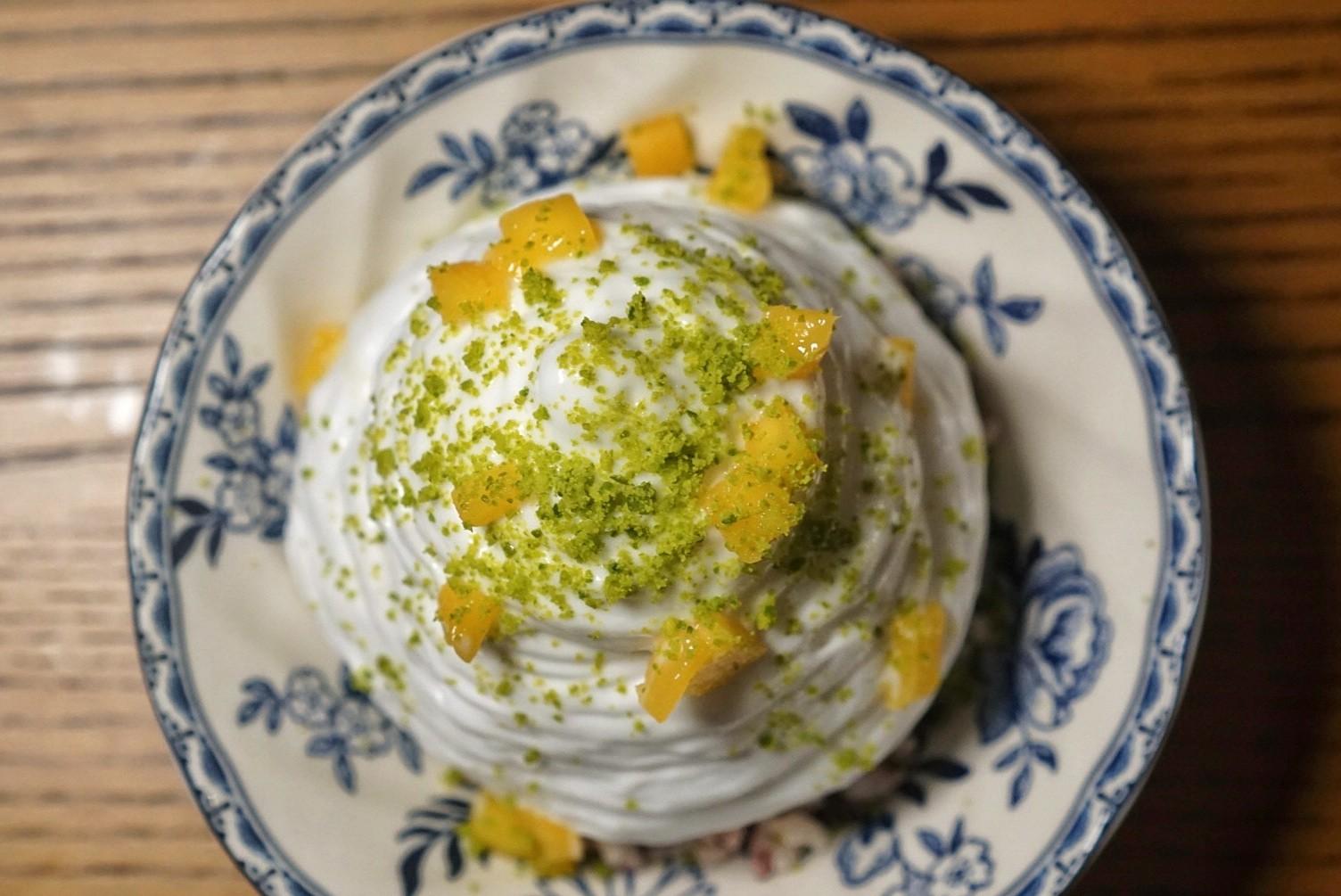
Chef Alexander Bitterling (previously of Hunter Gatherer and Thought for Food) cut his teeth in Thailand, bringing forth flavors from southeast Asia to boldly combine with customarily European plates – resulting in a mixed bag of dishes he refers to as ‘destination cuisine.’
Read a full review here.
Spread, a sunny café bistro on the corner of Shaanxi Bei Lu and Wuding Lu is an ode to all things on toast – the French interpretation of it, known as a tartine, that is. It is one that has stood the test of time for more than 1,500 years. The menu is chalk-full of tartines, soups and salads, plus a smattering of charcuterie, cheese and wine. Experience a world of food through the humble lens of a piece of toast.
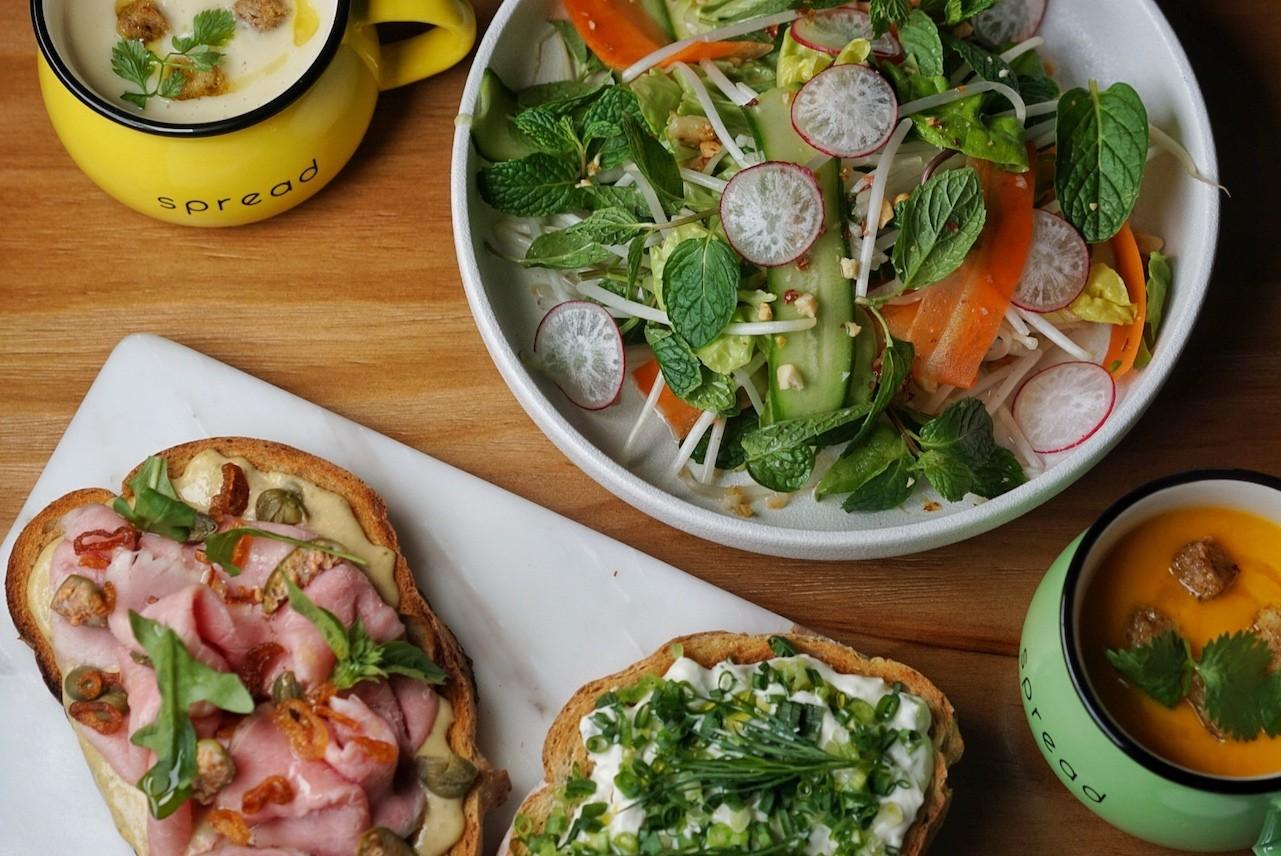
Every dish on the menu has a story, an inspiration, an emotional connection to owner Guillaume Tu's life that serves a purpose. And that enthusiasm translates directly to the plate.
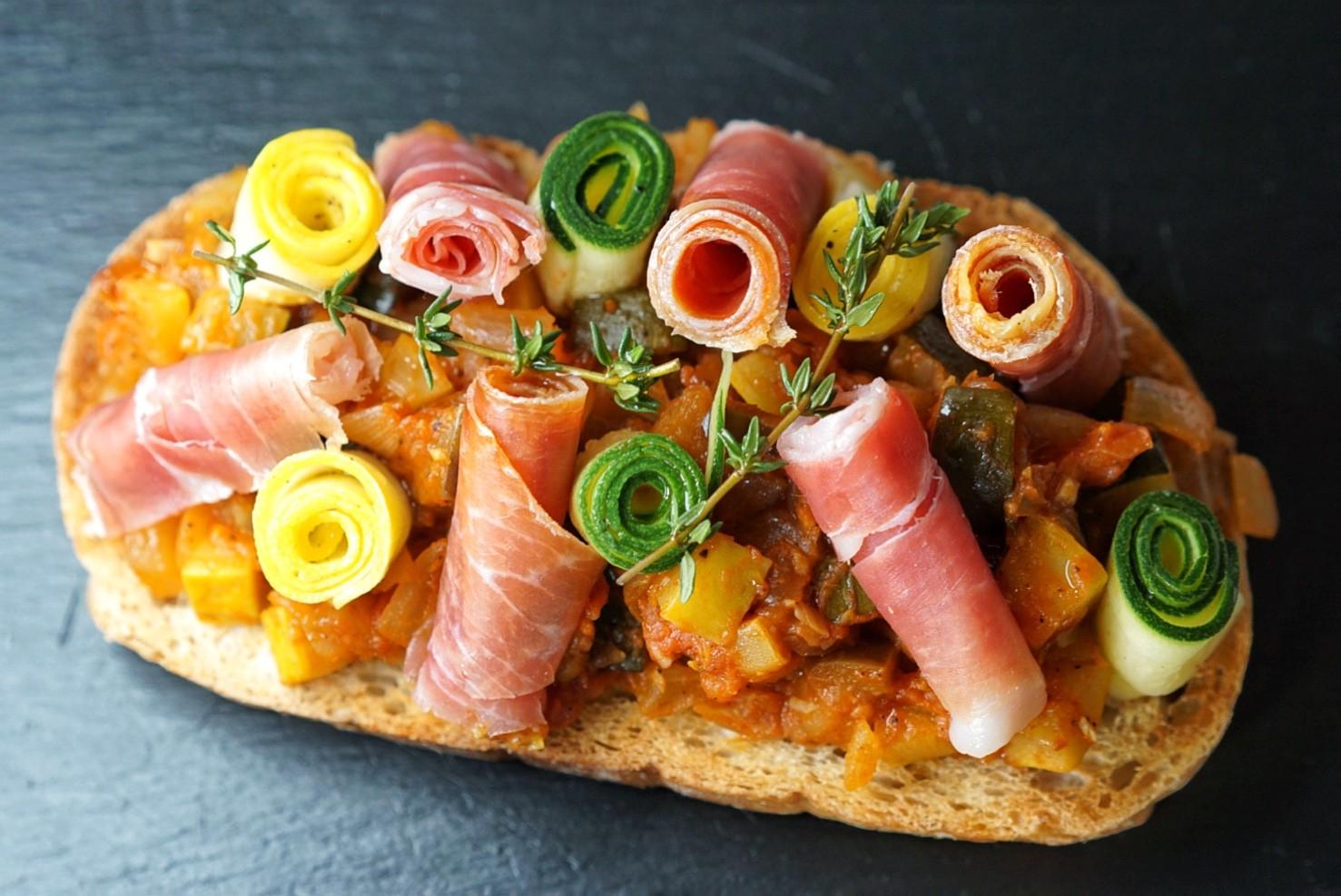
The space has the best of the Jing’an neighborhood feels – energetic yet unpretentious, with all day sunlight streaming in from south-facing windows. The streamlined menu affords diners quick delivery of food, making it an ideal lunch joint – with the added bonus of seeing all the F&B industry movers and shakers.
Read a full review here.
Powerhouse restaurateur and wine aficionado Li Ze (Ottimo, SOiF, theWarehouse) is at again, with the recent launch of yet another modern French bistro – Suzie – next to the Capella Complex. The revamped lane house-cum-European wine bar is dedicated to all things Champagne and Burgundy, as well as some luxury Italian wines.
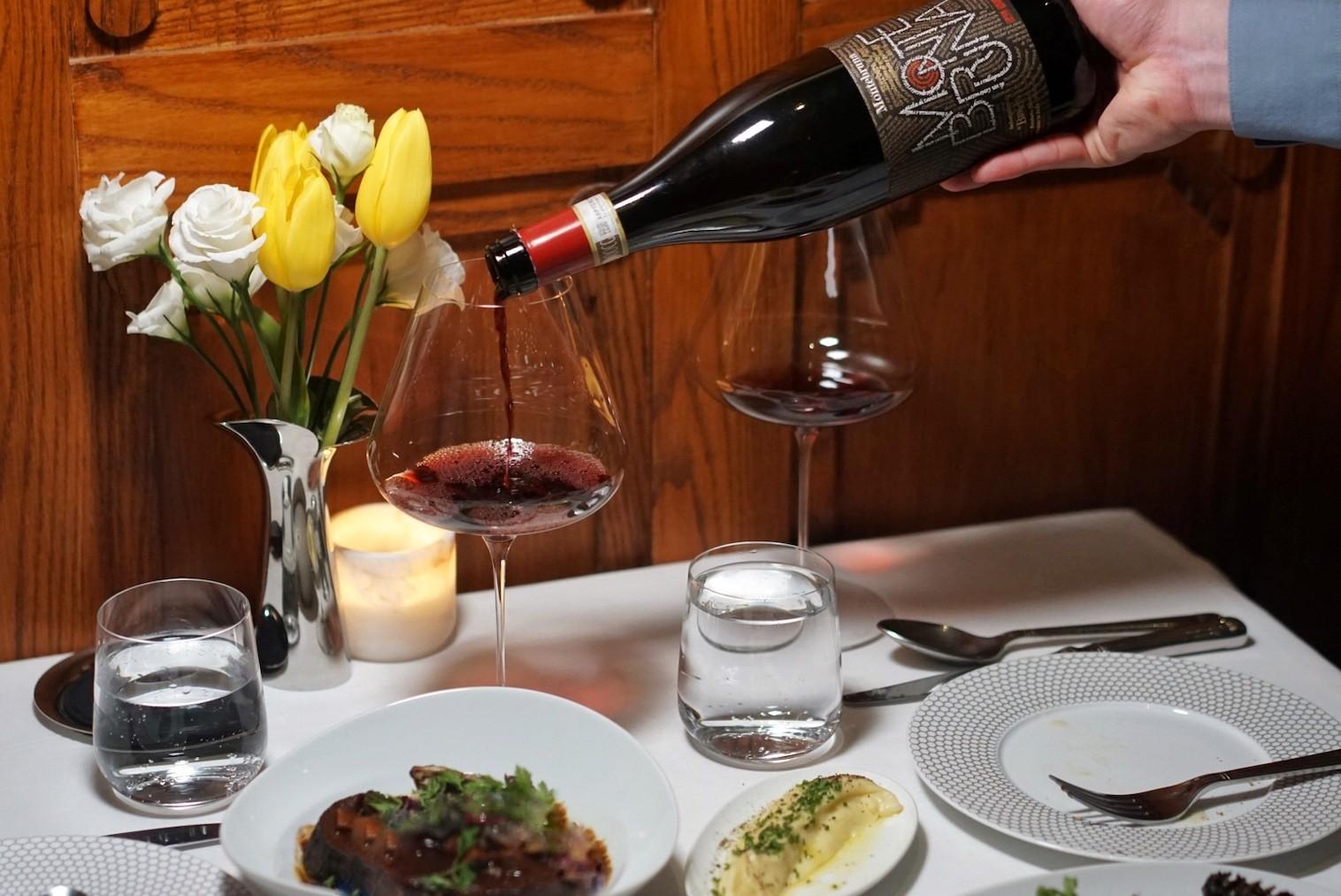
A work of art, the wine menu is compiled by in-house sommelier Yonex Zhang (Ottimo, theWarehous), who curated a prestigious 600-SKU portfolio, heavy on the Grand Crus – the highest and most well-respected wine classification within the appellation d'origine contrôlée (AOC), the governing board over the wines produced in Burgundy and Alsace, France.
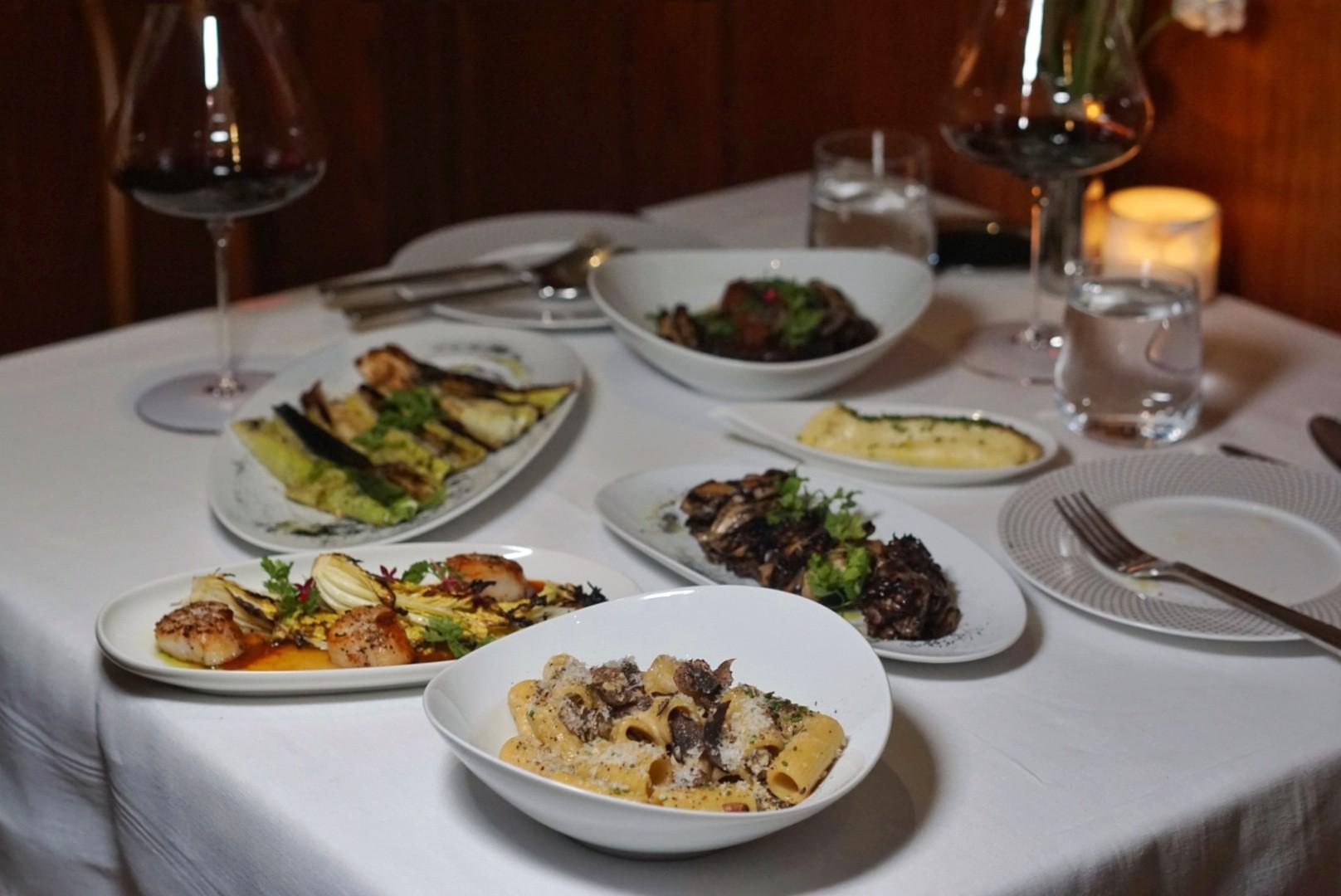
Full-time chef Freddy Raoult (The Nest, menu design for SOiF) is behind the traditional French menu, an indulgent smattering of lux buzz word ingredients – oysters, caviar, truffle, foie gras and wagyu – as if Shanghai would allow it any other way.
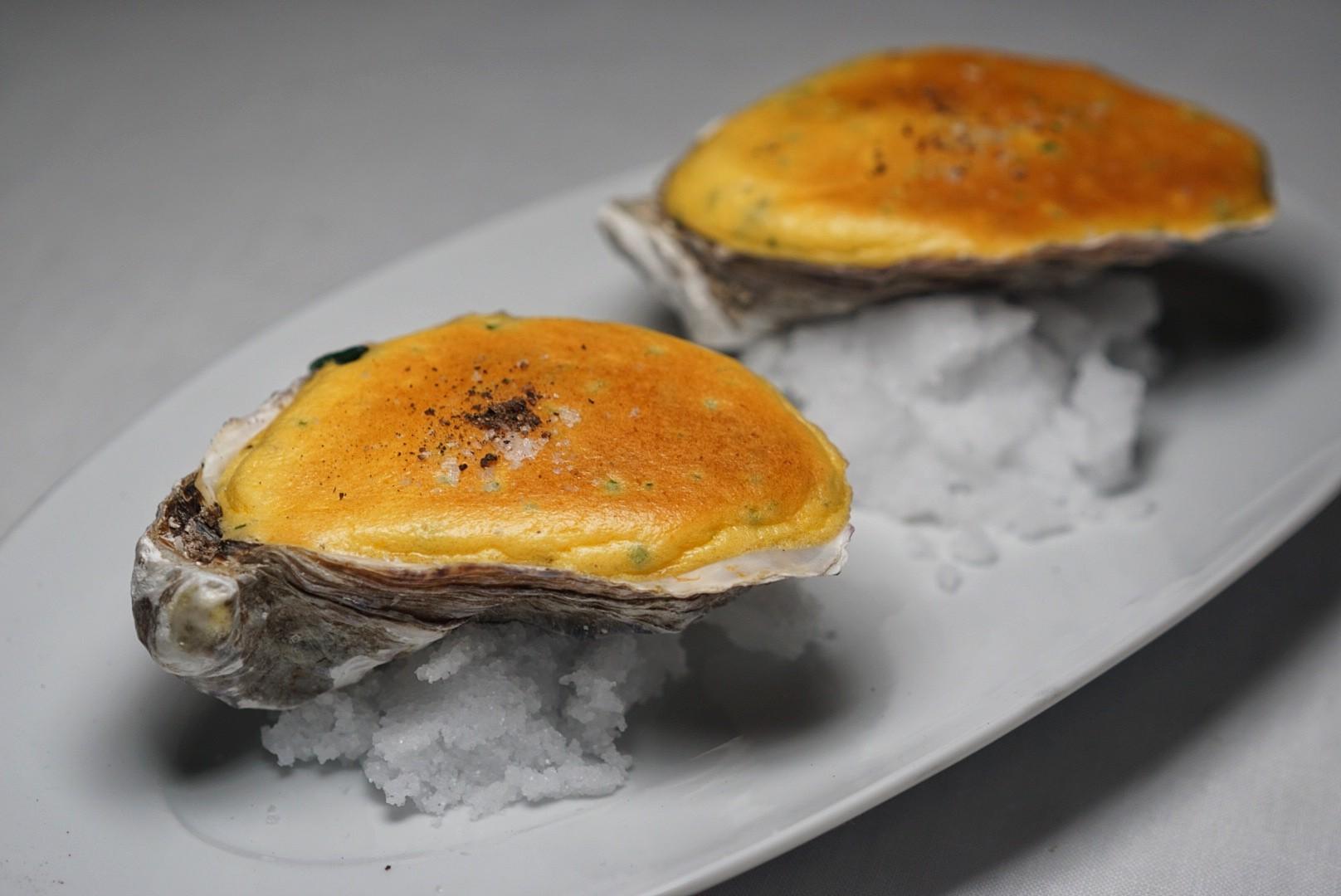
The assortment of high-end French fare is elegant in its simplicity – minimal on amount of ingredients, with an emphasis on the quality of those that are used.
The devil is in the details, and Suzie – a fictitious maître d' that the restaurant is named after – has got all the nuts and bolts sorted. White tablecloths, Baccarat flatware, bedazzled chandeliers and globular stemware all packaged in a warmly lit, European neighborhood-esque bistro.
Read a full review here.
Tacos El Paisa, situated just outside La Mezcaleria’s wooden door, serves just one thing – tacos. They are identifiably half-moon in shape, sit snugly in one hand and are filled with a multitude of smoky, flame-licked meats – dripping with fat and stewing juices – a sprinkling of crunchy, diced onions and a few sprigs of cilantro adorn the top. Even better, they are open late. Like satisfy-your-taco-craving-at-2am late.
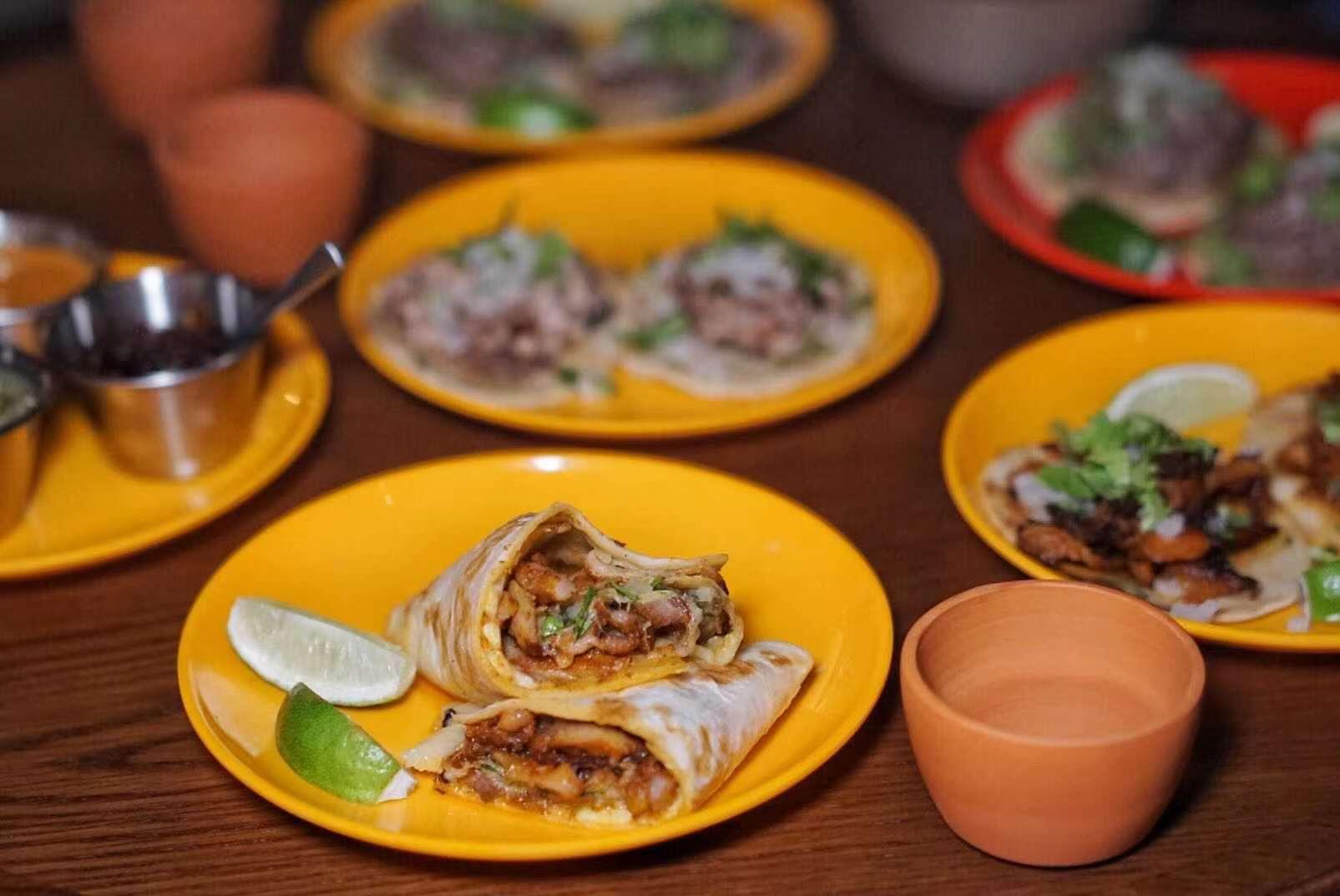
In the name of the salsa, the queso and the holy chili, we praise you taco gods for this offering.
Like a drive-through taco joint on the street, there is no real distinction between the kitchen and seating area of Tacos El Paisa, the taco 'bar' that serves as a the middle man between La Mezcaleria, La Barra and for floaters that seep up the stairs from Bonica as the evening marches on into late-night.
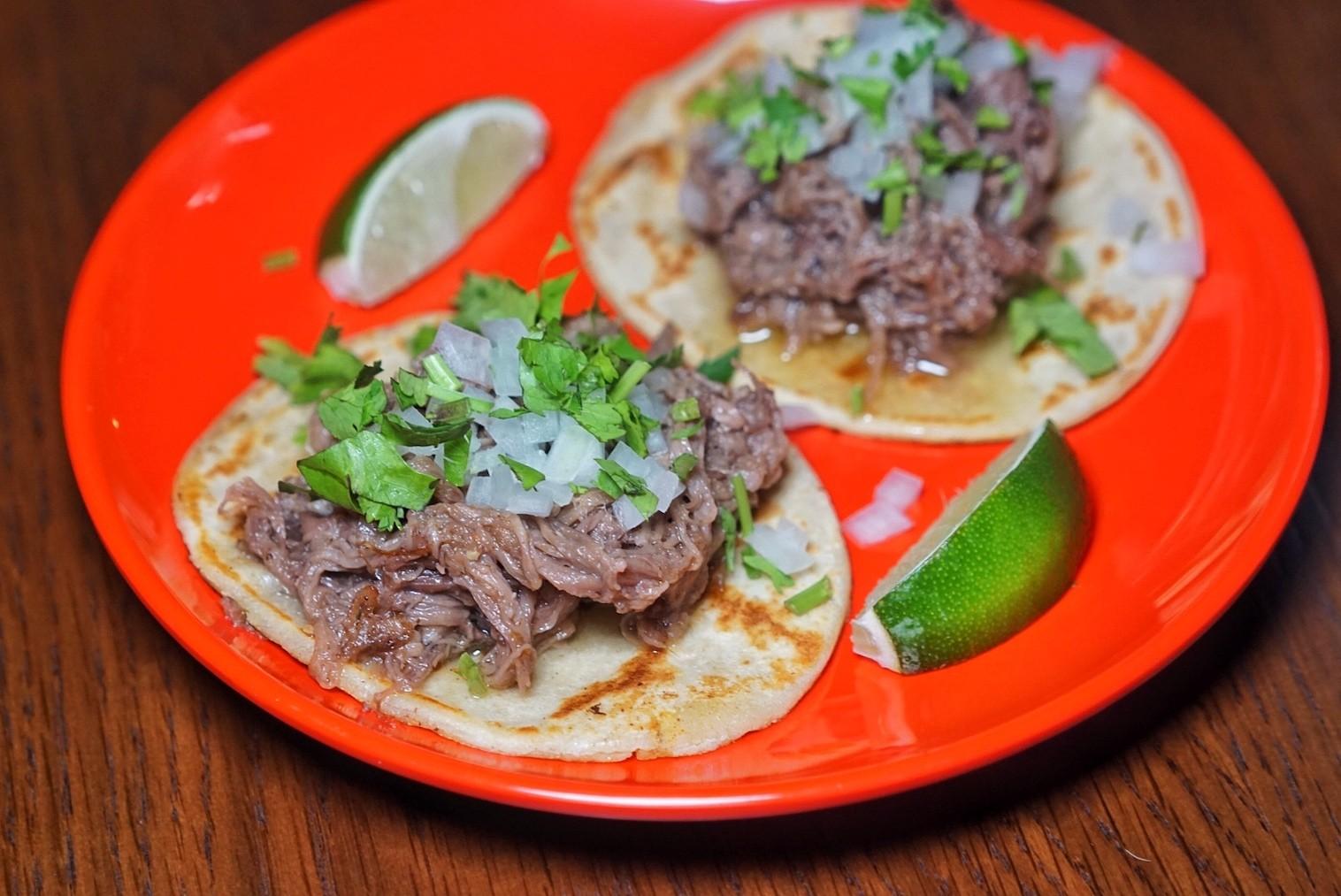
It’s like a humble neighborhood taqueria, a bastion of comfort and delicious bites that seems to exist exactly at the moment you need a morsel – after a few sneakily strong mezcal libations.
The bites here are a superlative rendition of Mexican tacos – as if they are hiding a little, old Mexican grandma in the back of the kitchen, forcing her to pump out round after round of masa taco shells, spice-rubbed meats and salsas by the bucketful. We thank you, 'taco abuela,' for your services.
Read a full review here.
Topgolf is a global entertainment company that's well known for innovating the driving range experience by adding technology to the tees and quality food and drink options. This past summer, Topgolf opened its doors to China, with its first outpost in Shanghai. The second of which – a 12,000 square meters space in Chengdu, including a Chinese restaurant along with a premium steakhouse, seafood restaurant and all-day dining, among other options – will open this upcoming year.
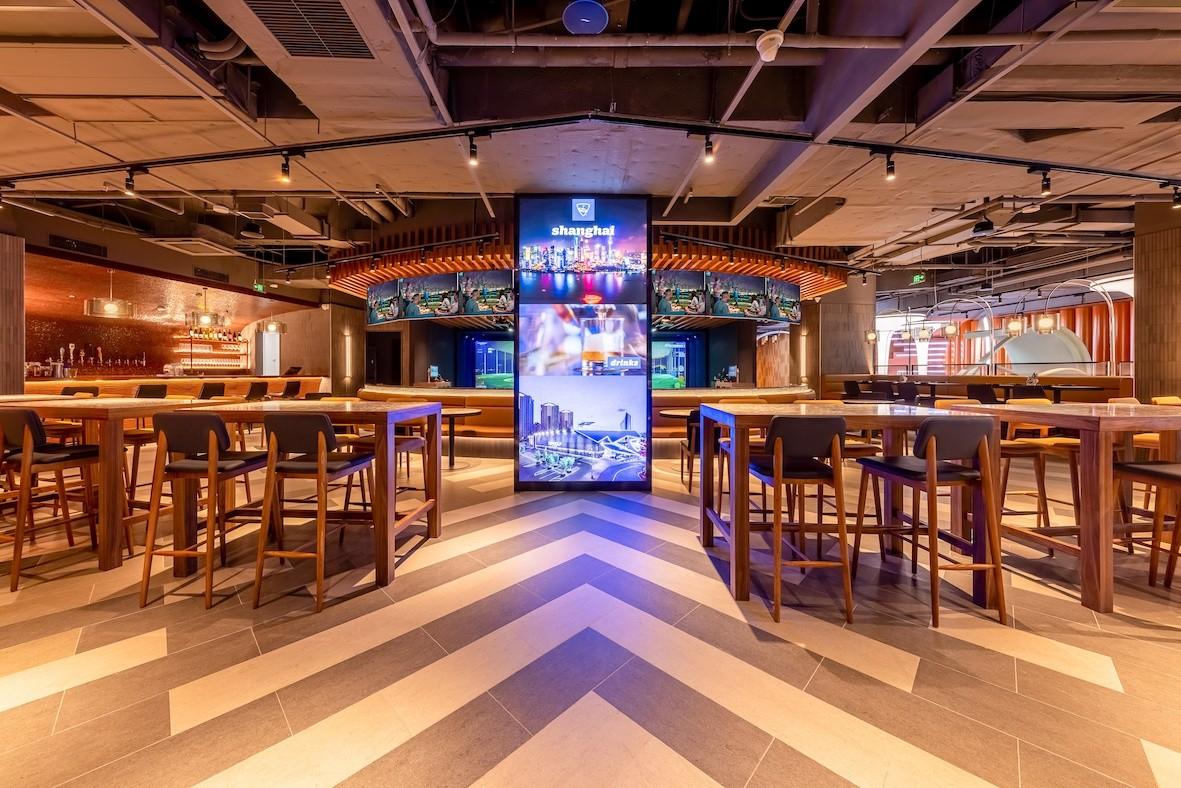
Image courtesy of Lounge by Topgolf
The full-on entertainment and dining space features mini golf, private swing suites loaded with more than 80 golf courses around the world and other interactive sports games, Asian fusion meets pub grub designed by Danyi Gao (Shake, Bun Cha Cha, Black Rock) and drinks by Colin Tait (Shake, Black Rock).
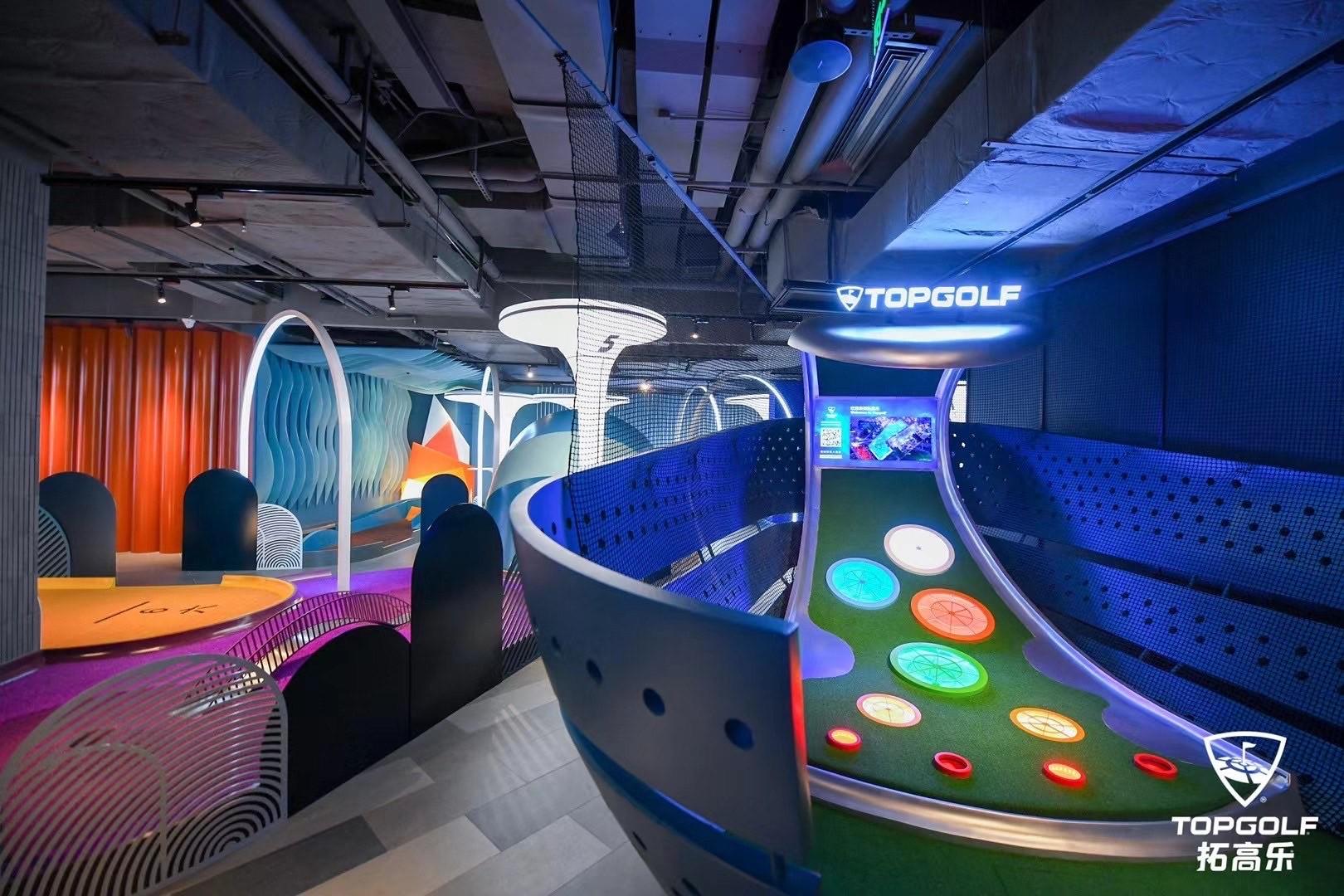
Image courtesy of Lounge by Topgolf
Outside of the sports entertainment, there is also a full restaurant and wine cellar plus VIP rooms with all sorts of gaming, pool tables and food and drink packages to choose from.
Read a full review here.
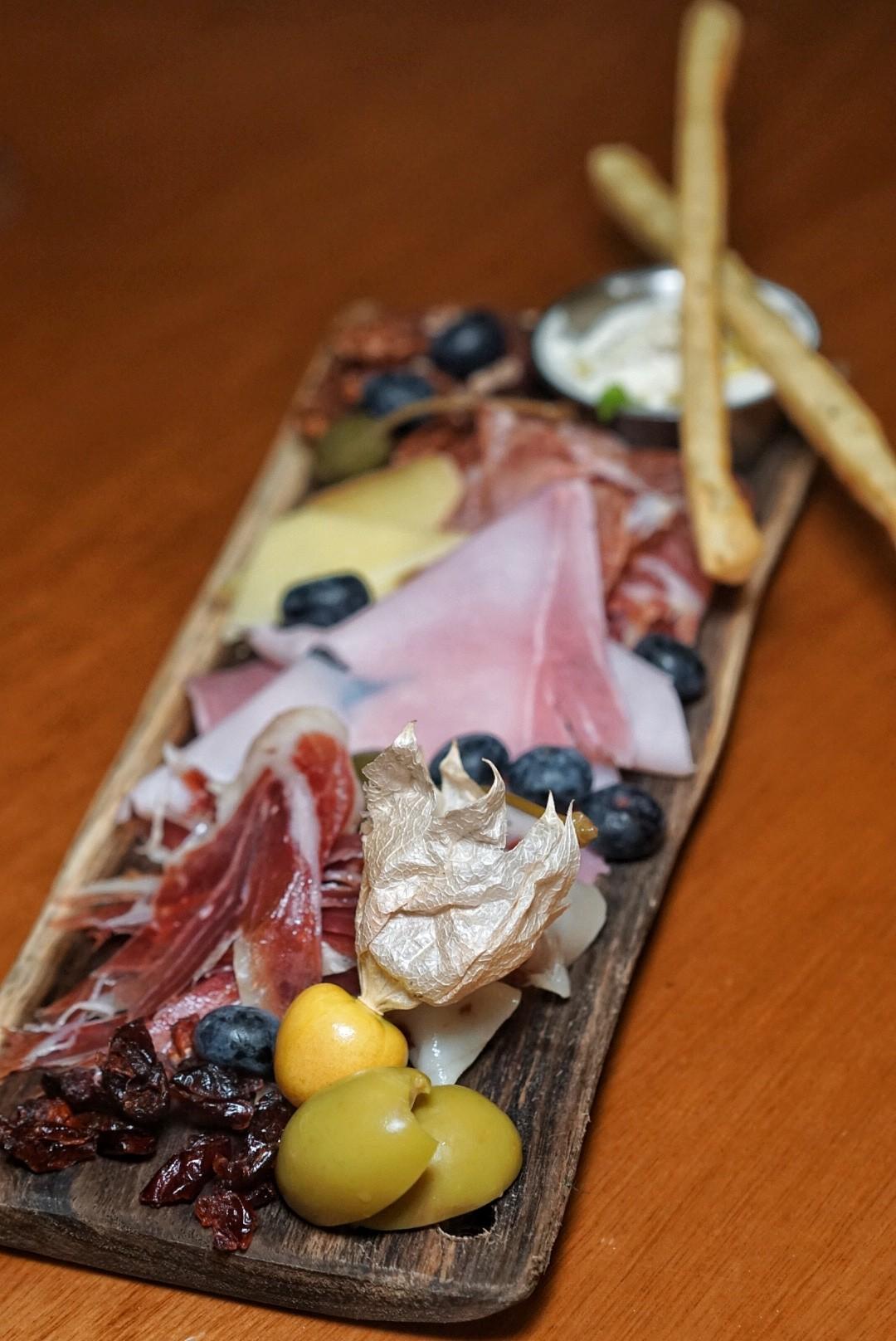
Coming at you from Li Ze (Ottimo, SOiF, Suzie), theWarehouse is another novel concept recently added to the team’s growing empire of locations. Located on Yongjia Lu, just below Ottimo in Surpass Court, this spot is actually a two-for-one, split across unit 217 and 312 for a distinct dine and sip experience in both.
The latter offers dimmed lighting, with a walk-in cellar and a large, dark wood table, providing diners with a ‘private chef’s table’-like experience, while the former is breezy and bright with countertop-lined walls and a circular central table bedecked with flowers and candles.
But, theWarehouse is not necessarily a restaurant. In fact, as the name suggests, it’s a glorified warehouse. Think Beer Lady, but for wine and centrally located – hundreds of wine labels in a ‘factory décor’ retail setting, with charcuterie and nibbles for those choosing to drink-in rather than take away. It’s a bottle shop with a wine bar experience.
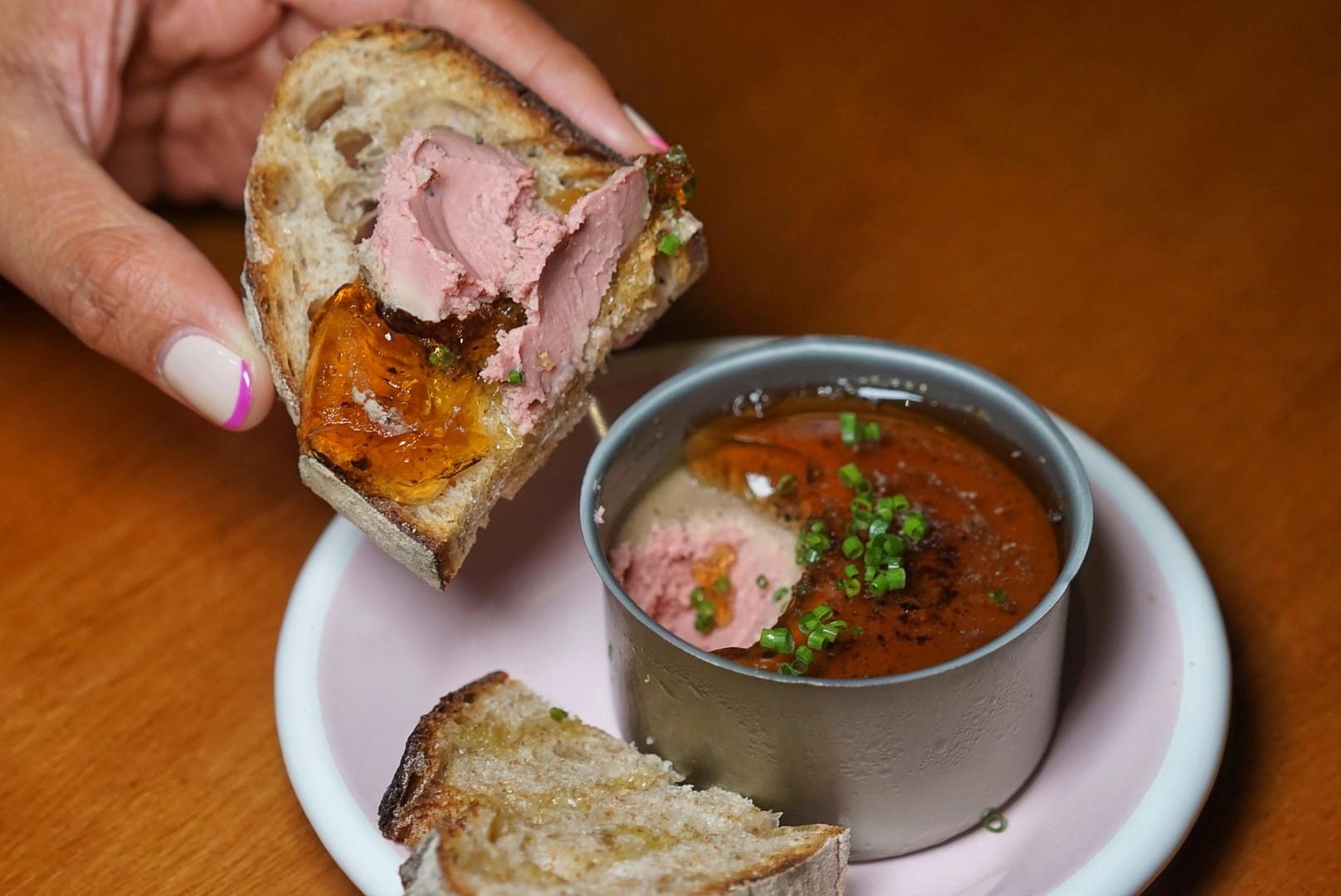
The food menu, curated by chef Freddy Raolt (The Nest, SOiF), is tight and modest, centering fully around – you guessed it – wine pairing.
Read a full review here.
American chain wannabe, Will's Lobster, is a mini shop across from Pudao Wines in Shankang Li, with lines forming at all hours of the day.
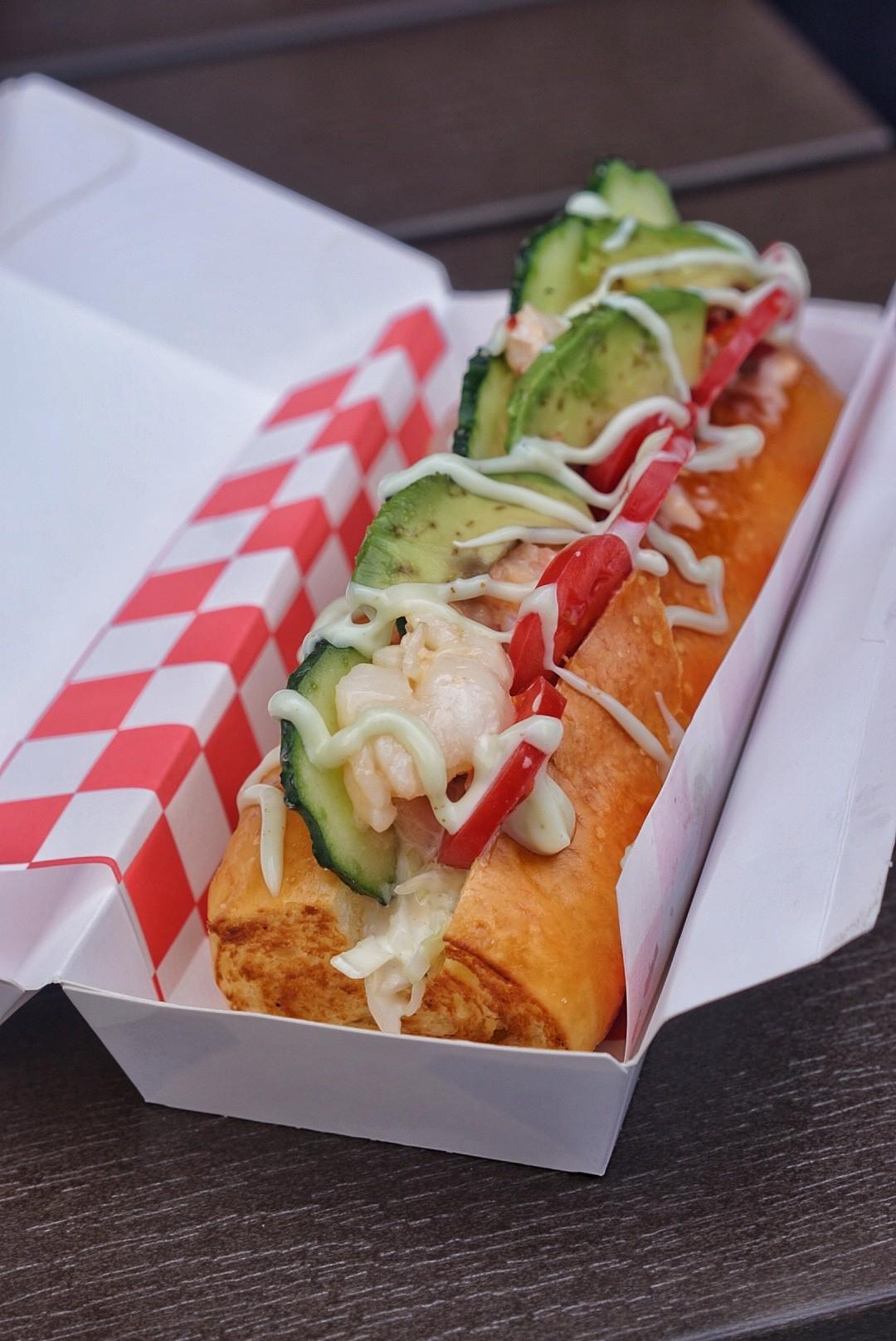
Sporting the American classics with a lobster focus, you can sample anything from Maine to California lobster rolls, from lobster-topped hotdogs to lobster-sporting burgers. Chicago style ballpark dogs, Texas chili dogs and Louisiana spicy shrimp rolls are also on offer.
There is no vibe, really. It’s a fast food shop with a grand total of nine seats. You order at a window, get your own water (or midday Asahi), sit outside, scarf down your meal, and get back to whatever else you need to do, all in under 15 minutes flat.
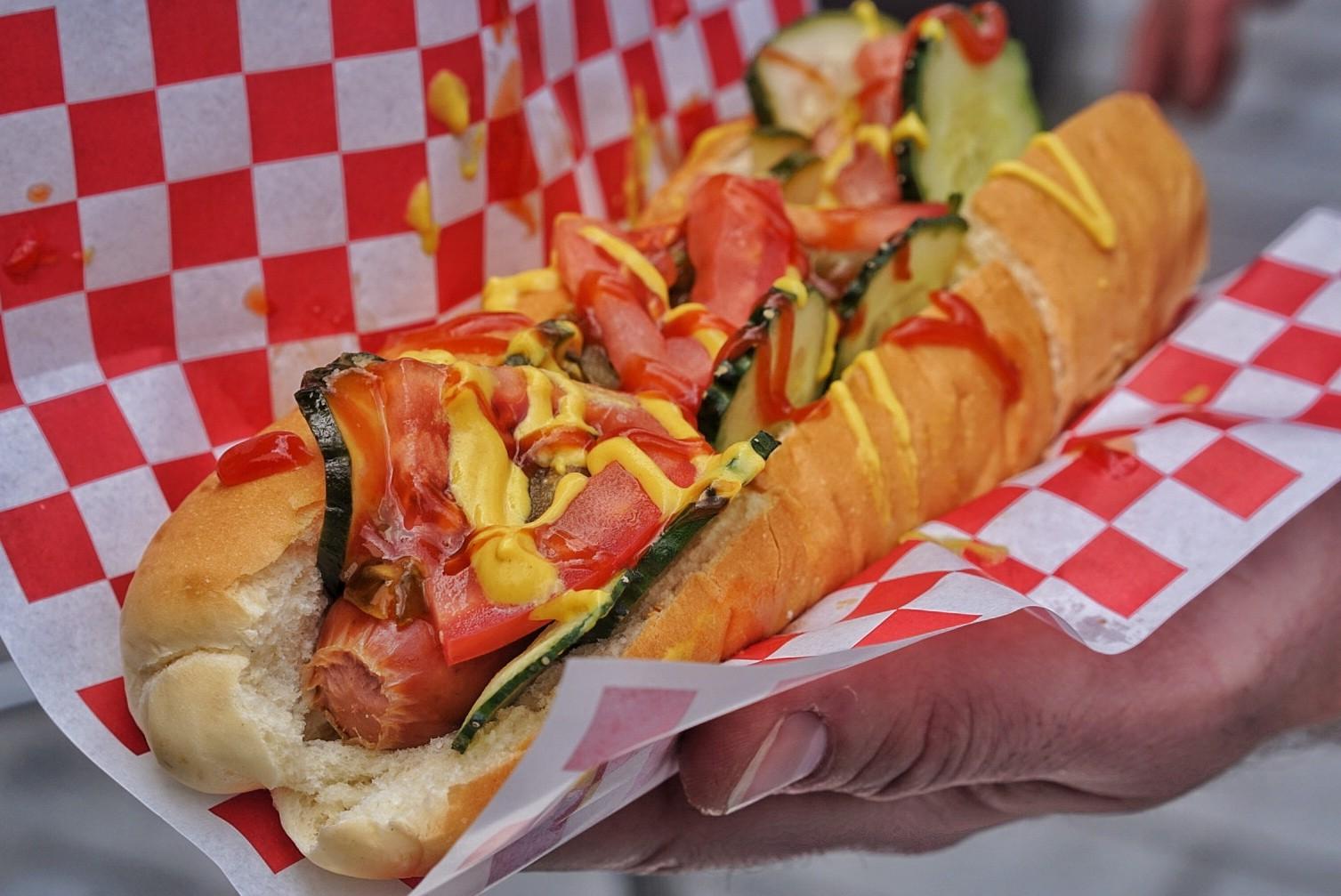
Get in, eat, get out; it’s efficient. Nothing wrong with that. But for our money, we’d spend it at any of the other 25+ food options within a 2-block radius. Except for the hotdog. That’s a wiener.
Read a full review here.
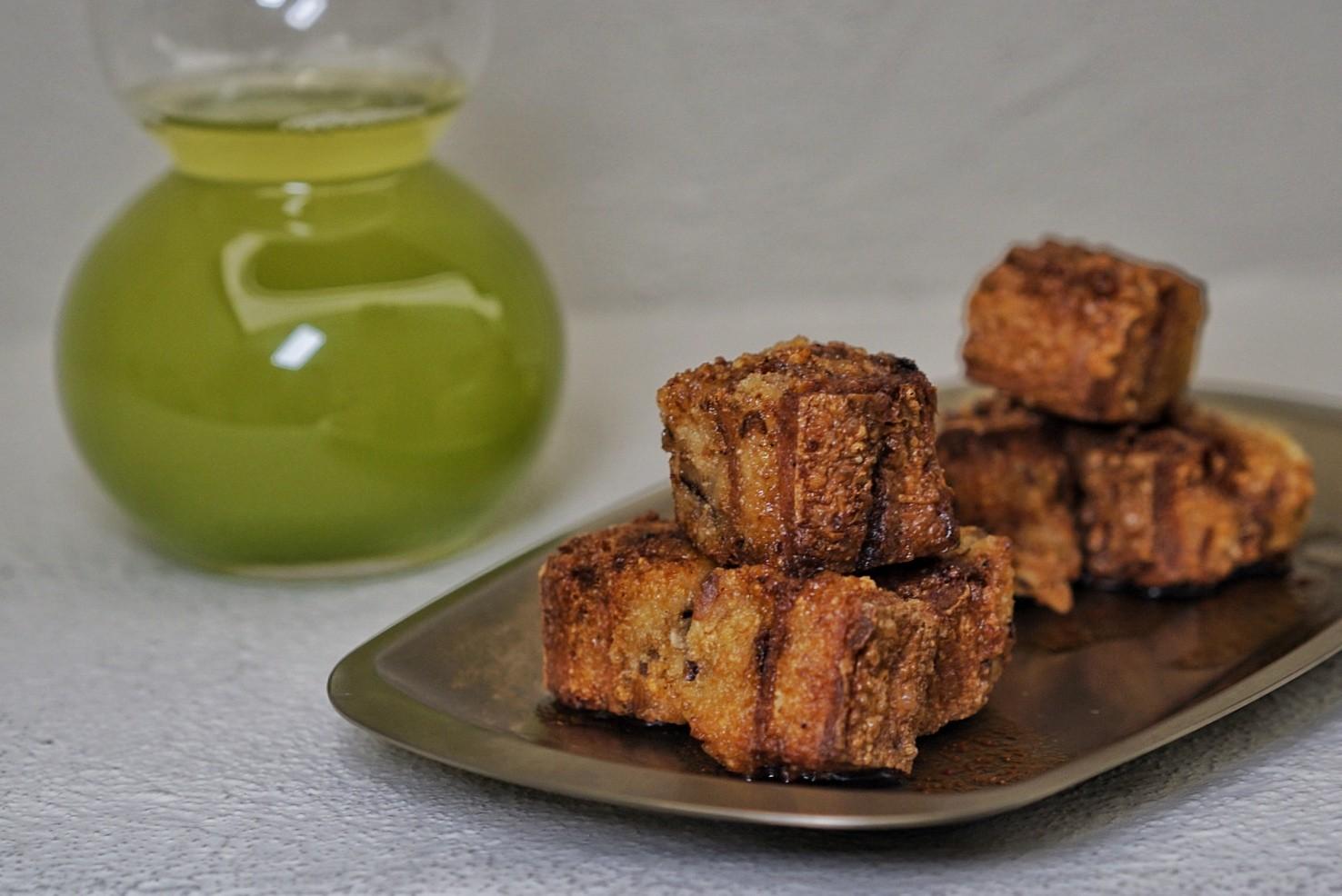
A modern take on a traditional tea house, Wulu on Fenyang Lu provides a refreshing alternative to always grabbing a coffee or cocktail. Partners Ting Huang and Dinguo Zheng (Vege Wonder 山河万朵, a one Michelin-star restaurant in Beijing) offer guests everything from sparkling teas to nitrogen teas to cold-drip teas, along with Chinese fusion sharing dishes that highlight local ingredients in a bright, outdoor-like urban garden atmosphere.
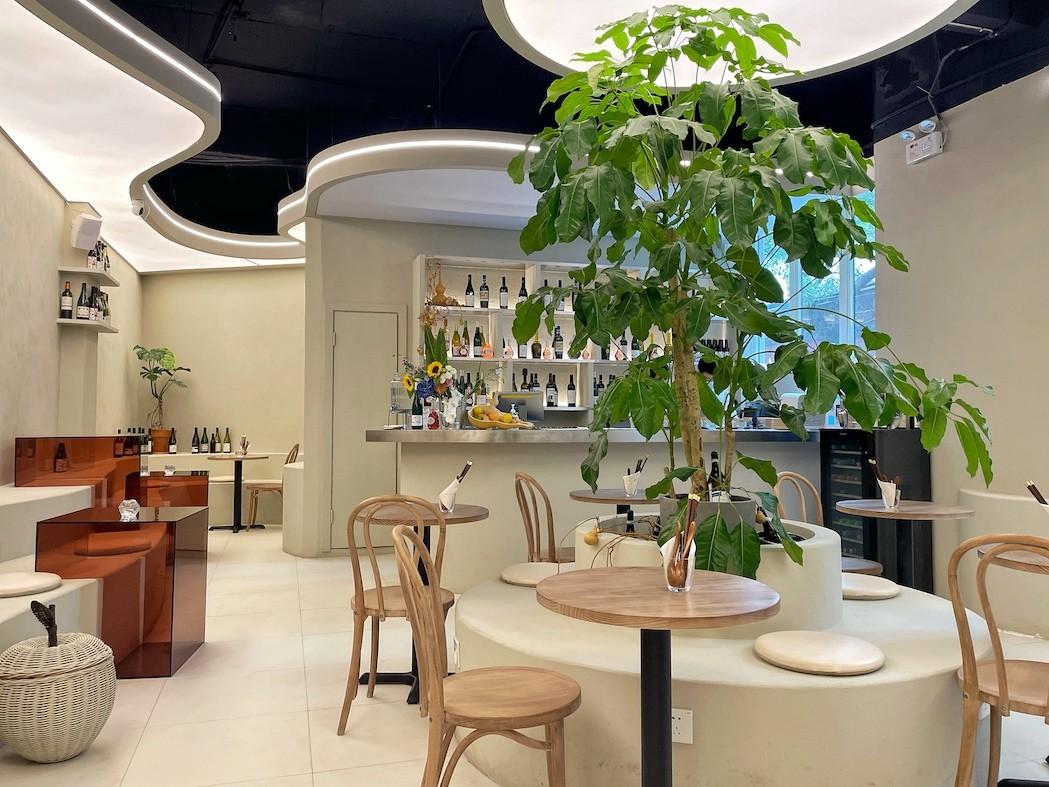
Wulu provides a relaxing environment for people to enjoy food, drinks and especially tea. It is a modern take on a tea house during daytime and a bistro at night. They have unique and interesting non-alcoholic teas, like nitrogen tea and sparkling tea, which act as the ideal alternative to highly caffeinated coffee drinks or alcoholic cocktails. The food is Chinese fusion, focusing on Shanghai local ingredients and flavors.
Read a full review here.
Late last winter, a new popup burger spot opened up late night on the corner of Shaanxi Bei Lu and Wuding Lu. Serving up Yugoslavian style burgers, grilled chicken and sausages to the late night crowd started to garner a pretty noteworthy following, and a few short months after, Yugo Grill opened up in their permanent brick and mortar shop on Kangding Lu in the old Lucky Diner spot.
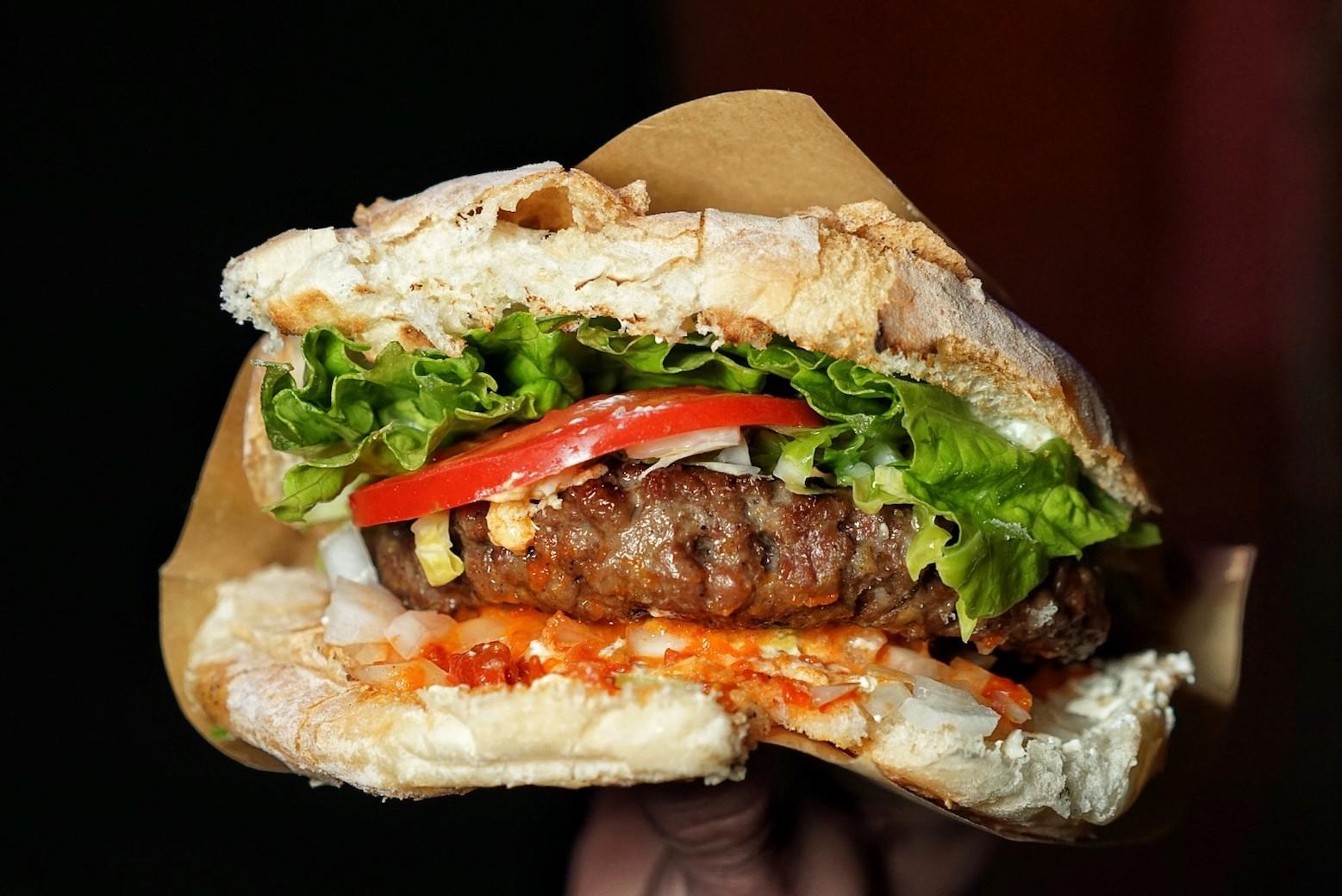
Born out of a craving for home, the four partners – all hailing from the region of former Yugoslavia – combined their favorite recipes and resources and opened an 8-square-meter popup window shop.
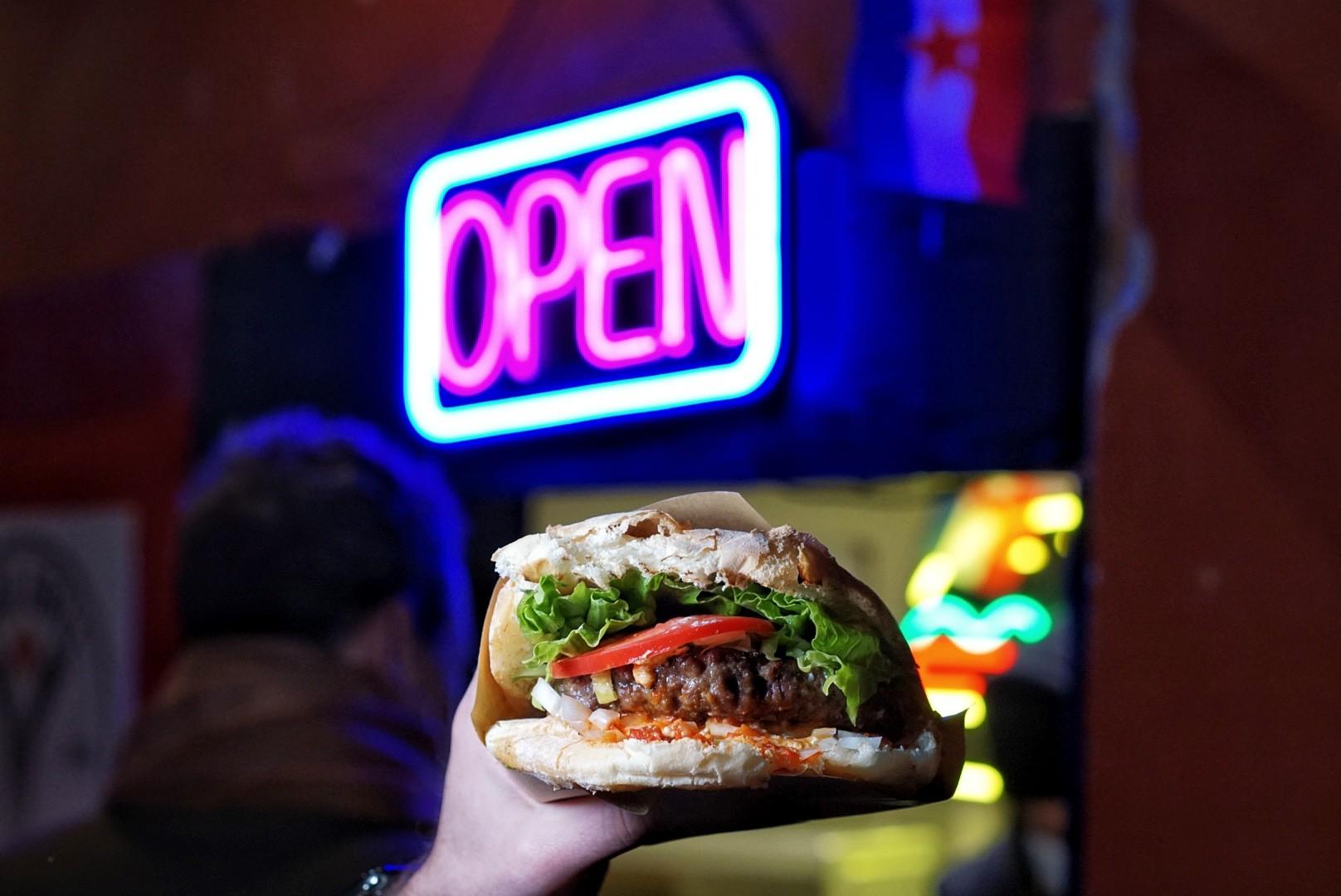
A pljeskavica – a Yugoslavian burger patty – is the national dish of Serbia, and the signature item on Yugo Grill's menu. From the three items that first graced the menu to the now full lineup of Yugoslavian favorites, bakery goods, coffee beverages and liquors, this spot has quickly become a haven for Eastern Europeans, burger lovers and party dwellers alike.
Read a full review here.
Serial bar opener and mixologist Geo Valdivieso (Unico, Up, The Captain,The Broken Dagger, Klay) is firing on all cylinders with the opening of his newest concept, Zodiac. The menu offers 12 cocktails, each named after a different star sign. A 13th ‘Placebo’ cocktail involves a DIY station where guests can enjoy their five minutes of bartender fame and design their own libation.
Collaborating on the design front, hcreates brings together the layout and aesthetics of the interior design, while The Orange Blowfish covered nearly every inch of wall space with Baroque and Victorian period pieces painted over with contemporary symbols.
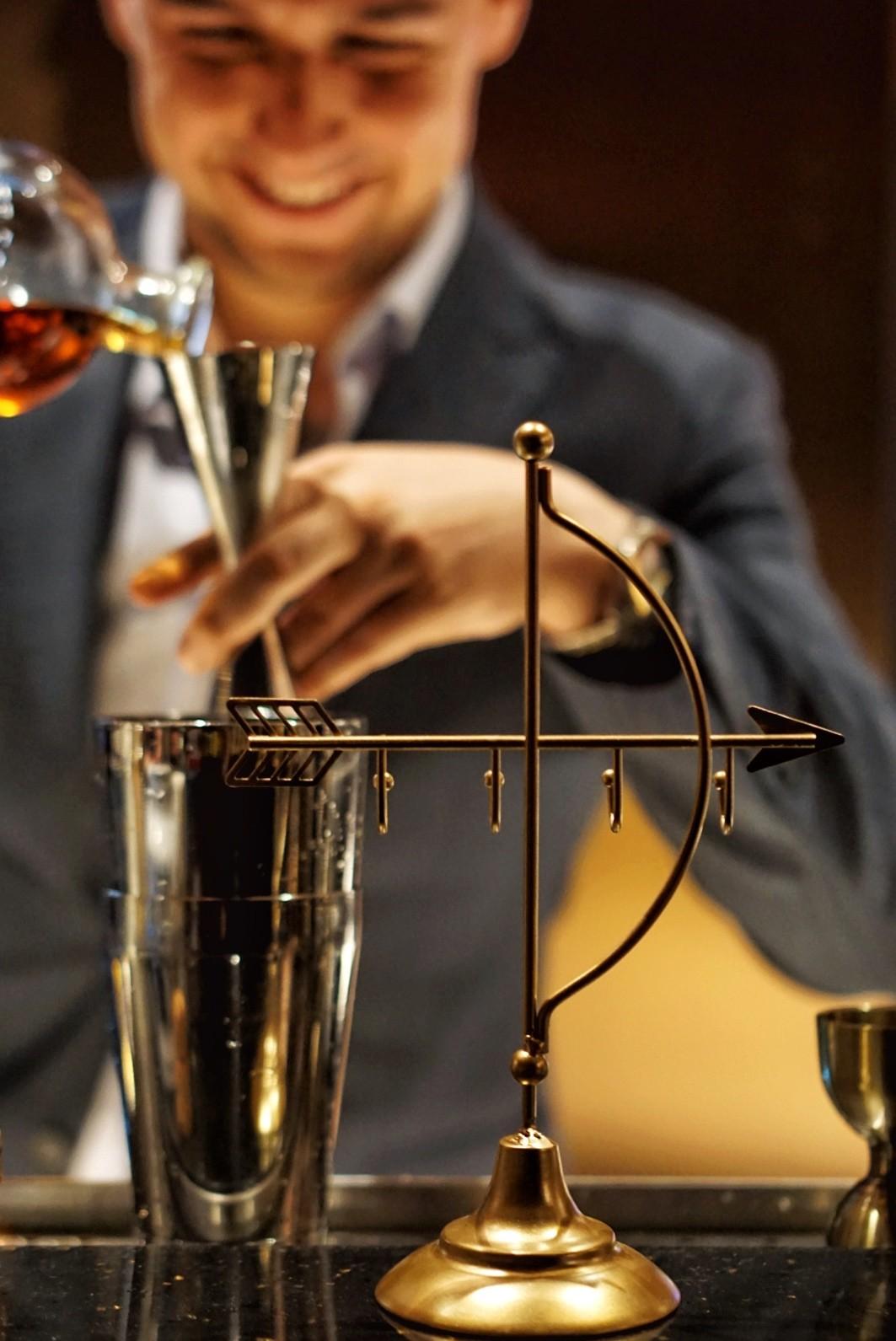
The menu is all about sparking conversations,” says Geo. “We are taking the classic first date question ‘What’s your sign?’ to the next level.” Mini horoscopes written by Shanghai’s go-to astrologer Alex Wang accompany each drink’s description, so you can simultaneously learn about your date’s personality alongside his or her flavor preferences.
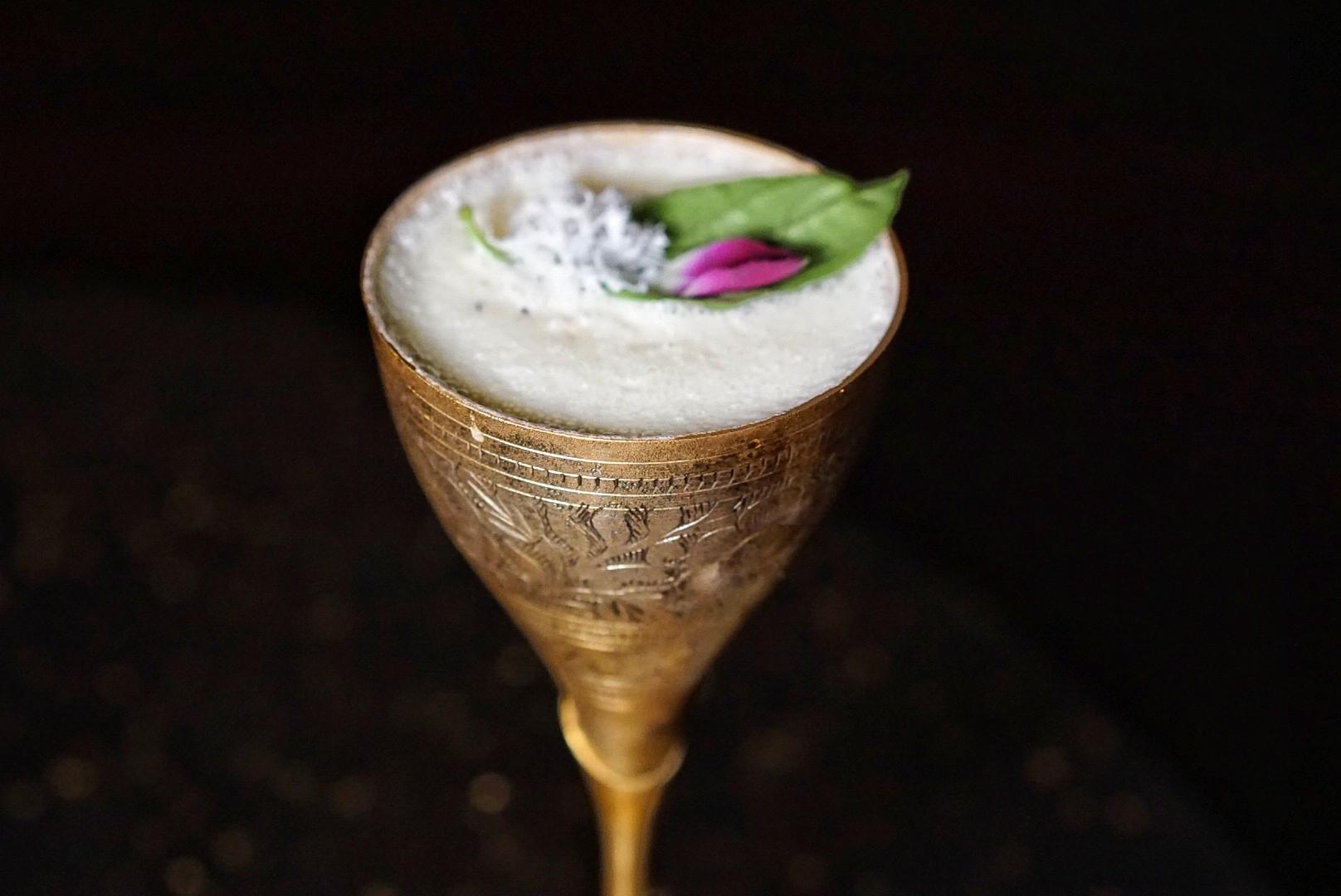
The juxtaposing, satirical twists exemplify the overall feel of the space – it doesn’t take itself too seriously. When guests are allowed to play bartender, breaking the mixologist fourth wall; when drinks arrive in gimmicky vessels with overtly playful components; when cocktail choices are made based on birth charts and star alignment rather than ingredients, it’s all just fun and games.
Read a full review here.

My name is Sophie Steiner, and welcome to my food-focused travel blog. This is a place to discover where and what to eat, drink, and do in Shanghai, Asia, and beyond. As an American based in Shanghai since 2015 as a food, beverage, travel, and lifestyle writer, I bring you the latest news on all things food and travel.
Your email address will not be published.
Be the first to comment!

Sign up for tips on the latest Shanghai openings, and other food, beverage, and travel content
© 2026 Sophie Steiner
Privacy Policy