15 of Shanghai's Most Popular Pastries To Eat Right Now – Part II
For that necessary blood sugar spike
April 10, 2026
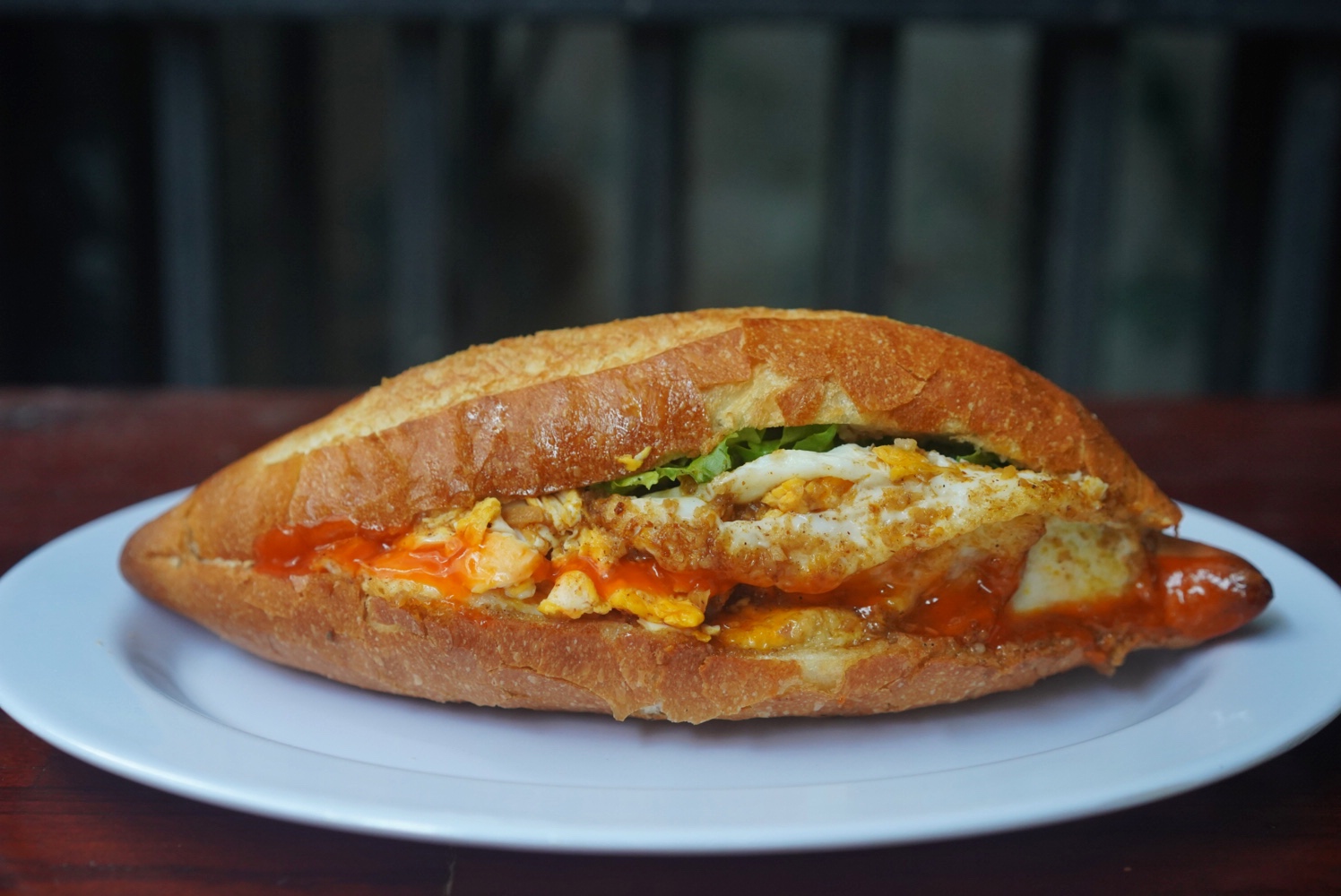
Imagine taking the quintessential, crusty French baguette, transporting it to the humid streets of Saigon, and deciding it needs more… life. That, in a nutshell, is the origin story of the banh mi – a sandwich that manages to be both a respectful nod to French colonial history and a rebellious, delectable Vietnamese masterpiece.It is arguably the world’s most successful culinary fusion, transforming from a "foreign" luxury into an accessible, vibrant street-side obsession.
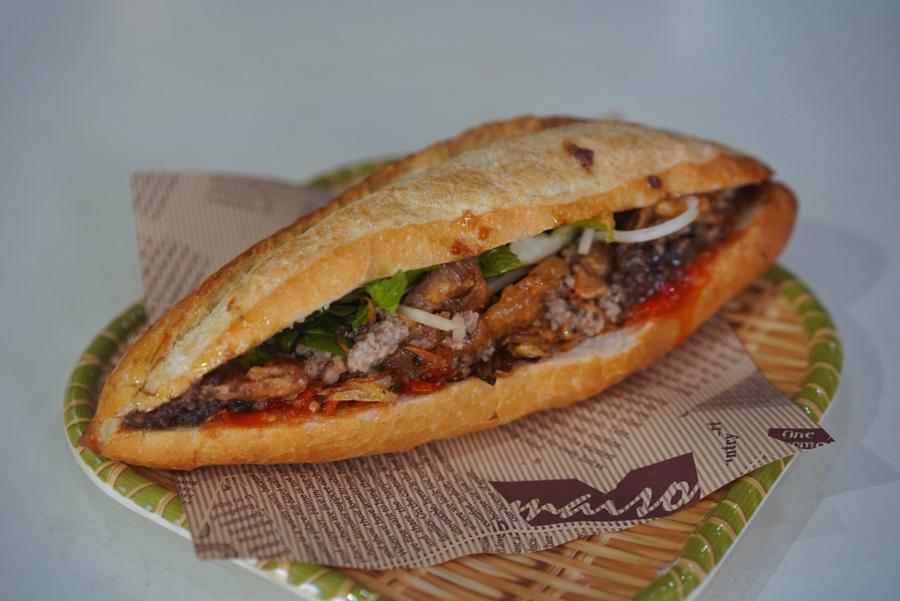
In the late 19th century, the French occupied Vietnam, bringing with them pâté, butter, and heavy baguettes. For decades, it was a "white man's" sandwich, known to locals as bánh tây (western bread).
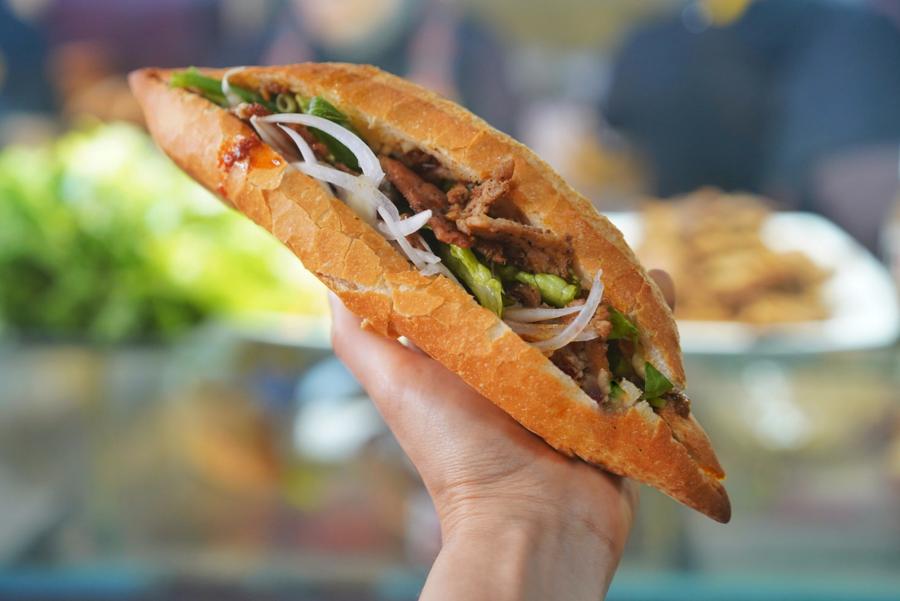
But after the French were sent packing in 1954, the Vietnamese did what they do best: they adapted and perfected. They couldn’t rely on imported flour, so they mixed in rice flour, creating a bread with a wafer-thin, almost flaky crust and a feather-light interior. They removed the heavy meat-to-bread ratio, replacing it with a bouquet of herbs, pickled vegetables, and intense, bright flavors.
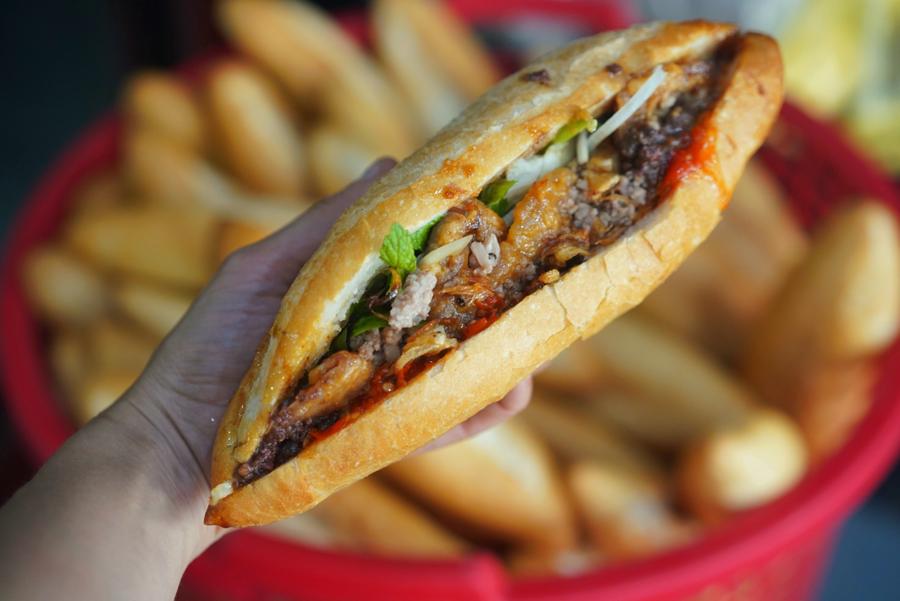
A true banh mi is not just food; it is a meticulously layered engineering project consisting of:
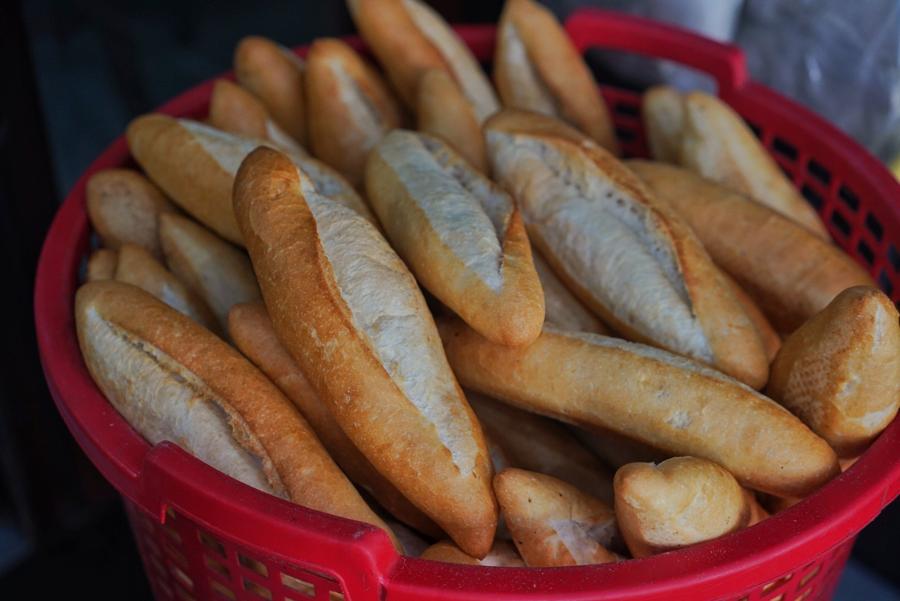
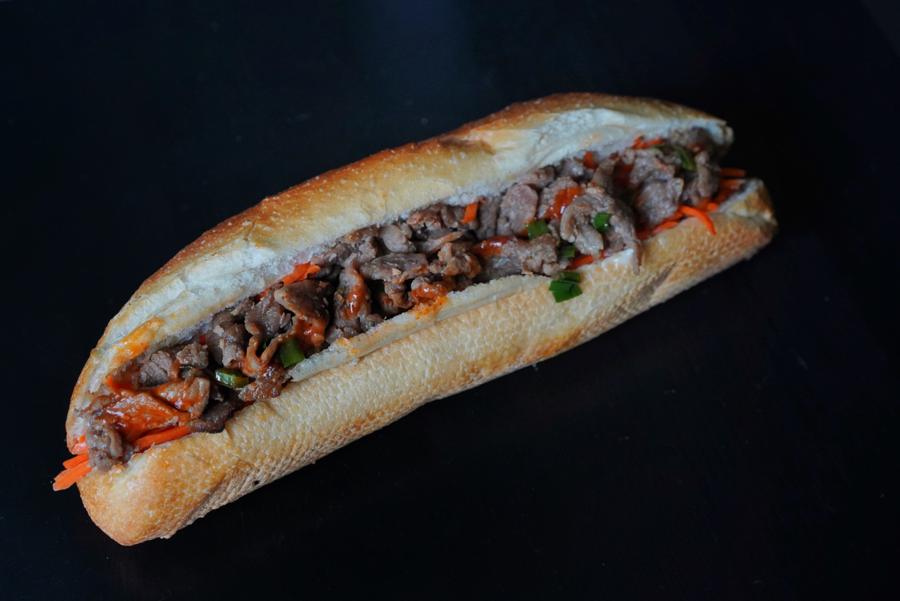
While the 2011 addition of " banh mi" to the Oxford English Dictionary solidified its place in global consciousness, in Vietnam, it is a way of life, with regional variances throughout the country. The Saigon style is particularly prized for its hearty fillings of cold cuts and grilled pork, a contrast to the simpler Northern versions that tend to be more demure in flavor and heft.
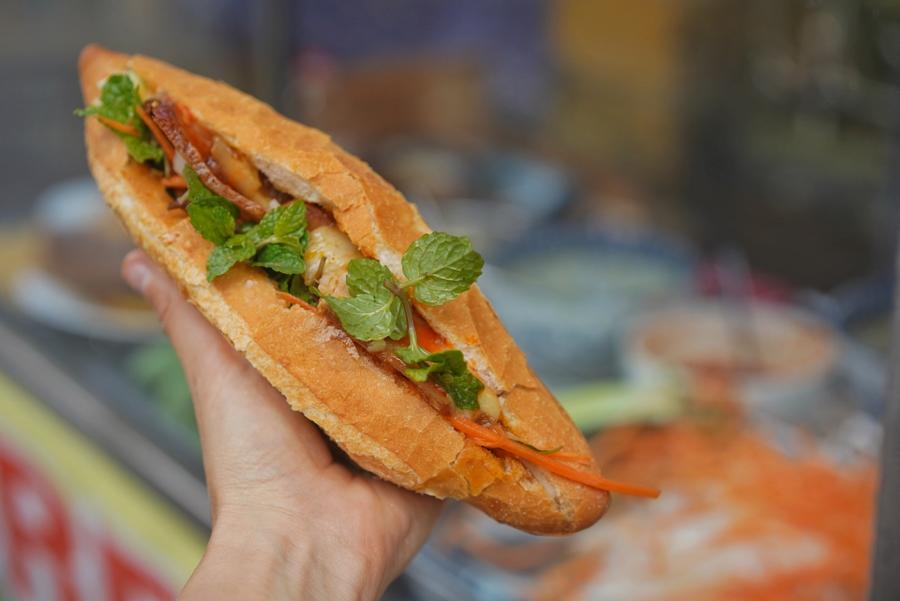
The banh mi has become a global ambassador of Vietnamese cuisine because it hits every sensory note: sweet, savory, acidic, and crunchy. It is the ultimate fast food, satisfying the modern craving for high-quality street food that is accessible, affordable, and incredibly flavorful.
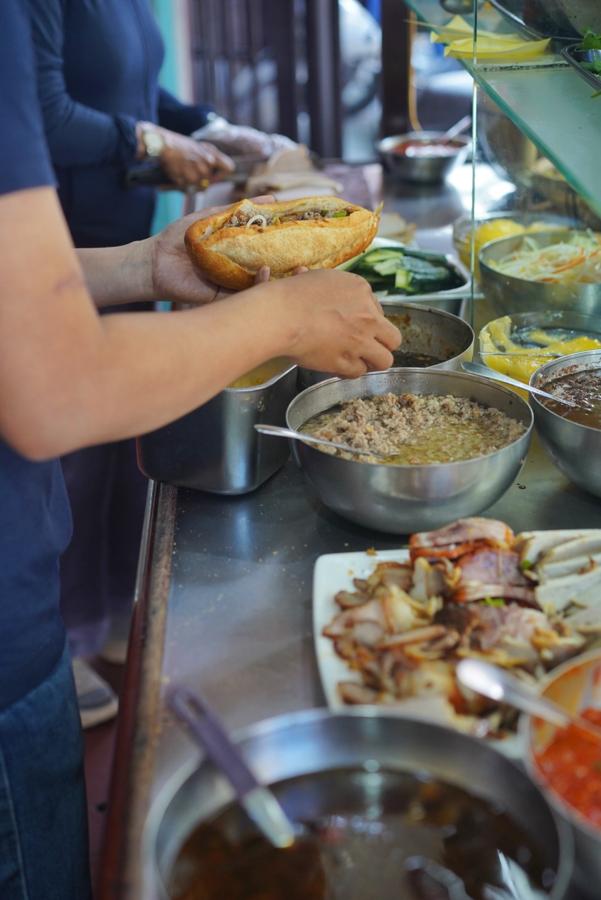
Whether you are in a bustling market in Ho Chi Minh City or a trendy cafe in Shanghai, a good banh mi is an explosion of tastes, culture, and heritage that bridges two worlds.
READ MORE: A-Z of Shanghai's Top Sandwiches
We scoured Shanghai’s streets for any and every banh mi rendition, from conventional to creative, and are here to spill the deets.
Shanghai’s favorite banh mi street cart, Feral, found a permanent outpost on Shimen Er Lu last year, bringing even more of their wanghong (internet famous) Vietnamese baguette sandwiches to Shanghai’s food loving community. These pocket-friendly sandwiches (RMB32-65) are available in classic to contemporary flavors, from crispy pork to pastrami beef to black tiger prawn, and everything in between, best enjoyed with a classic drip Vietnamese coffee.
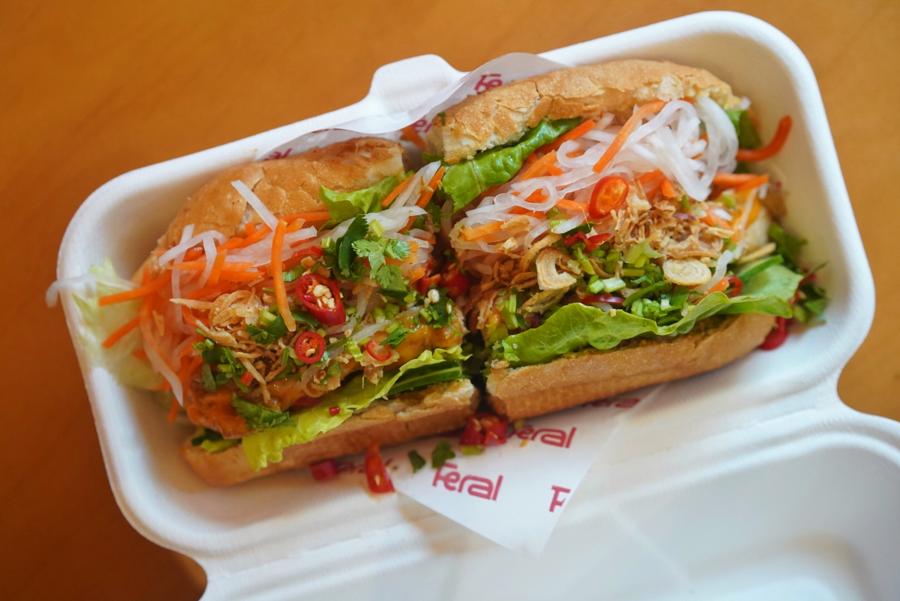
The Lemongrass Chicken Banh Mi (RMB32) is the most-ordered, and for good reason as the fragrant meat adds subtle herbaceousness without overpowering. The real star of the show, however, is the baguette – shatteringly crisp, brittle, and stuffed to the absolute gills with all manner of pickled daikon and carrots, cucumber slices, fresh herbs, and crispy fried shallots. The bottom bun receives a liberal slathering of homemade pâté, butter, and a squirt of sweet chili sauce. This is truly Shanghai’s most authentic banh mi.
Feral, 82 Maoming Bei Lu, 茂名北路82号
A mainstay in Shanghai’s Vietnamese food scene, Saigon Mama has a baker’s dozen worth of locations around town, serving up classic pan-Viet cuisine, like pho, bun thit nuong, spring rolls, minced chicken salad, and – the reason we are here – banh mi.
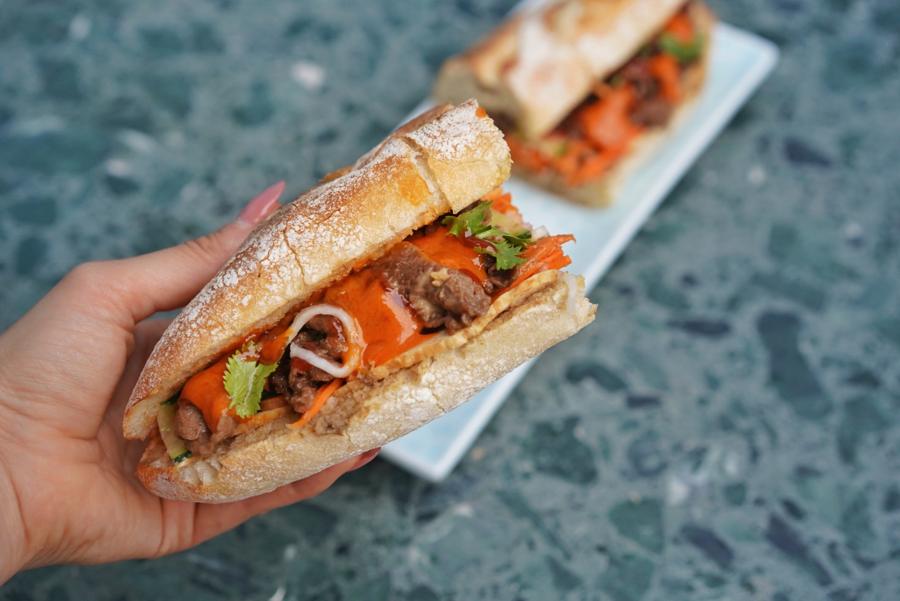
There are four to select from – Grilled Chicken (RMB55), Grilled Pork (RMB55), Saigon Combo (RMB58), and Beef Banh Mi (RMB58) – each served with a spread of housemade pork pâté plus pickled carrots and daikon, cucumber, and fresh cilantro.
Is the banh mi the most traditional in the world? Not really.
But is it still ideal for satisfying that Vietnamese food craving? Definitely.
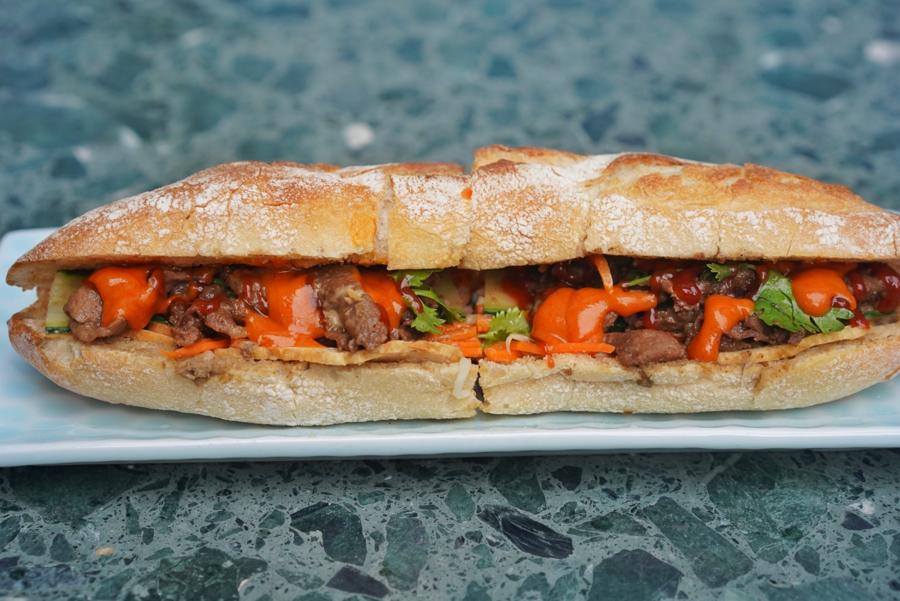
Fresh, crispy baguette? Check.
A thick dollop of pork pâté? Check.
Loads of julienned and pickled veggies topped with fresh herbs? Check.
Thinly sliced, slightly sweet and tender barbecued pork? Check.
Banh mi success.
Saigon Mama, 1/F, Shanghai Centre, 1376 Nanjing Xi Lu, by Xikang Lu, 南京西路1376号上海商城1层, 近西康路
At fast-casual diner Pho To Shop, the menu is a pared down list of popular Vietnamese dishes with an emphasis on authenticity, reasonable prices, and speed.
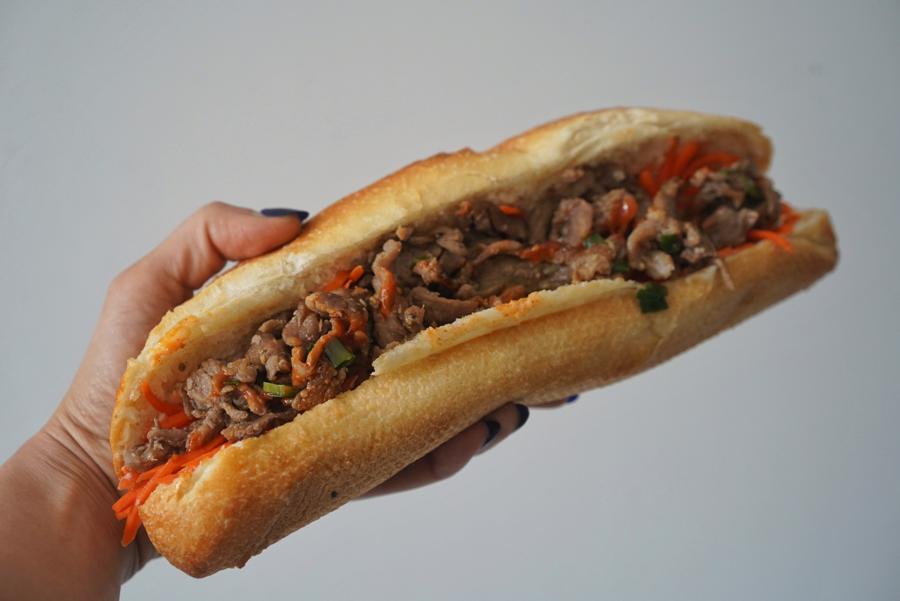
When it comes to the Beef Banh Mi (RMB55), the bread is freshly-baked albeit not as crispy as some others on the list, yet it’s quickly made up for in the marination level and quantity of tender meat. Pho to Shop also doesn’t skimp on the veggies, with an ample portion of finely shredded and pickled carrots and daikon, sliced cucumber, cilantro, chopped fresh chilis, scallions, and a thick shmear of mayo rather than butter or pâté.
Leaning more towards the Hanoi rendition of banh mi, Pho To Shop’s sando is fresh and filling without feeling too heavy.
Pho To Shop, Room 401, 1718 Beijing Xi Lu, 北京西路1718号401室
A storefront on Nanjing Xi Lu and a street cart on the North Bund, Trung Nguyen Legend is a humble Vietnamese eatery serving banh mi, pho, rice noodle sets, Southeast Asian salads, and an abundant range of Vietnamese coffee drinks. But we’re here for the banh mi, available with crispy tofu, marinated beef, lemongrass chicken, or fried eggs.
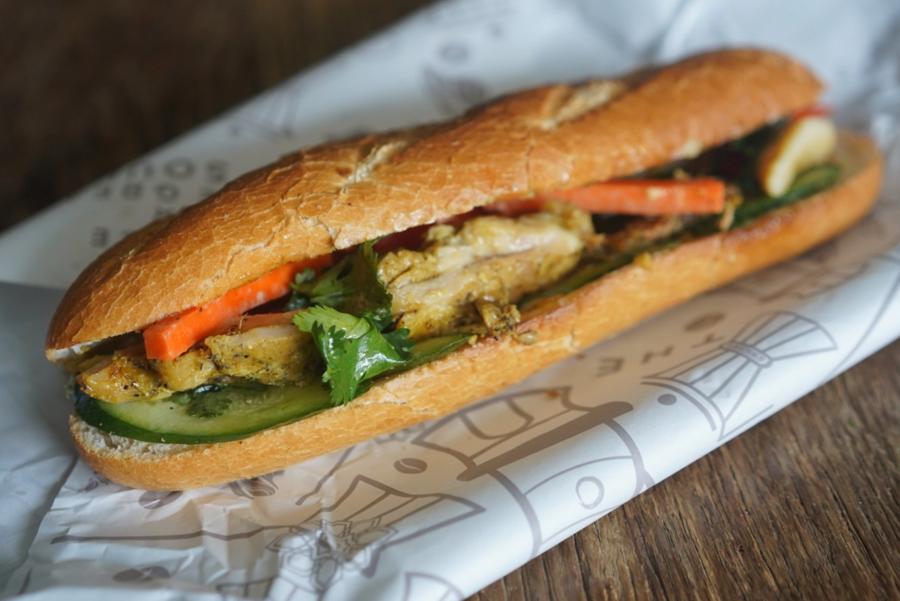
The Lemongrass Chicken (RMB28) sees marinated and sliced chicken thigh, batons of pickled daikon, carrot, and the curious addition of red peppers, cucumber slices, and cilantro stuffed inside an ultra-crispy buttered baguette. It’s not re-writing the playbook, nor is it trying to. But for a cheap and cheerful lunch, we’re all here for it. Make sure to ask for extra sriracha aioli for added zing.
Trung Nguyen Legend, Room 101, 699 Nanxing Xi Lu, 南京西路699号101室
Luneurs opened its 13th location in Shanghai (and first location in Jing’an) earlier this year in Reel Mall. This new outpost is also the Shanghai-born/French brand’s new flagship location, focused on all-day dining, afternoon tea, and post-work snack and drink options. Like other Luneurs locations, there is an extensive display of pastries and ice cream, but this location is also the home to a newly launched menu that balances health and pleasure, with Guillaume Tu (previously of Spread) as the chef consultant.
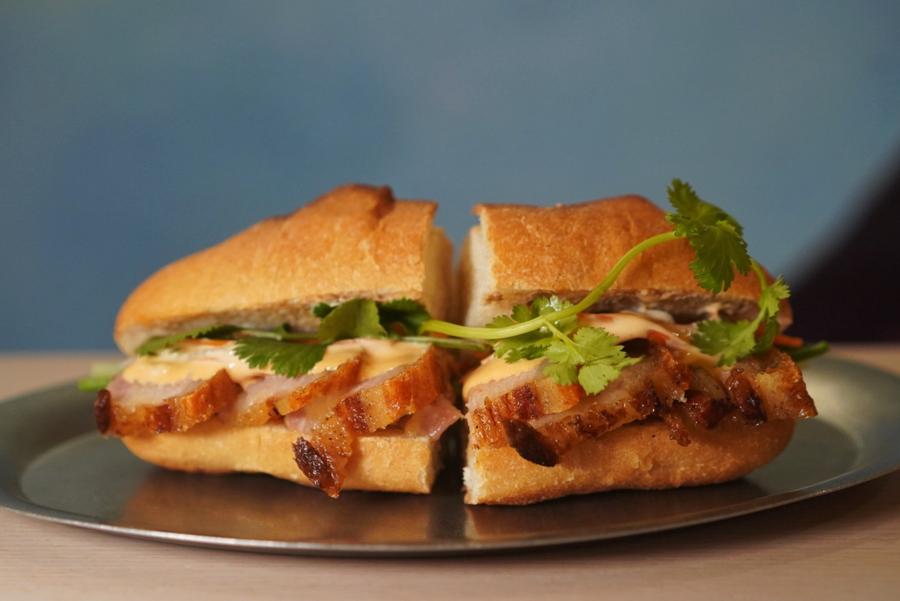
A nod to Tu’s French upbringing, tartines and banh mi make a showing, the latter of which are available in both pork and chicken. The Pork Banh Mi (RMB68) boasts dill-fragranced fat-pleated, thick-cut pork belly, daikon and carrot pickles, chives, cucumber, sriracha aioli, and chicken liver mousse (rather than the standard pâté) nestled inside a noticeably plush baguette. Take note that instead of the customary crunchy route, the team chose to go softer to appeal to the local palate, resulting in an exterior that resembles a thicker baguette but bites more like a bun.
Luneurs, Room 1D, 1601 Nanjing Xi Lu, 南京西路1601号1D室
Living a four-hour flight away from Vietnam, it goes without saying that we are never going to get the exact banh mi we crave. But there are some (many of which that are on this list) that scratch the Vietnamese food itch. And then, there are some that don’t, namely, Hyada’s.
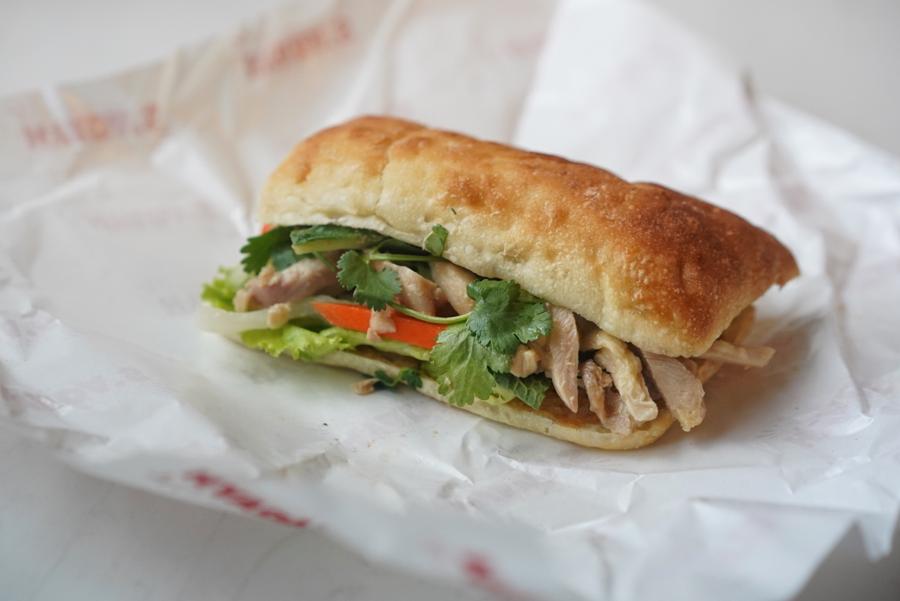
Hyada’s, playfully nicknamed “The Sandwich Club,” opened just before Chinese New Year in Lu One Mall, offering “Asian-inspired” sandos to the Xujiahui lunch crowd. Sandwiches range from crispy chicken cutlet to Korean style boneless chicken thigh to Hong Kong style club sandwich to, what brings us here in the first place, the Vietnamese Street Style Sandwich (RMB27). With prices that low, that should have been the first red flag.
For starters, it’s served on a ciabatta roll, not even trying to resemble that requisite baguette crunch. The “meat” (if one could even call it that) is processed school lunch tray-style mystery protein that resembles cold cut chicken slices. Said slices have negative flavor – falling somewhere on the spectrum of questionable squishy nothing to anti-flavor – surrounded by bird’s eye chilis, thick cut pickled daikon and carrots, fresh cilantro and mint, a slice of lettuce and cucumbers. There’s no pâté, butter, mayo nor sauce to be found.
This is a classic case of it’s got a lot of the right components on paper, but in actuality, it bears minimal resemblance to the real thing – the epitome of you get what you pay for.
Hyada's, B1, 838 Huangpi Nan Lu, 黄陂南路838弄B1
READ MORE: A-Z of Shanghai's Top Sandwiches
READ MORE: The Ultimate Hanoi Food & Drink Guide
READ MORE: How to Eat Your Way Through Ho Chi Minh (Saigon) Like a Local
READ MORE: The Ultimate Hoi An, Vietnam Guide: What To Do, Eat & Drink

My name is Sophie Steiner, and welcome to my food-focused travel blog. This is a place to discover where and what to eat, drink, and do in Shanghai, Asia, and beyond. As an American based in Shanghai since 2015 as a food, beverage, travel, and lifestyle writer, I bring you the latest news on all things food and travel.
Your email address will not be published.
Be the first to comment!

Sign up for tips on the latest Shanghai openings, and other food, beverage, and travel content
© 2026 Sophie Steiner
Privacy Policy